
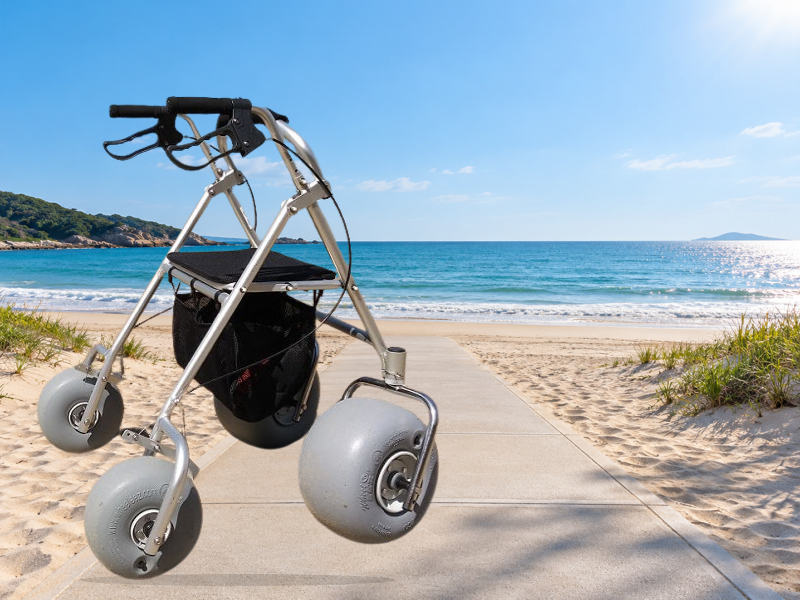
Also, Beach walkers are mobility aids designed for routes where narrow standard wheels may sink or drag. The label does not describe one universal product, user, surface, or service method. Buyers should compare the actual frame, wheel layout, handles, brakes where fitted, seat where fitted, folding, cleaning, storage, training, and supplier records.
Then, This article uses official mobility-device guidance only as policy context. It does not claim that every beach walker suits every person or sand condition. Individual fit and use decisions should involve suitable professionals and a controlled sample trial.
What Are Beach Walkers?
However, Beach walkers are walking aids configured for soft or uneven coastal routes. Designs can differ in wheel size, wheel count, frame, handles, brakes, seating, bags, and folding. The product label should never replace a model-specific review.
For example, Start with the exact product. Use the beach walker page and current supplier records.
- Identify the full configuration.
- Record fitted features.
- Avoid assumptions from the name alone.
| Product area | Question |
|---|---|
| Wheels | What route are they intended for? |
| Frame | How is it handled and stored? |
| Supports | What is fitted to this model? |
Meanwhile, Key Takeaway: A beach walker needs a model-specific definition.
Who Should Review Beach Walker Fit?
Instead, The intended user and suitable professionals should review handle position, control access, walking pattern, support needs, rest needs, and route conditions. A general article cannot decide individual suitability.
As a result, Keep fit personal. Record the approved setup and any professional guidance.
- Review handle height and reach.
- Check braking controls where fitted.
- Record seating or support needs.
| Fit area | Evidence |
|---|---|
| Handles | Approved position |
| Controls | Usable access |
| Support | Individual assessment |
Also, Key Takeaway: Product fit should follow the user.

How Should Sand and Coastal Routes Be Assessed?
Then, Inspect surface firmness, slope, transitions, boardwalks, turning areas, rest points, storage access, and changing weather. Test the walker on a controlled part of the intended route.
However, Use the real route. Follow the beach route review and all-terrain walker guide.
- Map surface changes.
- Mark steep or narrow sections.
- Record conditions during the trial.
| Route item | Check |
|---|---|
| Sand | Firmness and drag |
| Transition | Boardwalk or threshold |
| Rest point | Space and stability |
For example, Key Takeaway: Route evidence matters more than an all-terrain label.
What Wheel Layout Should Buyers Compare?
Meanwhile, Compare wheel diameter, width, material, bearings, mounting, steering behavior, cleaning access, and replacement route. Wide wheels can help on some soft surfaces, but actual handling depends on the full product and conditions.
Instead, Inspect the whole wheel system. Do not claim performance from wheel size alone.
- Check wheel and axle condition.
- Review turning behavior.
- Request replacement identifiers.
| Wheel item | Evidence |
|---|---|
| Width | Supplier specification |
| Mounting | Inspection access |
| Replacement | Approved part |
As a result, Key Takeaway: Wheel layout needs a controlled route trial.

How Should Brakes and Stability Be Checked?
Also, Follow the current instructions for brakes, parking, folding locks, and any stability-related setup. Keep the walker on a suitable surface and do not invent slope or load limits.
Then, Use the supplied instructions. Stop the trial if controls, locks, or labels are unclear.
- Check controls before use.
- Confirm folding locks.
- Record unresolved concerns.
| Control | Pass condition |
|---|---|
| Brake | Works as instructed |
| Parking | Holds under approved conditions |
| Lock | Fully engaged |
However, Key Takeaway: Controls should be understood before route use.
When Does a Seat Change the Review?
For example, A seat adds questions about setup, brakes, support, height, access, rest location, and individual suitability. A walking aid with a seat is not automatically suitable for every user or surface.
Meanwhile, Review walking and seated tasks separately. Keep seating guidance with the exact model and intended user.
- Confirm seat setup.
- Use brakes as instructed.
- Choose a suitable rest area.
| Seat check | Question |
|---|---|
| Height | Does it fit the approved setup? |
| Access | Can the user turn and sit safely? |
| Surface | Is the rest point suitable? |
Instead, Key Takeaway: A seat creates a second use case.

How Should Folding and Transport Be Tested?
As a result, Repeat folding, latches, gripping, lifting, vehicle loading, reopening, and post-fold checks with the actual walker. Record parts removed and who handles the product.
Also, Test the complete task. Use the rental handoff workflow for repeatable steps.
- Keep hands clear of joints.
- Identify approved grip points.
- Check controls after reopening.
| Task | Evidence |
|---|---|
| Fold | Repeatable sequence |
| Lift | Suitable handling plan |
| Reopen | Locks checked |
Then, Key Takeaway: A compact fold needs a safe repeatable process.
What Cleaning and Storage Records Are Needed?
However, Coastal use can expose the walker to sand, salt, moisture, and debris. Follow supplier instructions for inspection, rinsing where approved, drying, lubrication where approved, and protected storage.
For example, Complete the care cycle. Use the coastal storage plan as an operations reference.
- Inspect after use.
- Dry before protected storage.
- Record faults and missing parts.
| Care area | Record |
|---|---|
| Cleaning | Approved method |
| Drying | Complete before storage |
| Storage | Protected and accessible |
Meanwhile, Key Takeaway: Care work supports reliable fleet use.

How Should Staff Handover Be Organized?
Instead, Staff should demonstrate setup, controls, route limits, rest points, return, cleaning, and issue contacts with the actual walker. Handover should not promise suitability beyond the approved use case.
As a result, Train the repeatable sequence. Use the staff training plan and supplier question guide.
- Use one handover checklist.
- Name route and support limits.
- Keep incident contacts.
| Handover item | Pass condition |
|---|---|
| Setup | Correct configuration |
| Route | Limits explained |
| Return | Condition recorded |
Also, Key Takeaway: A repeatable handover supports consistent service.
What Is the Best Beach Walker Buying File?
Then, Combine user needs, route map, fit, wheel and control records, sample trial, folding, cleaning, storage, training, parts, service, quotation, and delivery.
However, Finish with evidence. Use the beach equipment range to compare related solutions without mixing product types.
- Use one exact model.
- Date every trial.
- Keep supplier and service records.
| File area | Pass condition |
|---|---|
| Fit | Approved setup |
| Route | Controlled trial |
| Support | Documented path |
For example, Key Takeaway: Choose the walker that passes the actual route and support plan.

Are beach walkers the same as beach wheelchairs?
Meanwhile, No. They support different mobility tasks and require separate fit and route reviews.
Do wide wheels work on every beach?
Instead, No. Sand firmness, slope, transitions, product design, and conditions vary.
Can every beach walker be used as a seat?
As a result, No. Only use seating features fitted and approved for the exact model.
Should staff training be documented?
Also, Yes. Keep setup, route, return, and issue-response records.
When should staff review the beach walker plan?
Review the route, setup, and support arrangements when equipment or beach conditions change. Then record the checks and any limits before the next handoff.