
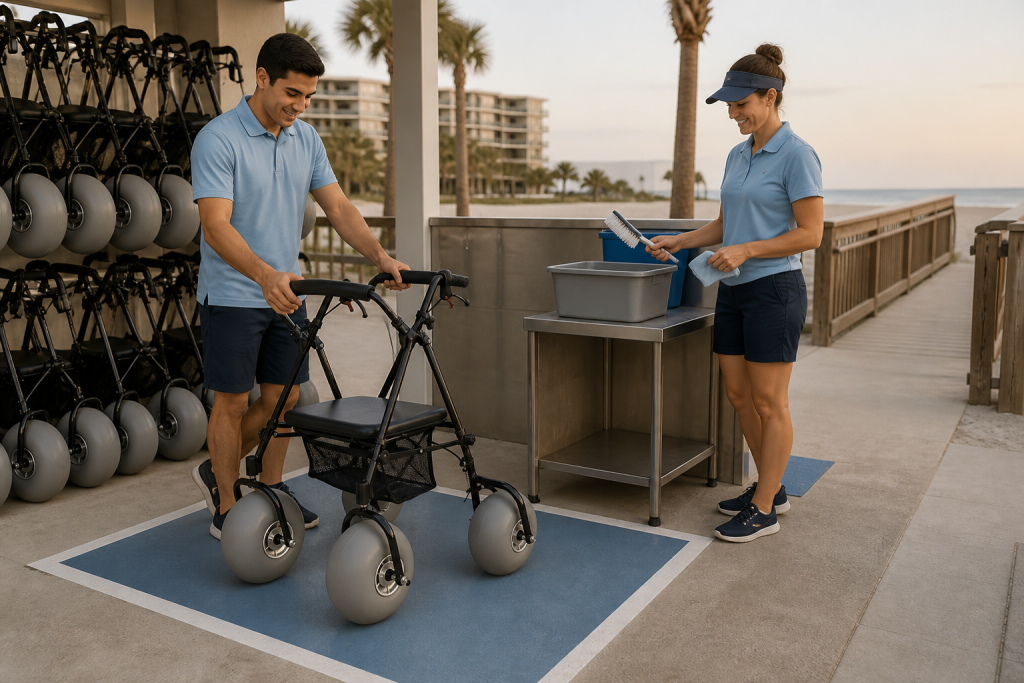
A beach walker training plan should give coastal staff one repeatable method for setup, route review, guest briefing, cleaning, and incident records. Train with the actual product. Use the normal service route. Repeat each handoff until another staff member can perform it clearly. For U.S. facilities, review official mobility-device guidance alongside local rules and site-specific safety requirements.
Coastal resorts can own suitable mobility equipment yet still give guests uneven service when staff use different setup checks, explanations, routes, and handoff words. That inconsistency creates doubt at the service desk and pressure beside sand. A beach walker staff training plan solves the problem by giving every shift one shared sequence for equipment status, visible checks, guest communication, route decisions, cleaning, storage, and records. The plan should stay practical, respectful, and tied to the exact walker model. It should not turn hospitality employees into clinicians or technical repair staff.
This article gives resort managers, rental teams, hotel trainers, recreation supervisors, and distributors a B2B framework for coaching coastal staff. Manufacturer instructions, resort policy, local access rules, and individual guest needs remain the operating authority. Teams should adapt each action around their walker design, building layout, service route, staffing pattern, and beach conditions. A four-legged walker with a seat and no wheels needs different handling language from a rollator, wheelchair, or powered device. Training materials should preserve that distinction.
In practice, A strong program also teaches staff how to pause. If a rubber tip looks damaged, a hinge sits differently, a route becomes crowded, or a guest asks for support outside the staff role, the correct response may be a calm stop and supervisor review. Managers should reward early reporting rather than fast improvisation. That culture helps staff protect service quality while avoiding promises about health, balance, personal suitability, or performance on a surface.
What Should a Beach Walker Training Program Cover?
A Beach Walker training program should cover roles, equipment status, setup, visible checks, guest communication, route decisions, cleaning, storage, and shift records. Managers can place the program inside a wider Beach Series service plan, so employees know why a no-wheel walker follows a different routine from beach wheelchairs or rollators. Each topic should have a named owner, approved instruction source, practice method, and stop point. A trainee should be able to explain the sequence before handling equipment near a guest.
Define Roles and Service Boundaries
Here is the practical point: every training session should name what staff can do, what requires a supervisor, and what belongs with a qualified professional or supplier. One person may lead guest communication, another may prepare equipment, and a supervisor may decide whether a route opens. Staff should ask guests about communication preferences and planned service without giving clinical advice. They should never decide that a walker suits an individual based only on appearance or a short conversation. A clear boundary makes service more respectful because employees know when to pause and who can answer the next question.
- Name a trainer, equipment lead, and route owner.
- State which actions staff may perform.
- Separate hospitality support from clinical advice.
- Give every trainee one escalation contact.
- Allow any participant to request a pause.
Teach One Shared Sequence
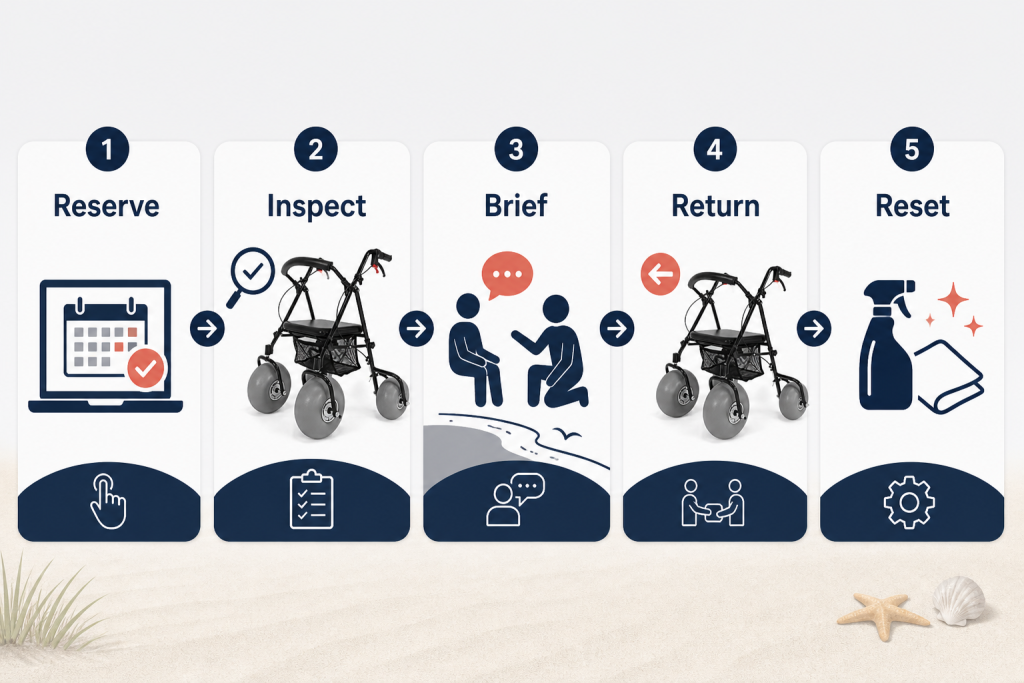
Next, Consistency comes from a repeatable order: status check, setup, visible inspection, guest briefing, route review, demonstration, return, cleaning, storage, and record. Trainers can display the sequence on one page and rehearse it with empty equipment. Each step should use plain words that seasonal staff can repeat. Avoid relying on memory from another product. The current Beach Walker page can support product recognition, while local model instructions control actual handling. A trainee should perform a return demonstration while the coach watches hands, equipment position, language, and stop decisions.
- Check equipment status before setup.
- Follow model instructions during preparation.
- Brief the guest before leaving a firm surface.
- Review the route before any demonstration.
- Close service with cleaning, storage, and a record.
How Should Staff Set Up and Inspect the Walker?
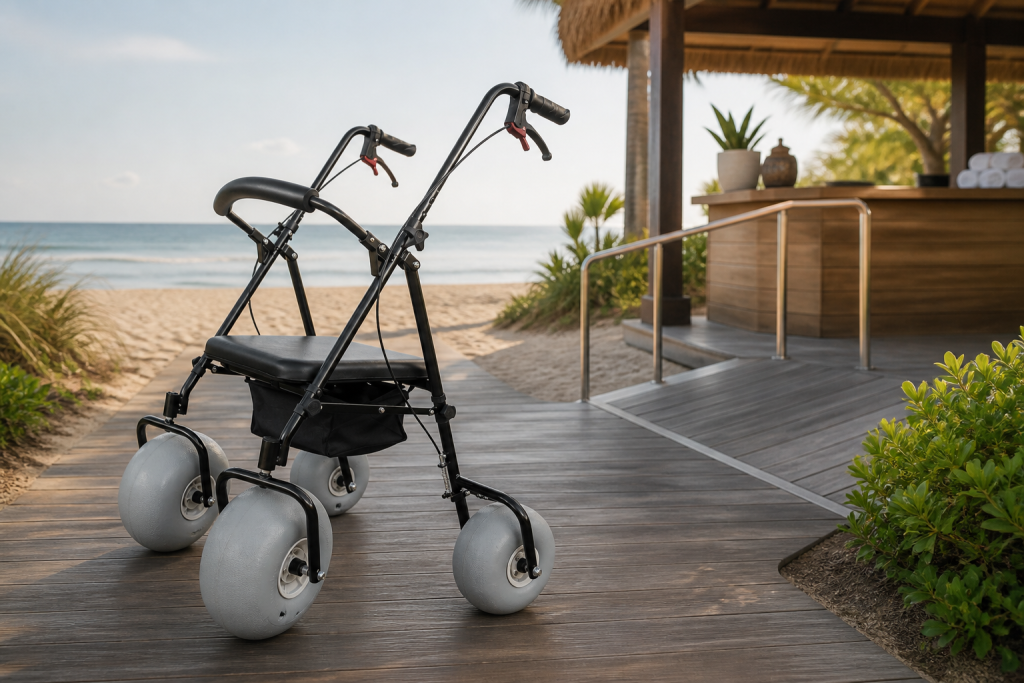
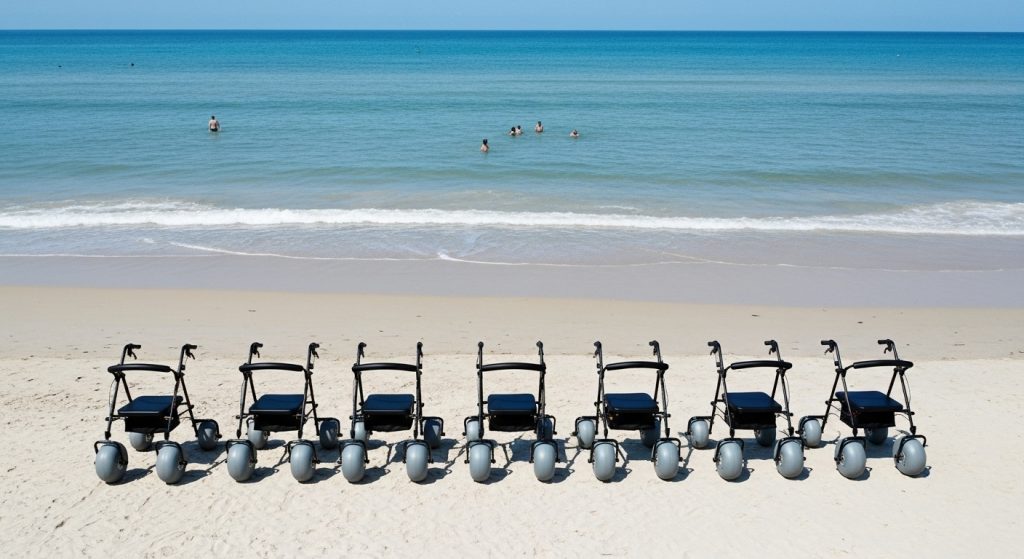
A Beach Walker should be set up and inspected on a firm, open surface using the exact model instructions and a visible ready-condition reference. The walker shown in this program has a black frame, padded U-shaped handle, flat seat, folding braces, hinges, fasteners, four straight legs, and rubber tips with no wheels. Staff should not add brakes, a basket, a backrest, or another part that does not belong to the model. They should also avoid forcing a hinge or brace that does not move as expected.
Prepare the Walker on Firm Ground
Start with stable working space: choose an area where the empty walker can stand without blocking a corridor, ramp, doorway, or public path. Confirm status before touching the equipment. Follow the approved opening or setup order, keep fingers clear of hinges, and check that braces and legs sit in their normal positions. Do not assume a folded shape, lock action, or adjustment method from another walker. If an action feels different from the approved demonstration, stop and compare with instructions. A trainer should observe setup from several angles rather than relying on a quick front view.
- Use firm open ground for setup.
- Confirm the walker identifier and current status.
- Follow the approved model-specific sequence.
- Keep hands clear of hinges and braces.
- Stop after any unexpected movement or fit.
Complete a Visible Equipment Check
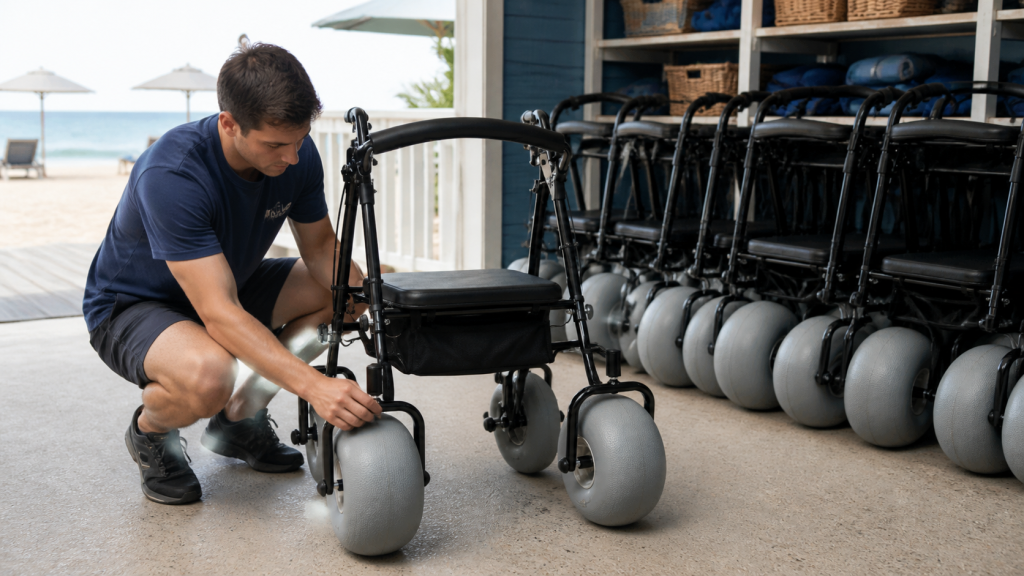
Meanwhile, Look at every contact and support point: review the padded handle, frame tubes, seat, braces, hinges, fasteners, four legs, and rubber tips. Compare both sides with a known ready-condition image. Look for cuts, distortion, loose-looking hardware, sand, salt residue, moisture, missing tips, or a part that sits differently. A visual check cannot confirm hidden condition, yet it can show when equipment belongs on hold. Staff should not tighten, replace, or modify parts unless their training and resort policy authorize that work.
- Check the handle and seat surfaces.
- Review braces, hinges, and visible fasteners.
- Confirm four legs and four rubber tips.
- Record anything that looks different.
- Move questionable equipment out of ready status.
How Should Trainers Demonstrate Guest Communication?
A Beach Walker demonstration should use plain language, consent, a clear staff role, and an agreed stop word before anyone begins a service interaction. Staff should explain what they plan to show and ask how the guest prefers communication. They should not diagnose mobility needs, prescribe technique, or promise that a device will prevent a fall. Personal fit and suitability may require input beyond a resort employee’s role. Training should give staff respectful words for that boundary.
Brief the Guest Before Demonstration
A calm briefing creates shared expectations: introduce the staff member, identify the walker, describe the demonstration area, and state where the session will stop. Ask whether the guest wants a slower explanation, a companion present, or a different communication format. Explain that equipment use follows model instructions and resort policy. If a guest asks for medical guidance or a personal suitability decision, staff should refer the question through the approved channel. A short briefing also gives the guest time to raise concerns before the group enters a busier route.
- Introduce staff roles and the equipment.
- Describe the demonstration area and boundaries.
- Ask about communication preferences.
- Agree on a plain stop word.
- Refer clinical questions outside the staff role.
Use a Demonstrate-and-Repeat Method
For example, Show one action at a time: the trainer demonstrates an approved action, explains the reason in operational terms, then asks the trainee to repeat it with empty equipment. Keep each step slow enough for observation. The coach should watch product position, hand placement, staff footing, guest-facing language, and pause decisions. Do not combine several actions into a rushed routine. If a trainee misses a step, reset the equipment under approved instructions and repeat that part. Document coaching needs without creating a permanent judgment about the employee.
- Demonstrate one approved action per step.
- Use empty equipment during staff practice.
- Ask the trainee to repeat the action.
- Coach language and handling separately.
- Stop the exercise after an unclear equipment response.
Where Should Teams Practice Route Decisions?
A Beach Walker team should practice route decisions on firm training surfaces before reviewing approved beach access points under current site conditions. The Beach Walker for Sand article can support category discussion, while local rules and exact product guidance decide service boundaries. Staff should inspect boardwalks, ramps, gates, access mats, packed sand edges, shaded stops, and the return path. A product name does not prove that every soft or uneven surface will suit the equipment or an individual guest.
Review Each Surface Change
The route deserves its own check: walk the planned path before a session and note surface, slope, debris, moisture, crowding, width, handoff space, and return access. Use plain location names rather than unsupported difficulty ratings. Staff should identify a firm place where they can pause, speak with a guest, or return equipment without blocking other visitors. If a route has standing water, loose debris, construction, heavy crowding, or an unclear edge, place that segment on review or close it under resort policy. Never improvise an unreviewed detour during a guest session.
- Walk the outbound and return route.
- Check every change in surface or level.
- Name firm pause and handoff locations.
- Keep public and emergency access open.
- Close any segment with unclear status.
Practice Stop and Return Decisions
Still, Good training includes the decision not to proceed: give trainees realistic scenarios such as a blocked gate, damaged rubber tip, sudden crowding, wet boardwalk, missing supervisor, or guest request for a pause. Ask the trainee to state the stop, secure the empty equipment under approved instructions, contact the route owner, and choose the known return path. The related hospitality beach accessibility article can help managers discuss service planning across departments. Scenario practice should never use invented risk scores or promises.
- State the reason for a pause in plain language.
- Keep equipment on a firm known surface.
- Contact the named route or equipment owner.
- Use only an approved return path.
- Update service status after the exercise.
How Should Cleaning and Records Close a Session?
A Beach Walker session should close with model-approved cleaning, complete drying, protected storage, and a concise training or service record. Sand, salt residue, moisture, and debris may remain on the handle, seat, frame, braces, legs, or rubber tips. Staff should follow product instructions for cleaning products, water, drying position, and storage. Cleaning does not replace inspection, and a dry appearance does not close an unresolved hardware concern.
Clean, Dry, and Store the Walker
Use the same closing order on every shift: move empty equipment to the approved cleaning area, remove loose debris, apply only permitted cleaning methods, dry surfaces, repeat the visible check, and return the walker to its marked bay. Do not cover damp equipment or place it where guests can request it before status changes. Keep chemicals, sharp items, wet towels, and stacked supplies away from the walker. If the model folds for storage, staff should use only the approved method and keep fingers clear of hinges.
- Move empty equipment to the approved cleaning area.
- Remove loose sand before permitted cleaning.
- Dry the handle, seat, frame, braces, legs, and tips.
- Repeat the visible check after cleaning.
- Store the walker with a current status.
Keep Training and Shift Records Short
Afterward, A useful record supports the next decision: note walker identifier, date, trainer, trainee, topics practiced, observed holds, route status, and any follow-up owner. For guest service, record equipment status and operational notes without diagnoses or unrelated personal information. Use one vocabulary across training, rental, recreation, and front-desk teams. Managers can review repeated holds or questions to improve coaching. A record should show completion of the approved program, not claim that one session proves permanent skill under every condition.
- Record equipment identity and current status.
- Name trainer, trainee, and topics practiced.
- Add holds, route changes, and action owners.
- Exclude diagnoses and unrelated guest details.
- Schedule follow-up after repeated questions.
What Do Coastal Teams Ask About Beach Walker Training?
Beach Walker teams often ask about equipment type, guest practice, route choice, visible concerns, and refresher coaching. These concise answers keep service decisions within model instructions and resort policy.
Is a beach walker the same as a wheeled rollator? No. Staff should train around the exact product; the model here has four legs, rubber tips, a seat, and no wheels.
In practice, Can staff decide whether the walker suits a guest? Not as a clinical judgment. Staff can explain resort service and approved equipment steps, then refer personal suitability questions through the proper channel.
Should a trainee practice with a guest immediately? Begin with empty equipment and a controlled staff demonstration. Any guest interaction should follow consent, product instructions, and resort policy.
What happens when a hinge or rubber tip looks different? Place the walker on hold and contact an authorized reviewer. Staff should not force movement or improvise a repair.
Next, When should managers repeat training? Repeat coaching after product, route, policy, storage, or staffing changes, and after repeated questions or observed gaps.
A Beach Walker training plan works when coastal teams use one sequence, respect role boundaries, inspect the exact no-wheel structure, practice route pauses, and close each session with cleaning plus a clear record. Managers can adapt this framework around their staff, site, and model instructions. For product questions, staff-program planning, or B2B sourcing support, contact us today.
Related planning resources: Compare rental handoff workflow, beach walker fundamentals, sand route suitability before approving a sample, staff plan, or service workflow.