
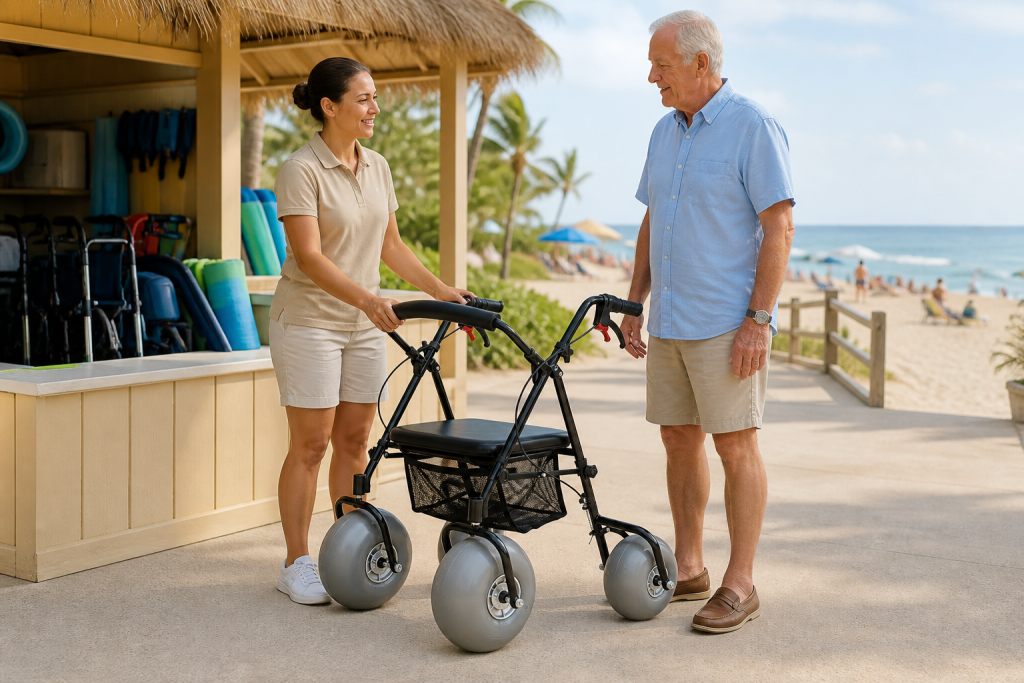
A beach walker rental workflow should move each unit through reservation, inspection, guest briefing, return, cleaning, and fleet reset without skipped steps. Give staff one record for every handoff. Keep instructions short. Escalate damage or route concerns before another rental begins. For U.S. facilities, review official mobility-device guidance alongside local rules and site-specific safety requirements.
A beach walker rental can support a guest’s shoreline plans, but a weak handoff often creates avoidable confusion about fit, brakes, route boundaries, return times, and equipment status. Resort teams need more than a booking calendar. They need a connected workflow that moves from reservation through inspection, guest briefing, return, cleaning, and fleet reset. This guide gives hospitality and rental managers a practical operating framework without making claims about an individual’s suitability for any mobility aid. Staff should follow product instructions, local access rules, resort policy, and qualified advice whenever a guest’s needs or site conditions fall outside routine service.
What should happen before a beach walker rental is confirmed?
A beach walker rental should begin with a clear description of the equipment, intended environment, pickup process, return process, and limits of the service. Reservation staff should avoid deciding whether a product suits a guest from appearance, assumptions, or a brief phone call. They can explain available models, ask what information the guest wants, describe approved use areas, and refer product-specific or clinical questions to the right source. Booking records should reserve an identified unit or product class without marking equipment ready before inspection. The team should also explain that route, weather, and equipment conditions can change. This gives the guest useful planning information while leaving the final checkout decision with trained staff and the approved operating process.
What information belongs in booking notes?
In practice, Keep booking notes operational and respectful. A reservation record can capture contact preferences, requested pickup window, expected companions, communication needs, and questions that staff must answer at handoff. It should not collect unrelated health details or convert a guest’s request into an unsupported suitability judgment. The Beach Walker product page gives teams a shared product reference for early conversations, while the model manual and local rental terms govern actual checkout. If a requested route falls outside the resort’s approved area, reservation staff should flag that issue before arrival and offer the site’s approved alternatives without promising a result.
- Guest name and approved contact method.
- Requested date, pickup window, return window, and equipment class.
- Communication or assistance preferences shared by the guest.
- Planned route or destination for an operational check.
- Questions that trained checkout staff or a product specialist should answer.
How should staff inspect a beach walker before checkout?
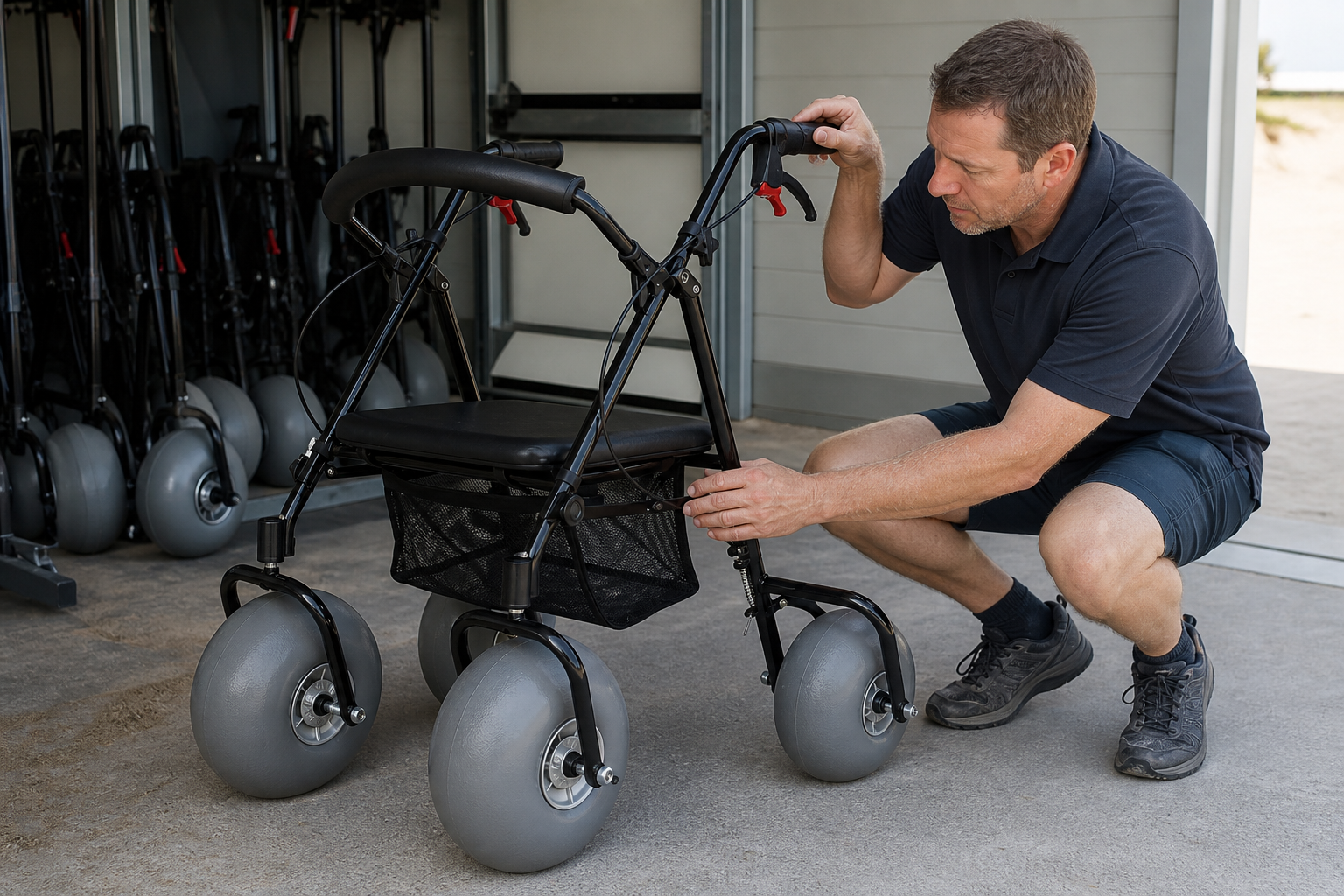
A beach walker rental inspection should compare the actual unit with its approved setup and confirm that frame, folding joints, seat, basket, back support, handles, brakes, cables, wheel attachments, and balloon wheels show no unresolved change. Staff should use a clean, well-lit inspection zone and a model-specific checklist. They can test approved functions exactly as directed without adding force, making unrecorded adjustments, or treating a quick roll across the floor as proof of suitability for every route. A unit should remain unavailable whenever a required part is missing, a brake response differs from the reference, a wheel rubs, a joint feels unfamiliar, or staff cannot close an observation. The record should identify who completed the check and when.
What should a beach walker handoff explain?
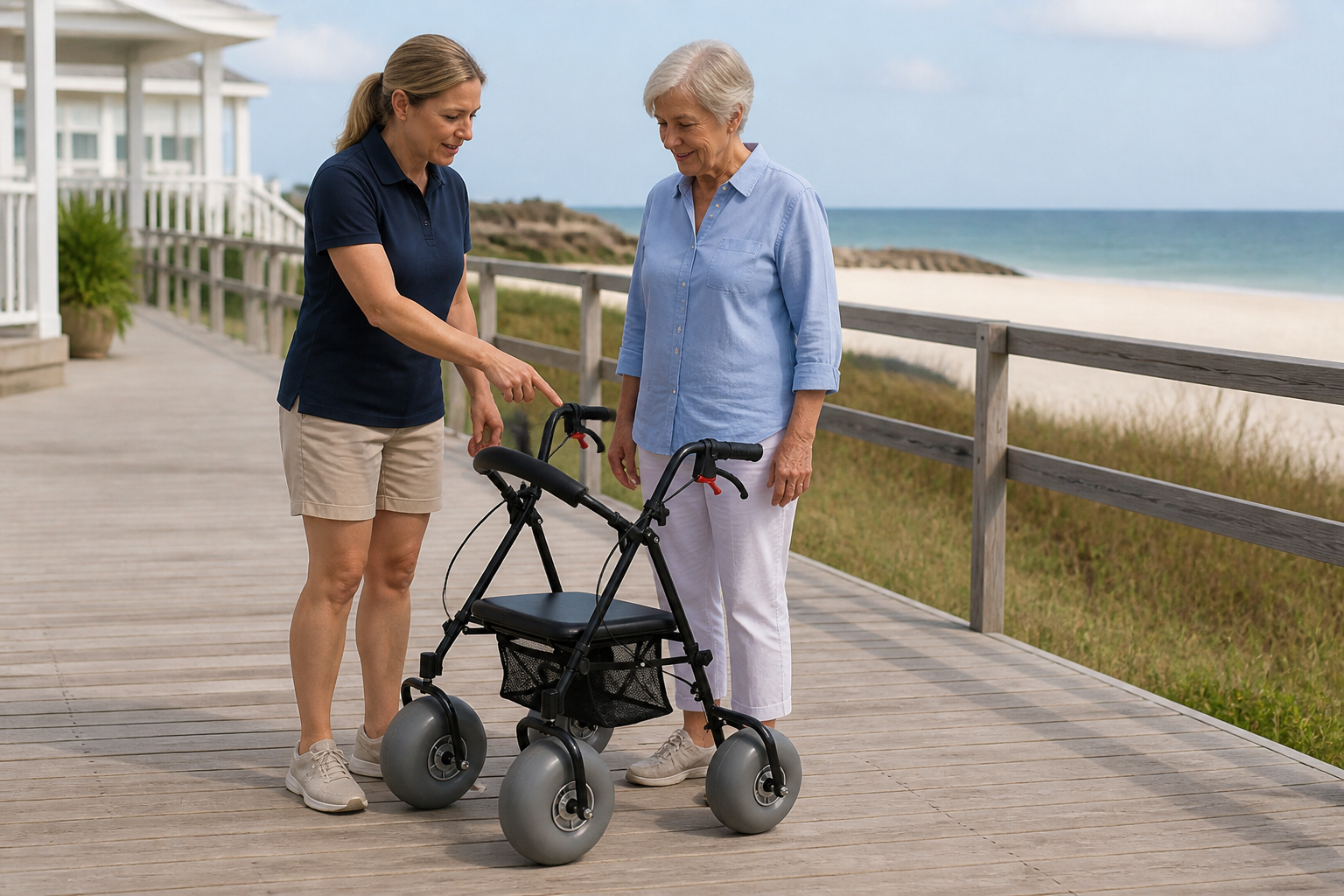
A beach walker rental handoff should explain handles, brakes, seat use, basket limits, folding points, approved route, stop conditions, return process, and how to request help. Staff should speak directly with the guest, demonstrate only manufacturer-approved functions, and invite the guest to repeat or show key steps at their own pace. The handoff should distinguish a beach walker from a standard pavement rollator without promising effortless movement or universal access. Surface firmness, slope, sand depth, crowding, weather, and individual needs can change the experience. The walker-for-sand guide can support staff education about beach contexts, while the live briefing must stay tied to the rented unit and the resort’s approved operating area.
Which points deserve a live demonstration?
Next, Show, pause, then ask for questions. Staff can demonstrate how to hold the grips, apply and release brakes, approach the seat when permitted, keep personal items within the basket’s approved use, and avoid lifting or folding the unit by unapproved points. They should also show the guest where the equipment identifier and support contact appear if the resort uses them. A demonstration should happen on a level approved surface with the walker stationary until the guest chooses to continue. If the guest asks for physical assistance beyond staff training or policy, the employee should pause and use the site’s approved support path rather than improvise.
- Identify handle grips, brake levers, cables, seat, back support, basket, and folding joints.
- Demonstrate approved brake use on a level surface.
- Explain where the walker may travel within the rental program.
- Review stop conditions and the process for requesting assistance.
- Confirm the return location, time window, and out-of-hours procedure.
How should teams plan a route without overpromising?
A beach walker rental route should be described as a current operating plan, not a guarantee that every surface will remain suitable. Staff can review boardwalk access, firm-sand areas, cross-slope, gates, crowded zones, water edges, and any local restrictions before checkout. The all-terrain beach walker overview can help procurement teams compare intended settings, but frontline staff still need live site information. If weather, sand, construction, crowding, or access controls change, the resort should tell the guest promptly and offer an approved route revision, waiting option, or cancellation process. Clear reservation language makes this conversation easier because it sets expectations before arrival without reducing the guest’s choices.
What should happen when a beach walker returns?
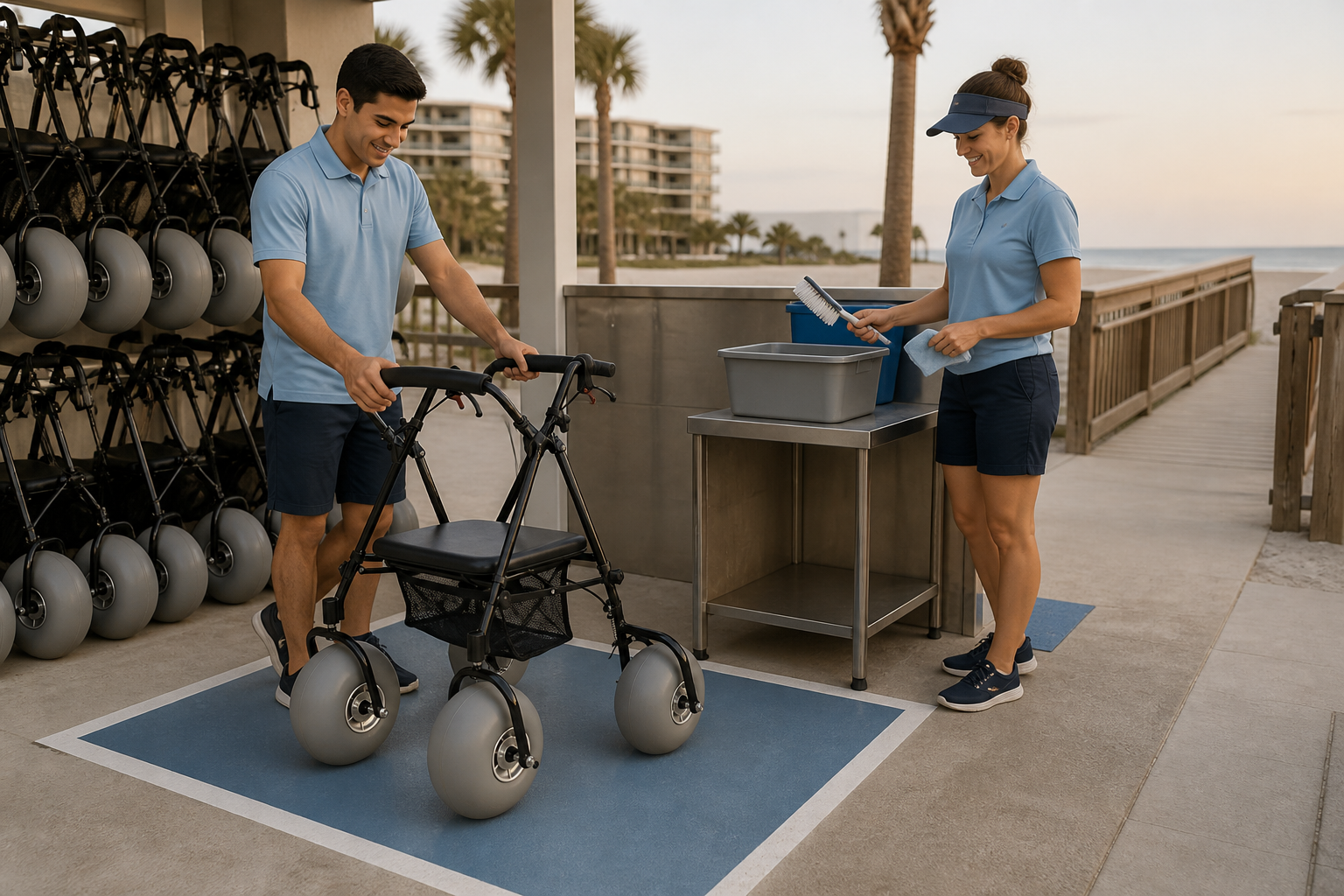
A beach walker rental return should move the unit into a controlled receiving area before it returns to available inventory. Staff can ask whether the guest noticed anything about brakes, wheels, frame, seat, basket, or route use, then record factual comments without drawing a technical diagnosis. The chair should receive the approved sand removal, cleaning, inspection, drying, and status process. Employees should check that the equipment identifier matches the reservation and that no personal items remain in the basket. If a guest reports a concern, staff should thank them, place the unit under review, and route the record to authorized personnel. A queue at the counter should not compress this reset into a visual glance.
How can fleet reset reduce checkout delays?
Meanwhile, A beach walker rental reset can reduce avoidable delays when each unit moves through visible statuses such as reserved, inspection due, ready, checked out, returned, cleaning, drying, under review, or unavailable. Those labels should connect the reservation system with the physical equipment area so staff do not rely on memory or a handwritten note left on another shift. Managers can choose fewer labels if they remain unambiguous. The key point is that a unit becomes ready only after required tasks close. A fleet with spare capacity can handle demand peaks more calmly, but managers should base inventory on their own booking patterns, care process, staffing, and supplier lead times rather than a universal ratio.
How should status move through the workflow?
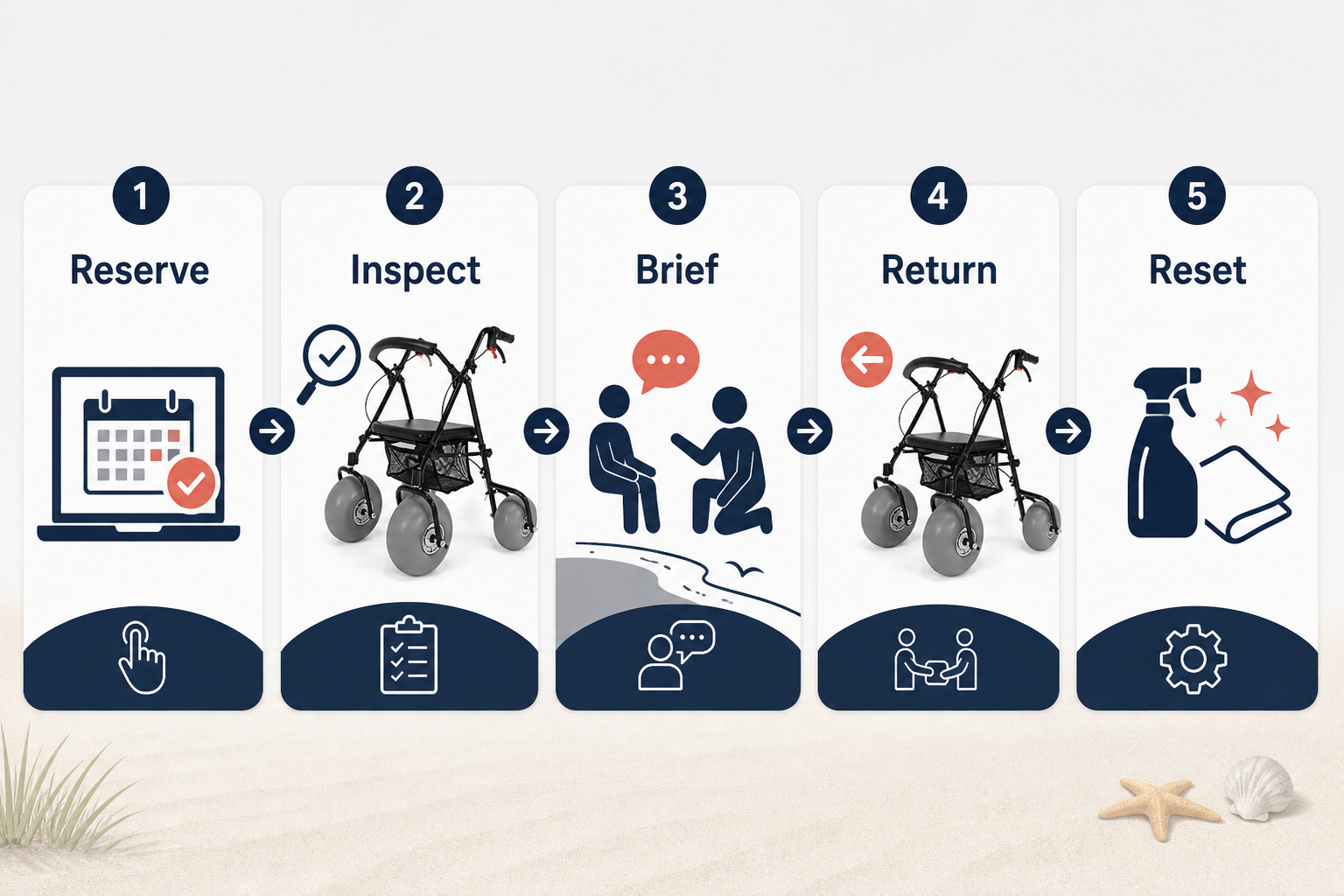
One owner should close each stage. Reservation staff can open the booking, equipment staff can complete inspection, checkout staff can record the briefing, return staff can receive the unit, and a named employee can close cleaning and reset. A small resort may assign all stages to one person, yet the record should still show each task. Exceptions need a direct route: an unavailable unit leaves bookable inventory, a late return alerts the next reservation team, and a route closure triggers guest communication. Managers can review status history for recurring bottlenecks without storing personal detail longer than their policy allows.
- Reserve a unit or approved equipment class without marking it ready early.
- Complete and record inspection before checkout.
- Record that the guest briefing occurred and note unresolved questions.
- Receive the matching unit into the return area.
- Close cleaning, drying, inspection, and ready status before the next booking.
How can staff communicate a delay or service stop?
A beach walker rental delay should be explained with the specific operational fact, the next available option, and a clear point of contact. Staff can say that inspection is still open, a route has closed, a unit returned late, or weather changed the approved operating area. They should not blame a guest, speculate about a defect, or promise a reopening time that no supervisor has approved. Reservation templates can give employees respectful wording and a set of options such as another pickup window, another approved model, a route change, or cancellation under site policy. Prompt communication protects the guest’s planning time and helps staff act consistently during busy periods.
How should a resort manage more than one walker model?
For example, A beach walker rental fleet with several models should use separate product references, checklists, images, parts records, and role training for each design. Similar black frames or balloon wheels do not make two walkers interchangeable. Handle layout, brake controls, folding points, seat instructions, basket use, wheel attachments, and approved environments may differ. Reservation staff can describe the available classes, but checkout staff should confirm the actual unit and use its matching handoff script. A guest who booked one model should be told before any substitution and given product information for the replacement rather than encountering the change at the boardwalk.
Storage and digital records should keep model identity visible from return through reset. Color tags or equipment codes can help, but they need a controlled reference so staff do not rely on memory. Managers should audit forms after adding a model and remove outdated photographs or instructions from active stations. If a mixed fleet shares one cleaning area, each chair still needs its own care requirements. This model-specific approach supports smoother service without implying that a single checklist fits every beach walker.
How can managers prepare seasonal staff for opening day?
A beach walker rental training plan should give seasonal staff supervised practice with reservations, unit identification, inspection, guest briefing, route updates, return intake, cleaning status, and service holds before opening day. A general orientation about hospitality does not replace product work. Managers can assign role permissions based on completed tasks, then post a current contact path for questions that exceed an employee’s role. Staff should practice using the same forms, equipment bay, boardwalk, and status board they will use during service, since small layout details often shape how reliably a workflow runs.
Still, Opening drills can include a late return, failed inspection, route closure, model substitution request, communication preference, or missing booking note. Teams should pause, name the responsible person, choose the approved option, and document what happened. The supervisor can revise unclear wording before real bookings begin. Short refresh drills can follow staff changes or route updates during the season. This keeps the handoff process connected across departments and gives new employees a clear way to stop when they do not have enough information.
What do resort teams ask about beach walker rentals?
A beach walker rental program usually raises questions about suitability, sand, brakes, seating, and failed checks. These concise answers support staff planning, while the model manual, local rules, and qualified guidance control decisions for a specific guest, product, and site.
Q1: Is a beach walker suitable for every guest? No. Staff should share product information and approved-use details without making a personal suitability decision outside their role.
Afterward, Q2: Can guests use the walker on any sand? No. Surface conditions vary, so teams should describe approved areas and current route conditions without promising universal access.
Q3: May a guest sit on the walker? Only as allowed by the product instructions and the resort’s approved handoff procedure.
Q4: What happens if a brake check feels different? Keep the unit unavailable, record the observation, and send it through authorized review.
In practice, Q5: Should returned walkers go straight back to the rack? No. Complete the required receiving, cleaning, inspection, drying, and status steps before reuse.
How can a resort build a dependable rental program?
A beach walker rental program becomes dependable when reservation, equipment, guest service, maintenance, and management use one connected workflow. Train staff on the actual model, keep the approved checklist at the inspection point, and make equipment status visible across shifts. Review route conditions before each operating period, give employees authority to pause a handoff, and keep guest communication specific and respectful. Buyers can compare related mobility products through the Beach Series before defining a fleet mix. If your resort, rental operator, or municipality is planning a beach walker service, contact us today with your site, route, storage, and staffing questions.
Related planning resources: Compare coastal team training, beach walker fundamentals, sand route suitability before approving a sample, staff plan, or service workflow.