
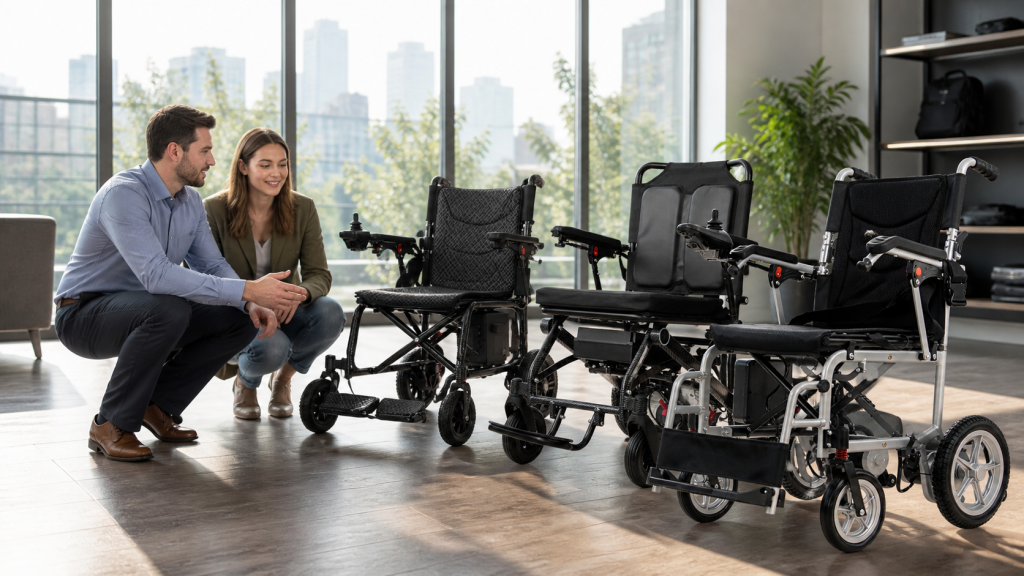
A wheelchair series review should map each model to a clear use case, route, fit requirement, service responsibility, and sample test. Compare actual configurations. Keep model revisions separate. Build the range around buyer decisions rather than a long feature list. For U.S. facilities, align local procedures with official mobility-device guidance.
Buyers can compare the best wheelchair series by matching real customer programs with a clear range map, identical sample checks, documented receiving rules, and a service plan that stays consistent after purchase. A catalog may look broad, yet a distributor can still face overlapping models, unclear product roles, missing option records, or spare-part questions after launch. Those gaps make quotations slower and handovers harder across sales, operations, and service teams.
A useful B2B comparison begins with evidence rather than a long feature list. Buyers should define use settings, record the offered configuration, inspect samples through one repeatable method, and keep open questions visible. This approach helps distributors, mobility providers, and facility buyers build a focused range without making medical promises or treating one showroom test as proof for every user.
What should a wheelchair series comparison start with?
In practice, A wheelchair series comparison should start with named customer programs, route contexts, transport routines, staffing limits, and service expectations before any model enters a shortlist. Product teams often begin with a supplier catalog because it feels concrete. That order can create a range built around available pages rather than buyer needs. Start with situations your commercial team actually encounters: facility deployment, distributor stock, travel-focused retail, rental rotation, or homecare supply. Record questions that each program must answer and mark unknown points for later supplier follow-up.
Map customer programs before choosing models
Here is the clean starting point:
Build one use-case sheet for every customer program. Keep each statement observable and commercial. Describe corridors, storage, handover roles, vehicle context, expected service channel, and purchasing pattern. Avoid turning a buyer brief into a user-fit decision; individual assessment belongs with qualified parties and current product guidance.
- customer type, sales channel, and intended program
- route setting, storage context, and transport routine
- staff roles, handover scope, and issue ownership
- service route, document language, and open questions
Next, Give each requirement a source and owner. A distributor request, facility route survey, staff interview, or service record may support different fields. If two programs need different chair roles, keep those differences visible. A strong brief lets buyers reject a model for this range without calling that model poor in every context.
Key Takeaway: A buyer-led range begins with real programs and documented boundaries rather than catalog volume.
How should buyers build a wheelchair series range map?
A wheelchair series range map should assign every model a clear role, evidence set, option record, and boundary so buyers can spot gaps and unnecessary overlap. Begin with broad commercial categories such as lightweight folding, general folding, supportive seating, or specialized facility use. Then connect each category with exact offered configurations. The lightweight electric wheelchair page can frame one category, while the sample, quotation, manual, and option sheet must define the offered unit.
Separate product roles with comparable fields
Meanwhile, The practical move comes next:
Use identical columns for every model. Record frame format, folded state, controller position, seating arrangement, wheel layout, supplied accessories, document set, service contact, and revision date. Keep claims out unless a current source supports them. A blank field provides more value than a guess copied from a neighboring model.
- model identity, revision, and approved configuration
- intended range role and customer program match
- visible structure, supplied options, and source documents
- overlap, missing evidence, and accountable owner
Review the map with sales, service, purchasing, and operations. Sales may spot duplicate offers. Service may notice parts or instructions that split support across too many systems. Purchasing may identify weak quotation control. Operations may see receiving or storage differences. The range map becomes a shared decision record rather than a marketing grid.
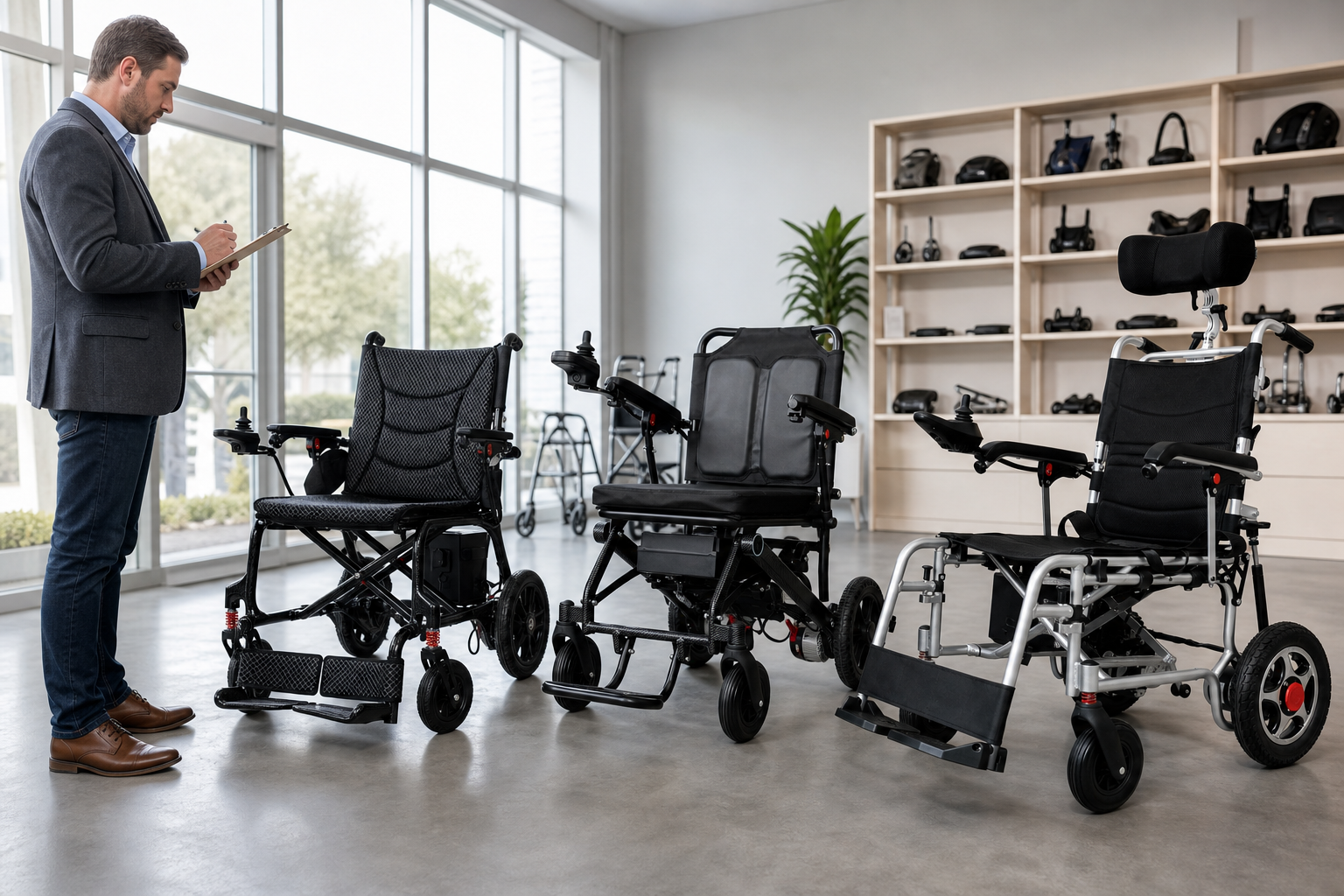
For example, A range review works best when product roles, physical formats, and source records remain visible together.
Key Takeaway: Comparable fields reveal product gaps and overlap without forcing unsupported claims.
Which sample checks make a wheelchair series easier to compare?
A wheelchair series becomes easier to compare when every sample receives the same identity check, visual inspection, setup review, route observation, folding review, and document audit. A loose showroom conversation usually favors whichever chair receives more attention. A fixed review method gives each sample the same chance and makes notes usable after people leave the room.
Run one repeatable review across every sample
Still, This is where consistency pays off:
Photograph each sample from the same useful angles. Record controller side, armrest relationship, seat and backrest format, foot support arrangement, caster and rear-wheel context, battery enclosure position, labels, supplied items, and visible differences from quotation documents. Do not open protected assemblies or adjust unfamiliar parts outside current instructions.
- exact sample identity and delivered option set
- visible condition, supplied parts, and document match
- permitted setup, controlled route, and folding observations
- difference log, owner, status, and decision impact
Use neutral language. Write “left armrest pad differs from approved image” rather than “armrest feels wrong.” Write “folding instruction not supplied” rather than “chair folds easily.” Neutral notes support supplier questions and keep one person’s impression from becoming a universal statement.
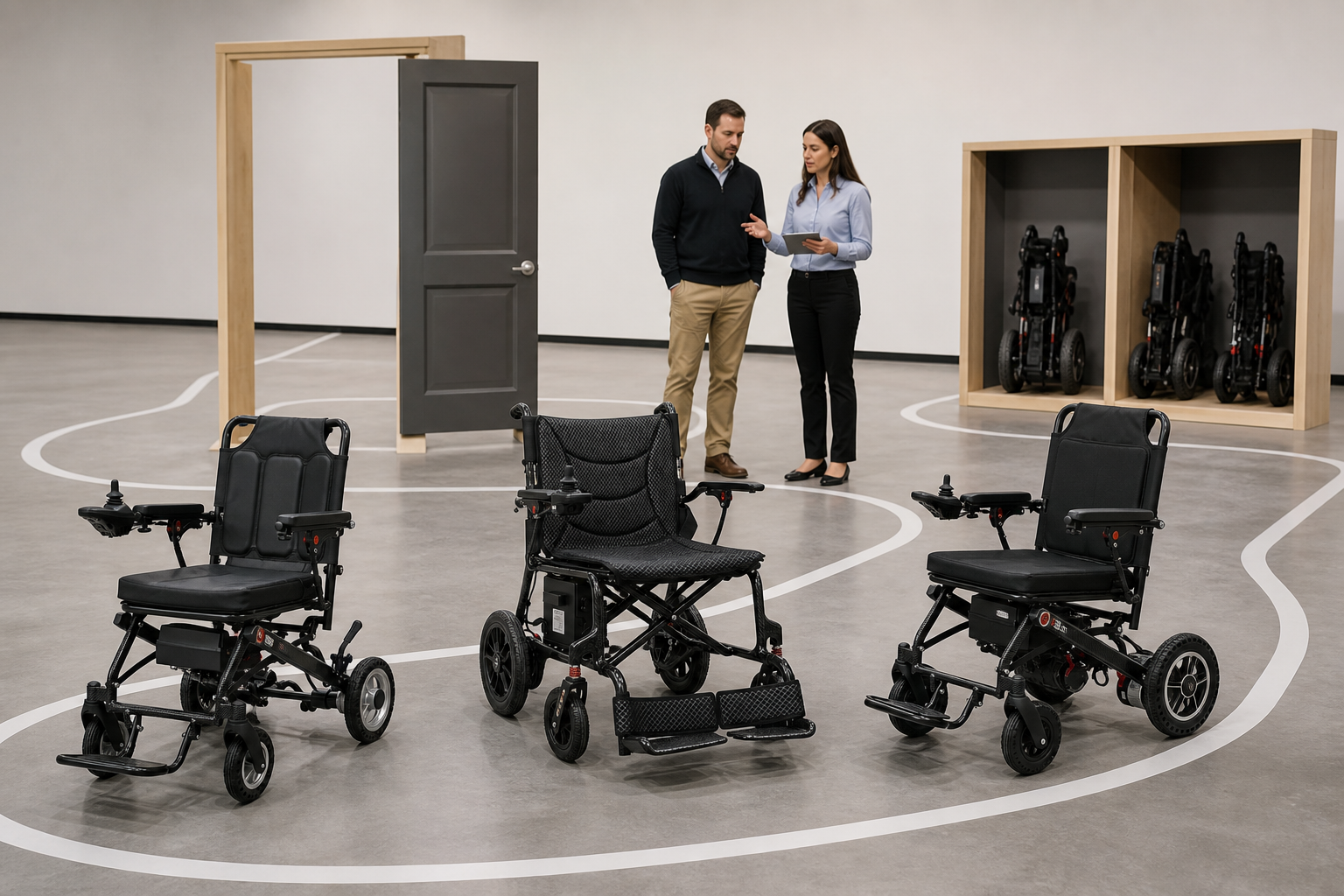
Afterward, A shared route and common observation form make sample differences easier to discuss across teams.
Key Takeaway: One sample method creates fair comparisons and clearer supplier follow-up.
How should folded handling shape a wheelchair series plan?
Folded handling should shape a wheelchair series plan through observed folding steps, protected control positions, grip points, storage context, and staff roles rather than a broad portability label. A chair may fold into a compact form yet still require careful controller protection, a defined lifting method, or a different vehicle routine. The ultra-light electric wheelchair page can prompt handling questions, but the exact offered model’s instructions must govern real work.
Observe the complete handling sequence
In practice, Watch the whole sequence, not one photo:
Record preparation, shutdown, accessory handling, permitted folding action, latch check, controller position, movement toward storage, reopening, and post-handling inspection. Ask the people who will perform these tasks to observe under qualified guidance. Keep manual handling policies and individual role limits in scope.
- preparation, shutdown, and removable-item control
- permitted folding points, latch state, and controller protection
- storage or cargo context without unsupported fit claims
- reopening, visual check, and issue-report route
Do not turn a successful sample demonstration into a promise for every vehicle or staff member. Capture the real context and unresolved questions. If a buyer needs a fit decision, record relevant dimensions from verified sources and compare them through the buyer’s own approved method.

Next, Folded handling evidence should cover preparation, protection, storage context, and reopening checks.
Key Takeaway: Portability becomes useful when teams document the complete handling routine and its limits.
What records should receiving teams repeat for a wheelchair series?
Receiving teams should repeat wheelchair series identity, configuration, visible condition, supplied items, document revision, and approved differences before releasing stock. A range decision can be sound while later deliveries drift from the reviewed sample. Receiving control protects the decision by comparing arrived units with a clear baseline.
Connect each arrival with the approved sample
Meanwhile, The receiving file should answer one question:
Did this unit arrive as the configuration buyers approved? Check model identity, frame finish, seating parts, controller side, wheel arrangement, foot supports, supplied accessories, packaging condition, and current documents. Photograph differences and assign each one a status before stock moves into sale, demonstration, or facility use.
- approved sample record and purchase configuration
- arrived identity, visible condition, and supplied items
- document revision, option match, and difference log
- hold rule, decision owner, closure, and release record
Separate cosmetic observations, configuration differences, missing documents, and transport damage so the correct owner can respond. Avoid silent substitutions. Even a workable difference may affect product pages, training materials, spare parts, or customer expectations.
For example, Key Takeaway: Receiving control keeps the approved range connected with the units that actually arrive.
How should service planning influence a wheelchair series?
Service planning should influence a wheelchair series through shared parts families, clear maintenance boundaries, current manuals, issue routing, and revision support. A product range can look attractive during sourcing yet become awkward when each model uses unrelated controls, cushions, casters, fasteners, or service documents. Buyers do not need identical parts across every chair, but they need a support picture they can explain and maintain.
Compare support work beside product features
Here is the service-side reality:
Still, Ask suppliers to identify current manuals, routine check scope, authorized service tasks, replaceable assemblies, part naming, warranty process, revision notices, and support contacts. Keep each answer tied to exact models and options. Do not infer compatibility because parts look alike.
- instruction and maintenance source for each configuration
- routine observation, service boundary, and escalation route
- part identity, compatibility source, and stock approach
- warranty channel, revision notice, and closure record
Review service effort alongside commercial range value. A niche model may still deserve a place when its role is clear and support is defined. A high-volume model may need more work if documents, parts, or ownership remain vague. The decision should show both product role and support load.
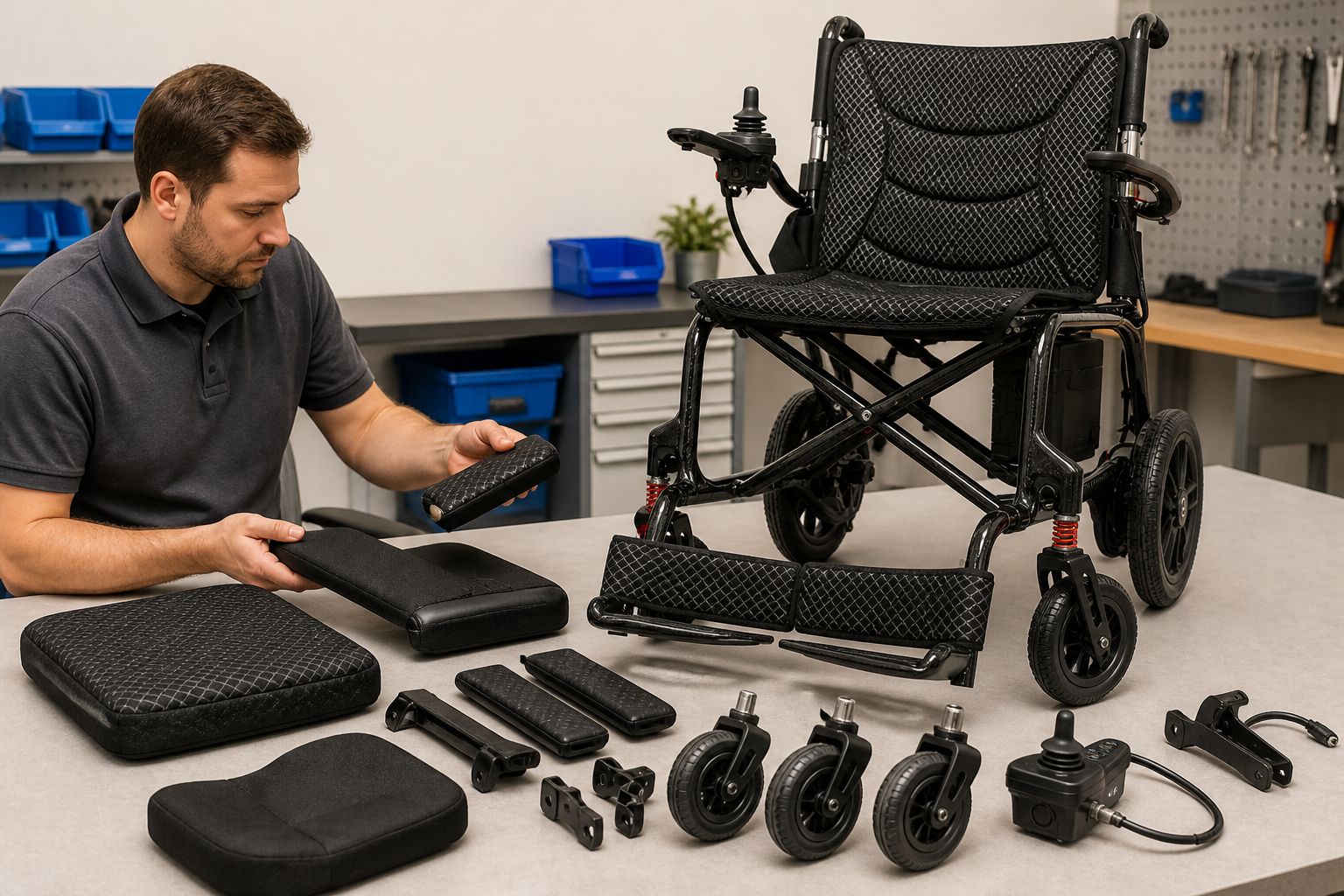
Service planning connects product roles with parts identity, document control, and issue ownership.
Afterward, Key Takeaway: Range quality depends on support clarity after purchase, not only showroom appeal.
How can buyers turn comparison results into a supplier brief?
Buyers can turn wheelchair series comparison results into a supplier brief by listing exact models, approved options, required sources, sample findings, open gaps, receiving rules, and change-control expectations. A vague request for the “best range” invites inconsistent proposals. A decision-ready brief gives every supplier the same questions and keeps commercial terms separate from technical evidence.
Write one brief that teams can reuse
The strongest request stays specific:
In practice, Create a line for every required chair role and configuration. Attach the range map, sample observation form, image references, source list, receiving checklist, and service questions. Ask suppliers to identify document revision and response owner. Mark statements that require verification instead of accepting generic reassurance.
- target role, configuration, quantity context, and option list
- required manual, image, part, and service sources
- sample gap, receiving rule, and acceptance owner
- change notice, response deadline, and revision history
Use the same brief during quotation review and final approval. If a supplier proposes a substitute, reopen affected range, sample, receiving, and service checks. Preserve earlier responses so later teams can see why a decision changed.
Add a version date and named editor whenever the brief changes. Send the revised file to every internal owner who relies on it. A controlled copy prevents an older option list or sample note from guiding a new quotation. It also gives receiving staff a clear point of comparison when products arrive months after approval.
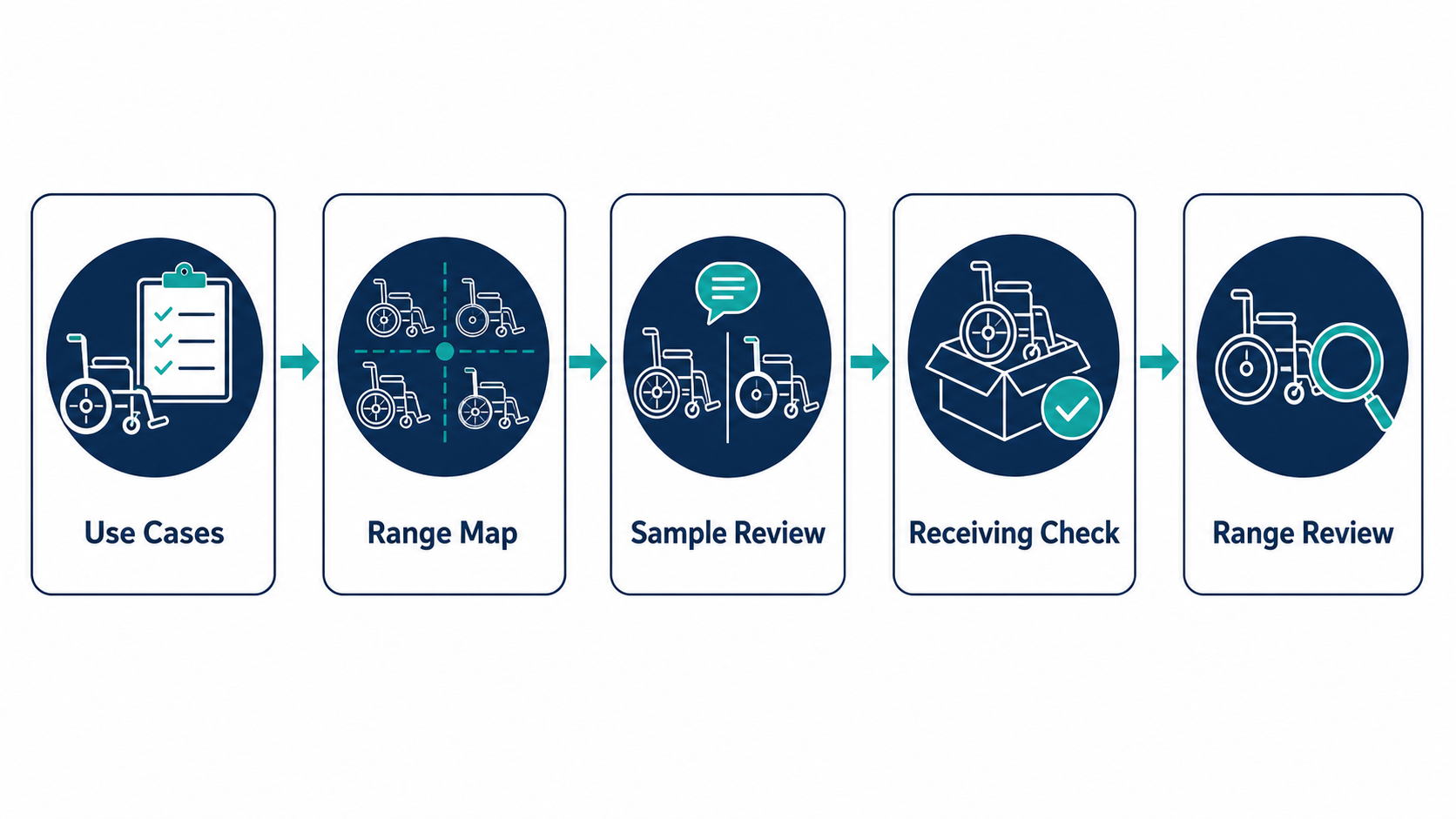
Next, The workflow links use cases, range mapping, sample review, receiving, and later range review.
Close the project with a shared decision meeting across purchasing, sales, service, and operations. Record approved models, rejected options, open items, accountable owners, and the next review point. A focused range should be easier to quote, receive, explain, and support. For a model-specific range discussion or source request, contact us today.
Key Takeaway: A reusable supplier brief turns comparison evidence into controlled purchasing and support work.
What FAQs do buyers ask about a wheelchair series?
Meanwhile, A wheelchair series FAQ should clarify range size, sample needs, folded handling, service overlap, and review timing without replacing model-specific guidance.
Can I build a wheelchair series from catalog pages alone?
No. Catalog pages can support early screening, yet buyers still need exact configurations, current sources, sample evidence, receiving rules, and service ownership.
For example, What’s the best number of models for a distributor range?
There is no universal number. Keep enough clearly separated roles to serve real programs while avoiding overlap that sales and service teams cannot explain.
How do I know if two models overlap too much?
Still, Compare their customer programs, structure, options, handling, documents, and support needs. If teams cannot state a distinct role, investigate whether both belong.
Can one sample prove every delivered unit will match?
No. A sample creates a baseline. Receiving teams must compare later units with that baseline and close differences before release.
Afterward, What should trigger a range review?
A configuration change, recurring receiving gap, new customer program, document revision, service pattern, or weak commercial fit should reopen affected decisions.
Related planning resources: Review adult wheelchair fit, travel wheelchair specifications, folding wheelchair comparison, wheelchair fleet management before approving a product, sample, route, or supplier decision.