
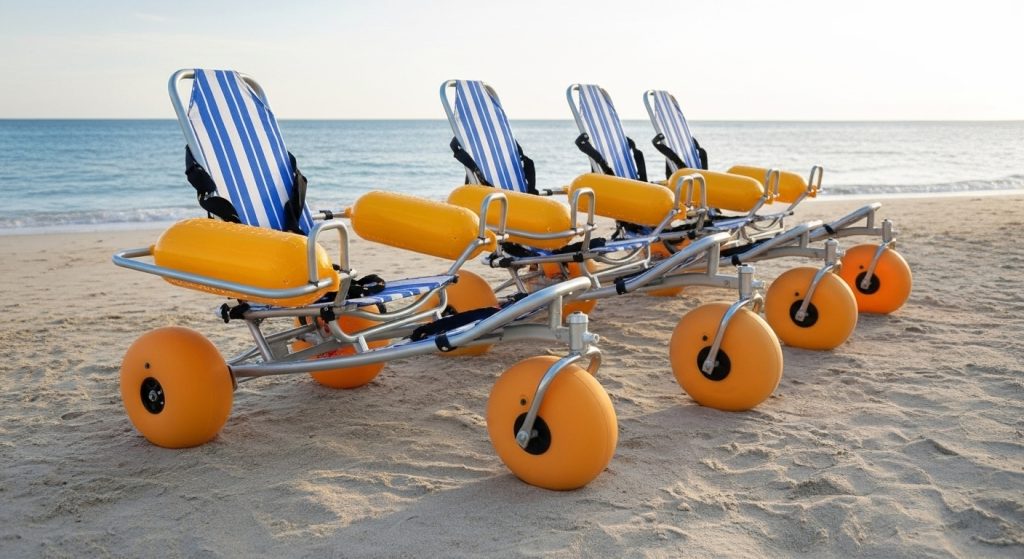
Also, Beach wheelchair accessibility requires a connected service from arrival to return. Equipment alone cannot solve inaccessible parking, missing route information, steep transitions, unsuitable transfer points, unavailable staff, poor maintenance, or unclear reservations. Plan each link and publish only what the site can deliver.
Then, ADA mobility-device guidance provides policy context. The California Coastal Commission directory illustrates how destinations publish chair availability and local arrangements. Operators still need qualified local advice and current site records.
What Does Beach Wheelchair Accessibility Include?
However, It includes information, parking, arrival, paths, boardwalks, mats, transitions, transfer points, equipment, staff, toilets, shoreline limits, return, and issue response.
For example, Think end to end. Use the beach access guide.
- Map the complete journey.
- Identify service owners.
- Record inaccessible gaps.
| Journey stage | Evidence |
|---|---|
| Arrival | Parking and route |
| Beach | Surface and equipment |
| Return | Handoff and support |
Meanwhile, Key Takeaway: Accessibility fails when one link is missing.
How Should Arrival and Parking Be Reviewed?
Instead, Confirm accessible parking, drop-off, public transport, curb transitions, path width, slopes, gates, and distance to the equipment handoff.
As a result, Start before the sand. Publish current directions and contacts.
- Measure clear route.
- Mark obstacles.
- Provide an alternative contact.
| Arrival item | Check |
|---|---|
| Parking | Current availability |
| Path | Clear and continuous |
| Gate | Usable opening |
Also, Key Takeaway: Beach access starts at arrival.
What Route Evidence Is Needed?
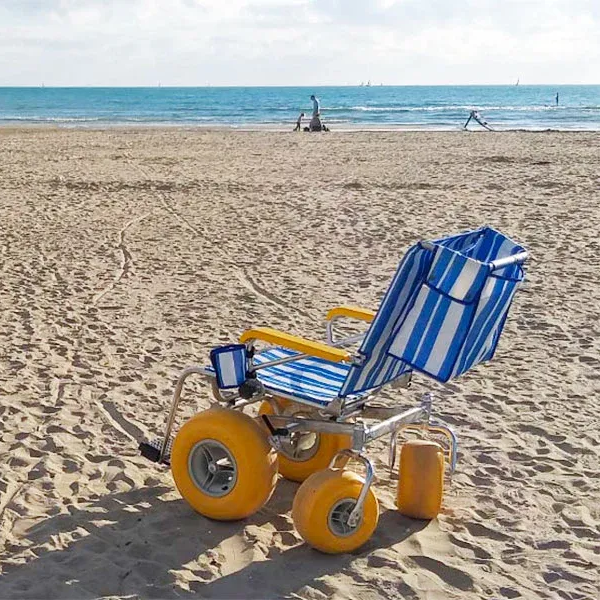
Then, Record boardwalks, mats, sand, gravel, grass, turns, rest areas, gradients, water edges, changing conditions, and staff limits.
However, Inspect the real route. Use the route planning guide.
- Map surface changes.
- Record conditions.
- Review closures.
| Route area | Evidence |
|---|---|
| Firm path | Width and continuity |
| Soft surface | Controlled trial |
| Shoreline | Local operating limit |
For example, Key Takeaway: Route claims need current site evidence.
How Should Transfer Points Be Planned?
Meanwhile, Choose stable, private where appropriate, spacious locations and use suitable equipment and trained support based on individual assessment. Avoid prescribing a universal transfer method.
Instead, Plan the location and support. Keep transfer boundaries in public information.
- Identify suitable space.
- Use qualified support.
- Keep emergency contacts.
| Transfer item | Question |
|---|---|
| Location | Stable and clear? |
| Support | Available and trained? |
| Privacy | Appropriate for the guest? |
As a result, Key Takeaway: Transfer access needs individual planning.
Which Beach Wheelchair Type Fits the Service?
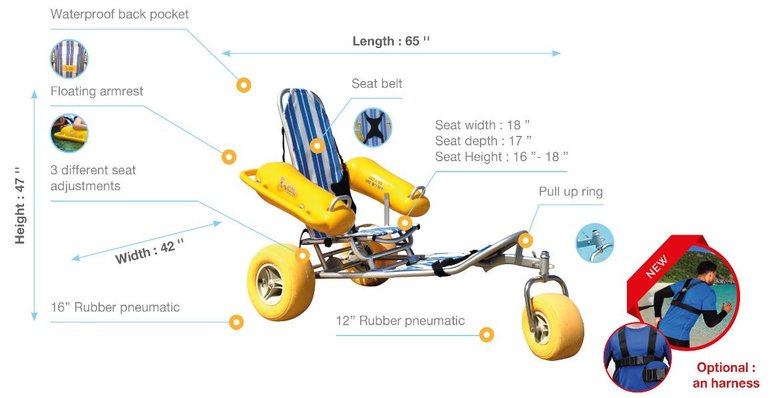
Also, All-terrain, floating, lightweight, and walker-style products serve different tasks. Match the model to the verified route, user needs, staff plan, cleaning, storage, and supplier support.
Then, Do not mix product types. Use the product-type comparison and beach range.
- Define intended task.
- Trial the exact model.
- State water-use limits.
| Product type | Review focus |
|---|---|
| All-terrain chair | Route and handling |
| Floating chair | Approved water service |
| Walker | Walking support and route |
However, Key Takeaway: The service brief should select the product type.
How Does Staff Support Affect Accessibility?
For example, Staff handle reservations, inspection, setup, route information, guest briefing, return, cleaning, and issue response. Coverage gaps should be visible before booking.
Meanwhile, Assign every task. Use the handoff plan.
- Name staff roles.
- Train repeatable steps.
- Provide escalation contacts.
| Role | Responsibility |
|---|---|
| Booking | Current information |
| Handoff | Setup and limits |
| Return | Condition and care |
Instead, Key Takeaway: Staff planning turns access equipment into a dependable service.
What Information Should Be Published?
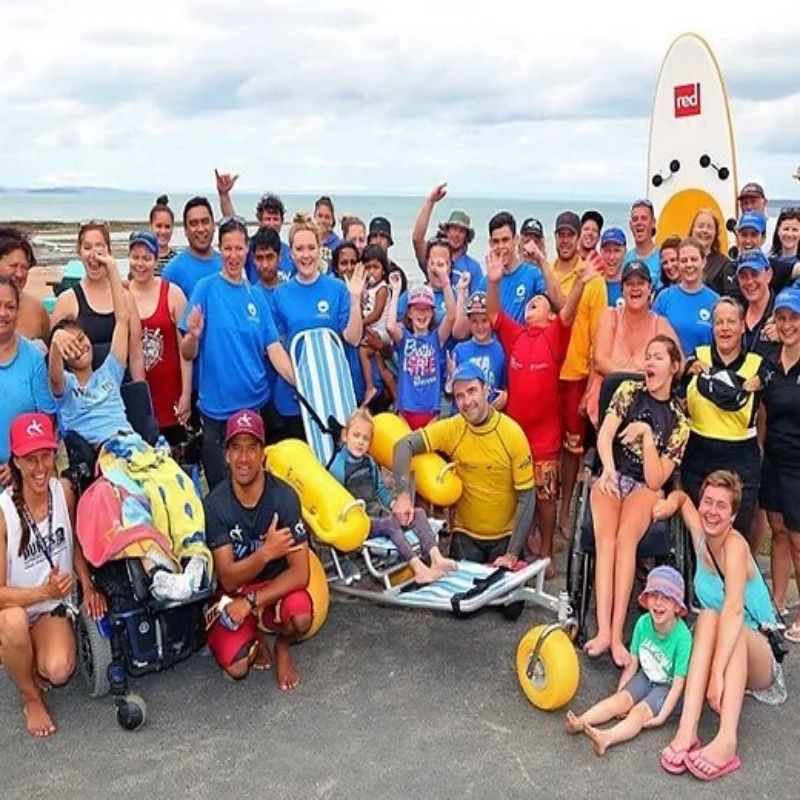
As a result, Publish reservation method, eligibility or service rules where lawful, available equipment, pickup, parking, route, facilities, staff support, service hours, closures, return, and contacts.
Also, Keep information current. Date important accessibility updates.
- Use plain language.
- Offer contact alternatives.
- Remove outdated claims.
| Information | Update owner |
|---|---|
| Availability | Equipment team |
| Route | Site operations |
| Reservation | Guest service |
Then, Key Takeaway: Accurate information is part of accessibility.
How Do Maintenance and Storage Support Access?
However, A chair unavailable from poor inspection, cleaning, drying, parts, or storage does not provide access. Follow current instructions and keep service records.
For example, Protect availability. Use the care guide and storage plan.
- Inspect after use.
- Dry before storage.
- Track parts and repairs.
| Record | Access effect |
|---|---|
| Inspection | Finds concerns |
| Downtime | Shows unavailable service |
| Parts | Supports repair |
Meanwhile, Key Takeaway: Maintenance is an accessibility operation.
How Should Accessibility Performance Be Reviewed?
Instead, Review completed requests, unmet requests, route failures, unavailable equipment, staff coverage, maintenance downtime, incidents, and feedback. Do not rely on a single success story.
As a result, Measure gaps as well as success. Assign actions and review dates.
- Track unmet demand.
- Record causes.
- Close corrective actions.
| Measure | Question |
|---|---|
| Request | Was service delivered? |
| Failure | What blocked access? |
| Action | Was it resolved? |
Also, Key Takeaway: Accessibility improves through evidence and follow-up.
What Is the Best Beach Wheelchair Accessibility Plan?
Then, Connect policy, arrival, route, transfer, equipment, staff, information, maintenance, review, and alternative service. Preserve the original featured image.
However, Build one accountable plan. Use the procurement guide when adding equipment.
- Name every owner.
- Date every source.
- Publish only verified service.
| Plan area | Pass condition |
|---|---|
| Route | Verified |
| Equipment | Available |
| Support | Accountable |
For example, Key Takeaway: A connected plan is stronger than an equipment-only claim.
Does owning a beach wheelchair make a beach accessible?
Meanwhile, No. Arrival, route, transfer, information, staff, facilities, and maintenance also matter.
Should accessibility information be dated?
Instead, Yes. Availability and routes can change.
Can all-terrain and floating chairs be treated the same?
As a result, No. They serve different tasks and require different service rules.
What should be measured?
Also, Track delivered and unmet requests, route issues, downtime, incidents, and feedback.
Will the main image change?
Then, No. The original featured image remains.