

A travel electric wheelchair specification should connect route needs, fit, folding, vehicle loading, battery records, service support, and handover steps to the exact model. Measure before ordering. Keep current product documents. Confirm transport requirements for every trip. For air travel, review current IATA passenger guidance and confirm requirements directly with each airline before booking.
A travel electric wheelchair becomes easy to specify when buyers connect route conditions, chair structure, handling tasks, power records, and staff handover in one written brief. A catalog image cannot show how a sample moves through a hotel doorway, how its folded shape fits a storage plan, or which documents accompany a trip. That gap creates vague requests, uneven quotations, and rushed staff training.
A stronger method starts with observable tasks, records every sample setup, and sends suppliers the same questions. This guide gives distributors, hospitality groups, travel operators, and institutional buyers a practical review sequence. It avoids broad promises and keeps each decision tied to a real route, an exact chair, a named reviewer, and a dated source.
What should a travel specification define?
In practice, A travel electric wheelchair specification should define users, routes, handling roles, storage points, trip frequency, and the records buyers expect from a supplier.
Begin with a short operating profile rather than a feature wish list. Name who uses the chair, who may assist, where trips begin, which doorways or lifts matter, and how equipment moves between storage and service. The wheelchair series can frame a model shortlist, while the operating profile keeps every comparison tied to real work. Separate confirmed facts from open questions so a sales claim never becomes an unstated requirement.
Give each route and handling step an owner. Record floor type, ordinary turns, loading points, approved helpers, and the chair setup used during review. Note whether the cushion, controller, footplate, battery housing, and any permitted accessories were present. This record lets purchasing, training, and service teams discuss the same sample without relying on memory or a staged photo.
Start with routes and handling tasks
Next, Here is the practical starting point:
Walk through one planned trip before scoring products. Follow the path from storage through preparation, doorway movement, transport handoff, destination use, and return inspection. Ask staff where pauses occur, which parts receive protection, and where a manual or service contact must be available. Keep personal mobility judgments with qualified professionals whenever a user needs individual clinical input.
- named user and helper roles
- route and storage checkpoints
- chair setup used for review
- open questions with owners
A useful brief describes what the buying team can observe and repeat. It does not label a chair trip-ready merely because it folds or looks compact. If a route changes, create a new entry instead of overwriting the earlier one. That simple history gives suppliers cleaner questions and gives internal teams a traceable basis for later training.
Meanwhile, Key Takeaway: A shared operating profile turns a broad travel request into a testable sourcing brief.
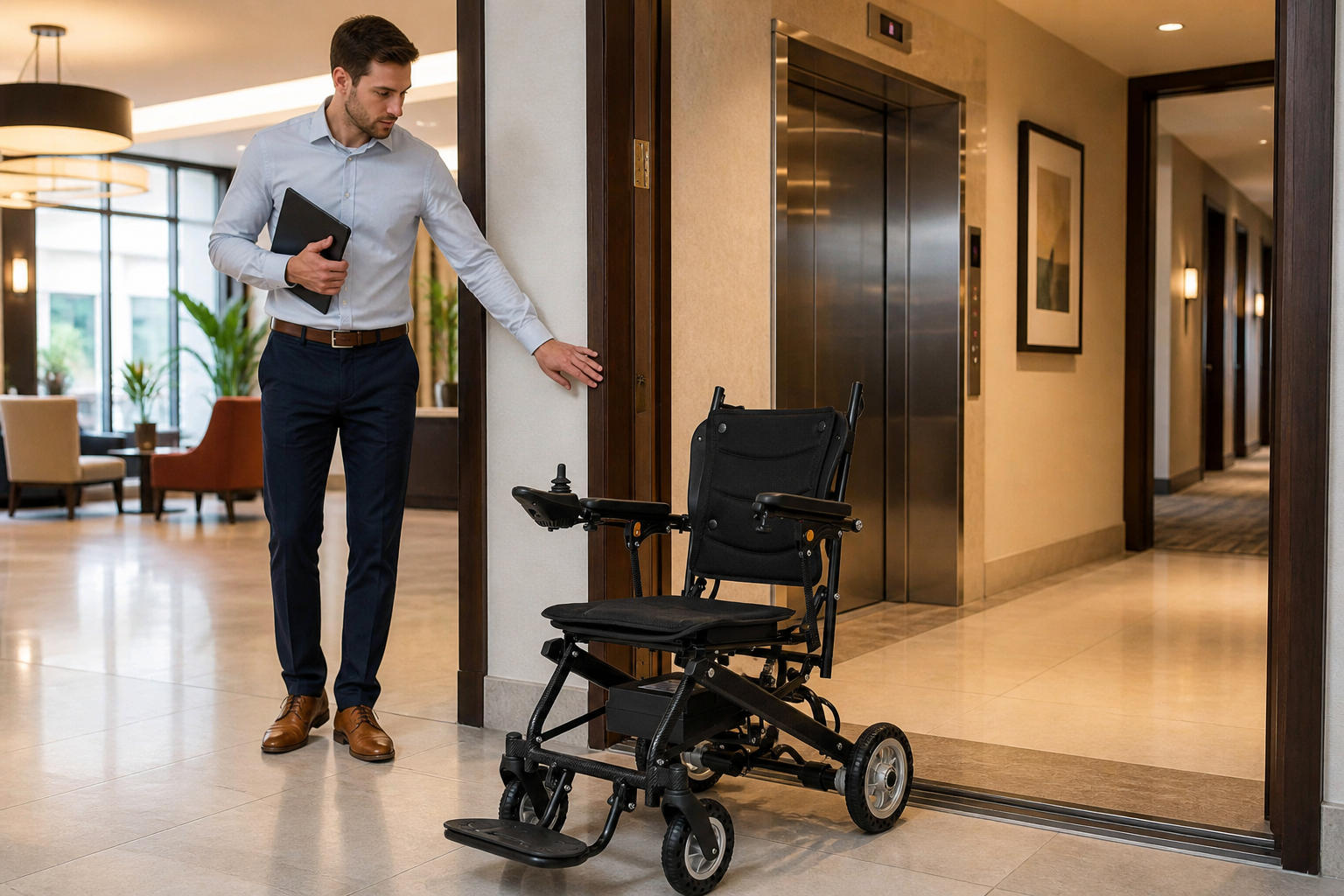
How should buyers review folding and transport steps?
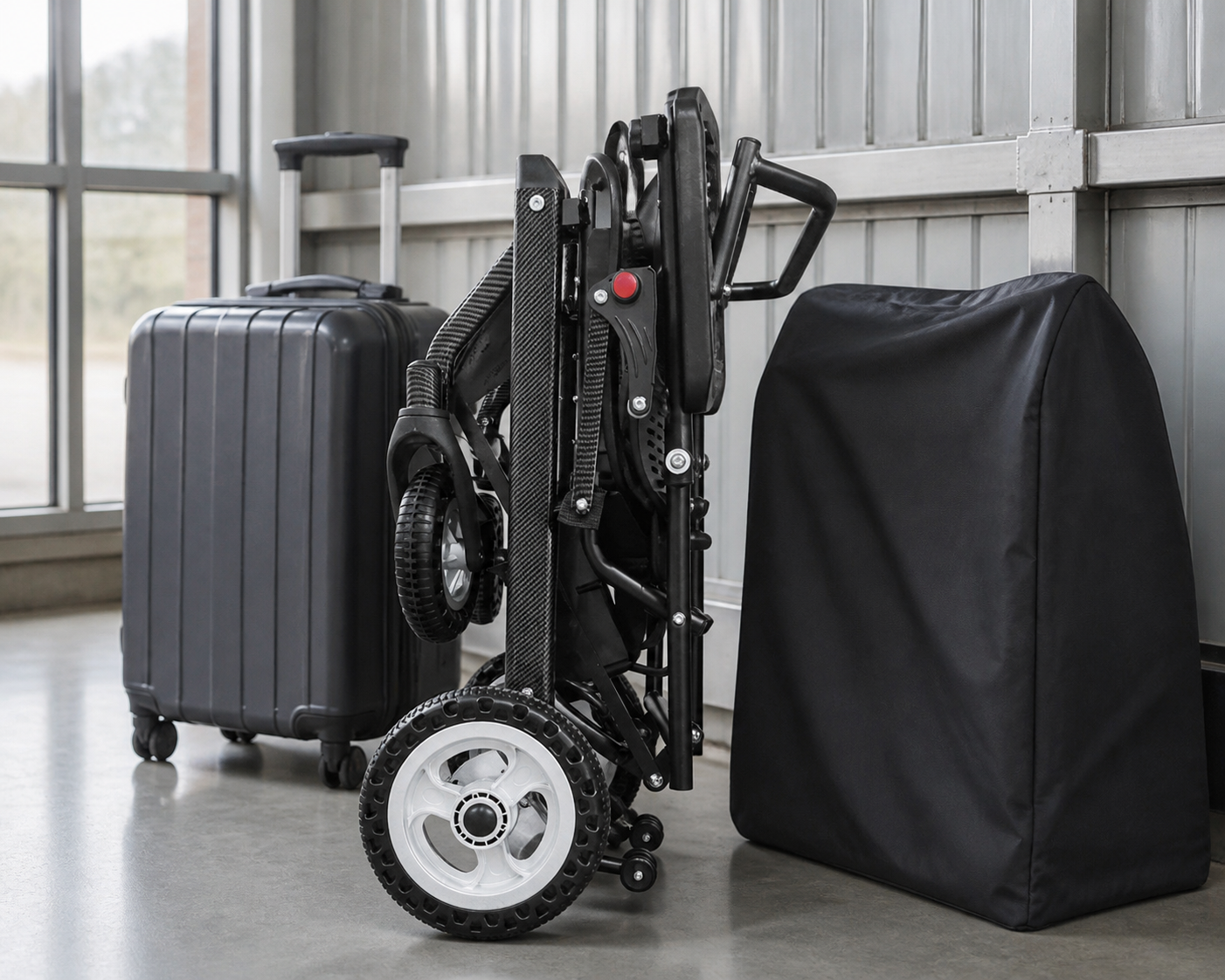
A travel electric wheelchair should be reviewed through its complete folding sequence, permitted handholds, loose parts, balance, protective steps, and planned storage position.
Folding speed alone says little about day-to-day handling. Buyers need the model manual, the exact sample configuration, and a supervised trial with the people expected to move it. An ultra-light product page may offer another context, yet a buyer should still confirm what stays attached, what may be removed, and how each component receives protection during a handoff.
For example, Document the power-off step, controller protection, backrest movement, footplate position, cable clearance, and resting orientation. Record the stated product weight only with a note explaining included parts. Staff should follow workplace policy, personal capability, and approved lifting aids. A low number does not grant permission for one person to lift a product.
Observe each handling handoff
Watch what happens between steps:
Run the movement from an open chair to its folded storage position, then reverse it. One reviewer performs the sequence while another records hand placement, pauses, part removal, pinch areas, and points needing protection. Repeat under the same conditions. If staff use a cover, trolley, ramp, or helper, include that item in the written method rather than treating it as background detail.
- power-off and fold sequence
- permitted grips and helper roles
- protected controller and cables
- folded resting position
Still, A successful trial belongs to that sample, vehicle, doorway, and team. Do not extend it to every trip or worker. Save photos of approved stages, link them with the manual section, and leave any unclear step open for supplier reply. This creates a usable handover record without turning one demonstration into a broad product claim.
Key Takeaway: Handling becomes comparable when every fold, grip, helper, and storage step appears in one record.
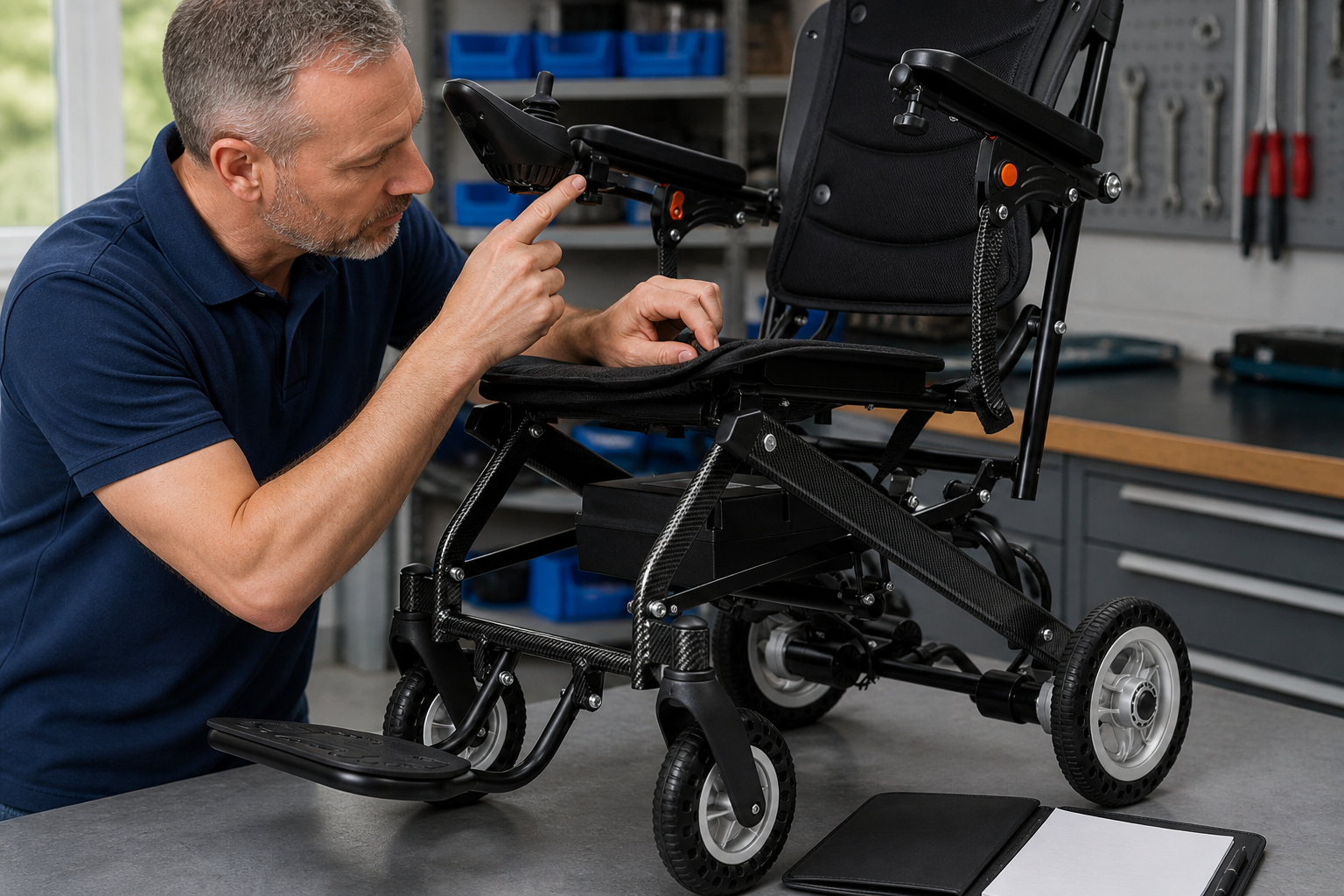
Which control and power records deserve attention?
A travel electric wheelchair needs model-specific records for the joystick, cables, power isolation, charging access, battery identification, and fault-report route.
Afterward, Travel planning often brings extra questions about batteries and carrier rules. Buyers should separate product documents from operator or carrier decisions. The airline battery article can help teams organize questions, but the carrier, trip, current rules, and exact battery record control each case. Never replace written confirmation with a badge, an old screenshot, or a general statement.
With power off, inspect joystick mounting, cable routing, connectors visible under normal service access, and the battery housing. Record label details only as identifiers. Ask for the current manual, charging instructions, isolation steps, storage guidance, and a named support route. Keep travel documents beside the product file with dates and sources.
Separate travel documents from product claims
This distinction prevents confusion:
In practice, Create two linked records. One covers chair controls, charging, battery identity, and supplier instructions. Another covers the planned carrier, route, operator contact, and current acceptance process. Staff can then update a trip file without changing the product record. If a battery, controller, or chair revision changes, open a new entry and repeat affected checks.
- joystick and cable inspection
- battery identity and manual source
- charging and isolation steps
- dated carrier confirmation
A reviewer should be able to see which statement came from the manufacturer, which came from a carrier, and which came from a local observation. Store copies with clear dates and avoid paraphrasing technical language beyond what the source supports. That discipline helps teams spot expired guidance before a booking or delivery becomes difficult.
Key Takeaway: Separate product facts from trip permissions so each record can be checked and updated on its own.
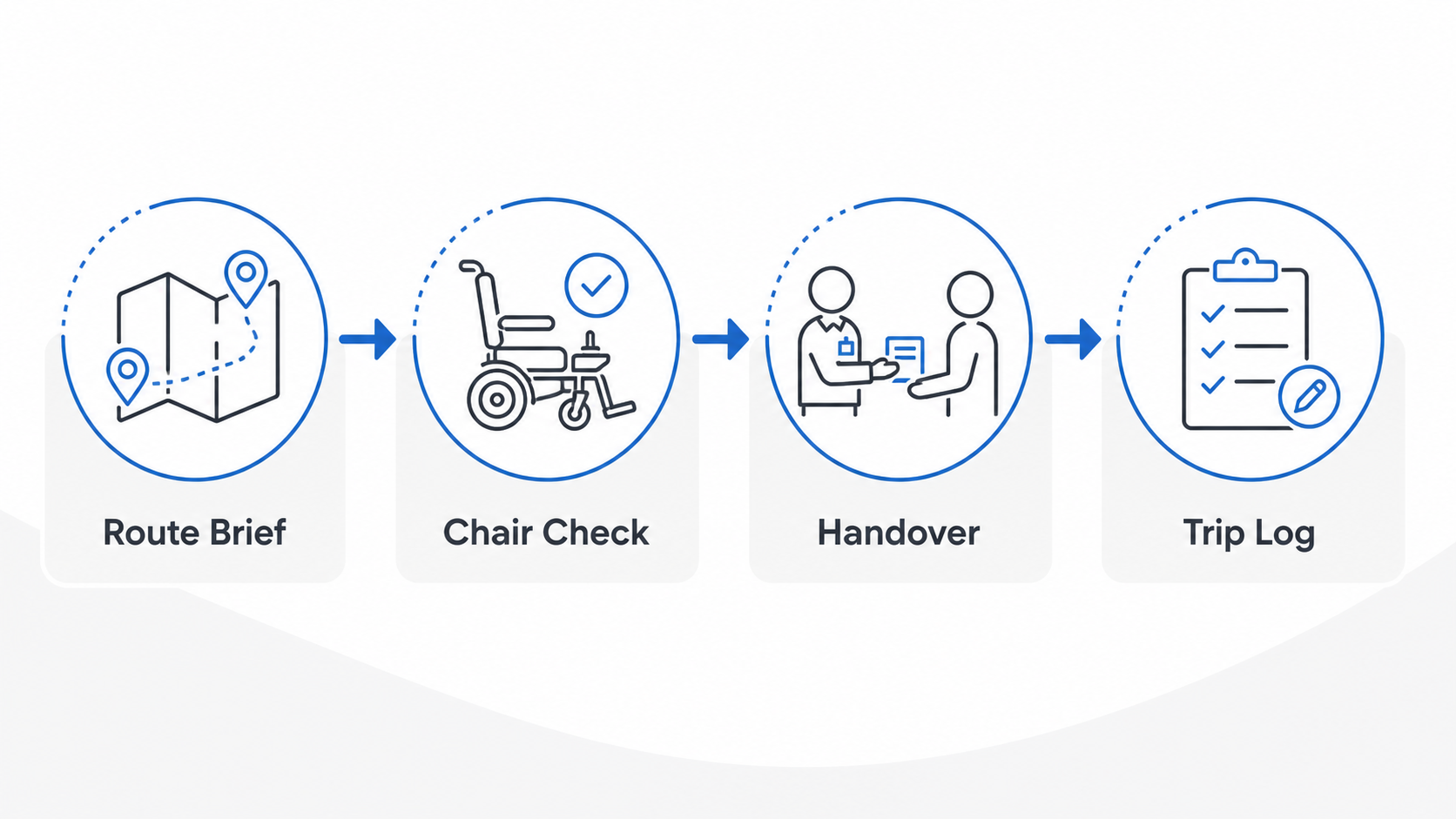
How can teams test hotels, offices, and terminals?
Next, A travel electric wheelchair route trial should repeat the same doorways, turns, floor changes, waiting points, and handover tasks expected during planned use.
Build a short supervised course from locations named in the brief. Include a wide doorway, level corridor, ordinary turn, lift threshold, waiting area, and the permitted surface changes described by the manual. The flying with an electric wheelchair guide provides trip-planning context, while the route trial supplies local observations for the buyer’s own operation.
Before moving, note chair setup, floor condition, evaluator, helper, and stop signal. During the trial, record caster tracking, footplate clearance, control response, pauses, and any helper action. Stop whenever the manual, local policy, or evaluator calls for a pause. A route note should describe what happened rather than assigning a vague pass mark.
Run a route trial with real staff
Meanwhile, Make the trial easy to repeat:
Use the same route map and observation form for every candidate. Ask evaluators to describe contact points, visibility, control access, and handoff timing in plain language. Do not add slopes, obstacles, or surfaces outside the documented use plan. A trial aims to answer buying questions, not push a sample beyond its instructions.
- fixed route and stop signal
- same chair setup for each run
- recorded pauses and helper actions
- open issues sent back to supplier
The result does not predict every building, traveler, or weather condition. It gives the buying team comparable notes from one defined course. Keep photos and comments linked with the exact route version. If a hotel layout, terminal process, or chair setup changes, schedule a focused retest rather than editing old notes.
For example, Key Takeaway: A fixed course turns travel language into repeatable doorway, handling, and handover observations.
What should supplier evidence include?
A travel electric wheelchair supplier file should include model identity, revision references, manuals, component names, packing guidance, inspection fields, and a written service route.
Ask how the supplier identifies a production revision and matches replacement parts after delivery. Request current manuals, labeled component views, packing steps, and a sample issue-report form. Each record should name the exact model rather than a broad product family. Pricing belongs beside this evidence, yet it cannot close a missing service field or unclear handling step.
Still, A good file also states how document changes reach dealers, who answers technical questions, and which photos or identifiers support a service request. Keep marketing material separate from service records. A clean document trail gives warehouse, sales, training, and support teams the same component names and the same escalation path.
Ask for repeatable records
Traceability matters after delivery:
Send each supplier one checklist with identical fields. Ask for source dates, revision codes, document owners, and a sample reply route. Review whether a new staff member could identify the chair, locate its manual, protect it for transport, and report an issue without relying on a private chat thread.
- model and revision reference
- manual and component naming
- packing and inspection fields
- written support contact route
Afterward, Score each field with a short reason and link. Leave unanswered items open. A polished brochure may support orientation, but it does not replace a manual or service record. Buyers gain stronger comparisons when every favorable score points back to an observable sample check or a dated supplier document.
Key Takeaway: The supplier file should help a new team member identify, handle, and support the exact chair.
What should buyers do before requesting a quote?
A travel electric wheelchair quote request should carry one aligned brief covering route needs, sample setup, handling method, document gaps, service expectations, and open questions.
In practice, Review the brief with purchasing, warehouse, training, service, and user-facing staff. Resolve contradictory wording before sending it outside the organization. Ask suppliers to mark assumptions instead of filling gaps silently. This produces quotations that are easier to compare and keeps later demonstrations focused on unresolved points.
Attach only the route notes, setup photos, and document questions needed for the discussion. Avoid personal details that do not belong in a supplier request. Name the expected sample review process, who signs off records, and how changes will be logged. Keep publication or customer-facing promises outside the sourcing worksheet.
Send one aligned checklist
The final review is straightforward:
Next, Read every requirement aloud as an observable action or requested record. Replace vague words with a route, setup, document, or owner. Confirm that the featured keyword describes the product family rather than a guarantee about travel acceptance. Then send the same version to each shortlisted supplier.
- approved operating profile
- sample and route review method
- document gaps and owners
- change log for supplier replies
Bring the use profile, expected route, sample plan, and document questions into a model-specific discussion. Keep the brief available for receiving, training, and service after an order so the original buying logic remains visible.
Key Takeaway: One aligned brief supports cleaner quotes, focused sample checks, and a traceable handover.
What do buyers ask about this travel electric wheelchair topic?
Meanwhile, Can I choose a travel chair from folded size alone?
No. Folded shape is only one part of a travel plan. Review route clearance, chair setup, handholds, helper roles, protected parts, storage position, power records, and current operator requirements for each planned trip.
What’s the best way to compare handling?
For example, Use one supervised sequence with the same staff roles, sample setup, storage point, and observation form. Record every removed part, grip, pause, helper, and protective step rather than relying on a single weight figure.
How do I know if a chair fits a hotel route?
Map doorways, turns, lift thresholds, waiting areas, storage, and permitted surface changes. Then run a controlled sample trial under the chair manual and the site’s own operating rules.
Still, Can an old carrier approval support a new trip?
No. Confirm the exact chair and battery record against the current carrier, route, operator process, and travel date. Save the dated reply in the trip file.
What supplier records should I request?
Afterward, Request model and revision references, the current manual, component naming, packing steps, inspection fields, charging guidance, and a written route for technical or service questions.
For model-specific records, sample planning, or a supplier discussion built around your operating profile, contact us today.
Related planning resources: Review folding wheelchair comparison, lightweight wheelchair selection, adult wheelchair fit before approving a product, sample, route, or supplier decision.