
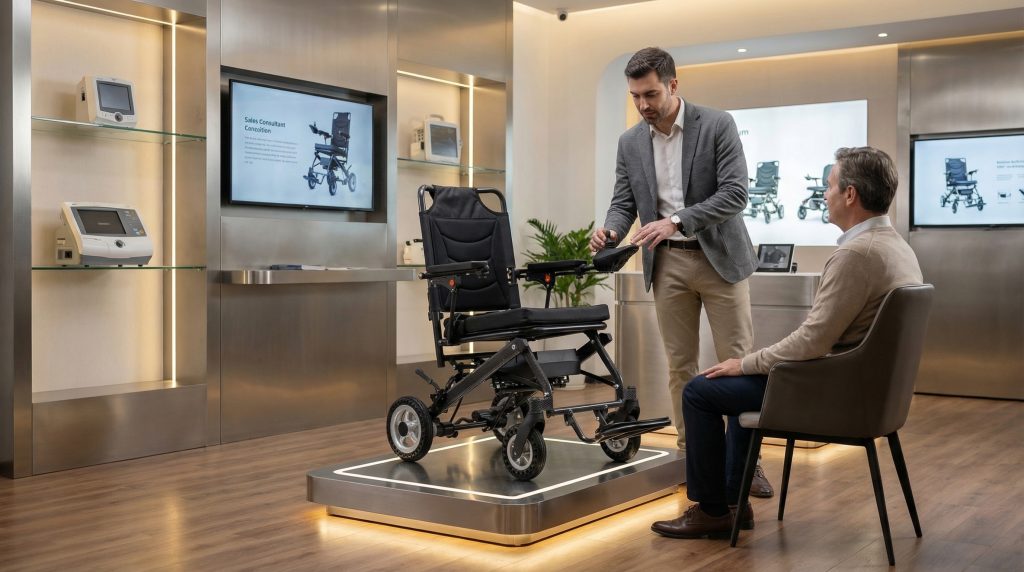
The best electric wheelchair is the configured model that fits the user, completes the intended route, offers accessible controls, carries clear battery and service records, and passes a repeatable sample trial. No single product can be “best” for every user, building, vehicle, climate, or support network.
Also, This article uses official mobility-device guidance for policy context. It does not make clinical recommendations or rank models without evidence. Current product questions should be checked through Ary Medical’s wheelchair series and exact supplier documents.
What Does “Best Electric Wheelchair” Mean?
Best means fit for a defined person, route, task, service plan, and budget. The decision should be written before models are compared.
Then, Start with the use case. Separate must-have conditions from preferences and unverified brochure claims.
- Name the user and route.
- Define pass and fail conditions.
- Keep clinical decisions with suitable professionals.
| Requirement | Example evidence |
|---|---|
| Fit | Approved dimensions |
| Route | Measured trial |
| Support | Supplier records |
Key Takeaway: Define best before comparing products.
How Should Seating Fit Be Reviewed?
However, Review seat width and depth, back support, arm supports, foot support, cushion, transfers, and posture with the intended configuration. A product photo cannot show individual fit.
Use the complete setup. Follow the adult fit review.
- Record required supports.
- Check transfer access.
- Confirm approved adjustments.
| Fit item | Record |
|---|---|
| Seat | Dimensions and cushion |
| Supports | Approved positions |
| Transfer | Access plan |
For example, Key Takeaway: Seat fit can outweigh a long feature list.
Which Control Checks Matter?
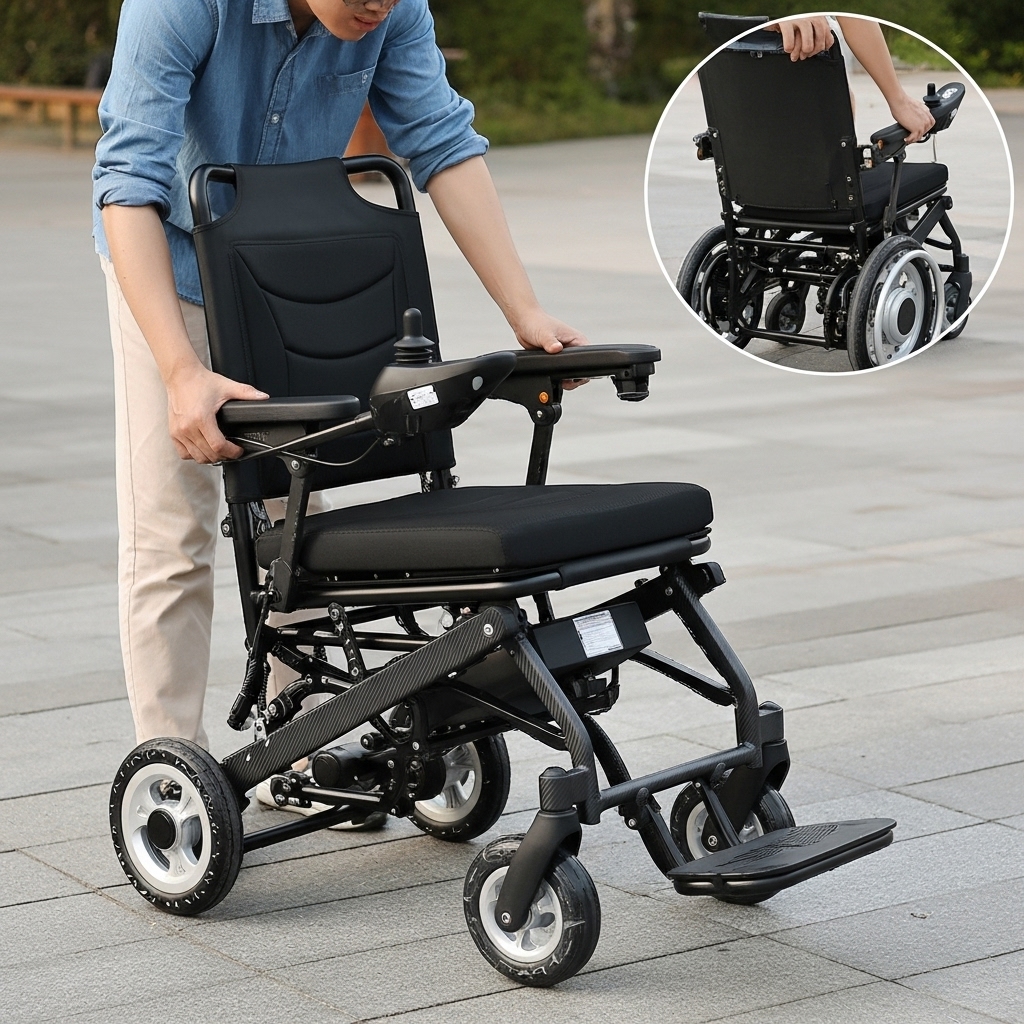
Check joystick side, mounting, reach, clearance, power controls, speed settings, indicators, and stop actions. Confirm trained users or attendants can repeat the handover.
Meanwhile, Control access is personal. Use the joystick handover guide.
- Review hand and arm position.
- Test clearance near tables and doors.
- Record the approved mounting.
| Control area | Pass condition |
|---|---|
| Reach | Comfortable access |
| Mounting | Stable approved position |
| Handover | Repeatable steps |
Key Takeaway: A good chair must offer usable control access.
How Should the Intended Route Be Tested?
Instead, Map entrances, turns, thresholds, surfaces, stopping points, slopes, storage, and charging. Run the configured sample through a controlled version of the real route.
Use measured conditions. The compact route plan and suspension review organize evidence.
- Measure clear openings.
- Record trial surfaces.
- Note anything not tested.
| Route item | Evidence |
|---|---|
| Doorway | Clear width |
| Turn | Occupied space |
| Surface | Controlled observation |
As a result, Key Takeaway: Route fit should be demonstrated, not assumed.

What Battery and Charger Evidence Is Needed?
Keep exact battery, charger, connector, label, instruction, replacement, and service records. Range claims depend on conditions and should come from current model evidence.
Also, Match the system. Do not combine a charger or battery from another model without written approval.
- Match battery and charger.
- Inspect cables and connectors.
- Keep replacement identifiers.
| Record | Purpose |
|---|---|
| Battery identity | Model match |
| Charger identity | Correct charging system |
| Instructions | Current handling |
Key Takeaway: Matched battery records support safer ownership.
How Should Folding and Transport Be Reviewed?
Then, If folding matters, repeat every step, latch, lift, loading, and reopening check with the actual chair. Record parts removed and who will handle them.
Test the whole task. Use the folding comparison and travel guide.
- Repeat the fold.
- Measure the vehicle.
- Check the chair after reopening.
| Task | Evidence |
|---|---|
| Fold | Repeatable steps |
| Lift | People and approved points |
| Load | Vehicle fit |
However, Key Takeaway: Transport claims need a real handling trial.

What Should a Sample Trial Include?
Use a written scorecard for fit, controls, stops, turns, route obstacles, handling, charging records, and service questions. Apply the same sequence to each candidate.
For example, Keep comparisons fair. Record facts, concerns, and untested items rather than a single impression.
- Use one test sequence.
- Include suitable users and staff.
- Retain the sample configuration.
| Trial result | Meaning |
|---|---|
| Pass | Meets written condition |
| Concern | Needs clarification |
| Not tested | No conclusion |
Key Takeaway: A repeatable trial exposes tradeoffs.
How Should Supplier Support Be Tested?
Meanwhile, Ask for manuals, revision history, approved parts, battery and charger matches, warranty terms, packaging, service contacts, and response responsibilities.
Test before ordering. Use the supplier comparison.
- Request current documents.
- Ask one realistic service question.
- Record response ownership.
| Support item | Evidence |
|---|---|
| Manuals | Current revision |
| Parts | Model-specific list |
| Service | Named process |
Instead, Key Takeaway: Support quality affects the ownership decision.

What Should Happen at Delivery?
Match the delivered chair, configuration, battery, charger, accessories, documents, and packaging to the approved order. Record damage or substitutions before acceptance.
As a result, Check before handover. Use the delivery receiving checklist.
- Match model and revision.
- Inspect visible condition.
- Retain receiving records.
| Delivery item | Pass condition |
|---|---|
| Chair | Correct model |
| Accessories | Complete and matched |
| Documents | Current and supplied |
Key Takeaway: Delivery should reproduce the approved sample.
What Is the Best Electric Wheelchair Decision Rule?
Also, Choose the model that passes written fit, route, control, handling, battery, support, delivery, and service requirements with the fewest unresolved risks. Keep original product media unless a separate image change is approved.
Finish with evidence. Track ongoing ownership through the fleet management guide.
- Reject unresolved must-have failures.
- Keep approved configuration records.
- Review support before price alone.
| Decision area | Pass condition |
|---|---|
| User and route | Fit demonstrated |
| Product | Evidence complete |
| Supplier | Support confirmed |
Then, Key Takeaway: Best means the strongest verified fit for the actual use case.
Is one electric wheelchair best for everyone?
No. Fit, controls, route, handling, service, and support needs vary.
Should buyers choose by motor size alone?
However, No. Model evidence and the complete use case matter more than one specification.
How many samples should be trialled?
Use enough suitable candidates to compare tradeoffs with the same written sequence.
Does a high AIOSEO score prove product quality?
For example, No. The score checks page content signals, not physical product performance.
Will the main image be replaced?
No. This workflow keeps the original featured image.