

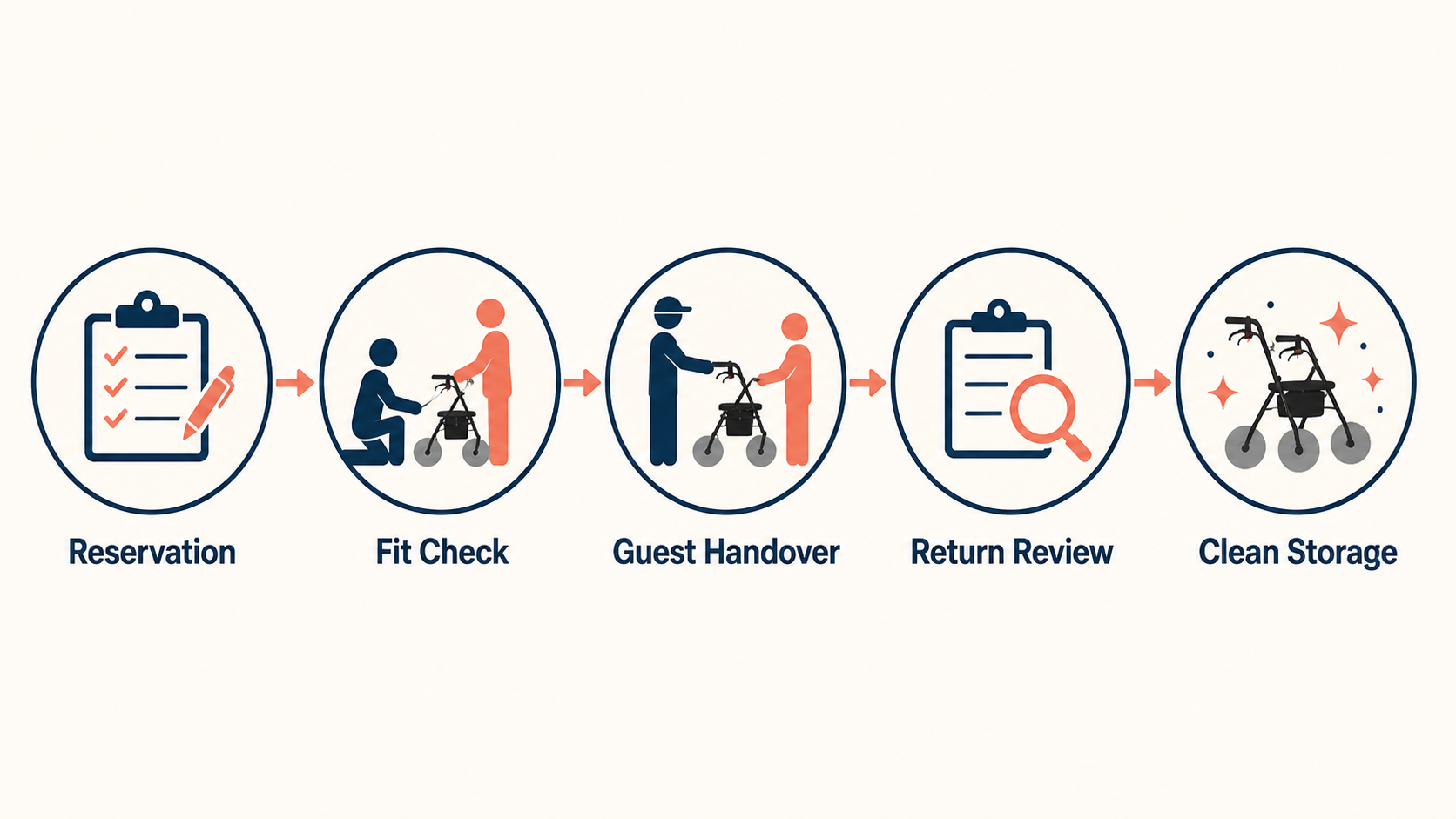
A beach walker rental can look simple at the desk, yet service gaps often appear between reservation, fitting, route briefing, return, and cleaning. Guests may receive mixed instructions, while staff may not know whether equipment is ready for another booking. A beach walker rental workflow solves that problem with one documented path and clear ownership at every handoff. This guide helps resorts, hotels, coastal parks, and rental operators create a friendly B2B service model without inventing product claims or guessing about individual suitability. Manufacturer instructions, local access rules, and resort policy remain the operating authority. The framework below focuses on communication, visible equipment status, clean records, and respectful guest choice.
Managers should set scope before training begins. Decide which team accepts reservations, who releases equipment, who handles route updates, and who closes a returned unit. Name one escalation contact for questions outside desk authority. A short process map can show these owners without adding guest data or unsupported promises. The map should also separate product care from repair, since routine cleaning staff may not hold permission for mechanical work. When duties cross departments, use a clear verbal and written handoff. Front desk, recreation, housekeeping, and beach operations can then see the same booking and equipment status. That shared view reduces calls, duplicate work, and rushed decisions during busy service periods.
Service language deserves the same planning. Staff can use a short booking script, fit-check prompt, route brief, and return question. These prompts should guide conversation without making it rigid. Guests still need room for preferences and questions. Managers can review wording after staff observations, route changes, product updates, or repeated confusion. Each revision should have an owner plus a clear effective date.
How Should a Beach Walker Rental Workflow Begin?
A beach walker rental workflow should begin with a focused reservation intake and a verified equipment status. Staff need enough information for service planning, yet they should avoid medical screening or promises about suitability. A booking record can capture date, requested service window, contact method, pickup point, expected route, and any communication preference shared by the guest. Equipment should remain tied to a visible ready status before confirmation. Resorts that offer several sand-access products can place this process within their wider Beach Series plan, so desk teams understand which request belongs with each product category.
Capture a Focused Reservation Request
Here is the practical point: reservation staff should gather operational facts without turning a booking into a medical interview. Ask where a guest plans to collect equipment, whether a companion will join, and which resort areas they expect to use. Explain that final route status depends on current conditions and operating policy. Do not promise access across every sand type or surface. Staff can also note preferred communication, booking duration, and a contact channel for changes. A short script keeps tone consistent while giving guests room for questions. If a request falls outside staff authority, route it to a supervisor rather than improvising an answer. This approach protects clarity and keeps personal details limited.
- Record booking date and service window.
- Name pickup plus return locations.
- Ask about the planned resort route.
- Note a preferred contact method.
- Send unusual requests to a supervisor.
Match a Ready Unit With the Booking
This is where status matters: a booking should link with a specific ready unit only after staff review its record and visible condition. Place the empty beach walker on firm ground, then check frame alignment, seat surface, bag, hand grips, brake levers, cables, and balloon wheels. Compare each item with manufacturer guidance and a known ready reference. A unit under cleaning, drying, repair review, or another booking should not appear available. Resorts can use a simple tag or digital field rather than relying on memory. The dedicated Beach Walker page can help purchasing and operations teams identify product features, while model instructions control checks plus adjustments.
- Confirm unit identity before assignment.
- Review cleaning and prior-return status.
- Check visible frame, seat, controls, and wheels.
- Keep held equipment outside guest circulation.
- Record which unit belongs with each booking.
What Should Staff Cover During Fitting and Handover?
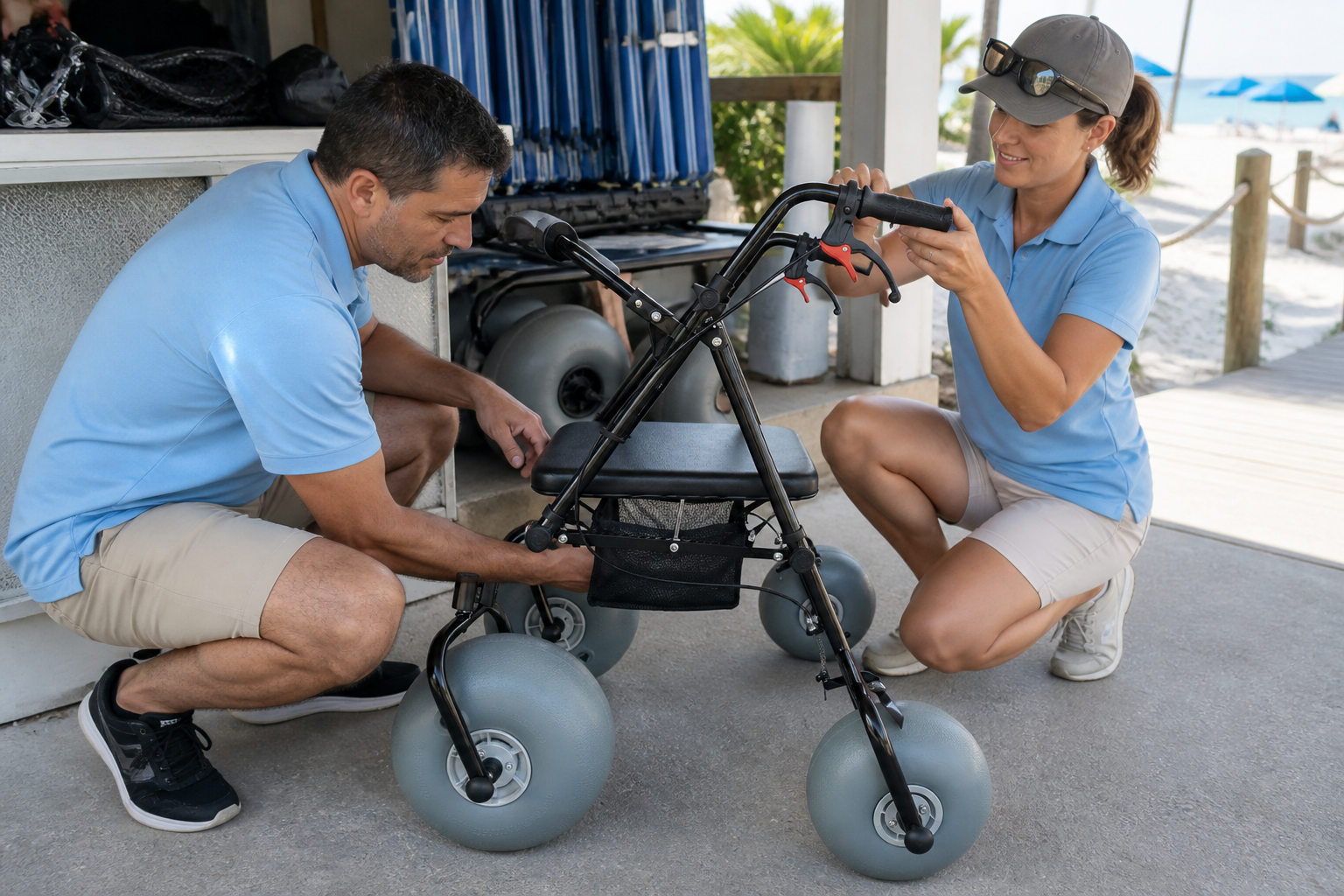
A beach walker rental handover should cover fit, controls, route boundaries, stop language, and the return plan. Staff should demonstrate manufacturer-approved adjustments on a firm surface, then ask the guest to confirm comfort and communication preferences. They should not make medical judgments or promise that one setting suits every person. A clear handover also states where equipment may travel under resort policy and which areas remain closed. Keep the conversation short enough for attention, yet specific enough that the guest knows how staff support works.
Run a Calm Fit Check on Firm Ground
Start with a stable setup: place the walker fully on a level boardwalk or paved staging area before any adjustment. Staff can review hand position, frame setting, brake operation, seat condition, and storage bag use according to model instructions. Ask permission before touching personal items or changing a setting. The guest should have time for questions and should never feel rushed into movement. Staff can demonstrate how brakes respond without claiming a stopping distance. If any control feels different from a ready reference, pause the rental and assign another verified unit. A broader article on what beach walkers are may help desk teams explain category purpose in plain language.
- Keep all wheels on a firm level surface.
- Explain each approved adjustment before changing it.
- Demonstrate controls without performance promises.
- Ask the guest about comfort and communication.
- Stop when a control or frame part feels unclear.
Give a Route and Return Briefing
Clarity beats a long speech: show the planned route, identify surface changes, and name any closed segment. Guests should know where firm boardwalk ends, where staff support may be available, and when equipment must return. Explain how route status may change with weather, crowding, debris, or resort operations. Agree on a contact method in case the guest wants support or an early return. Staff should also state whether a rest area or shaded meeting point forms part of service. Keep language direct and avoid pressure. A booking remains a hospitality service, so respectful choice should guide pace, questions, and any decision not to proceed.
- Point out pickup, route, rest, and return locations.
- Name surfaces that are open for that booking.
- Explain how staff communicate a route closure.
- Confirm contact details for support.
- Ask the guest to repeat the return plan.

How Should Resorts Manage Returns and Cleaning?
A beach walker rental should close with a structured return review, model-appropriate cleaning, complete drying, and a clear status update. Staff should receive the unit on firm ground and ask a short operational question about route or equipment observations. They should not collect health details that service records do not need. A visible return check helps staff find trapped sand, wet fabric, unusual control movement, or a missing item before another booking. Cleaning should follow manufacturer instructions plus resort hygiene policy.
Review Each Unit at Return
Here is the useful habit: compare returned equipment with its recorded ready condition before moving it into cleaning. Check that seat, bag, grips, levers, cables, frame, and wheels remain present and visibly aligned. Ask whether the guest noticed anything unexpected during use, then document only operational facts. A concern should place the unit on hold until an authorized person reviews it. Staff should never hide a delay by passing questionable equipment into a new booking. Return review also gives managers route feedback. Repeated sand buildup or access complaints may point toward a route or briefing issue rather than a product problem.
- Confirm unit identity at return.
- Compare visible condition with the ready reference.
- Ask one short equipment and route question.
- Place unresolved concerns on hold.
- Send the unit into cleaning with a recorded status.
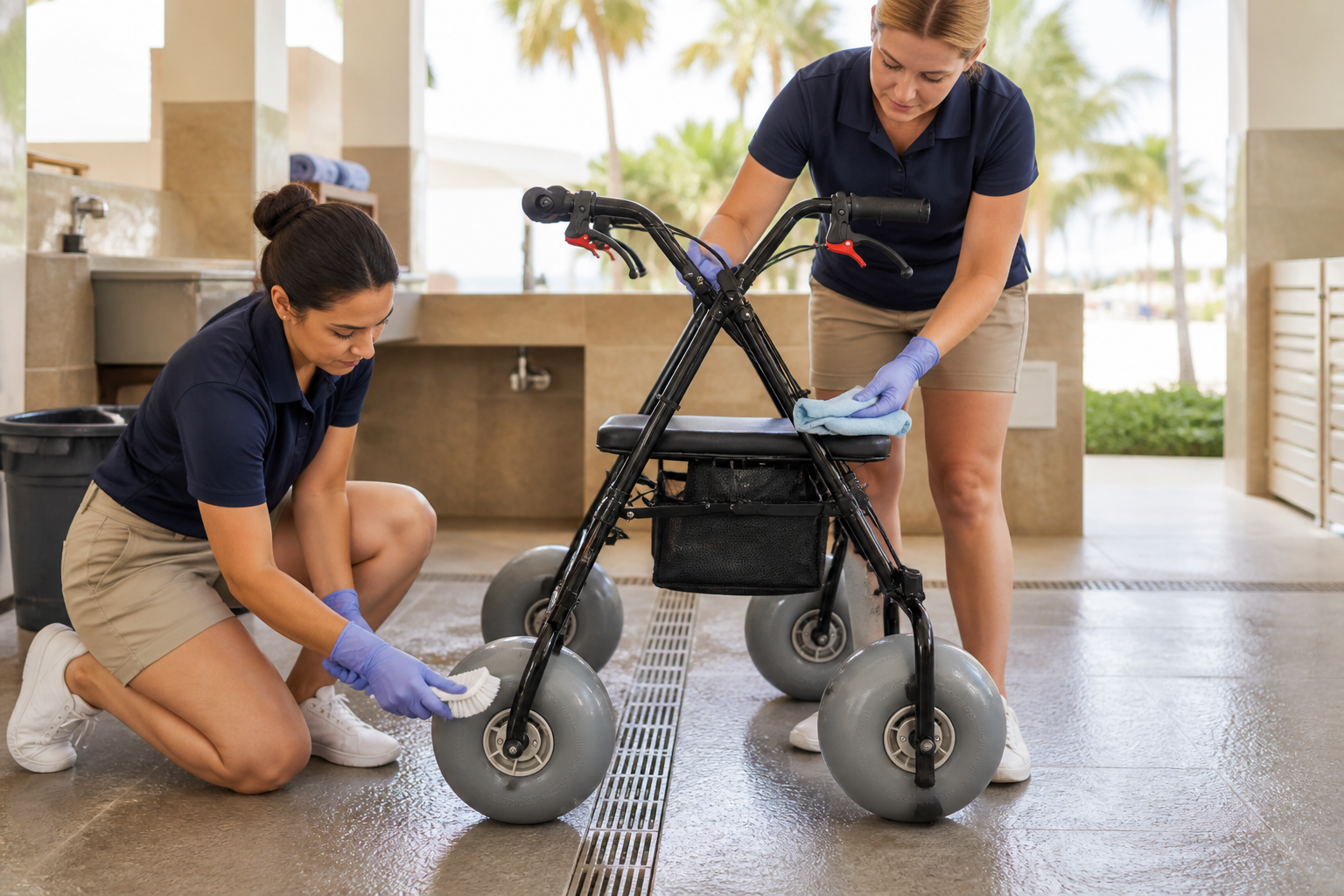
Clean, Dry, and Reset Status
A ready label comes last: remove loose sand, clean approved surfaces, and let every damp area dry before equipment returns to inventory. Follow product instructions for water, cloths, and cleaning materials. Avoid pressure, chemicals, or disassembly that staff are not authorized to use. Pay attention to grips, brake levers, seat, bag, joints, cables, and wheel surfaces. A shaded ventilated area can support drying without placing equipment in a public path. Once work closes, a staff member should update status and return the unit to its named storage location. That small record prevents another shift from guessing.
- Brush away dry loose sand before wiping.
- Clean touch points under resort policy.
- Check fabric and bag for trapped moisture.
- Dry equipment before closed storage.
- Mark ready status only after a final review.
How Can Managers Keep Rental Service Consistent?
A beach walker rental service stays consistent when managers use short records, observed practice, and scheduled coaching. A workflow document alone cannot show whether staff use it under pressure. Supervisors should watch real handoffs, review a small sample of records, and ask employees which step causes confusion. Coaching can focus on one behavior at a time, such as unit identification, route language, or status closure. This approach supports seasonal teams without creating a heavy administrative burden.
Use a Compact Shift Record
Keep only fields that guide action: a useful rental record can show booking window, unit identity, pickup and return status, route status, cleaning completion, and any hold. Avoid free-text notes when a short status value works. Managers can still include one comment field for operational observations. Records should not collect diagnoses or other private details unrelated to service. At shift handover, outgoing staff can review open bookings, units still out, equipment drying, and held items. The incoming team gains a clear inventory picture instead of checking storage one piece at a time. Consistent records also make guest updates more accurate when weather or route access changes.
- List active bookings by service window.
- Tie each booking to one unit identity.
- Show ready, out, cleaning, drying, or hold status.
- Record route closure plus notification status.
- Limit notes to operational facts.
Coach Through Observation and Practice
Here is what managers can watch: does staff identify the unit, complete the fit check, use clear route language, confirm return details, and close status after cleaning? A supervisor can use those points during a brief observation. Coaching should happen soon after practice and should name one clear change. Seasonal staff may benefit from empty-equipment role play before live service. Returning staff may need a short update when product, route, or policy changes. The article Can You Use a Walker on the Beach? can support category discussion, yet local site rules and model guidance still decide service boundaries.
- Observe one full handover sequence.
- Ask staff to explain each stop point.
- Practice route closures with role play.
- Give one specific coaching action.
- Repeat observation after process changes.
What Do Resort Teams Ask About Beach Walker Rentals?
Beach walker rental teams often ask about booking data, guest fit, route limits, cleaning, and held equipment. These concise answers keep service decisions connected with manufacturer guidance and resort policy.
Can staff promise that a beach walker works on every sand surface? No. Product guidance, site conditions, route policy, and individual preferences shape each booking.
Should a resort collect medical details during reservation? Usually no. Collect operational information needed for service and follow applicable privacy policy.
Can equipment return straight into another booking? Only after return review, approved cleaning, full drying when needed, and a verified ready status.
What should staff do after a guest reports a control concern? Place the unit on hold and record the observation. An authorized person should review it before reuse.
How should staff handle a route closure? Contact affected guests promptly, state the operational change, and offer available options under resort policy without making promises.
A beach walker rental workflow gives every shift one reliable path from reservation through clean storage. Clear roles, respectful handovers, and visible equipment status make that path easier for staff and guests. For product questions, rental planning, or B2B sourcing support, contact us today.