
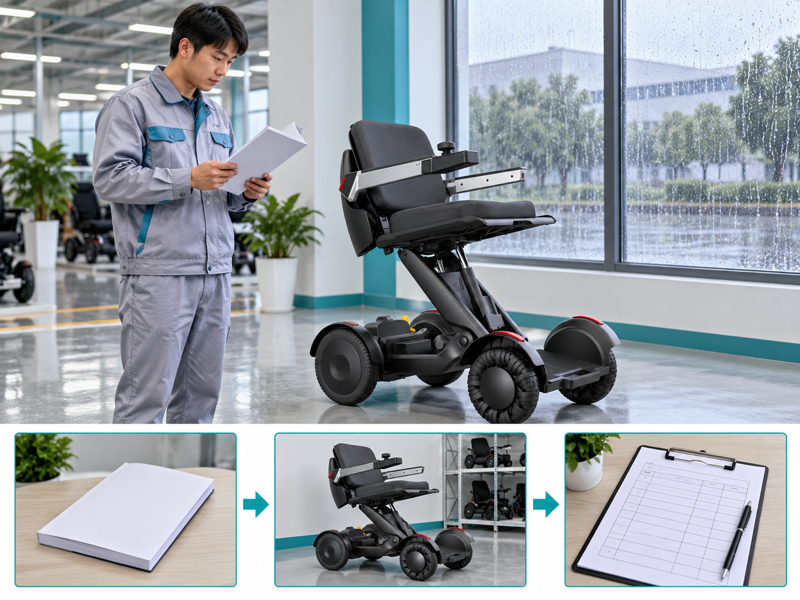
Plan power chair rain exposure around the exact maker limits and a supported response when weather changes. A UK dealer may be asked whether an outdoor chair can stay in rain without having the relevant protection guidance. A clear model-specific enquiry helps prevent a broad weather promise from outrunning the evidence.
What should power chair rain exposure guidance establish?
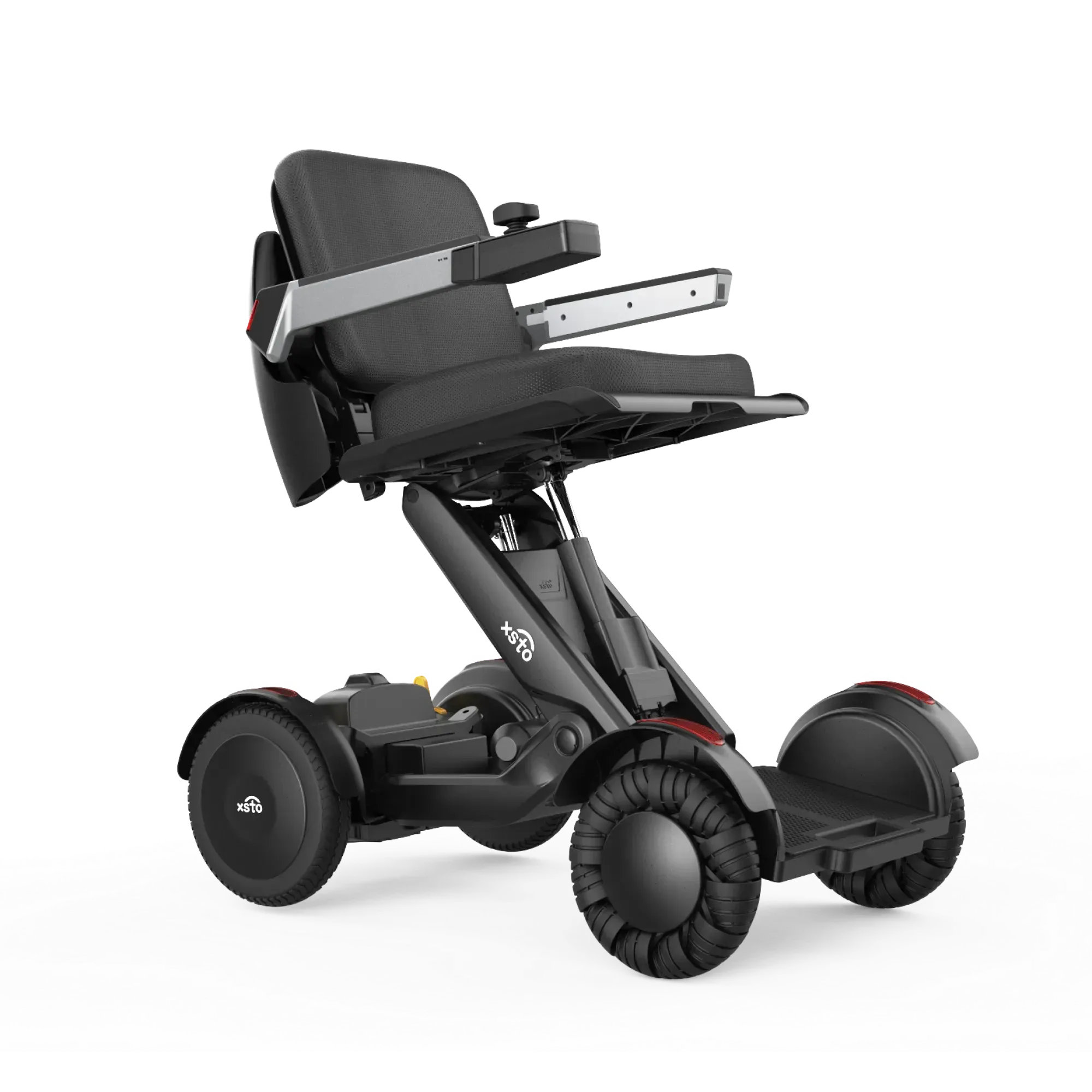
Power chair rain exposure should be judged against the maker's written limits and the intended conditions. A powered chair is not weatherproof merely because it is sold for outdoor use.
Confirm the model's weather scope
Use the exact model's weather limits. Ask for the current model guide and any stated protection evidence. Keep uncertain weather use as an open product question before recommending the chair.
- Exact model
- Weather limits
- Protection evidence
| Check | Record or reference |
|---|---|
| Exact model | ID |
| Weather limits | Manual |
| Protection evidence | Maker file |
Key Takeaway: You can identify the conditions the product details actually covers.
What does a protection rating need to specify?
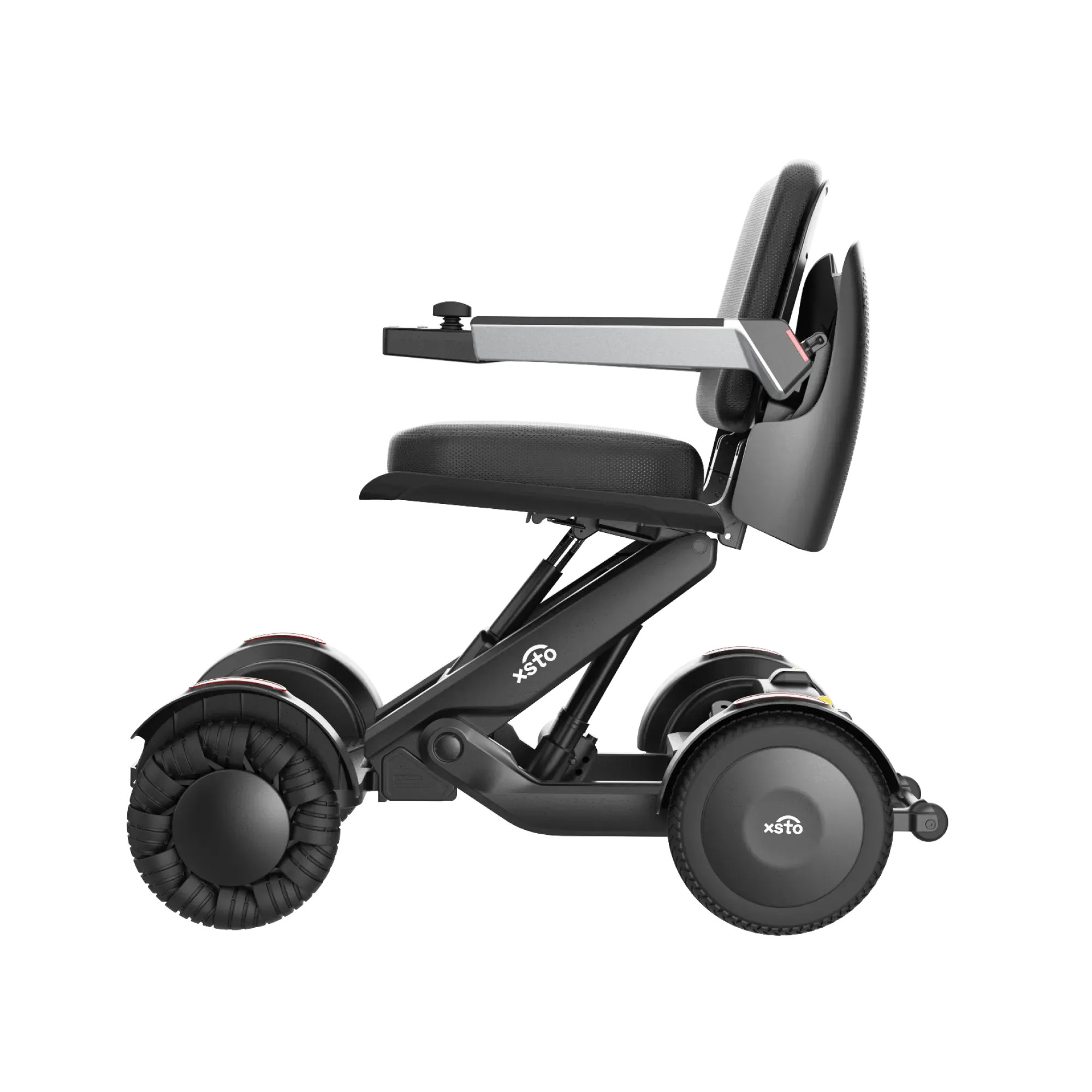
For power chair rain exposure, a stated protection rating needs a clear link to the complete product or component it covers. A rating on one enclosure does not automatically describe every connector or accessory.
Identify what the rating covers
Check what was rated. Ask the maker for the scope, conditions and relevant instructions. Do not infer a broader weather claim from an isolated label. Identify the relevant components through the model parts list.
- Rated item
- Conditions
- Use limits
| Check | Record or reference |
|---|---|
| Rated item | Evidence scope |
| Conditions | Report |
| Use limits | Guide |
Key Takeaway: The rating can be interpreted within its recorded scope.
Which parts should a buyer ask about?
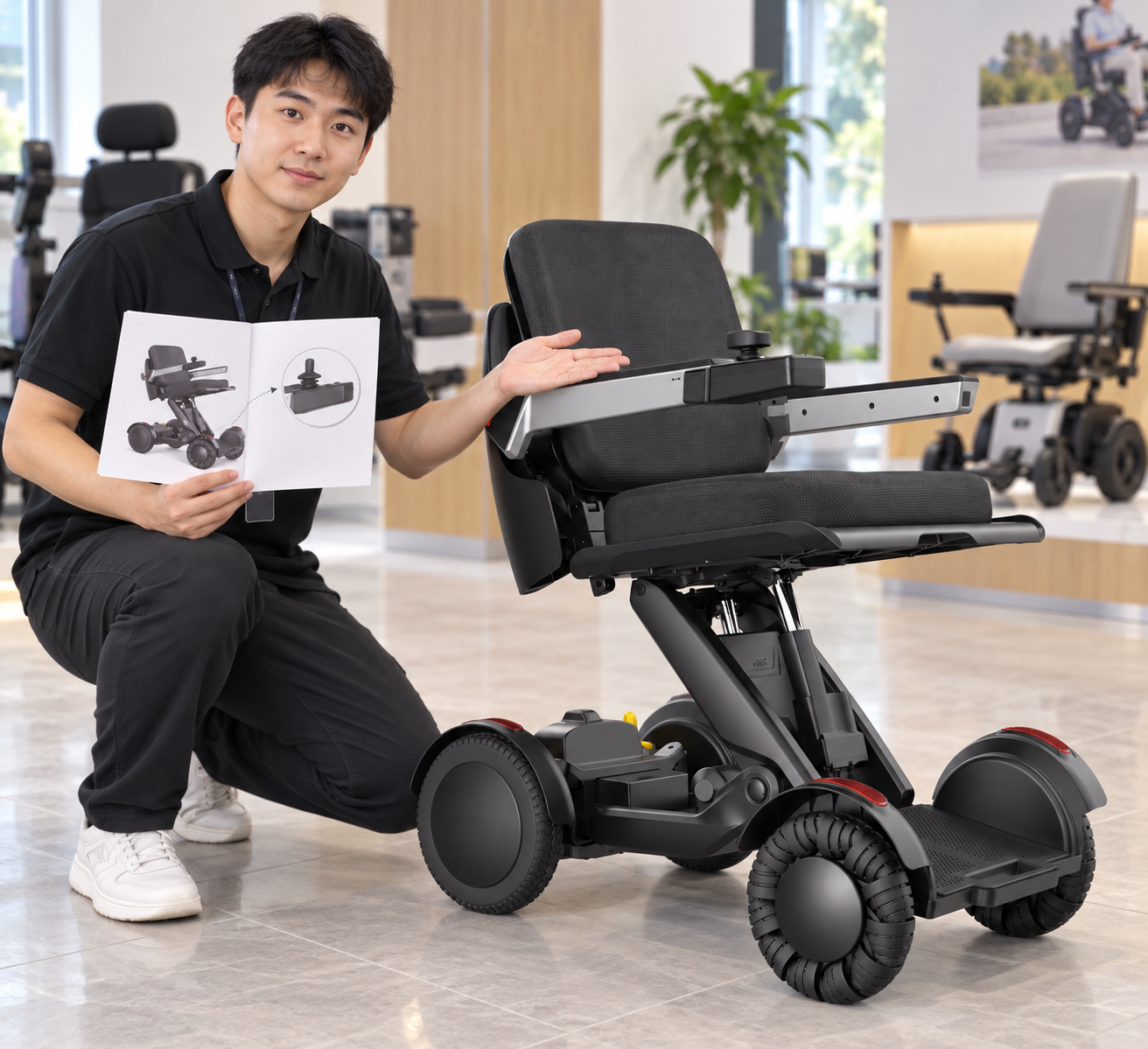
Power chair rain exposure questions should cover controls, charging connections and other parts named in the maker's guidance. Product photographs cannot show every sealing detail or service limit.
Ask about relevant electrical interfaces
Include the exposed electrical interfaces. Request the model's handling and service advice for wet conditions. Avoid opening covers to inspect protection without an approved service method.
- Controls
- Connections
- Service limits
| Check | Record or reference |
|---|---|
| Controls | Manual section |
| Connections | Product guide |
| Service limits | Maker response |
Key Takeaway: The enquiry reaches the parts whose instructions need clarification.
How should a route plan account for weather?
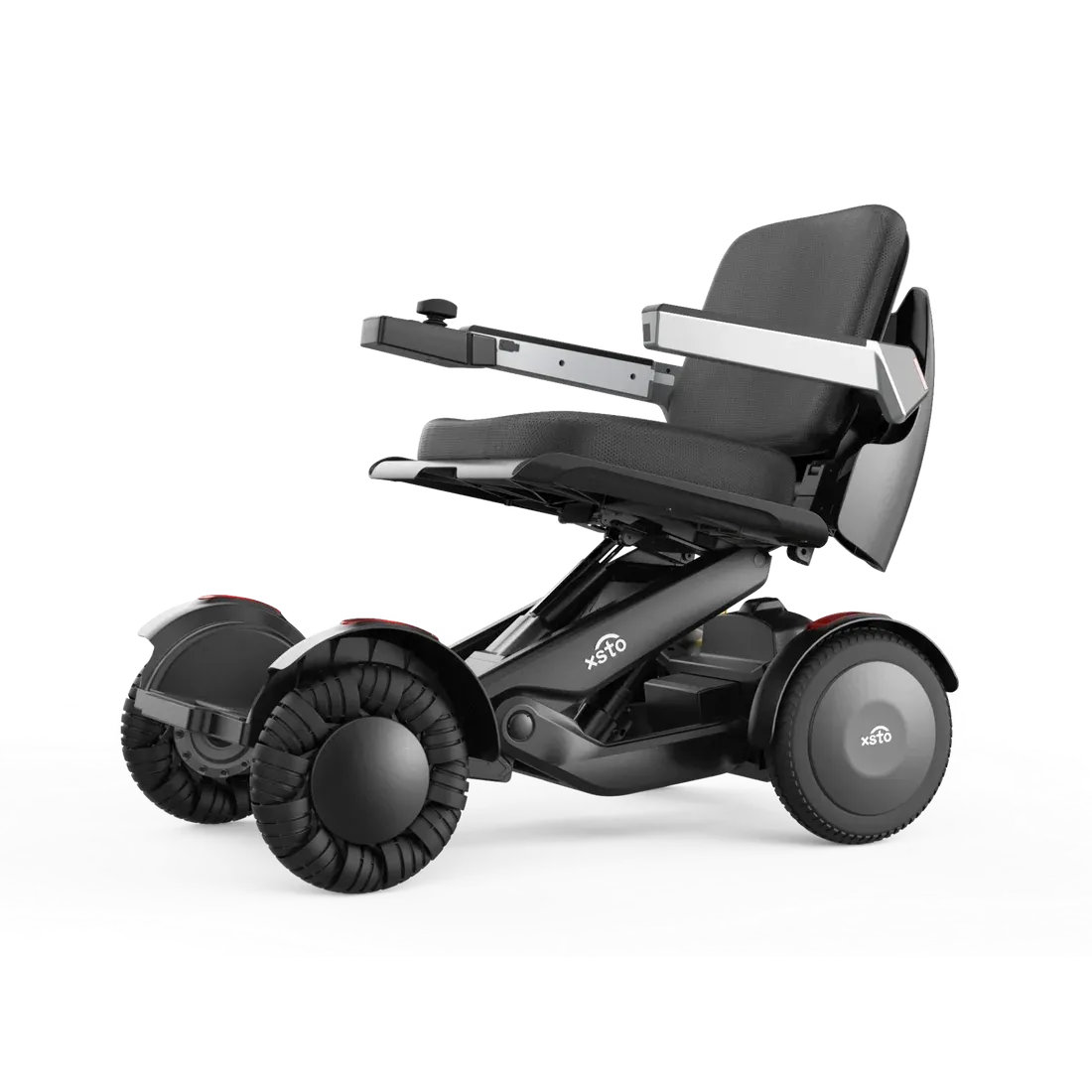
For power chair rain exposure, route planning should consider the model's limits and a practical response if conditions change. A dry forecast is not a substitute for knowing those limits.
Plan for changing conditions
Plan access to suitable shelter. Use the person's suitable mobility assessment and the current product guidance. Record unresolved access or assistance needs before relying on a route.
- Product limits
- Shelter option
- Assistance need
| Check | Record or reference |
|---|---|
| Product limits | Manual |
| Shelter option | Route plan |
| Assistance need | Assessment |
Key Takeaway: Weather planning connects the chair with a real journey.
Can a cover make any chair suitable for rain?
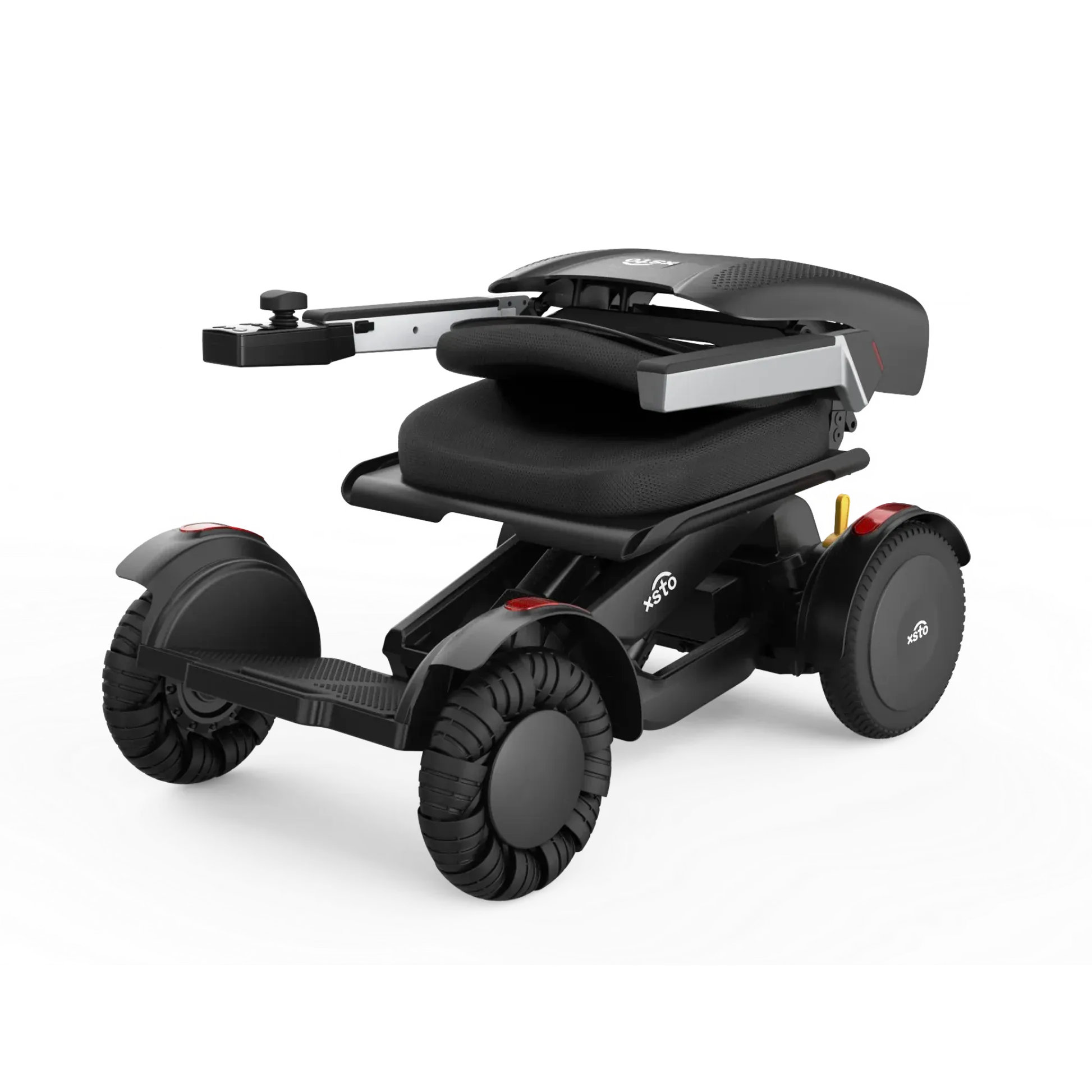
For power chair rain exposure, a cover must be suitable for the exact model and the maker's permitted use. An improvised cover can interfere with controls, visibility or heat management.
Review supported accessories
Use only a supported accessory arrangement. Ask which accessories are supported and under what conditions. Do not treat a cover as a way to exceed the chair's stated weather limits.
- Cover model
- Permitted use
- Control clearance
| Check | Record or reference |
|---|---|
| Cover model | Part reference |
| Permitted use | Guide |
| Control clearance | Review |
Key Takeaway: An accessory does not silently expand the chair's approved role.
What should happen after unexpected wetting?
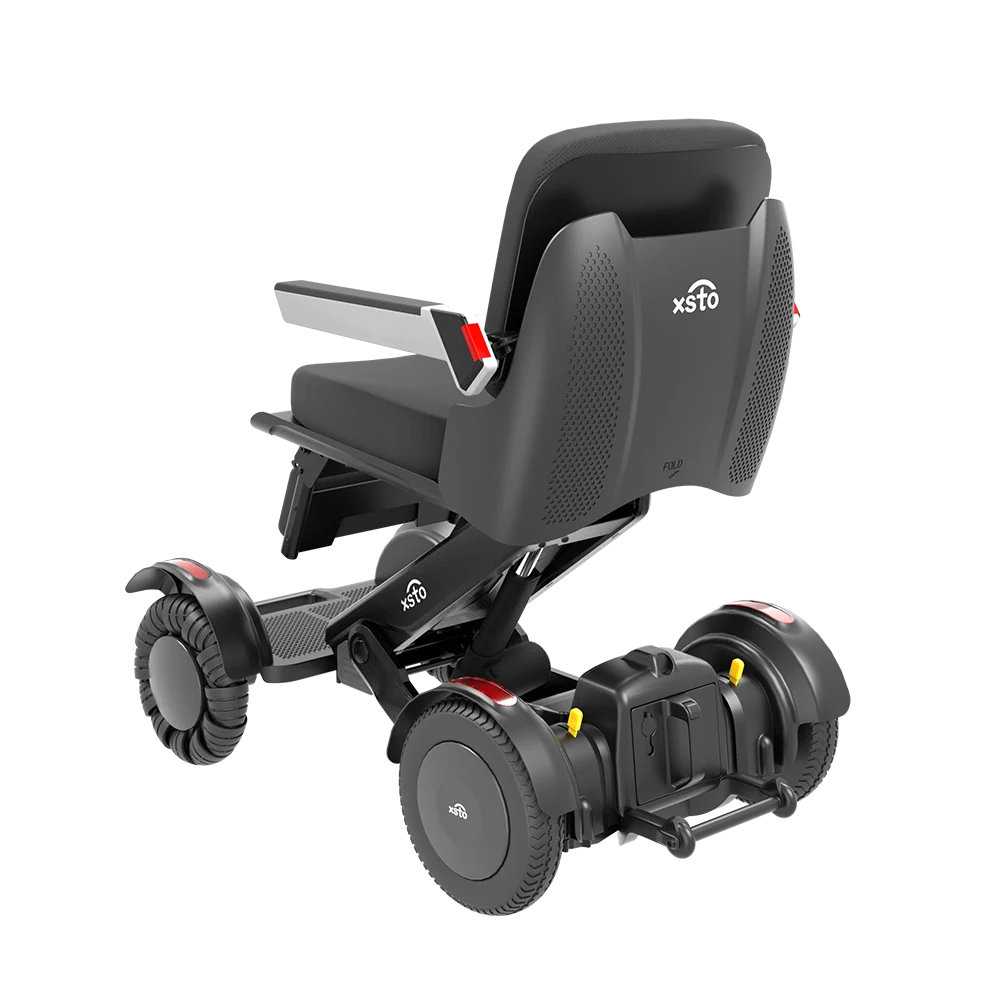
After power chair rain exposure, follow the model's instructions and seek qualified service advice when the condition is uncertain. A chair that still switches on has not thereby been shown fit for continued use.
Use the maker's post-exposure guidance
Follow the maker's response instructions. Record the circumstances without opening electrical parts or improvising a drying method. Let the responsible service team decide the next step. Include any reported change in brake behavior in the service enquiry.
- Exposure report
- Model instructions
- Next action
| Check | Record or reference |
|---|---|
| Exposure report | Case note |
| Model instructions | Guide |
| Next action | Service decision |
Key Takeaway: The response uses product-specific guidance rather than a guess.
How should charging questions be handled?
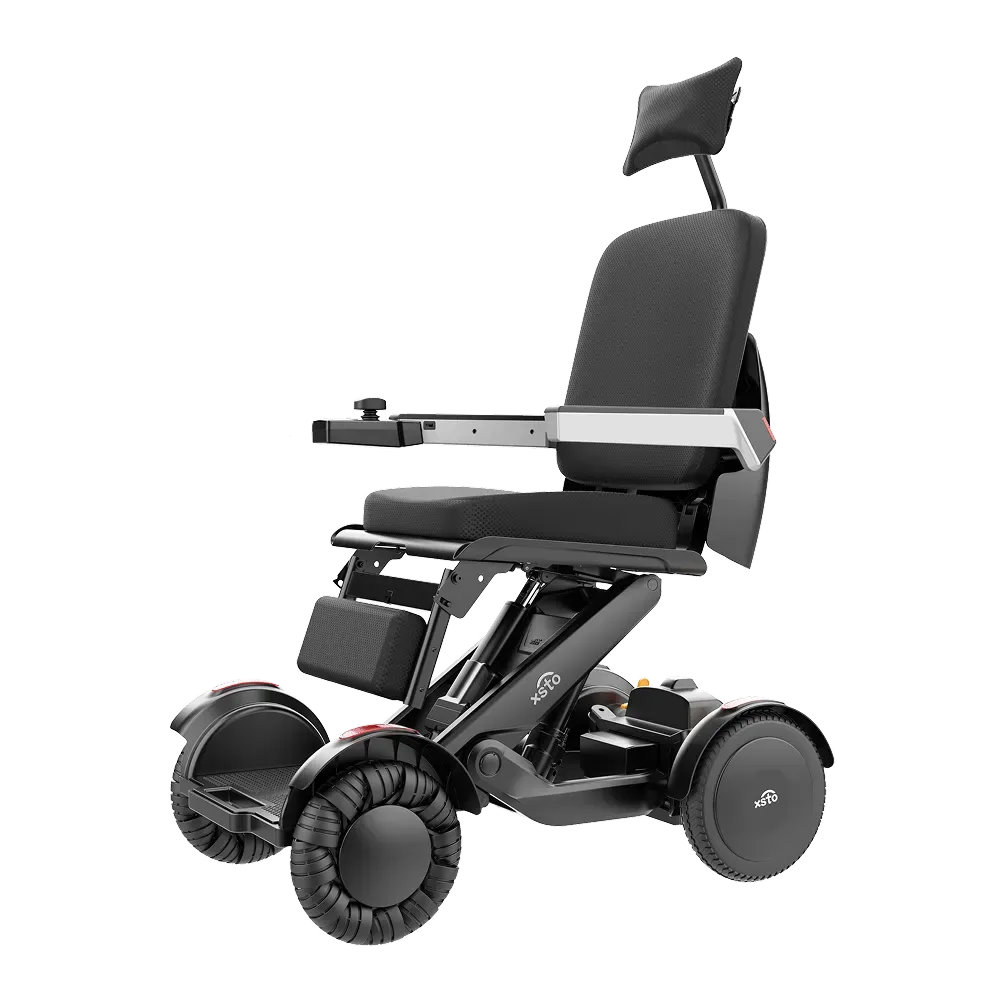
For power chair rain exposure, charging should follow the maker's instructions and any service advice after wetting. Do not assume that a dry-looking connector proves the electrical system is ready.
Resolve charging-condition questions
Resolve uncertain condition before charging. Ask the service team what evidence or inspection is required for the exact model. Keep the approved charger and charging location within their own stated limits. Keep the approved charger information with the charging-condition review.
- Chair condition
- Charger match
- Charging limits
| Check | Record or reference |
|---|---|
| Chair condition | Review |
| Charger match | Product record |
| Charging limits | Manual |
Key Takeaway: A charging decision can use the relevant condition evidence.
What should be recorded for a service enquiry?
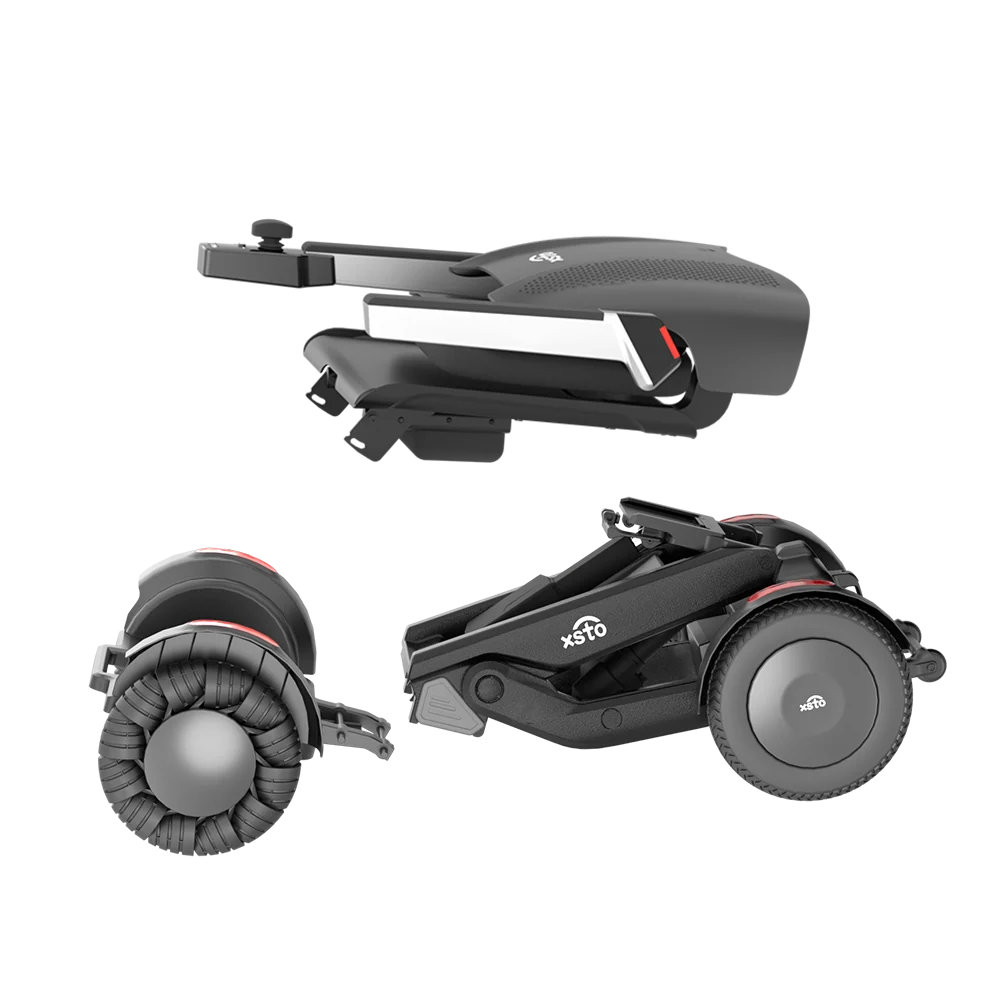
A power chair rain exposure enquiry should identify the chair, exposure circumstances and any observed changes. Avoid claiming that rain caused a fault before a qualified review establishes the cause.
Record facts for service
Describe conditions and symptoms separately. Retain relevant photographs and available service history. State what the team needs to decide about inspection, repair or release.
- Unit identity
- Exposure circumstances
- Observed symptom
| Check | Record or reference |
|---|---|
| Unit identity | Label |
| Exposure circumstances | Report |
| Observed symptom | Case note |
Key Takeaway: The service team receives useful facts with uncertainty preserved.
How should dealers describe weather capability?
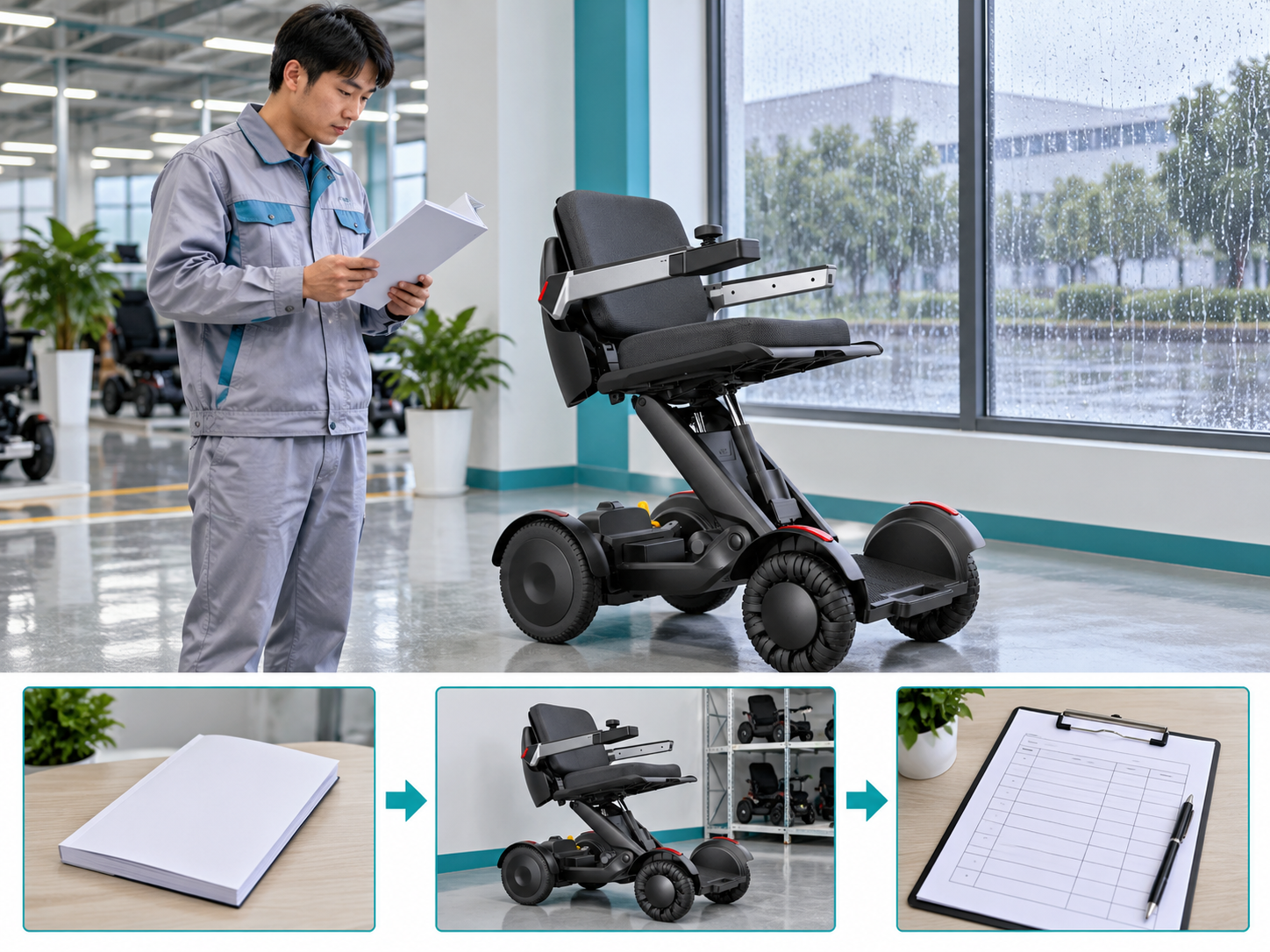
For power chair rain exposure, dealer copy should stay within the exact model's recorded limits. Broad phrases such as all-weather can imply conditions the product file does not support.
Publish supported weather wording
Use the maker's supported wording. Keep a claim-to-source record and review accessories separately. Update the wording when the maker revises the relevant guidance. See the WHO assistive product specifications for procurement context.
- Published claim
- Source
- Revision
| Check | Record or reference |
|---|---|
| Published claim | Copy sheet |
| Source | Model file |
| Revision | Change record |
Key Takeaway: Customers can read weather details with a clear product basis.
What should buyers settle before ordering?
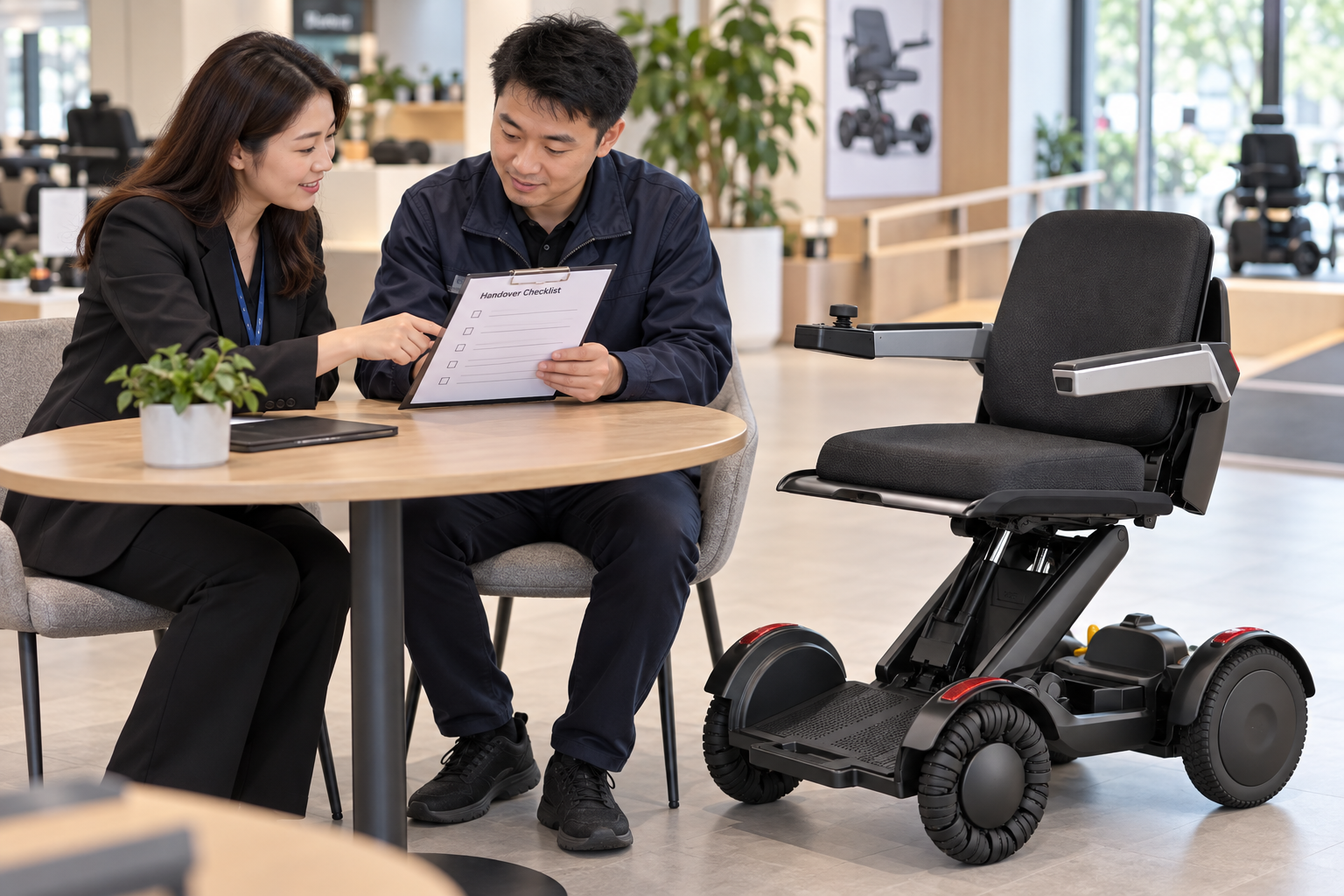
For power chair rain exposure, confirm the intended use, model limits, supported accessories and service response before approving supply. Leave unanswered capability questions out of the sales promise.
What should you do next?
Close the weather-use questions. Send the relevant conditions and requested documents with your enquiry. Ask for a written response tied to the exact chair version.
- Intended conditions
- Supported limits
- Service route
| Check | Record or reference |
|---|---|
| Intended conditions | Brief |
| Supported limits | Maker response |
| Service route | Agreement |
Key Takeaway: Your purchase and dealer details can use the same supported weather scope. To discuss the model and documents for your order, contact us with your requirements. At AryMD, useful product facts should support every care-equipment purchase.
Frequently asked questions
Q1: Can I assume an outdoor power chair is weatherproof?
No. Use the exact model's written weather limits and relevant protection evidence.
Q2: What’s the best cover for every power chair?
There is no universal supported cover. Confirm the accessory and conditions approved for the particular model.
Q3: How do I know whether a protection rating covers the whole chair?
Ask for its scope and supporting instructions. A component label should not be expanded into a whole-product claim.
Q4: Can switching on prove the chair is fine after wetting?
No. Follow the maker's response guidance and seek qualified service review where condition is uncertain.
Q5: Should I charge a chair just because the connector looks dry?
Do not rely on appearance alone. Follow the maker's instructions and any required service decision after exposure.