

Review small wheelchair casters as complete wheel, fork and axle assemblies. The supplied product sheet and a differently identified manual give different front-wheel sizes. Treating them as equivalent can send a buyer toward the wrong part. Examples use the 5903, a manual carbon-frame chair with one fixed 38 cm seat width.
What should you compare in small wheelchair casters?

Review small wheelchair casters as complete wheel, fork and axle assemblies. A 5903 front casters review should name the small front wheels, their forks and the axle or bearing arrangement fitted to the actual chair. Keep those parts distinct from the large rear wheels and the smaller rear anti-tip parts.
Name the wheel by its location
A general small-wheel request can name the wrong part. Use an overall chair photo and a close view to show which assembly you mean. Retain the model and part reference when requesting information or service. WHO guidance supports assessment, fitting and follow-up.
- Front wheel
- Fork
- Other small wheels
| Review point | What to confirm |
|---|---|
| Front wheel | Actual caster wheel |
| Fork | Matching front mounting structure |
| Other small wheels | Rear anti-tip parts recorded separately |
Key Takeaway: You can give the supplier an unambiguous part request before discussing size or replacement.
Which front-wheel size should you rely on?
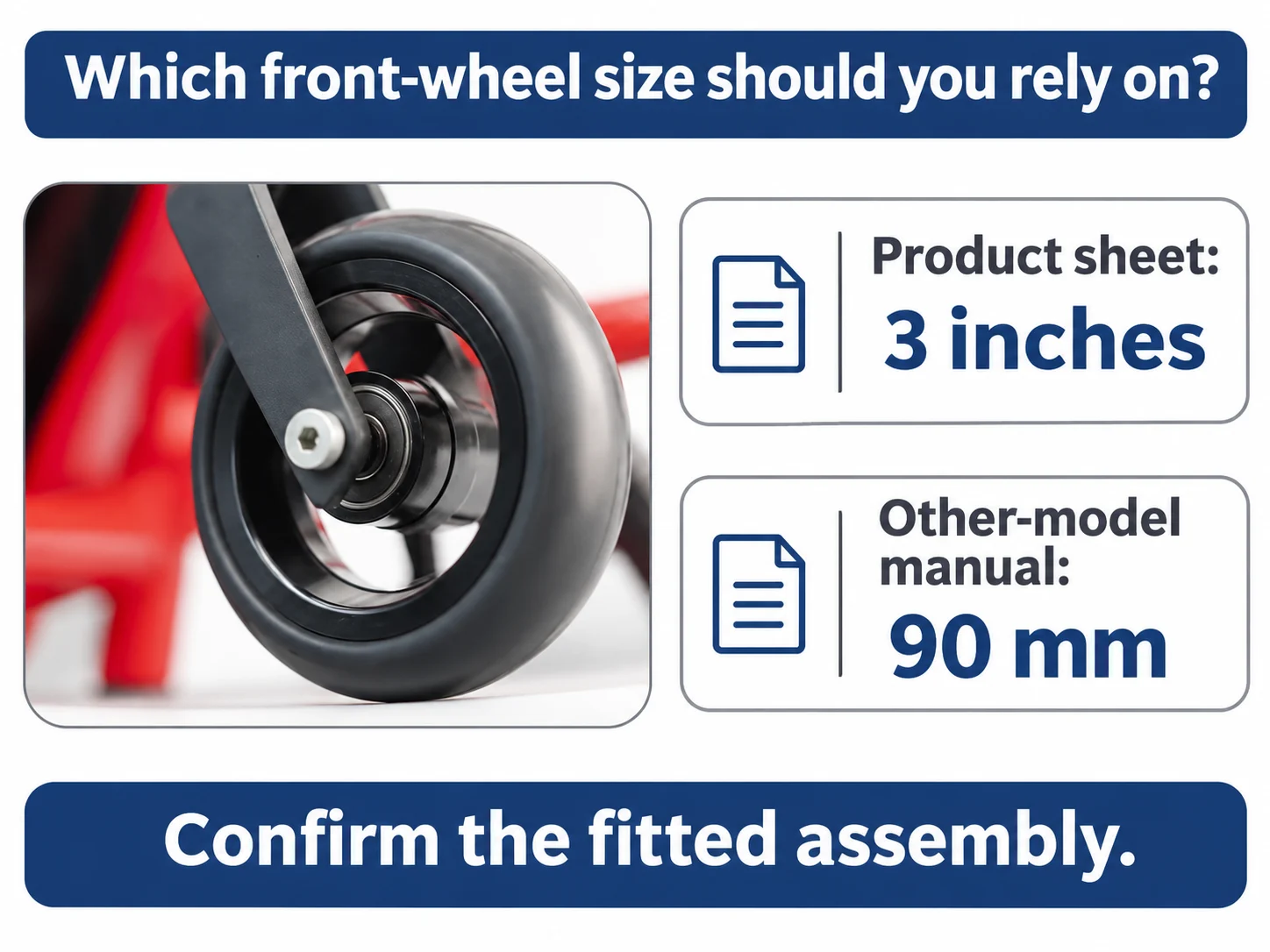
Use the applicable build record and actual wheel marking when comparing size claims for small wheelchair casters. Rely on the confirmed supplied 5903 front casters assembly because the available documents show different size entries. The 5903 product sheet says 3 inches, while the accompanying manual names another model and lists 90 mm.
Which record applies to the delivered unit?
Those entries should not be treated as interchangeable. Ask for the current part reference and a measurement with defined endpoints. Do not resolve the difference by rounding one entry into the other or presenting both as available options. Keep the confirmed size with the sample inspection record.
- Product sheet
- Manual entry
- Resolution
| Review point | What to confirm |
|---|---|
| Product sheet | 3-inch front-wheel listing |
| Manual entry | 90 mm under another model |
| Resolution | Actual part and measurement confirmation |
Key Takeaway: You can keep a source discrepancy from becoming an incorrect wheel order.
How do the fork and wheel relate in front casters?

The fork and axle determine the mounting arrangement around small wheelchair casters, so diameter alone is insufficient. The 5903 front casters wheel and fork form a fitted assembly, so a wheel-size change needs a review of the complete interface. Wheel diameter alone does not establish axle fit, clearance or the resulting setup.
Review the assembly as a unit
The fork belongs in a wheel comparison. Provide the supplier with the existing fork and wheel references. Ask whether the proposed part is supported for that exact arrangement rather than assuming it can be substituted because it looks similar.
- Wheel geometry
- Mounting interface
- Supply decision
| Review point | What to confirm |
|---|---|
| Wheel geometry | Actual size and width |
| Mounting interface | Fork axle and spacers |
| Supply decision | Confirmed assembly compatibility |
Key Takeaway: You can name the related parts before accepting a replacement proposal.
What should a front-wheel condition record include?

Record visible wheel condition, movement concerns and the exact assembly when inspecting small wheelchair casters. A 5903 front casters condition record should describe visible wear, damage or unusual behavior without guessing the technical cause. Record the exact wheel location and the circumstances in which the concern was noticed.
Describe what you can observe
A photograph and a precise note are more useful than a broad fault label. Use the service provider's requested images and inspection process. Keep observations separate from any conclusion about bearings, alignment or another part that has not been assessed.
- Location
- Observation
- Technical finding
| Review point | What to confirm |
|---|---|
| Location | Left or right front assembly |
| Observation | Specific visible or reported concern |
| Technical finding | Responsible service assessment |
Key Takeaway: You can make the initial report useful while leaving diagnosis to the appropriate review.
How should cleaning protect small wheelchair casters?

Use the model's approved cleaning method for debris around small wheelchair casters, with service advice for trapped material or damaged parts. Debris around 5903 front casters should be handled through the care instructions for the fitted assembly. Record accessible dirt or hair buildup, and confirm which cleaning tasks belong with the user and which require service access.
Check the care scope before removing parts
A visible axle does not authorize an unfamiliar dismantling task. Ask the provider for the permitted cleaning method and relevant inspection points. Do not copy a tool size, lubricant or disassembly sequence from another chair's caster instructions. Include the permitted care tasks in the user handover.
- Observed condition
- User care
- Service access
| Review point | What to confirm |
|---|---|
| Observed condition | Visible buildup and location |
| User care | Permitted accessible cleaning |
| Service access | Tasks assigned to a qualified provider |
Key Takeaway: You can plan routine care without turning a simple observation into an unsupported repair procedure.
Does a small caster prove suitability for every surface?

The diameter of small wheelchair casters does not prove suitability for every route or surface. No; the 5903 front casters design does not establish suitability for every pavement, threshold or outdoor route. The intended use and the individual's needs require review with the actual chair setup.
Evaluate the route you intend to use
A product photo cannot show every surface condition. Ask the supplier to name the supported operating conditions. Keep any threshold or rough-surface concern in the relevant assessment rather than inventing an obstacle height from the caster diameter.
- Product guidance
- Route information
- Use decision
| Review point | What to confirm |
|---|---|
| Product guidance | Documented intended conditions |
| Route information | Actual surfaces and transitions |
| Use decision | Appropriate individual and product review |
Key Takeaway: You can discuss where the chair may be used without converting wheel appearance into an all-terrain claim.
What if front casters become noisy or unstable?

Report new noise or unstable movement around small wheelchair casters for assessment instead of guessing an adjustment. If 5903 front casters become noisy or behave unusually, record the change and use the matching service process before assuming a cause. The available material does not establish a universal adjustment that resolves every symptom.
Give the provider the context
Noise, visible wear and movement are different observations. State when the concern appeared and whether a known change or impact preceded it. Include the unit and part references so the response can address the actual assembly.
- Reported change
- Context
- Service route
| Review point | What to confirm |
|---|---|
| Reported change | Specific noise or movement |
| Context | Timing and relevant events |
| Service route | Model-matched technical review |
Key Takeaway: You can support a focused service response without prescribing a guessed fix.
How should a replacement caster be specified?
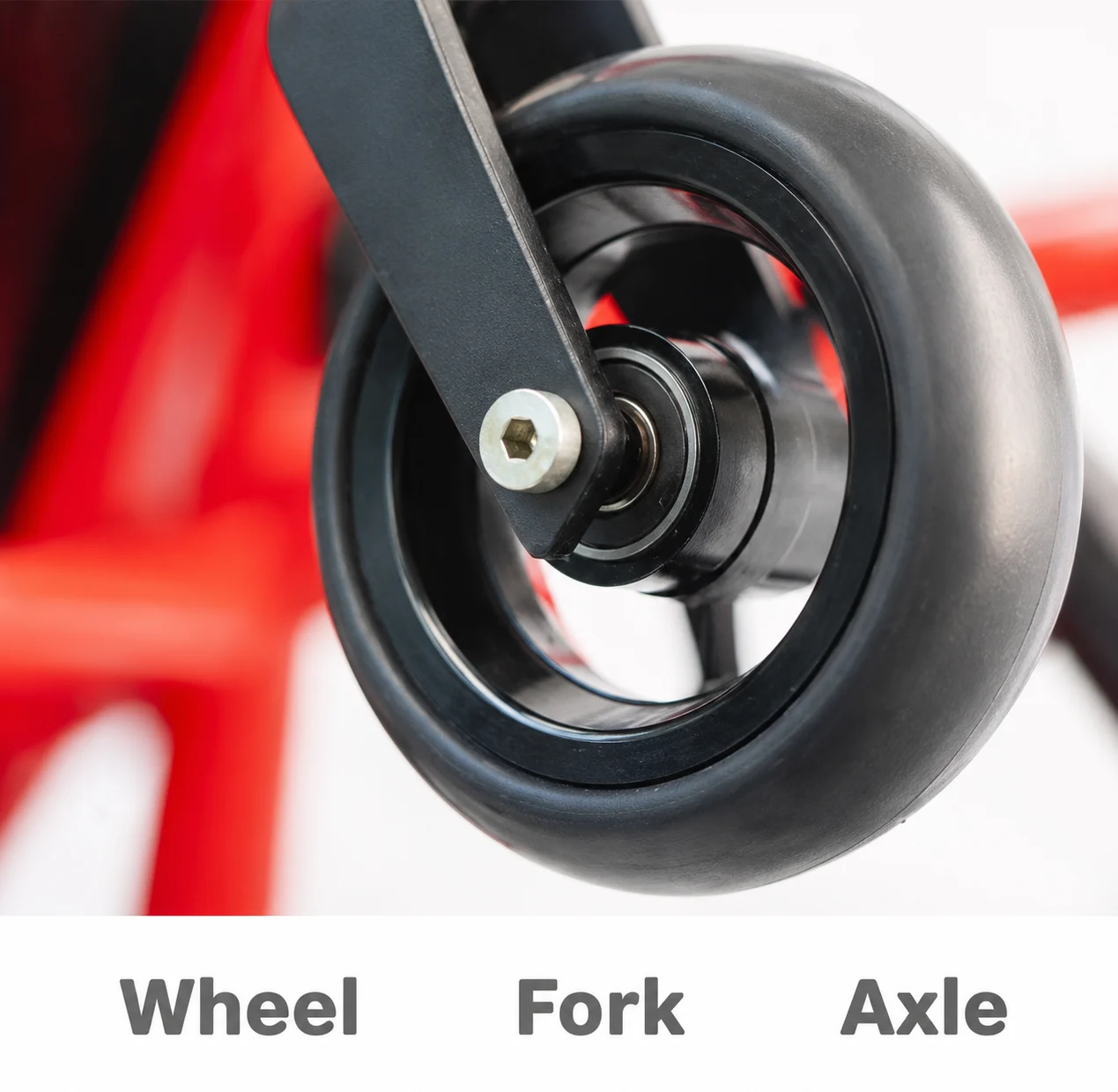
Specify the complete compatible assembly when requesting replacements for small wheelchair casters. Specify replacement 5903 front casters using the exact wheel, fork and interface information requested by the supplier. Include any spacers or mounting parts that are part of the confirmed assembly.
Ask what the quoted part includes
A wheel-only price may omit the rest of the required kit. Request written compatibility and the matching service instructions for the unit. Keep the goods list separate from installation or inspection work that needs its own arrangement. Identify the relevant frame interface when the proposed assembly affects it.
- Part identity
- Included contents
- Service scope
| Review point | What to confirm |
|---|---|
| Part identity | Exact proposed reference |
| Included contents | Wheel and named associated hardware |
| Service scope | Confirmed fitting and inspection tasks |
Key Takeaway: You can compare replacement offers without assuming they contain identical parts or work.
Which records should accompany small wheelchair casters?

Retain the assembly identity, route limitations and service contacts in a handover involving small wheelchair casters. A 5903 front casters handover should retain the supplied assembly identity, care guidance and the route for reporting a concern. Any source-size discrepancy should be resolved or clearly assigned for follow-up.
Keep the guide with the unit record
Future service should not restart from a photograph alone. Record the current part reference and the relevant instruction revision. Retain replacement history so the next provider knows whether the caster arrangement still matches the original supply.
- Original assembly
- Care guidance
- Change history
| Review point | What to confirm |
|---|---|
| Original assembly | Recorded part reference |
| Care guidance | Applicable instructions |
| Change history | Approved replacements and service work |
Key Takeaway: You can preserve continuity between delivery, routine care and a later parts request.
How can you request useful front casters information?

Ask about small wheelchair casters with the actual chair reference, dimensions and photographs of the wheel and fork together. Request 5903 front casters information with the model, part photos and the measurement or service question you need answered. Ask for the actual assembly definition rather than a generic front-wheel description.
Make the part request specific
The supplier needs the wheel and fork context. Send AryMD your unit or order reference, destination and the required scope. We can discuss the product data and written parts proposal needed for your review.
- Product context
- Question
- Response
| Review point | What to confirm |
|---|---|
| Product context | Exact unit and front assembly |
| Question | Size compatibility condition or supply |
| Response | Current part details and stated scope |
Key Takeaway: You can turn a small-wheel inquiry into a traceable part and support request. Contact us with your 5903 setup, quantity and destination so we can discuss the product information and written supply scope. AryMD puts clear specifications before purchasing promises.
Frequently asked questions
Q1: Can I treat 3 inches and 90 mm as the same caster specification?
No. Keep the two source entries separate and confirm the assembly supplied on the actual 5903.
Q2: What's the best photo for a front-wheel inquiry?
Send both a location view and a close view of the wheel, fork and axle area. This distinguishes the caster from rear anti-tip parts.
Q3: How do I know whether a replacement wheel fits the fork?
Obtain the supplier's complete interface confirmation. Diameter alone does not establish the axle, clearance or spacer arrangement.
Q4: Can I use another model's lubrication instructions?
No. Use the care method applicable to the fitted assembly and the responsible provider's service scope.
Q5: Does a caster photo prove that the chair can cross a particular threshold?
No. The actual route and supported operating conditions require their own review.