
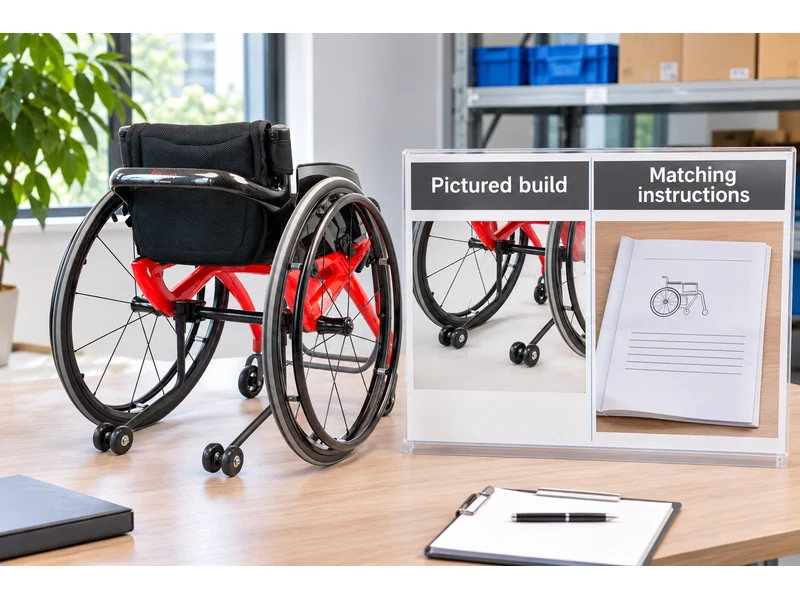
Confirm wheelchair anti-tip compatibility from the assemblies actually supplied, not from a generic product photo alone. The red product photos show parts that a nearby manual says are absent. Passing both records to a customer leaves a basic setup question unresolved. Examples use the 5903, a manual carbon-frame chair with one fixed 38 cm seat width.
How do you confirm wheelchair anti-tip compatibility?
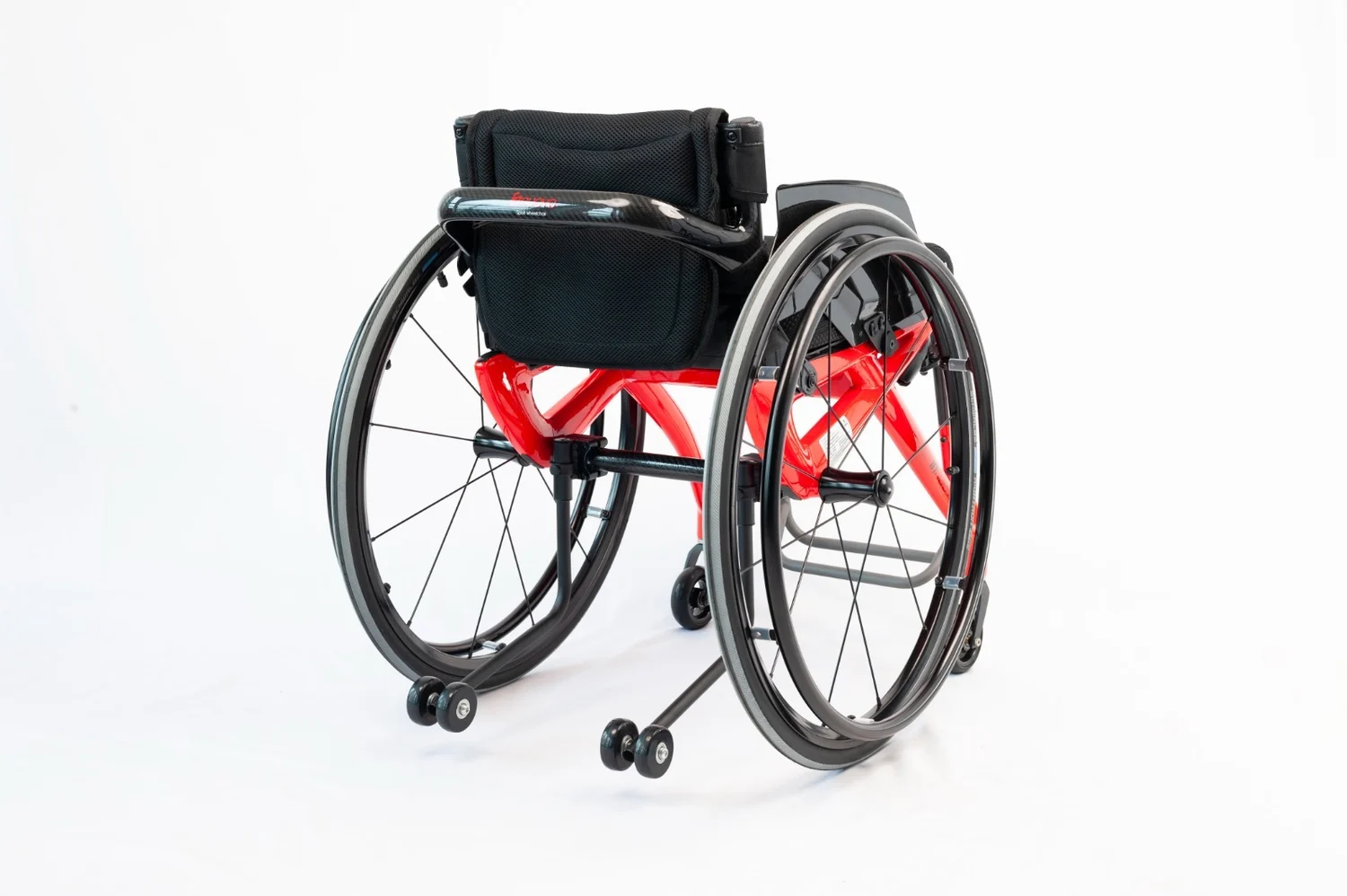
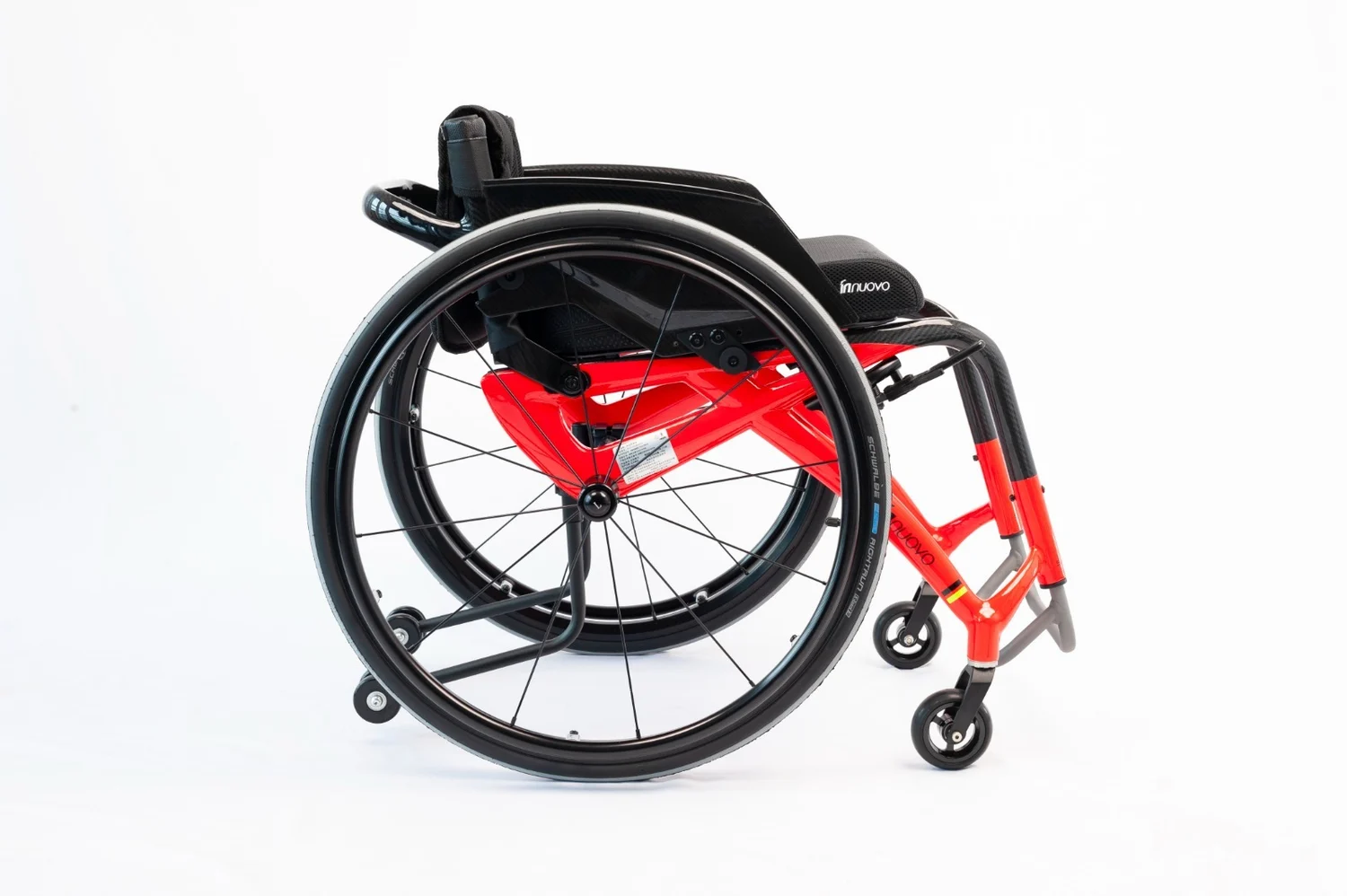
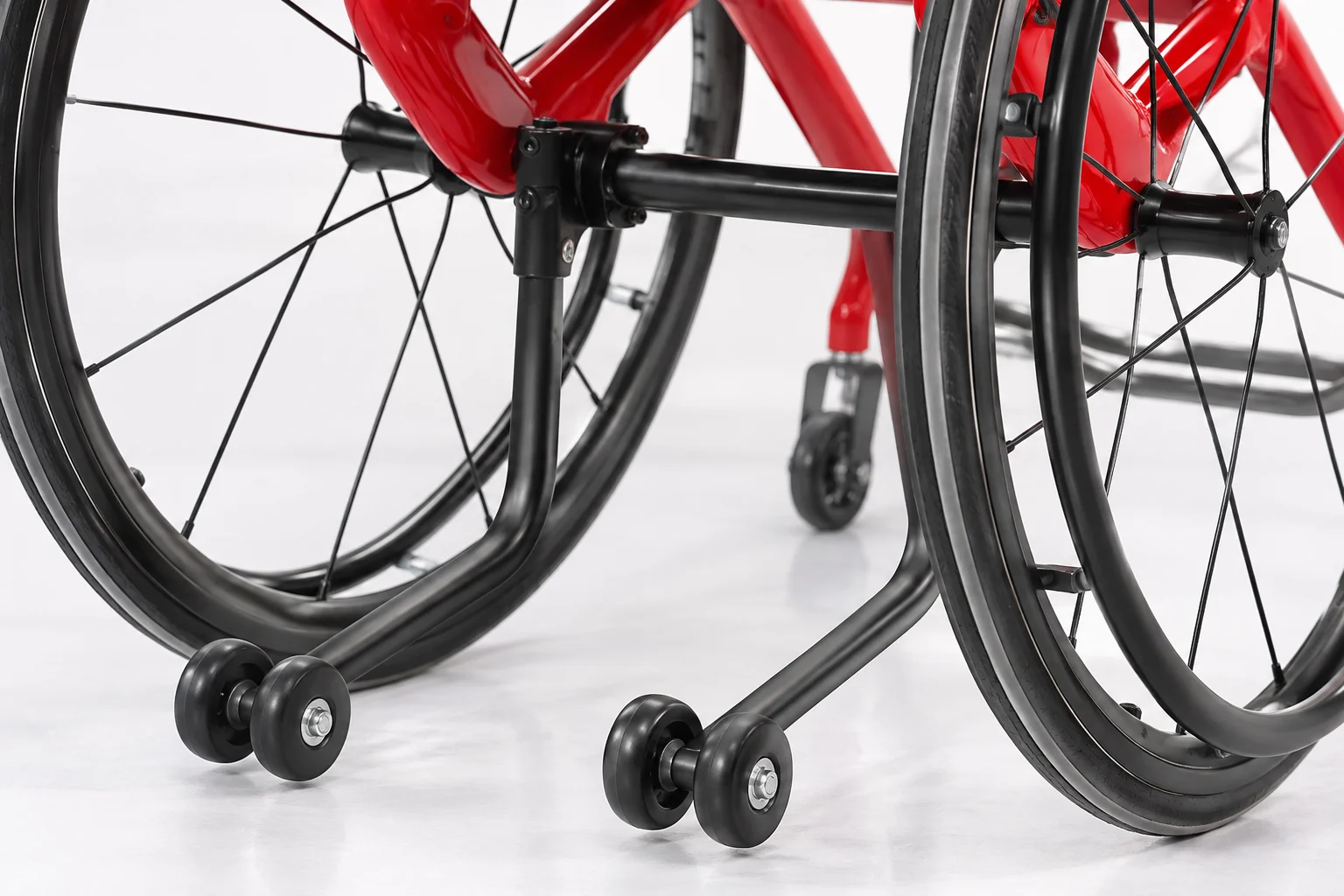
Confirm wheelchair anti-tip compatibility from the assemblies actually supplied, not from a generic product photo alone. The 5903 anti-tip wheels red-frame photos show left and right rear anti-tip assemblies extending behind the main wheels. Treat this as evidence of the pictured setup and confirm whether the same parts are included in the offered chair.
Identify the whole rear assembly
The small wheels belong with their supporting brackets. Ask for the left and right part references and a clear view of their mounting points. Keep the actual rear arrangement in the product and order records. WHO guidance supports assessment, fitting and follow-up.
- Photo setup
- Component scope
- Order confirmation
| Review point | What to confirm |
|---|---|
| Photo setup | Rear assemblies on both sides |
| Component scope | Brackets wheels and mounts |
| Order confirmation | Explicit included parts |
Key Takeaway: You can describe the reference design without assuming that every supplied version has identical equipment.
Why does the accompanying manual describe another arrangement?
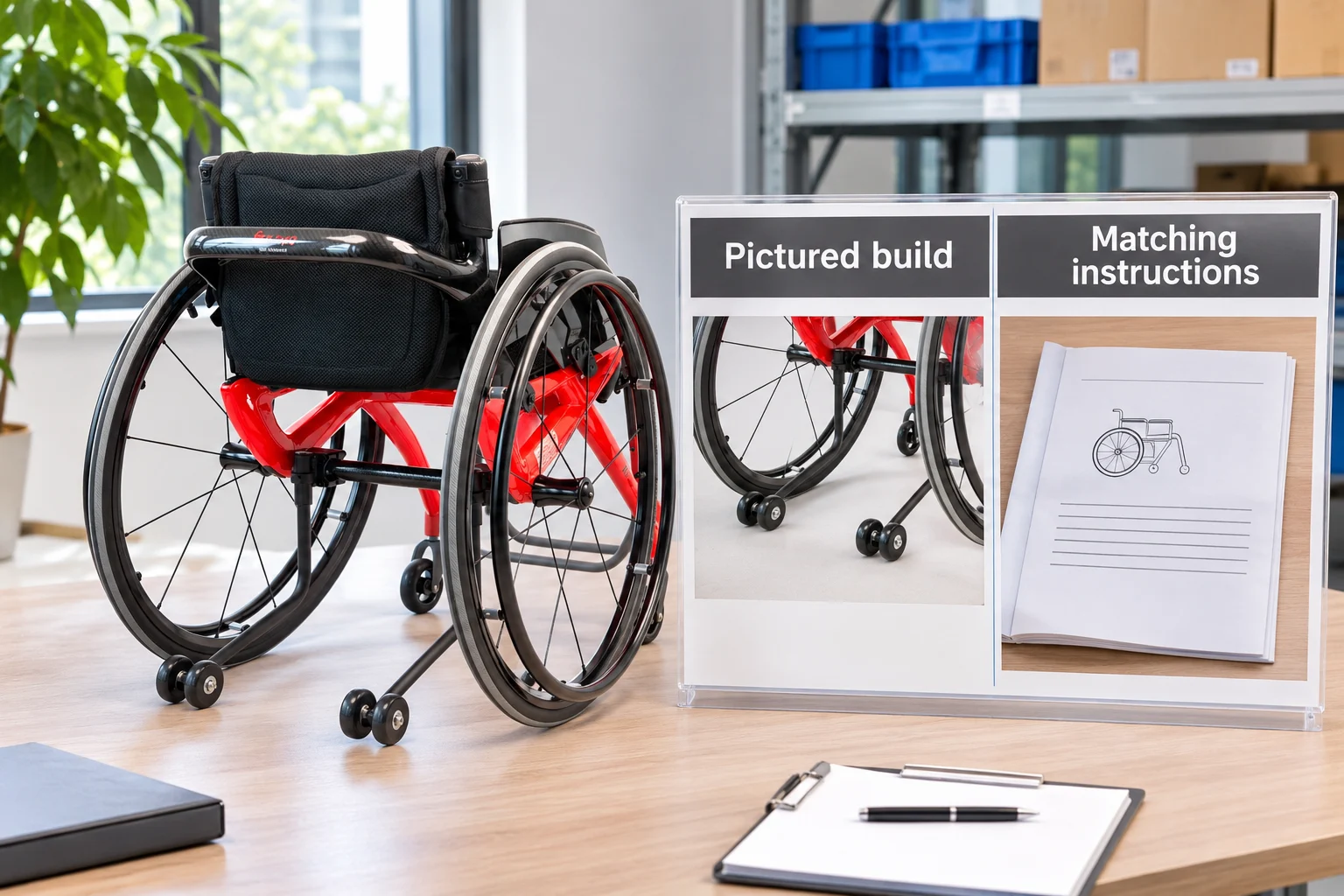
Resolve any mismatch between a manual and the offered build before accepting wheelchair anti-tip compatibility. The 5903 anti-tip wheels review has a document mismatch because the supplied manual names another model and states that no anti-roll device is fitted. That statement does not match the red product images, so applicability needs a supplier response.
Which guide belongs to this build?
The mismatch should be resolved before handover. Send the model and setup references with the two conflicting records. Request instructions that describe the actual rear assemblies rather than selecting whichever source is more convenient. Keep the corrected guide with the user handover record.
- Image record
- Manual record
- Required response
| Review point | What to confirm |
|---|---|
| Image record | Rear anti-tip assemblies visible |
| Manual record | Different model and arrangement |
| Required response | Matching current instructions |
Key Takeaway: You can prevent a contradictory manual from defining the operation of a differently equipped chair.
Do anti-tip wheels prevent every tipping event?
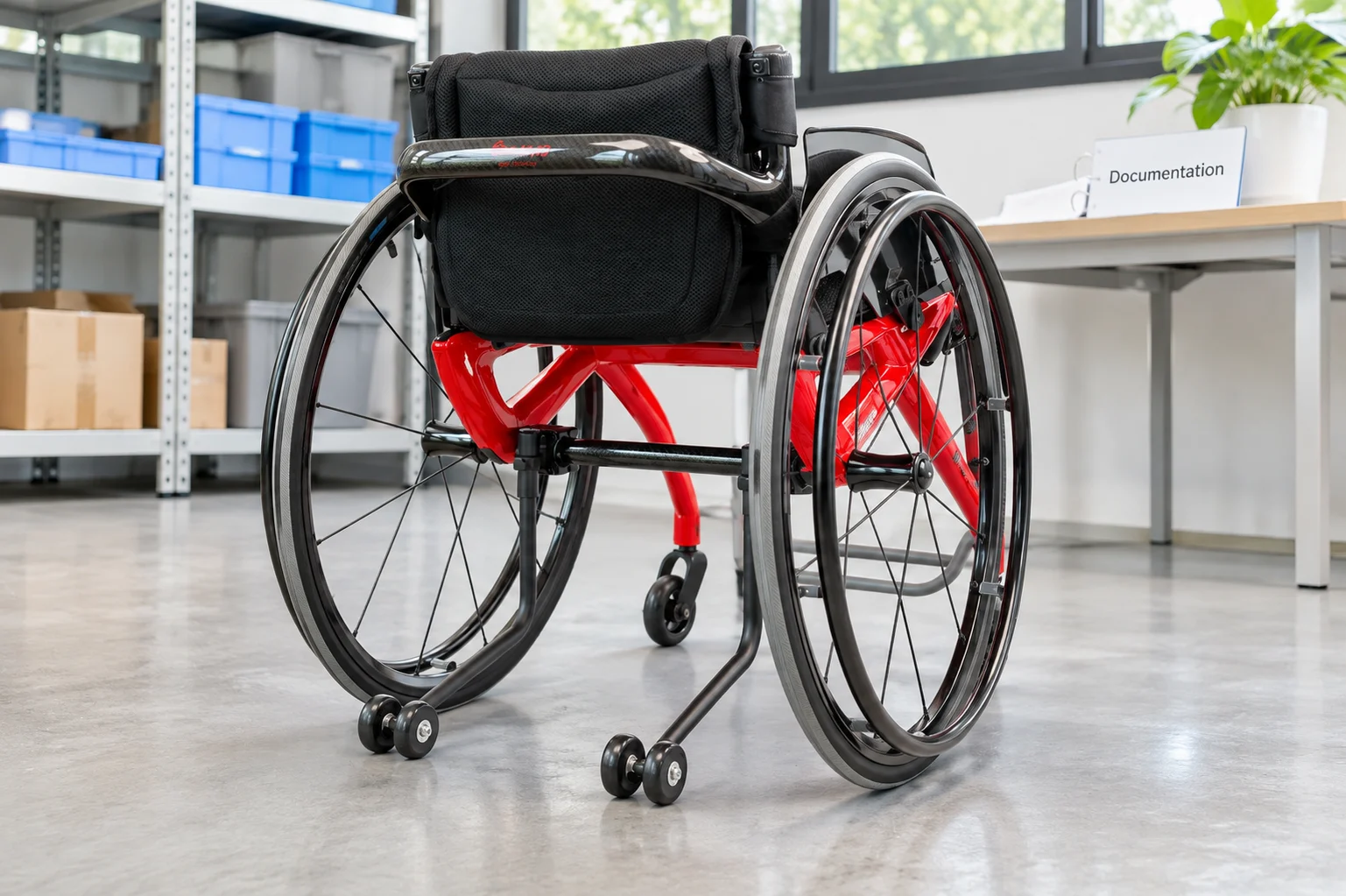
Documented wheelchair anti-tip compatibility does not mean that an accessory prevents every tipping event. No; 5903 anti-tip wheels should not be presented as a guarantee against all tipping events. Their role depends on the actual assembly, matching setup and the conditions in which the chair is used.
Keep the claim within the evidence
A visible part is not proof of universal stability. Ask the supplier to define the intended role and guide for the fitted parts. Keep the user's needs and proposed activities within the relevant assessment instead of treating the feature as permission for unverified maneuvers.
- Component role
- Setup
- Claim limit
| Review point | What to confirm |
|---|---|
| Component role | Defined by matching product guidance |
| Setup | Actual reviewed arrangement |
| Claim limit | No universal no-tip guarantee |
Key Takeaway: You can explain the feature without promising a result the supplied material cannot establish.
How should the rear extension be measured?
Measure the fitted rear extension as part of the actual setup used to review wheelchair anti-tip compatibility. Measure the 5903 anti-tip wheels rear extension in its actual use or transport position, with the endpoints shown on a drawing or photo. Confirm whether the chair's quoted overall length includes that part envelope.
Trace the back of the chair
A rear bracket can affect the space you need. Use the same part position when comparing storage, access or packing arrangements. Do not assume a published 84 cm length includes every accessory position unless the supplier defines it that way.
- Position
- Endpoint
- Length record
| Review point | What to confirm |
|---|---|
| Position | Named use or transport state |
| Endpoint | Farthest included rear part |
| Length record | Complete defined product envelope |
Key Takeaway: You can include the rear assemblies in a space plan without guessing what the catalog length covers.
What should a wheelchair anti-tip compatibility review record?
Record the attachment, visible condition and unresolved movement concerns during a wheelchair anti-tip compatibility review. A 5903 anti-tip wheels condition review should record the supplied parts and any visible damage, wear or changed behavior under the matching inspection process. Keep the observations specific to the affected side and part.
Describe the affected part
A loose-wheel report can refer to several different assemblies. Provide the context and detail images requested by the service provider. Do not infer an acceptable gap, position or tightening value from an unrelated wheelchair's instructions. Distinguish the affected part from the main wheel assemblies.
- Affected side
- Observed condition
- Review basis
| Review point | What to confirm |
|---|---|
| Affected side | Left right or both |
| Observed condition | Specific damage wear or behavior |
| Review basis | Matching guide and responsible provider |
Key Takeaway: You can help the service team name the issue without introducing an unsupported setup rule.
Can rear anti-tip parts be removed to save space?
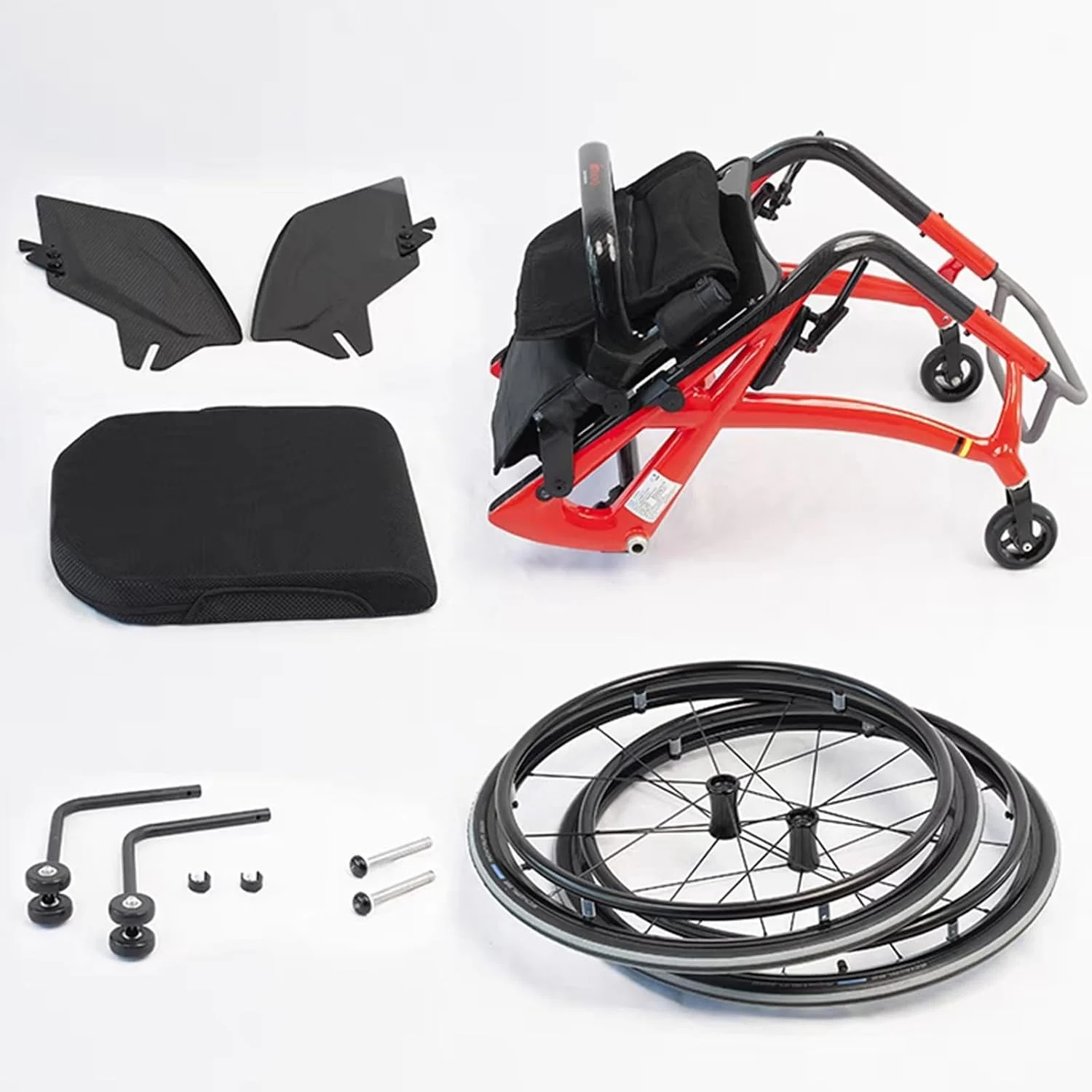
Check the matching instructions before removing rear accessories, because a storage change can affect wheelchair anti-tip compatibility and intended use. Removal of 5903 anti-tip wheels must be reviewed against the actual product instructions and the intended transport task. A detached part in a source photo does not authorize use of the chair in that altered state.
Separate transport state from use state
A smaller packed kit can require a later return step. Ask which removals are permitted and who completes the required reassembly and checks. Keep the removed parts on the inventory so they are not omitted from the return-to-use process.
- Permitted removal
- Stored parts
- Return step
| Review point | What to confirm |
|---|---|
| Permitted removal | Applicable handling guidance |
| Stored parts | Complete named inventory |
| Return step | Required reassembly and checks |
Key Takeaway: You can plan transport without treating a storage setup as an approved operating setup.
How should replacement anti-tip wheels be matched?

Match the mounting interface and approved assembly when checking replacement wheelchair anti-tip compatibility. Replacement 5903 anti-tip wheels should be matched as the suitable wheel, bracket and mounting assembly for the exact chair. A small wheel with a similar diameter does not establish compatibility with the supporting parts.
Confirm the complete replacement scope
The mounting interface matters as much as the visible wheel. Send the supplier the unit and part references with the requested photos. Ask whether the offer covers one side, a pair or a complete assembly, and which service work is required.
- Technical identity
- Quantity
- Service scope
| Review point | What to confirm |
|---|---|
| Technical identity | Exact assembly and unit |
| Quantity | One side pair or complete kit |
| Service scope | Applicable fitting and inspection |
Key Takeaway: You can compare replacement offers without overlooking part count or mounting requirements.
What should sales staff say about the feature?
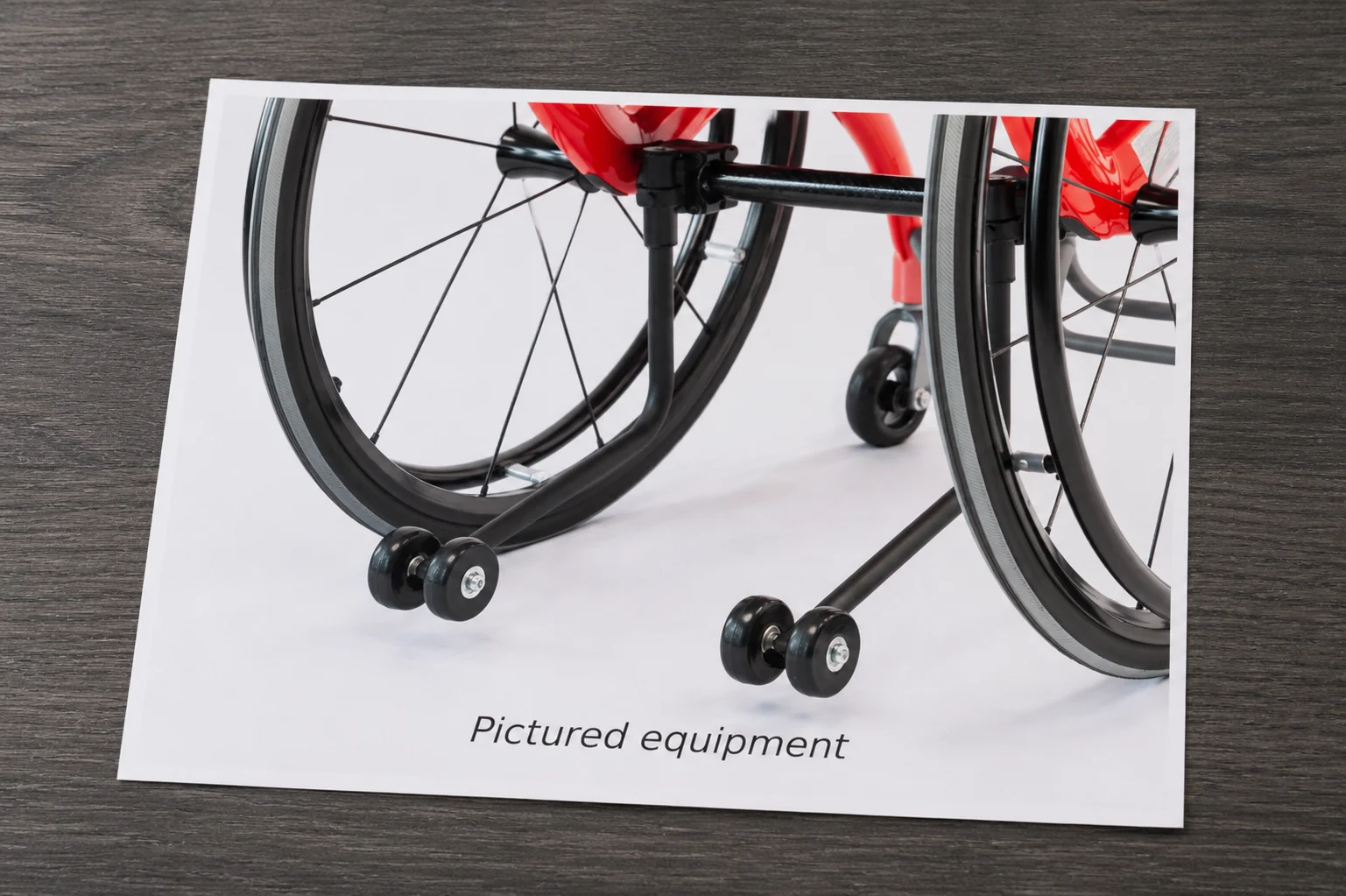
Sales descriptions should state the supplied equipment and its documented limits after wheelchair anti-tip compatibility has been checked. Sales staff should describe 5903 anti-tip wheels as pictured rear parts whose inclusion and matching guidance must match the order. They should avoid claiming that the chair cannot tip or that the feature approves a particular sport or obstacle.
Use a setup statement
The buyer needs the actual included equipment. Link the description to the agreed parts list and product records. If the customer asks about a specific task, route that question to the relevant product and individual review. Use the same evidence boundary in the wider carbon-chair comparison.
- Sales wording
- Excluded promise
- Specific task
| Review point | What to confirm |
|---|---|
| Sales wording | Actual included setup |
| Excluded promise | Universal stability or activity approval |
| Specific task | Reviewed with matching guidance |
Key Takeaway: You can keep a useful product feature from becoming an unsupported performance claim.
How should an order document wheelchair anti-tip compatibility?
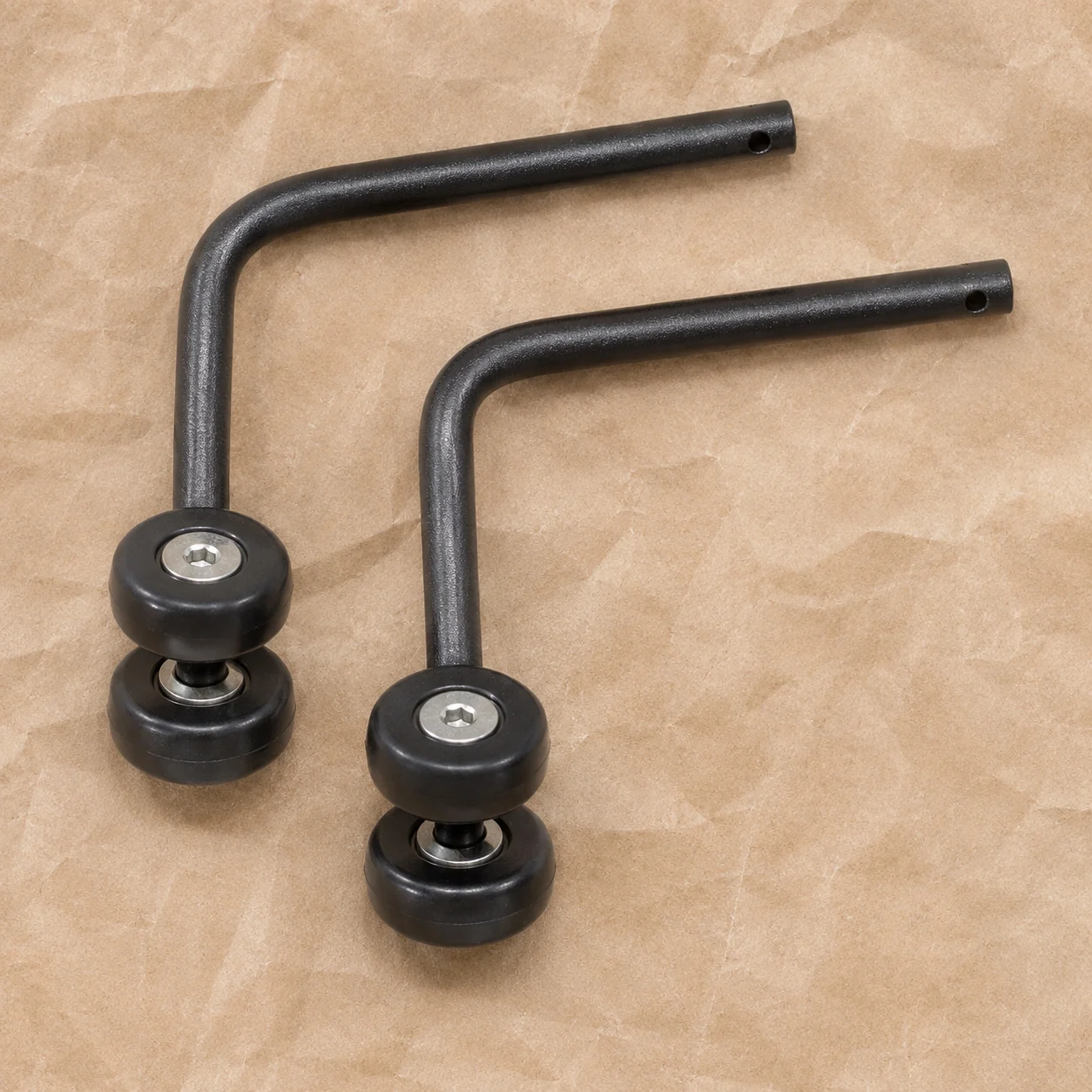
Itemize the rear assemblies and matching instructions on the order to preserve the wheelchair anti-tip compatibility decision. List 5903 anti-tip wheels on the order by their confirmed assembly scope, quantity and setup. Keep the relevant guide and any setup or service responsibilities attached to that supply description.
Make the rear equipment visible in the quote
A standard-accessory assumption can create a delivery dispute. Ask the supplier to name what is included and how any changes will be documented. Retain the accepted version so the receiving team can compare the actual parts with the order.
- Contents
- Documents
- Acceptance reference
| Review point | What to confirm |
|---|---|
| Contents | Named rear assemblies and hardware |
| Documents | Matching setup and guide |
| Acceptance reference | Final written offer |
Key Takeaway: You can make the delivery check concrete before the chair arrives.
How can you resolve a question about anti-tip wheels?
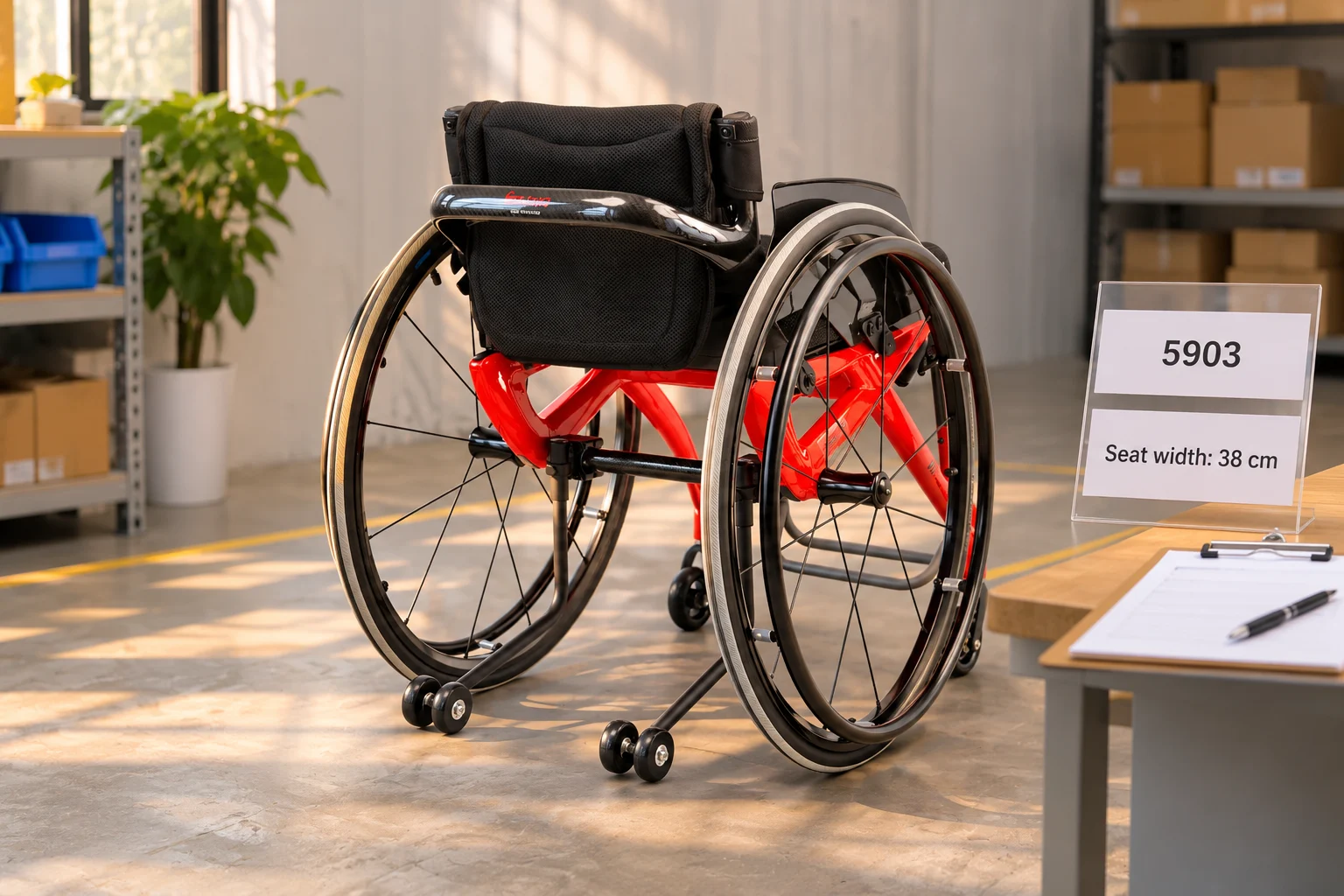
Resolve wheelchair anti-tip compatibility questions with photos, model identity and a matching supplier instruction record. Resolve a 5903 anti-tip wheels question by linking the unit, rear-assembly photos and the decision you need to make. Ask for the matching parts and instructions before relying on a broad stability description.
Send the setup evidence
The right response starts with the actual rear setup. Give AryMD the model reference, destination and whether your request concerns a complete chair or spare parts. We can discuss the product information and written supply scope needed for review.
- Evidence
- Question
- Response
| Review point | What to confirm |
|---|---|
| Evidence | Model and actual rear setup |
| Question | Inclusion condition compatibility or transport |
| Response | Matching parts guide and commercial scope |
Key Takeaway: You can turn a conflicting photo or document into a specific supplier question with a clear next action. Contact us with your 5903 setup, quantity and destination so we can discuss the product information and written supply scope. AryMD puts clear specifications before purchasing promises.
Frequently asked questions
Q1: Can I assume every 5903 includes the pictured rear assemblies?
No. Have the supplier itemize the actual included parts in the offer.
Q2: What's the best way to resolve the manual and photo mismatch?
Send both references with the exact proposed build. Request current instructions that describe the supplied setup.
Q3: How do I know whether rear extensions are included in overall length?
Ask for a drawing or photo with the measurement endpoints marked. Keep the part position with that record.
Q4: Do anti-tip parts guarantee that the chair cannot tip?
No. Their role depends on the actual setup and matching guidance, and they do not establish universal stability.
Q5: Can I use the chair in any setup shown in a transport photo?
No. A storage or separated state does not establish an approved operating setup.