
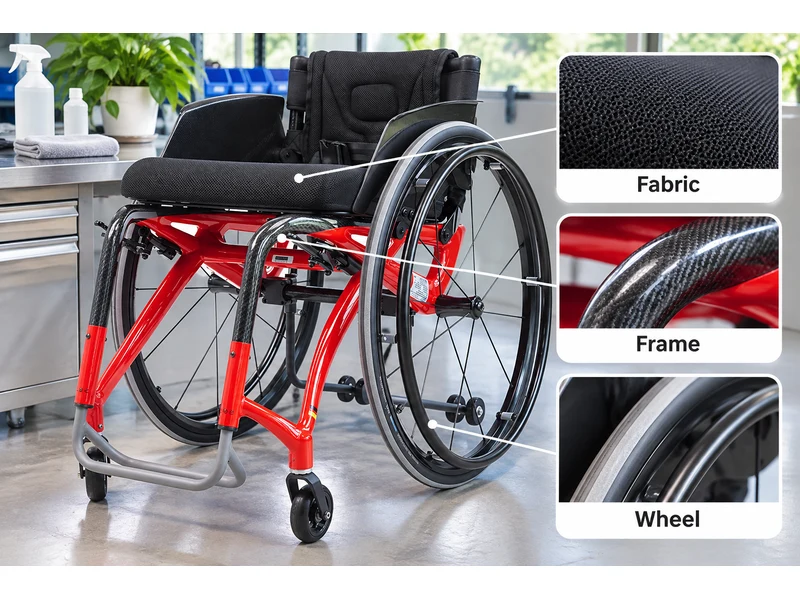
Plan carbon fiber wheelchair cleaning by separating the frame, fabric, cushion and wheel assemblies. A removable cushion or carbon finish can look easy to care for while its permitted products and drying method remain unspecified. Guessing can change or damage parts that later need support. Examples use the 5903, a manual carbon-frame chair with one fixed 38 cm seat width.
How should carbon fiber wheelchair cleaning be planned?
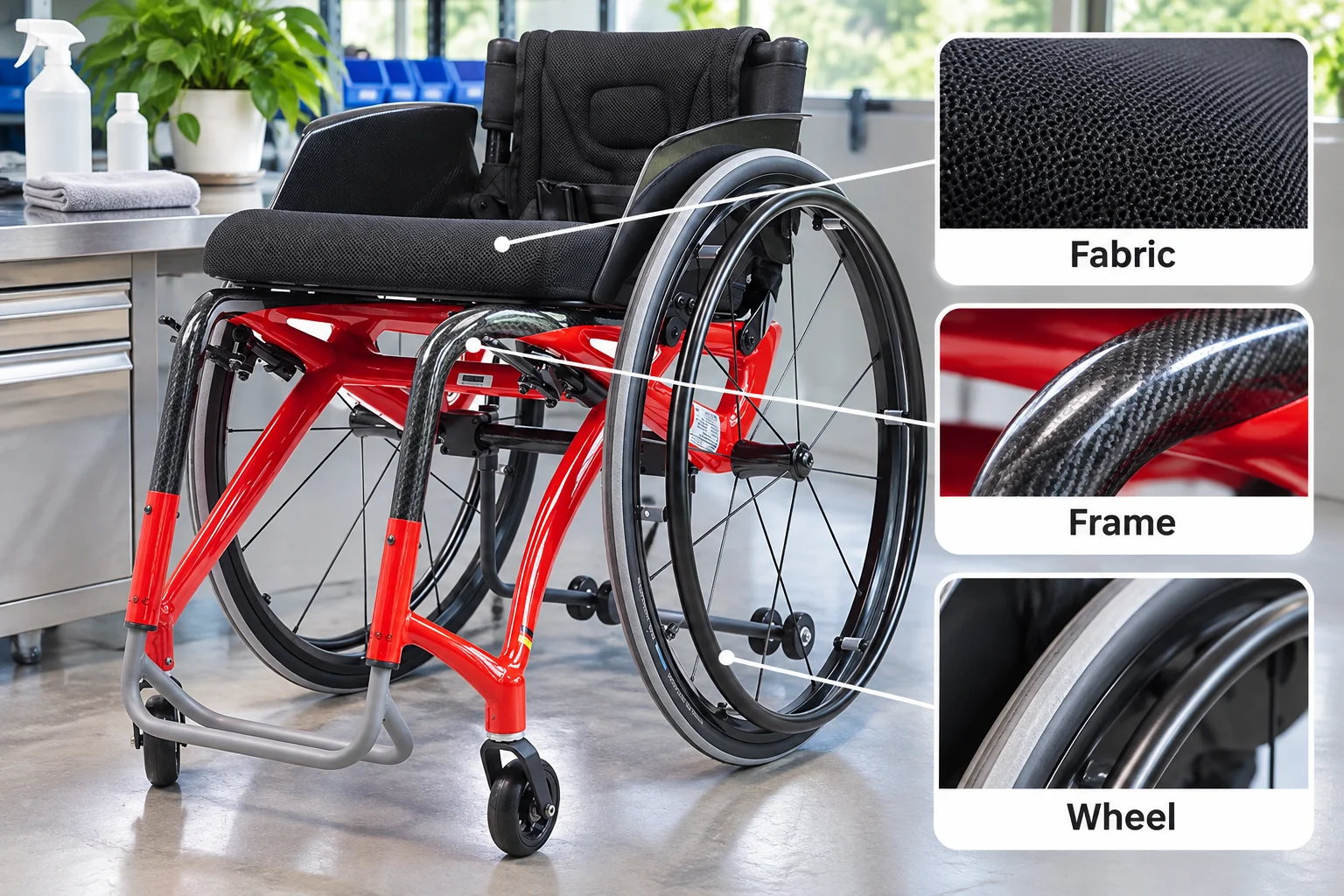
Plan carbon fiber wheelchair cleaning by separating the frame, fabric, cushion and wheel assemblies. Plan 5903 wheelchair cleaning by identifying the actual frame finish, seat plate, cushion, back upholstery and wheel assemblies. Each surface needs the applicable care method rather than one assumed treatment for the entire chair.
Separate the materials in the plan
A removable part can have its own instructions. Ask for the care guidance supplied with the chair and cushion. Record which tasks can be done as routine care and which need the service provider's involvement. WHO guidance supports assessment, fitting and follow-up.
- Frame and guards
- Seating parts
- Wheel assemblies
| Review point | What to confirm |
|---|---|
| Frame and guards | Actual finish and surface guidance |
| Seating parts | Cover cushion and support instructions |
| Wheel assemblies | Applicable cleaning and service scope |
Key Takeaway: You can create a usable care plan without treating every visible part as the same material.
Which guide should define the cleaning method?
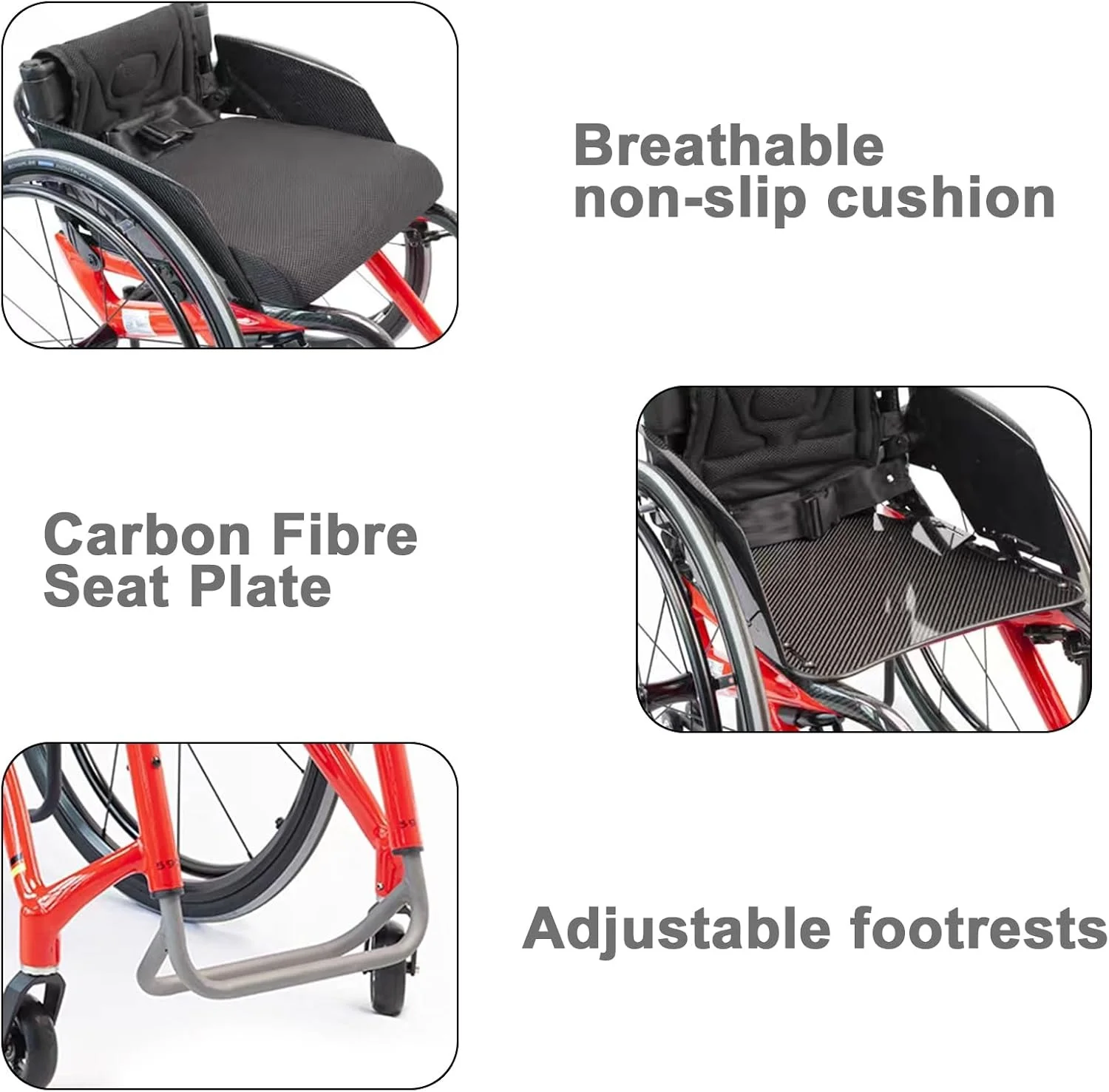
Use instructions for the exact supplied model to choose methods and products for carbon fiber wheelchair cleaning. The 5903 wheelchair cleaning method should come from instructions that match the delivered chair and seating parts. The supplied manual names another model, so its applicability needs confirmation before its wording becomes a local care procedure.
Which version belongs to this chair?
A file in the product folder is not enough by itself. Request the current model and revision reference from the supplier. Keep any cushion or cover instructions alongside the chair guide because those parts may have separate care requirements. Record the guide match in the product inspection file.
- Chair guide
- Seating guide
- Unresolved difference
| Review point | What to confirm |
|---|---|
| Chair guide | Matching model and revision |
| Seating guide | Exact cushion and cover |
| Unresolved difference | Supplier clarification |
Key Takeaway: You can give users a coherent set of instructions rather than combining unrelated procedures.
What should wheelchair cleaning say about the cushion?
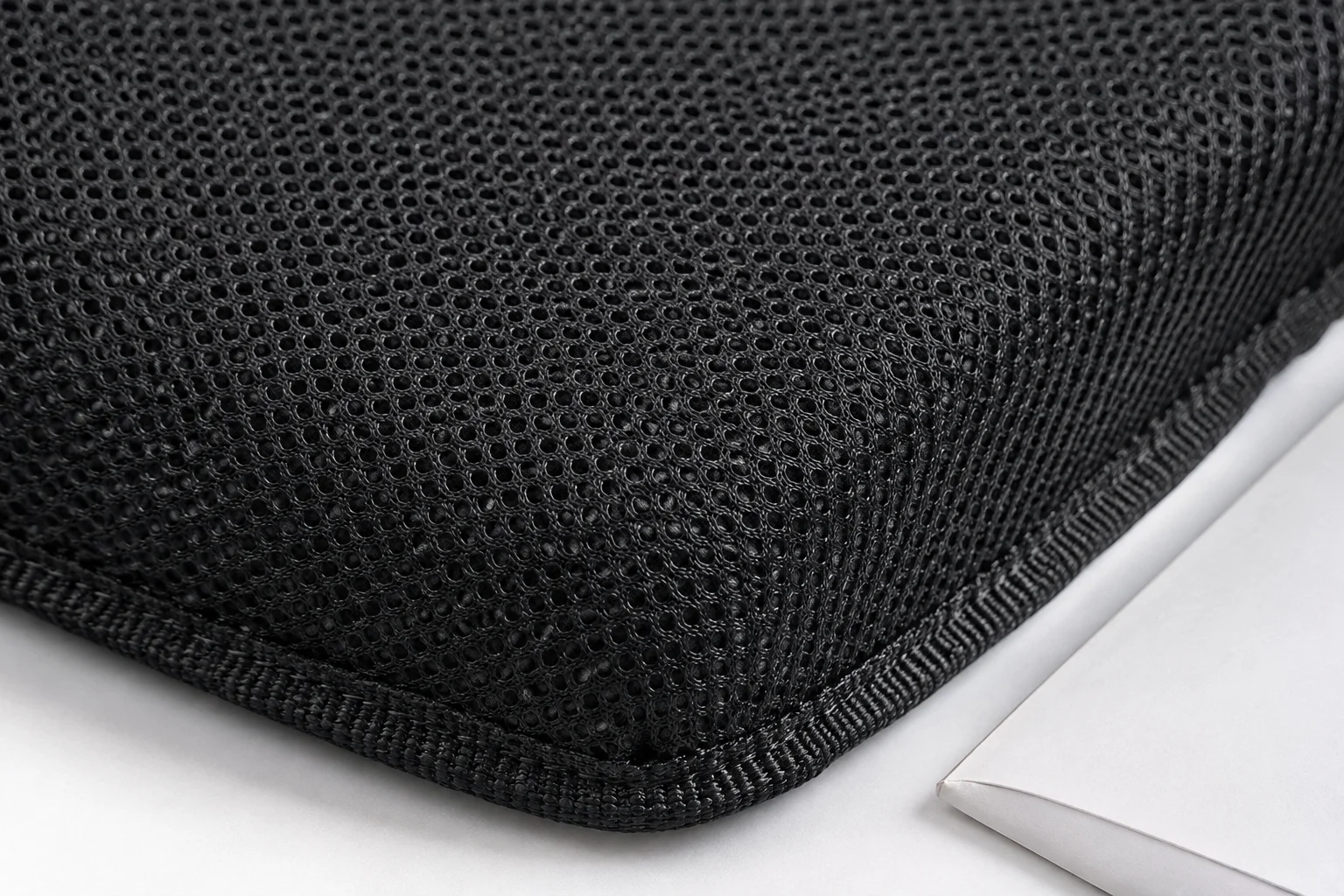
Confirm removal, cover care and attachment guidance before including the cushion in carbon fiber wheelchair cleaning. For 5903 wheelchair cleaning, identify the cushion and cover separately and use their actual care instructions. Removability does not by itself establish that the cover can be machine-washed or that the inner cushion can be soaked.
Read the instructions for each part
The visible fabric may hide a different inner construction. Ask which cleaning products, methods and drying conditions are permitted. Keep any replacement cushion's instructions with its own part reference instead of continuing the original care routine automatically.
- Cover
- Inner cushion
- Replacement
| Review point | What to confirm |
|---|---|
| Cover | Exact material and care limits |
| Inner cushion | Separate permitted treatment |
| Replacement | Updated product and care record |
Key Takeaway: You can protect the seating arrangement by matching care to the part actually supplied.
How should the back upholstery be included?
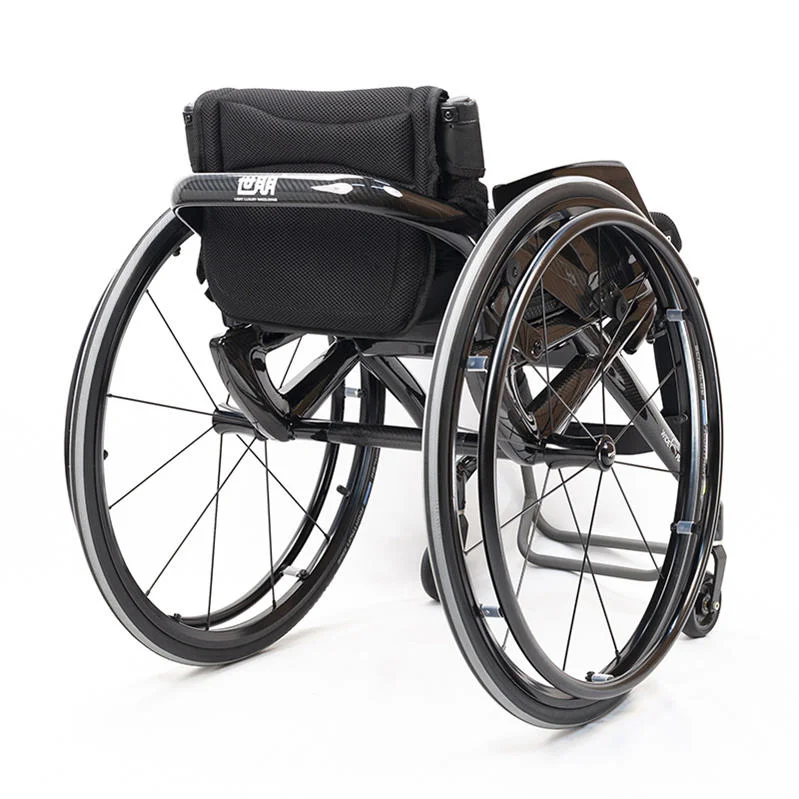
Treat back upholstery as a separate material within carbon fiber wheelchair cleaning, with its own care instructions. Back upholstery belongs in 5903 wheelchair cleaning through its material, attachment and applicable cleaning method. The source shows a removable soft back, but it does not establish every permitted washing or reattachment procedure.
Keep removal and return in the plan
A clean cover still needs the intended fitted state. Ask the supplier how the actual upholstery should be handled and returned. Assign any setup or tension question to the appropriate provider rather than copying another model's strap adjustment.
- Upholstery identity
- Care method
- Return state
| Review point | What to confirm |
|---|---|
| Upholstery identity | Actual supplied back part |
| Care method | Matching cleaning and drying guidance |
| Return state | Applicable attachment and setup review |
Key Takeaway: You can keep a cleaning task from ending with an unreviewed change to the back support.
How should carbon fiber wheelchair cleaning handle wheel assemblies?
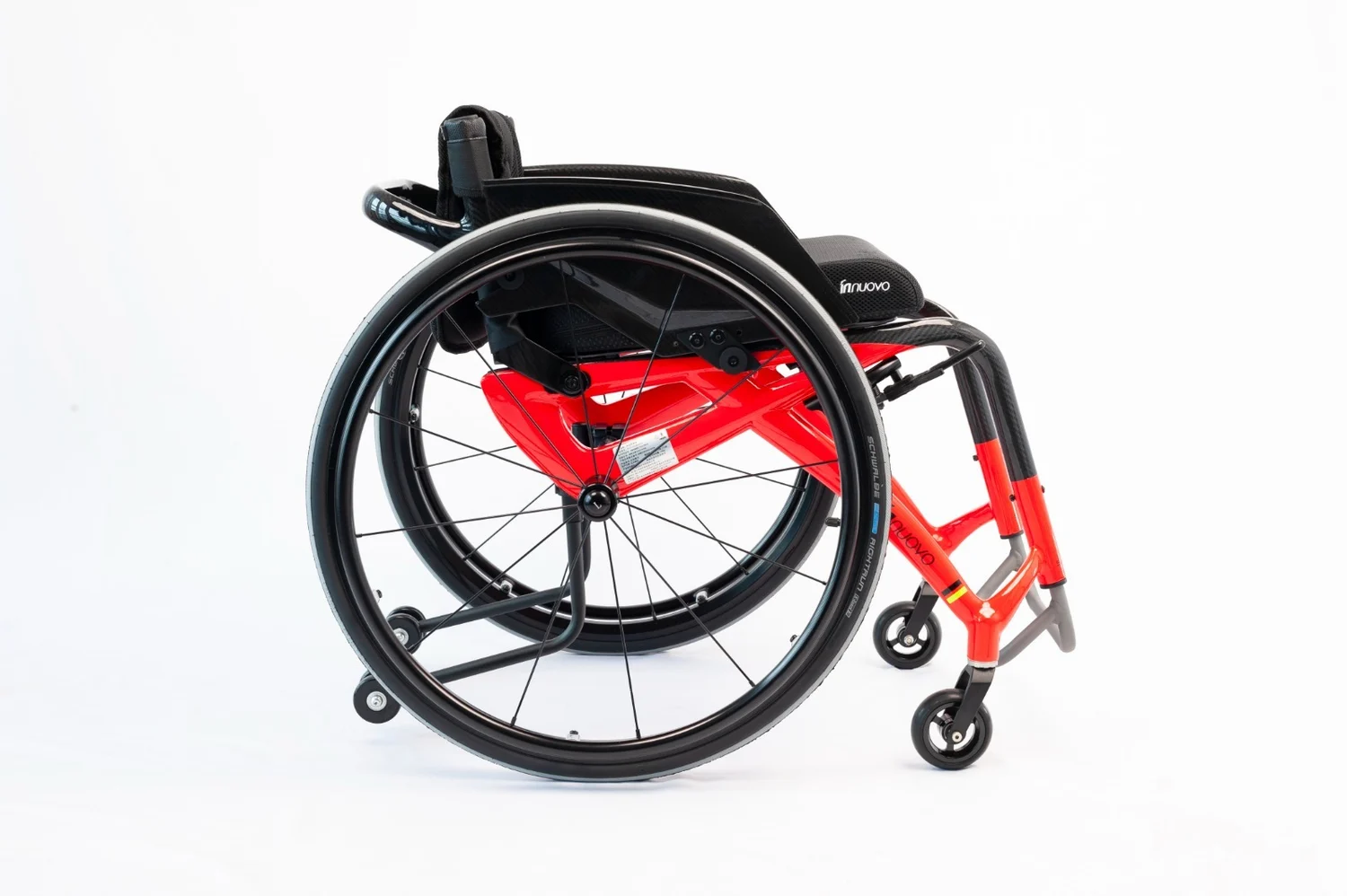
Follow the assembly-specific guidance when carbon fiber wheelchair cleaning reaches the hubs, bearings and axles. When 5903 wheelchair cleaning reaches the wheels, distinguish accessible surface care from tasks involving axles, bearings or other service interfaces. The front casters, rear wheels and anti-tip assemblies should each be named in the plan.
Identify the assembly before touching it
A general wheel-cleaning note can cover very different parts. Record the permitted method and any reported concern at the affected location. Do not add lubricant or remove unfamiliar parts solely because another wheelchair guide describes that step. Name the actual front fork and caster assembly when that area needs review.
- Rear wheels
- Front casters
- Rear supports
| Review point | What to confirm |
|---|---|
| Rear wheels | Rims handrims and actual fitted tires |
| Front casters | Wheel and fork assembly |
| Rear supports | Actual anti-tip setup |
Key Takeaway: You can make wheel-care instructions specific enough to prevent confusion between separate assemblies.
Are cleaning and disinfection the same task?
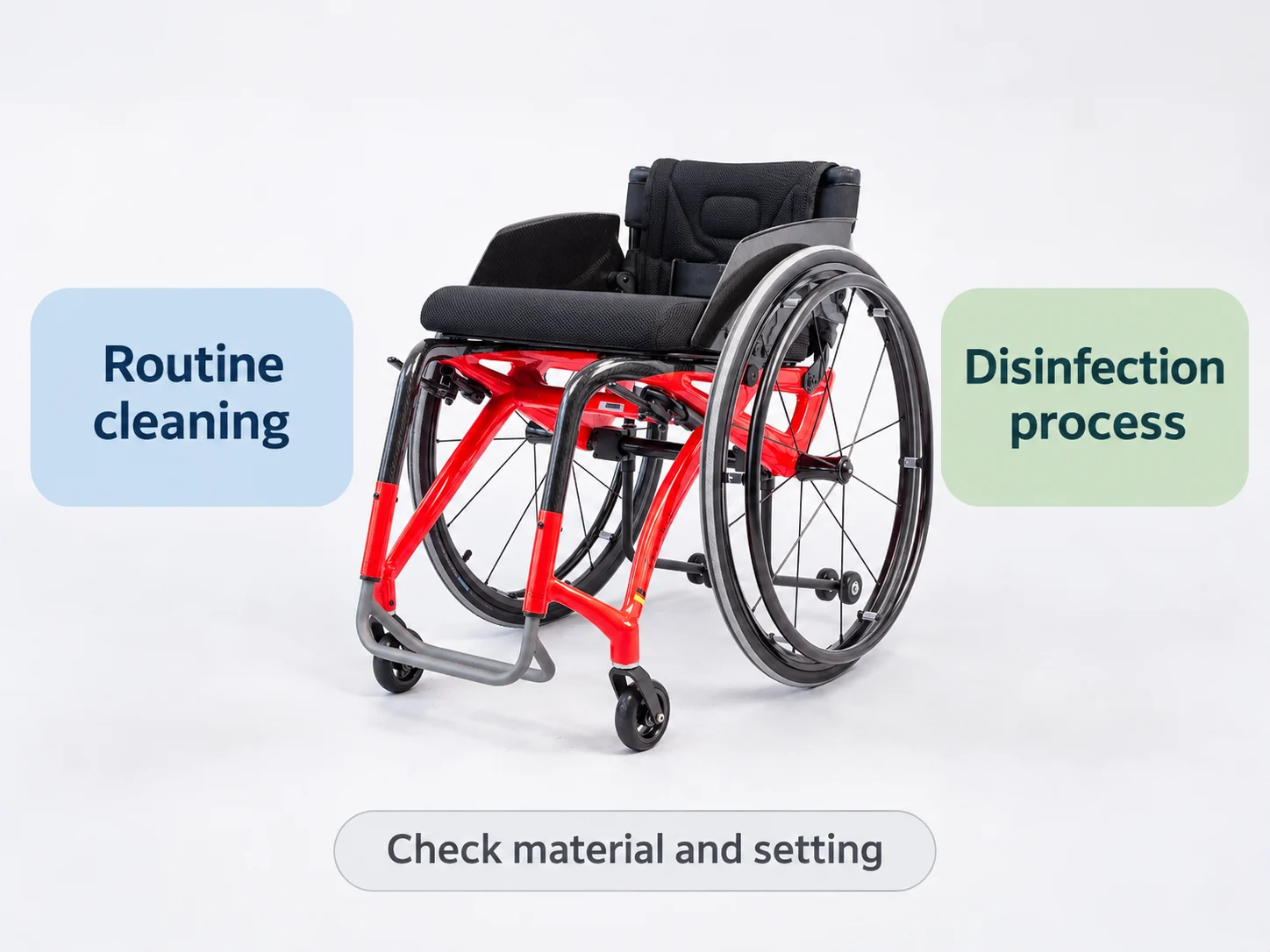
Cleaning and disinfection have different purposes, so confirm both requirements separately in carbon fiber wheelchair cleaning. No; 5903 wheelchair cleaning should distinguish routine cleaning from any required disinfection process. The permitted product, contact conditions and relevant local service requirements need a separate review for the actual materials.
Define the purpose of the task
A clean appearance does not document a disinfection process. Ask the responsible provider which method applies to the intended setting. Do not label an improvised chemical mixture or an unspecified wipe-down as a validated infection-control procedure.
- Routine care
- Disinfection need
- Product match
| Review point | What to confirm |
|---|---|
| Routine care | Permitted cleaning method |
| Disinfection need | Setting-specific requirement |
| Product match | Confirmed material compatibility and instructions |
Key Takeaway: You can describe the intended care task without claiming an unverified hygiene outcome.
How should drying and storage follow wheelchair cleaning?
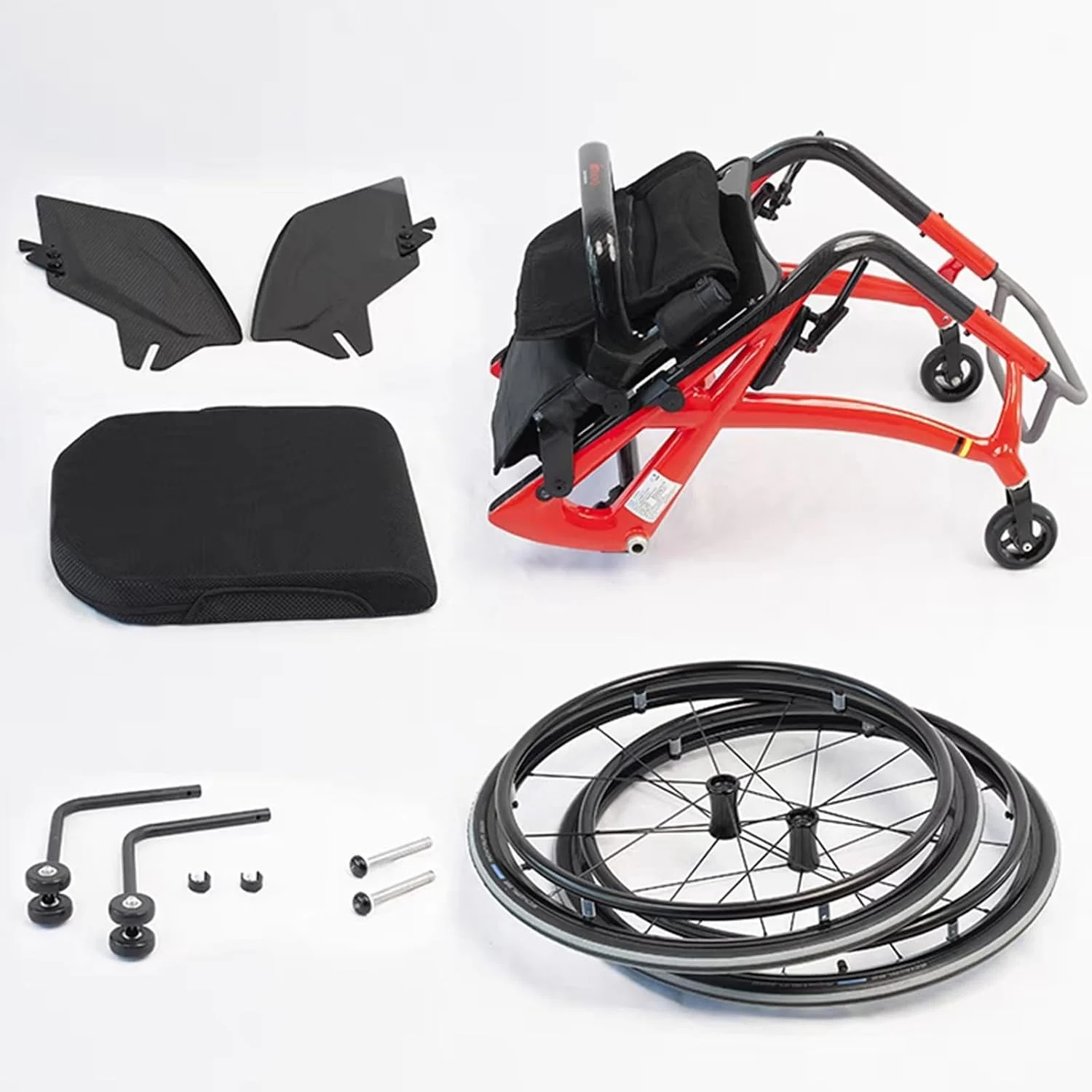
Follow the prescribed drying and reassembly guidance after carbon fiber wheelchair cleaning, before storage or return to use. After 5903 wheelchair cleaning, follow the matching drying and storage instructions for the chair and its seating parts. Record any residual condition or concern that requires further attention before the intended setup is restored.
Check the parts before storage
The frame and removable fabrics may follow different guidance. Ask the supplier to identify the permitted storage conditions for the actual product. Keep the clean parts associated with the unit and avoid using an unspecified high-heat method to shorten drying time.
- Drying guidance
- Storage conditions
- Unit inventory
| Review point | What to confirm |
|---|---|
| Drying guidance | Actual part instructions |
| Storage conditions | Matching product requirements |
| Unit inventory | All removed parts accounted for |
Key Takeaway: You can make the care cycle complete without assuming every part dries or stores in the same way.
What if damage is found during cleaning?
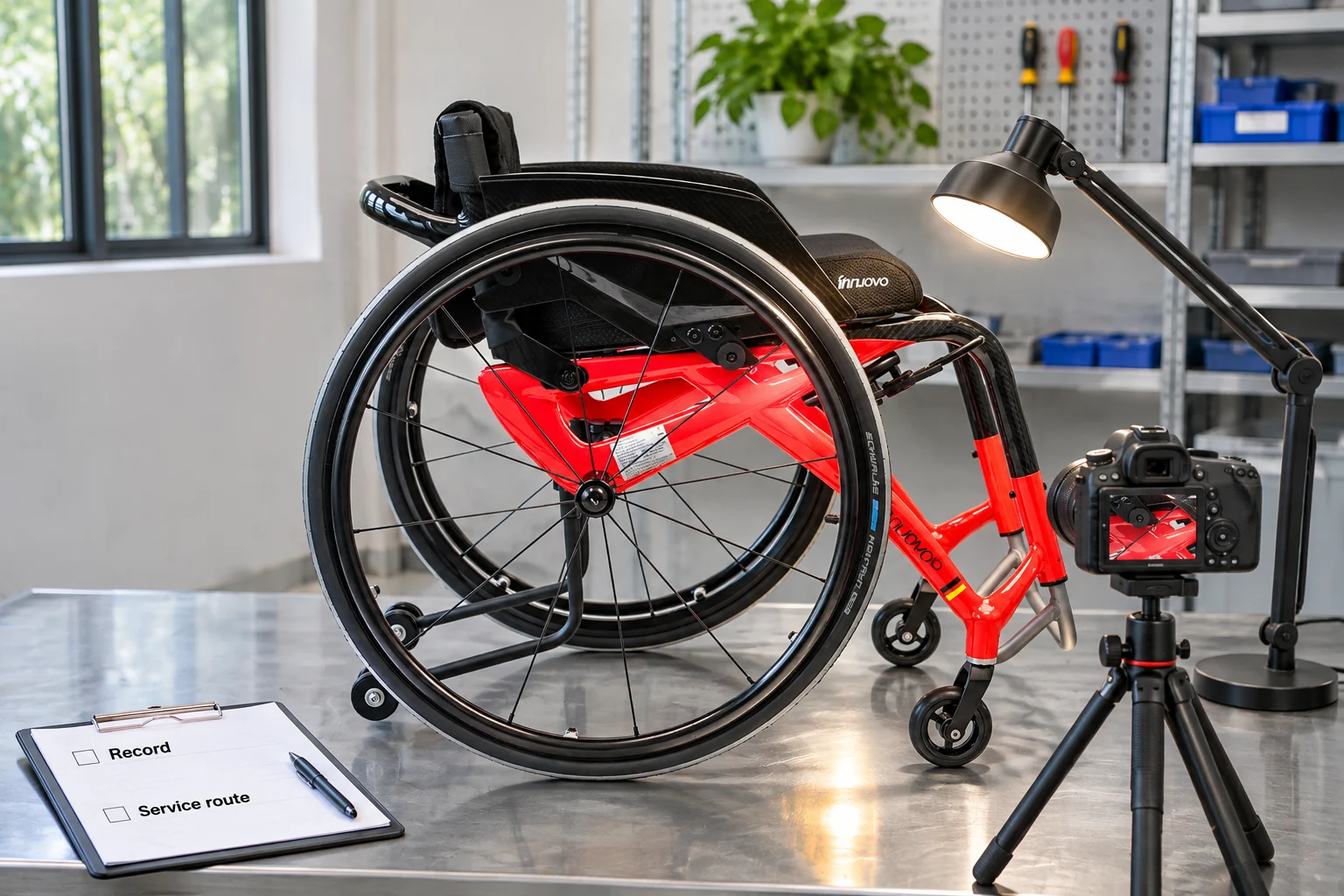
Record and refer damage found during carbon fiber wheelchair cleaning rather than trying to hide it with further cleaning. If damage is found during 5903 wheelchair cleaning, record the affected area and use the relevant service route. Cleaning the surface does not resolve a structural, wheel or attachment concern or prove readiness for use.
Keep the observation visible
Care work can reveal a separate service task. Take the requested context and detail photos without attempting an improvised repair. Retain the provider's response and the next responsible action in the unit history. Use the frame record to locate any reported structural concern.
- Observed issue
- Evidence
- Service follow-up
| Review point | What to confirm |
|---|---|
| Observed issue | Specific part and condition |
| Evidence | Requested photos and context |
| Service follow-up | Named action and provider |
Key Takeaway: You can prevent a newly noticed problem from disappearing inside a routine cleaning log.
What should a carbon fiber wheelchair cleaning log record?
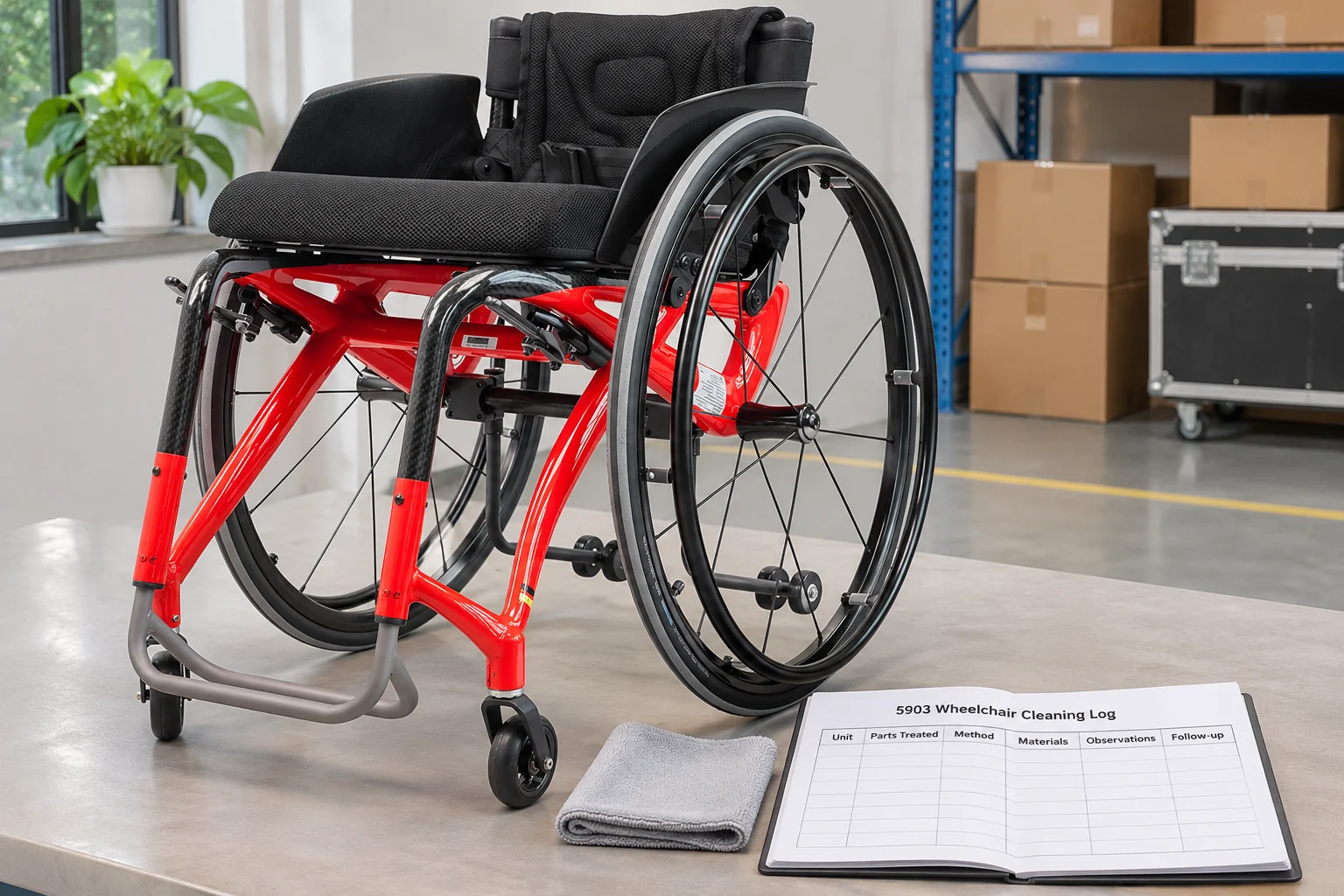
Log the method, materials, observations and follow-up after carbon fiber wheelchair cleaning. A 5903 wheelchair cleaning log should identify the unit, parts treated, permitted method and any issue referred for follow-up. It should record completed care without claiming that every technical function has been inspected.
Write what was actually done
A short factual record is easier to use later. Keep dates, relevant products and the responsible person with the entry. Update the plan when a cushion, cover or other part changes so the next person uses the current instructions.
- Care scope
- Completion
- Exceptions
| Review point | What to confirm |
|---|---|
| Care scope | Named surfaces and method |
| Completion | Date and responsible person |
| Exceptions | Specific service concerns or changed parts |
Key Takeaway: You can retain a practical history while keeping cleaning and technical approval separate.
How can you request useful wheelchair cleaning guidance?
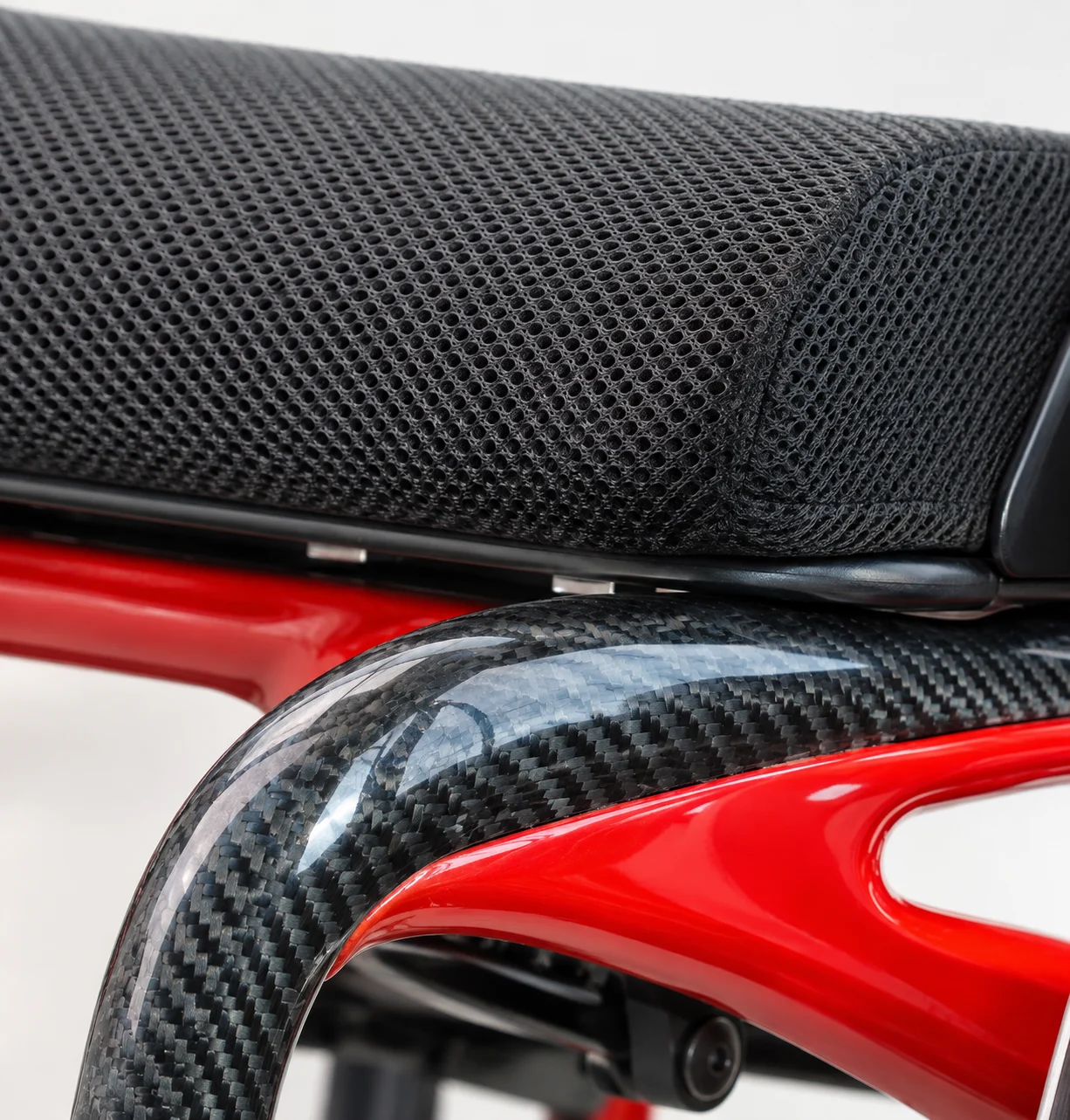
Ask for part-specific instructions when preparing a carbon fiber wheelchair cleaning routine. Request 5903 wheelchair cleaning guidance with the exact chair, cushion and intended care setting. Ask for the current material-specific instructions and the division between user care and service work.
Send the actual component details
A broad wipe-clean label leaves too much unresolved. Give AryMD the product reference, destination and any proposed cleaning products that need compatibility review. We can discuss the product documentation and support scope relevant to your request.
- Product scope
- Care setting
- Required response
| Review point | What to confirm |
|---|---|
| Product scope | Chair and seating part references |
| Care setting | Actual intended routine |
| Required response | Matching methods restrictions and support route |
Key Takeaway: You can build a care plan that follows the supplied parts rather than a generic product category. Contact us with your 5903 setup, quantity and destination so we can discuss the product information and written supply scope. AryMD puts clear specifications before purchasing promises.
Frequently asked questions
Q1: Can I clean every part with the same product?
Not without confirming compatibility. The frame finish, cushion, upholstery and wheel interfaces may have different care instructions.
Q2: What's the best source for washing the cushion cover?
Use the instructions for the exact cover and cushion. Removability does not establish machine-washing permission.
Q3: How do I know whether cleaning also disinfects the chair?
Use the relevant setting-specific process and product instructions. A clean appearance alone does not document a validated disinfection method.
Q4: Should I repair a part because cleaning revealed a problem?
Use the appropriate service route. Record the finding and follow the provider's specific guidance instead of improvising a repair.
Q5: Does a completed cleaning log prove that the whole chair is ready for use?
No. Keep completed care separate from technical checks, fitting work and the responsible readiness decision.