
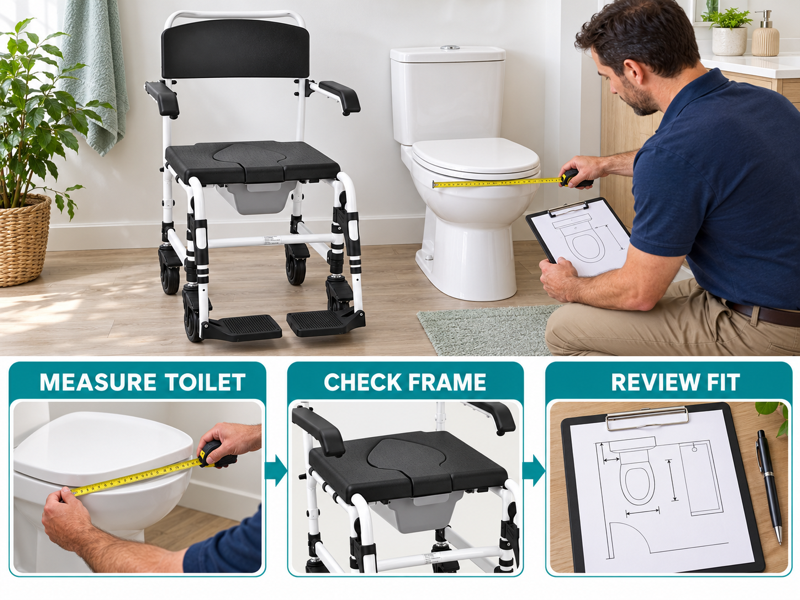
Plan commode chair toilet clearance by confirming the permitted use and comparing the complete frame with the actual toilet. A UK buyer may find that the seat clears the rim while a lower brace meets the pan. A measured brief and model-specific drawing help you resolve that conflict before ordering.
What should commode chair toilet clearance cover?
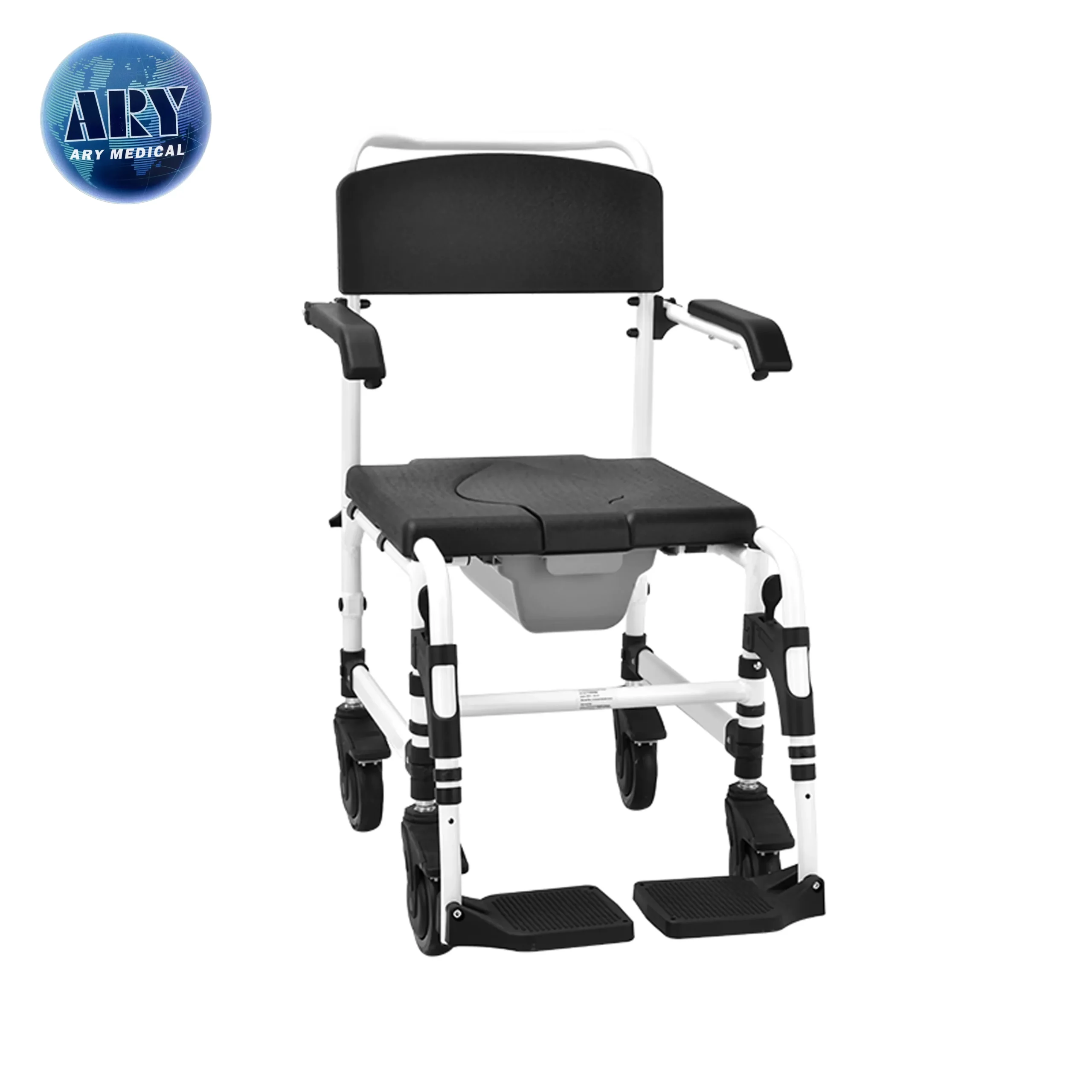
Commode chair toilet clearance should cover the toilet shape, the chair's clear frame space and the maker's permitted setup. A product name such as multifunctional does not prove it can fit over your toilet.
Confirm the permitted product mode
Start with permitted use. Ask for the exact model guide before measuring a proposed over-toilet arrangement. Keep a bedside setup separate from a setup that the maker permits above a toilet.
- Permitted use
- Exact model
- Intended setup
| Check | Record or reference |
|---|---|
| Permitted use | Model guide |
| Exact model | Product ID |
| Intended setup | Room brief |
Key Takeaway: You can rule out an unsupported use before comparing dimensions.
Which toilet measurements matter?
For commode chair toilet clearance, record the height, width and projection of the toilet and any fittings that affect the chair's path. A toilet's catalog width may not describe its widest point.
Measure the actual toilet outline
Measure the shape you have. Include the cistern, lid, nearby pipework and floor obstructions on a simple sketch. Ask the supplier which chair dimensions are needed for the proposed setup.
- Toilet outline
- Fittings
- Floor obstruction
| Check | Record or reference |
|---|---|
| Toilet outline | Measured sketch |
| Fittings | Site photos |
| Floor obstruction | Route note |
Key Takeaway: Your brief shows the real object the frame would need to clear.
Which chair dimensions should you request?
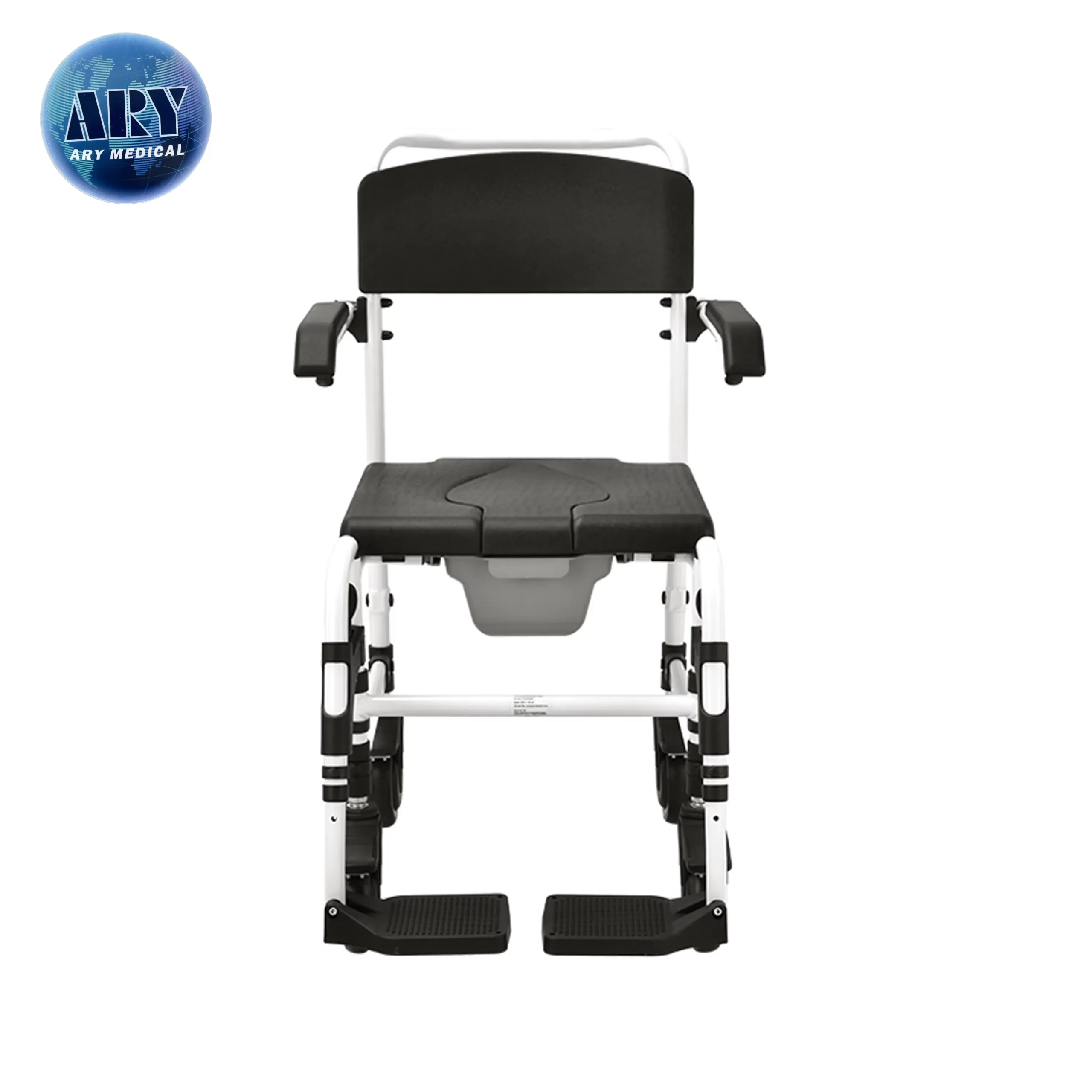
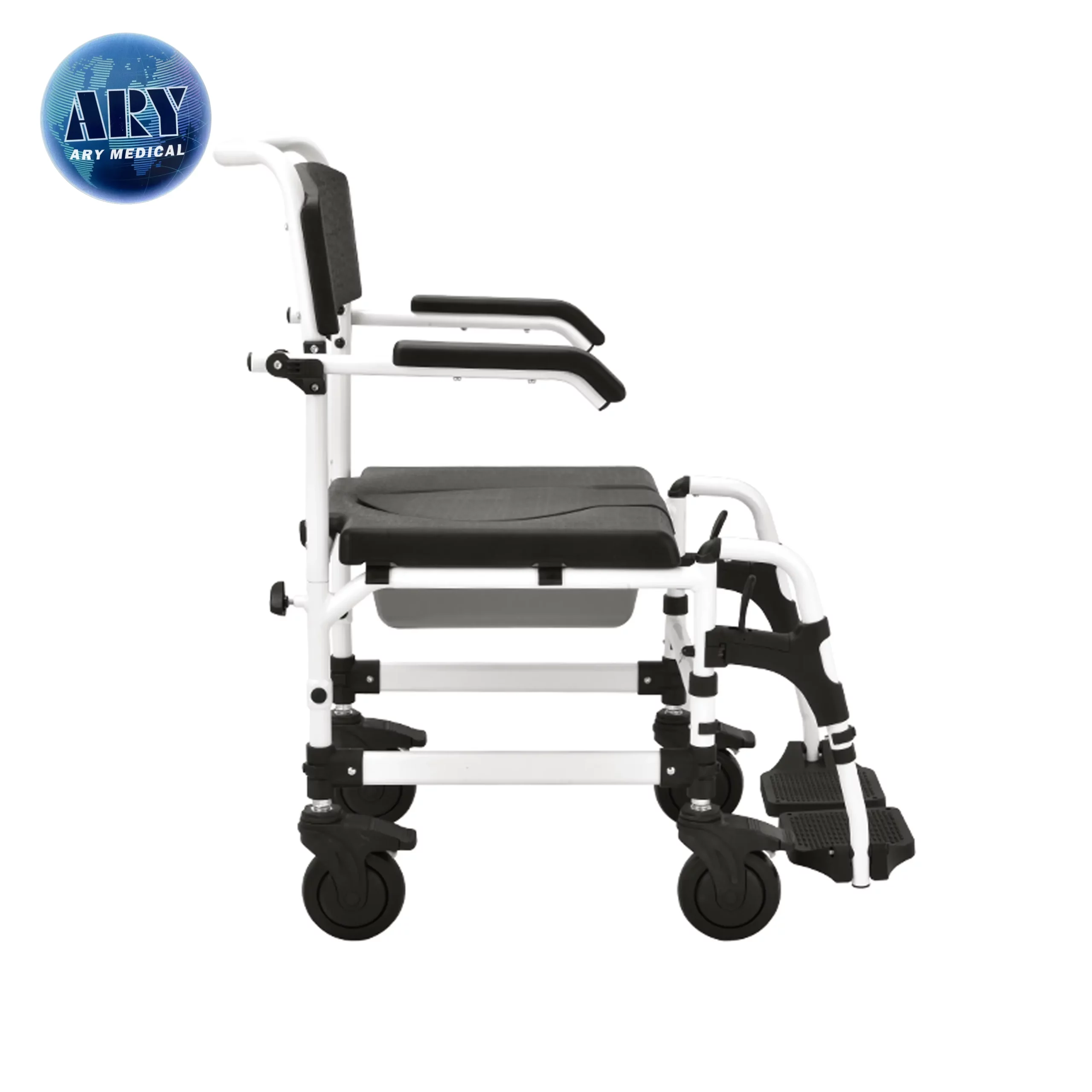
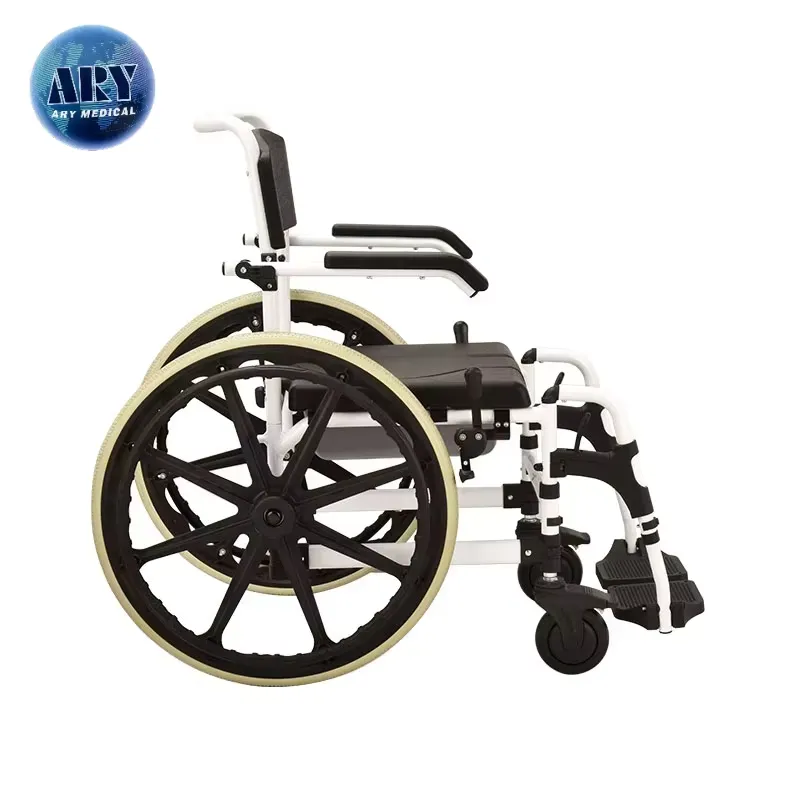
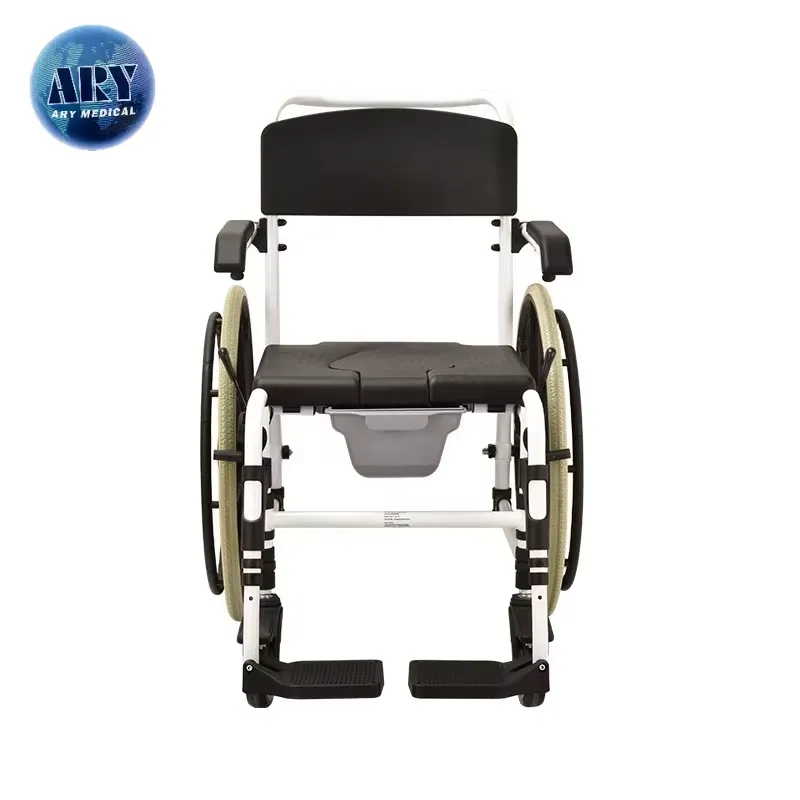
Commode chair toilet clearance needs clear internal frame dimensions as well as seat height. A seat can sit above the toilet rim while a brace or bucket rail prevents the chair reaching the intended position.
Request under-seat frame dimensions
Look below the seat. Request a drawing that shows the lowest fixed parts in the relevant setup. Do not estimate hidden clearances from a front photograph.
- Under-seat space
- Frame braces
- Setup limits
| Check | Record or reference |
|---|---|
| Under-seat space | Maker drawing |
| Frame braces | Side view |
| Setup limits | Instructions |
Key Takeaway: You avoid treating seat height as proof of frame clearance.
How should the bucket arrangement be checked?
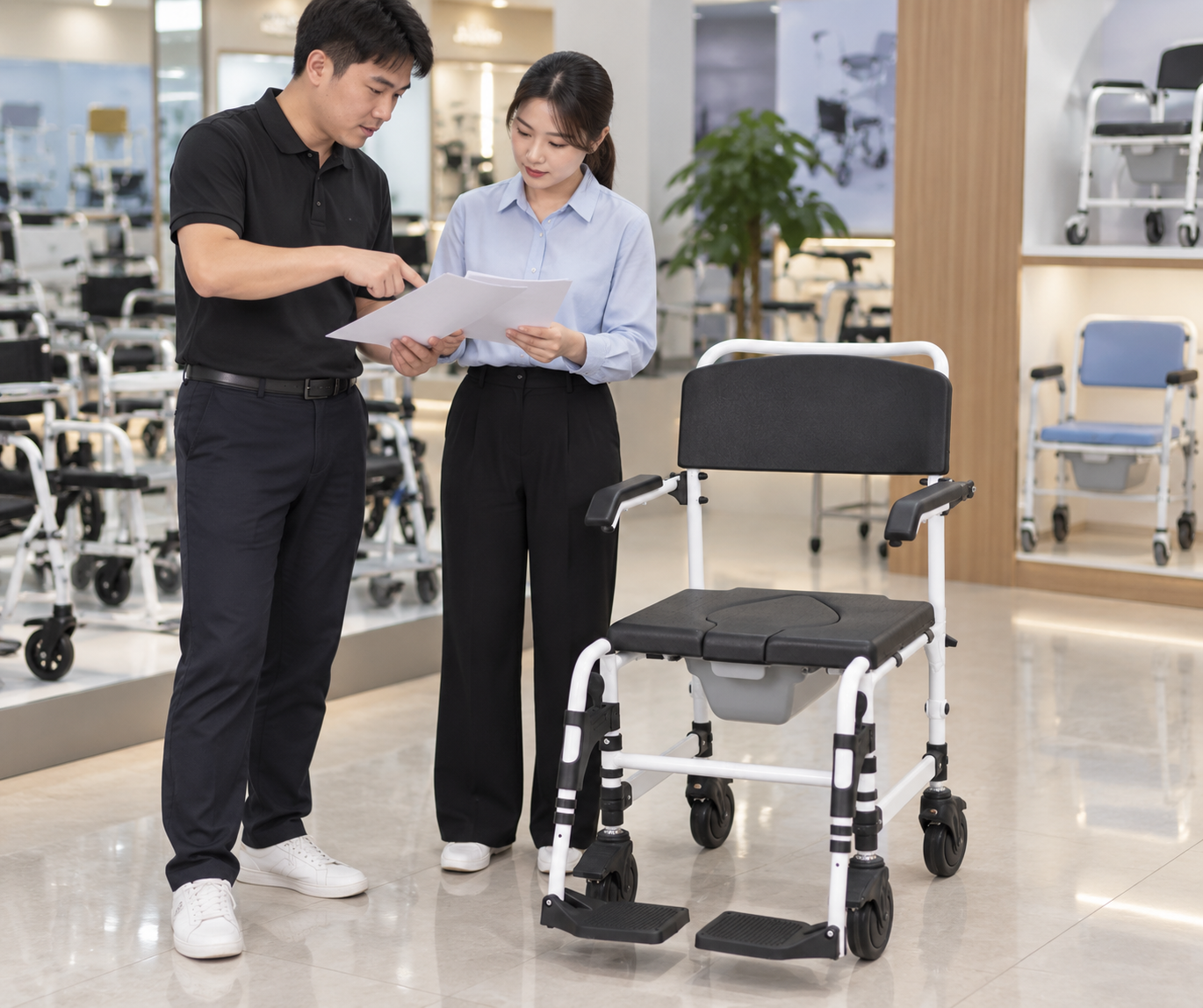
For commode chair toilet clearance, confirm whether the bucket and its supports stay fitted in the proposed mode. Do not remove rails or other structural parts to create extra space.
Check the approved bucket setup
Follow the approved mode. Ask the maker which removable items belong in each permitted setup. Keep the answer with the drawing so staff do not infer a mode from the product photo. Check the exact bucket configuration when confirming the intended mode.
- Bucket mode
- Removable items
- Fixed parts
| Check | Record or reference |
|---|---|
| Bucket mode | Current guide |
| Removable items | Parts list |
| Fixed parts | Maker response |
Key Takeaway: The clearance review uses a setup the chair actually supports.
What can the wheels change?
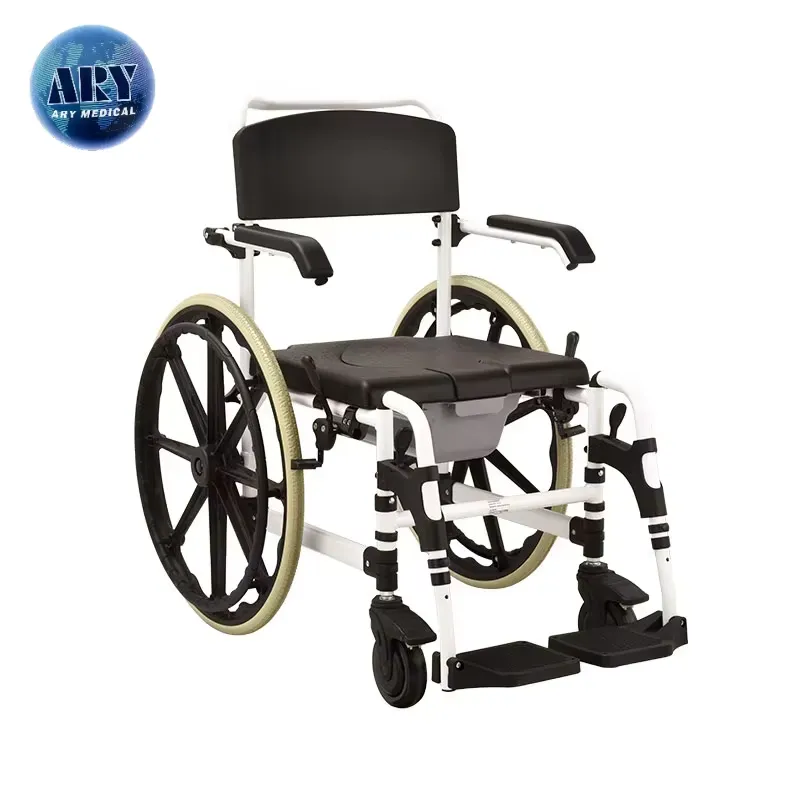
Commode chair toilet clearance should include caster positions, brake pedals and foot supports where fitted. These parts may meet the toilet or nearby fittings before the seat reaches its proposed location.
Include the lower components
Check the complete lower frame. Use the approved configuration and relevant drawing when reviewing the path. Never assume a pedal or footplate can be removed simply because it obstructs access. The footplate guide can help identify the relevant lower components.
- Caster envelope
- Brake pedal
- Foot support
| Check | Record or reference |
|---|---|
| Caster envelope | Drawing |
| Brake pedal | Detail view |
| Foot support | Permitted position |
Key Takeaway: Your comparison includes the parts below and around the seat.
How should the approach route be assessed?
For commode chair toilet clearance, assess the route to the toilet and the space needed to position the empty chair. A match at the final position does not resolve a tight turn beside the basin.
Map the approach route
Include the way in and out. Provide a room plan with doors and fixed fittings. Personal transfers and assistance needs belong with a suitably qualified assessor. Include arm-support dimensions in the room brief where they affect the outline.
- Approach route
- Fixed fittings
- Personal needs
| Check | Record or reference |
|---|---|
| Approach route | Room plan |
| Fixed fittings | Photos |
| Personal needs | Assessment |
Key Takeaway: A geometrical fit does not hide a route or care problem.
Can a sample confirm clearance?
A sample can help review commode chair toilet clearance if the maker permits the proposed mode and the check has a clear scope. It does not by itself establish suitability for a particular person.
Define an empty-sample check
Use an agreed empty-chair check. Record the sample model, settings and measured toilet. Stop if the frame or fittings interfere and seek a supported alternative rather than forcing the chair into place.
- Sample ID
- Setting
- Interference
| Check | Record or reference |
|---|---|
| Sample ID | Product label |
| Setting | Check record |
| Interference | Photo and note |
Key Takeaway: The sample check can verify a drawing without becoming a risky trial.
What if the dimensions are close?
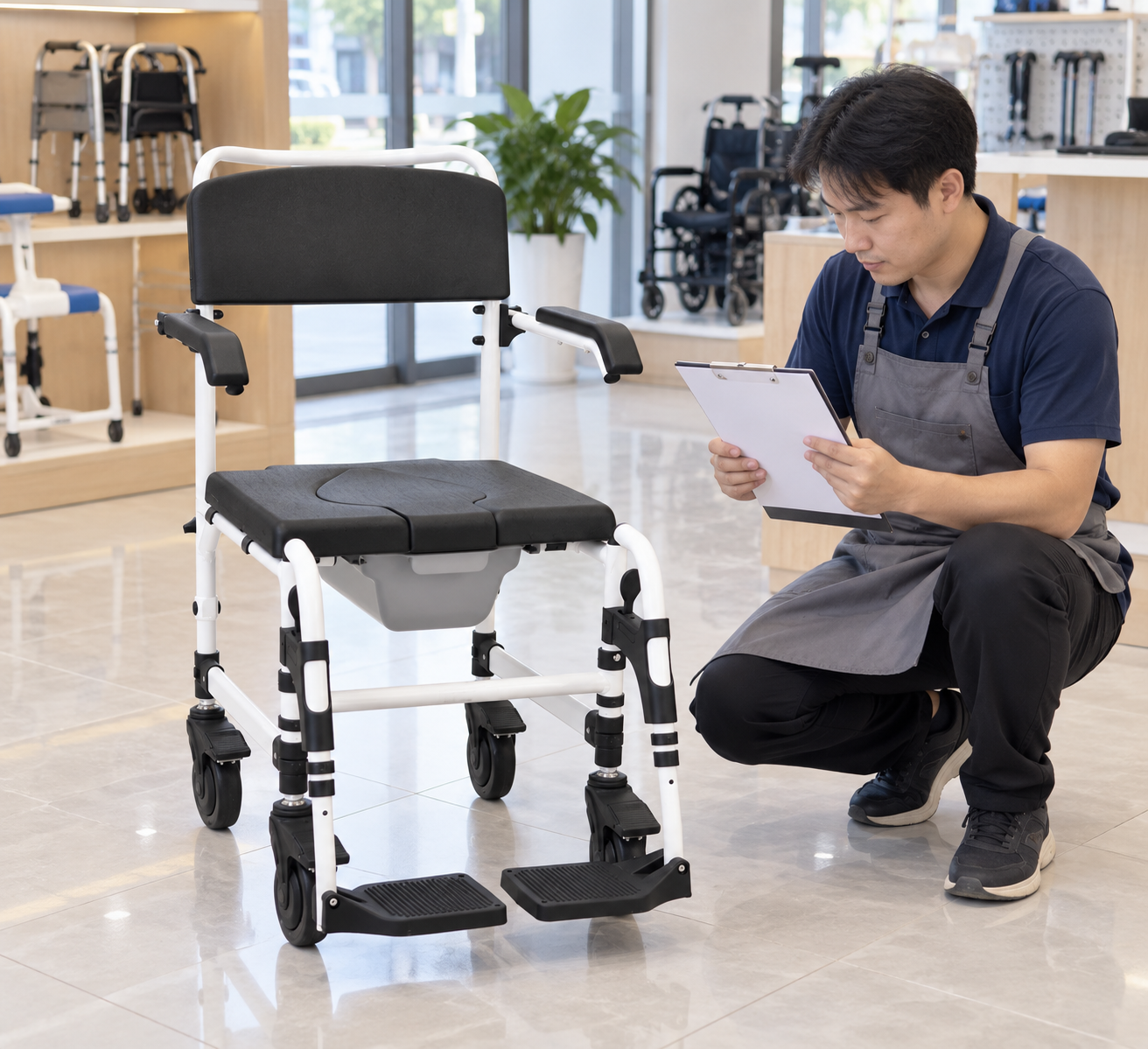
Commode chair toilet clearance remains uncertain when tolerances, moving parts or handling space are unclear. A nominal match is not a fit guarantee.
Resolve uncertain clearance
Resolve the gap before ordering. Ask the maker to clarify the dimension and its limits. Have the site reviewer assess the intended arrangement rather than choosing an arbitrary clearance allowance.
- Uncertain value
- Maker answer
- Site decision
| Check | Record or reference |
|---|---|
| Uncertain value | Question list |
| Maker answer | Written response |
| Site decision | Review record |
Key Takeaway: The purchase can wait for the fact that matters.
When should the fit review be repeated?
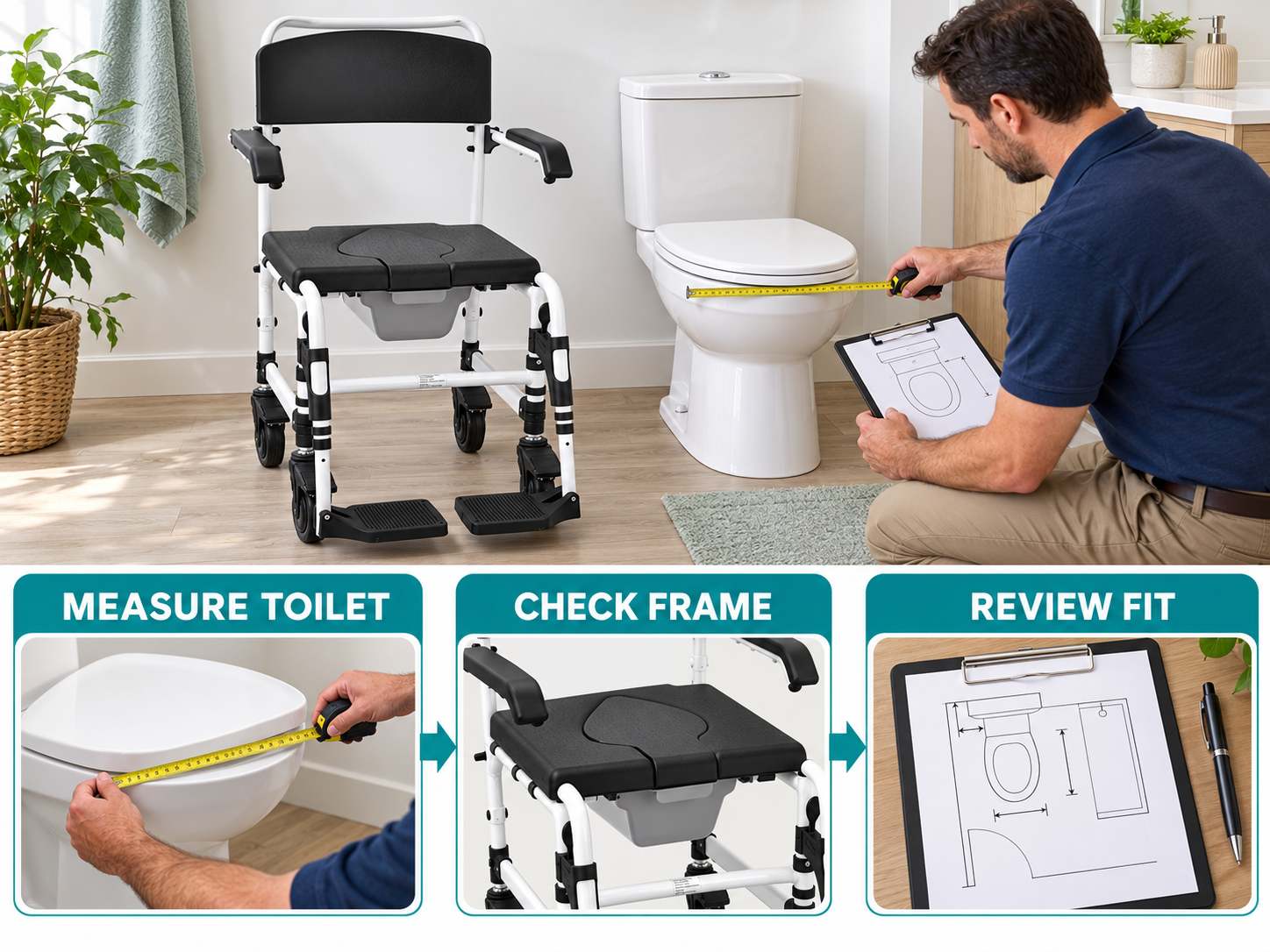
Repeat commode chair toilet clearance when the chair version, toilet, floor or nearby fittings change. A prior result applies only to the setup that was checked.
Review changed products and rooms
Review changes that affect space. Keep the original drawings and notes so the next reviewer can identify the difference. Include changed foot supports or bucket hardware in that review. The NHS home-adaptation guidance describes routes to assessment.
- Changed chair
- Changed room
- Earlier result
| Check | Record or reference |
|---|---|
| Changed chair | Revision file |
| Changed room | Updated plan |
| Earlier result | Fit record |
Key Takeaway: A later order does not rely on an outdated fit decision.
What should a clearance enquiry include?

An enquiry about commode chair toilet clearance should include the exact model, intended mode and a measured toilet and room sketch. State which dimensions or permissions still need confirmation.
What should you do next?
Send a complete measured brief. Ask for a current frame drawing and permitted-use guide. Use those facts to support a suitable personal assessment where the chair will be used.
- Model and mode
- Toilet shape
- Open questions
| Check | Record or reference |
|---|---|
| Model and mode | Enquiry |
| Toilet shape | Measured sketch |
| Open questions | Review list |
Key Takeaway: You can ask the supplier a precise product question. To discuss the model and documents for your order, contact us with your requirements. At AryMD, useful product facts should support every care-equipment purchase.
Frequently asked questions
Q1: Can I place any commode chair over a toilet?
No. Confirm that the maker permits that mode for the exact model, then review the actual toilet, frame and intended use.
Q2: What’s the best measurement for checking toilet clearance?
No single value is enough. Seat height, internal frame space, fixed braces and the toilet shape can all affect the comparison.
Q3: How do I know if the bucket should be removed?
Use the model's current guide. Do not remove supports or structural parts to create space without explicit manufacturer guidance.
Q4: Can a close dimension match guarantee a fit?
No. Clarify relevant tolerances, moving parts and handling space, and seek an appropriate assessment of the intended arrangement.
Q5: Should I repeat the check for a replacement chair?
Yes, when the model or setup changes. Similar seat dimensions can conceal different braces, wheels or foot supports.