
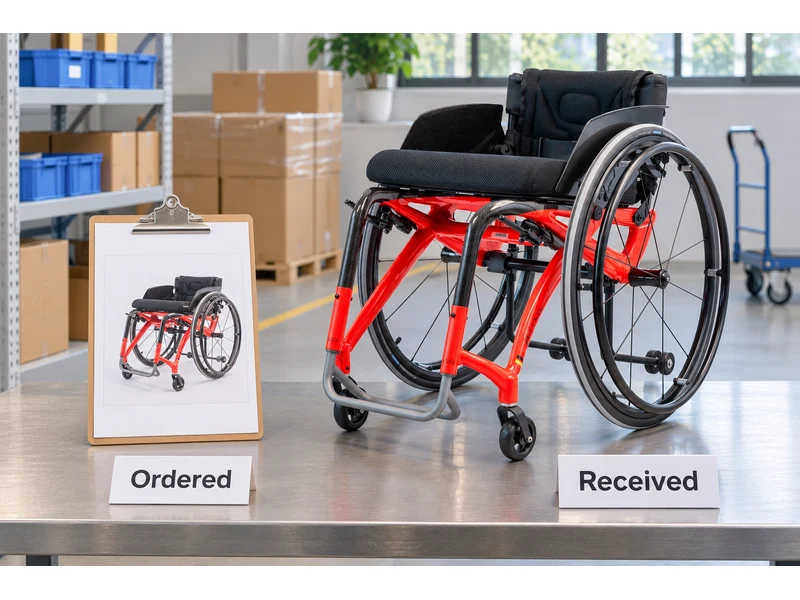
Compare the received chair with the accepted order during a wheelchair delivery inspection. A clean appearance can distract from a missing part or an unmatched guide. Those gaps may then be repeated in a larger order. Examples use the 5903, a manual carbon-frame chair with one fixed 38 cm seat width.
What should a wheelchair delivery inspection compare?
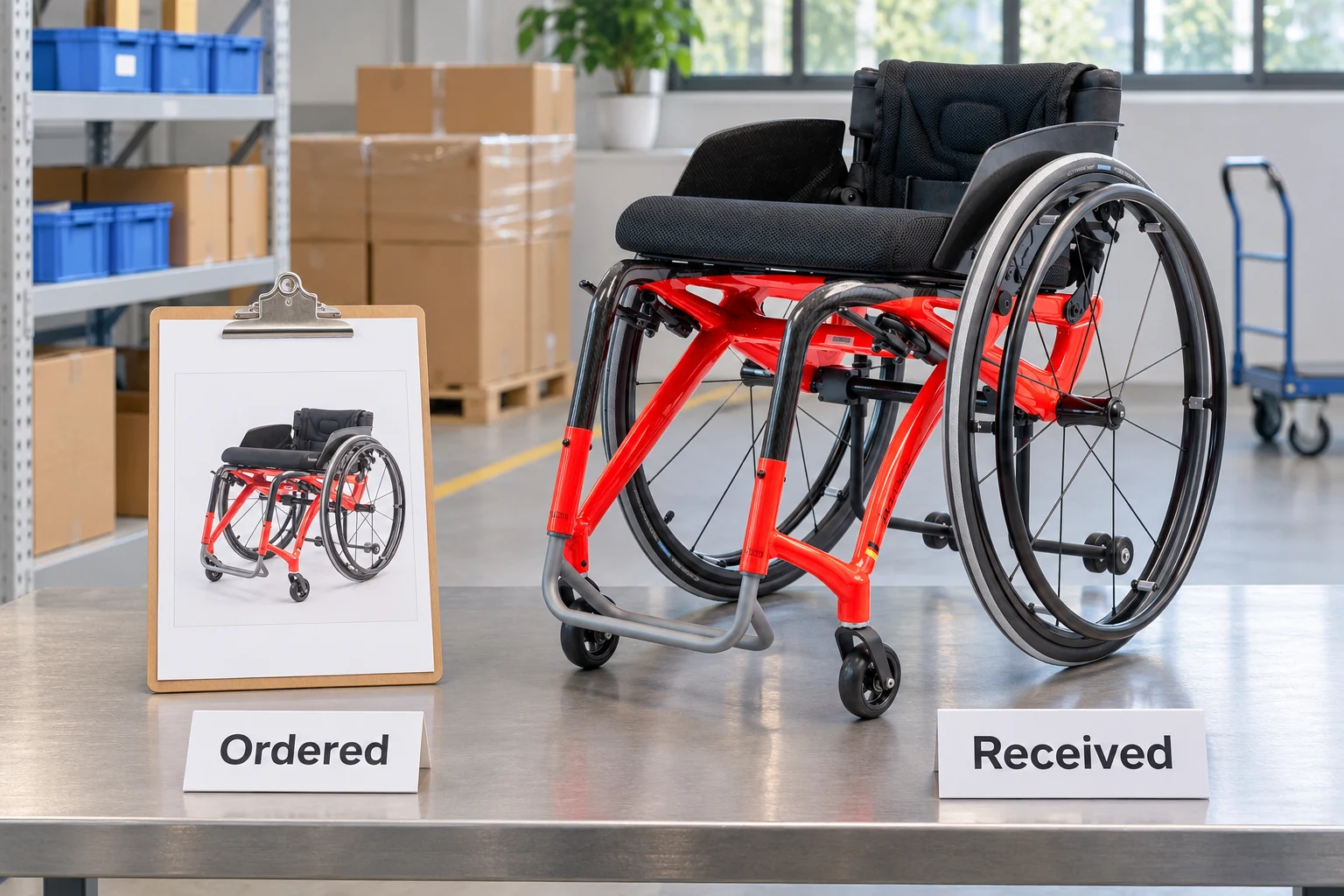
Compare the received chair with the accepted order during a wheelchair delivery inspection. Separate the arrival check, technical check and individual fitting work so each decision has a clear basis. Name the provider who will review each open point.
Start with the agreed reference
A sample cannot be judged against an undefined order. Keep the current quote, part list and matching guide available. List the questions this sample must answer. WHO guidance supports assessment, fitting and follow-up.
- Match the chair to the signed order and parts list.
- Keep care checks separate from any personal fitting review.
- Name the person who will close each open issue.
| Review point | What to confirm |
|---|---|
| Comparison basis | Agreed setup and documents |
| Review scope | Named receiving technical and fitting tasks |
| Sample identity | Traceable unit or reference |
Key Takeaway: You can assess the sample against a defined request rather than a general expectation of quality.
Which identifiers should be recorded at receipt?
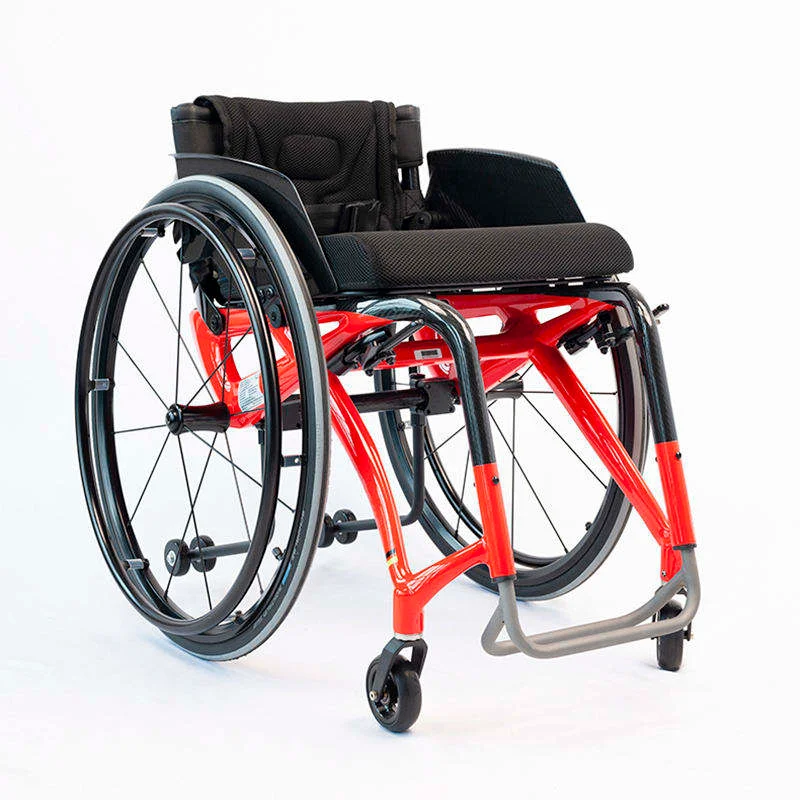
Record the model, unit reference and delivery identity at the start of a wheelchair delivery inspection. Record the model, available unit or serial reference, order reference and package identity in a 5903 check. A traceable record lets the supplier connect a finding with the actual goods received.
Which unit was inspected?
A photo of an unnamed chair can be difficult to reconcile later. Keep the labels and current documents related with the sample. Avoid altering an unclear identifier to make it match the order; request clarification when the records differ. Keep the available frame identity with the sample.
- Photograph the chair and its visible labels.
- Record the order number and date received.
- Keep the delivery note with those photos.
| Review point | What to confirm |
|---|---|
| Product identity | Actual model and unit reference |
| Commercial identity | Order and supplier record |
| Package identity | Relevant carton or delivery reference |
Key Takeaway: You can connect each observation with the correct sample and order record.
How should delivery inspection handle the packaging?
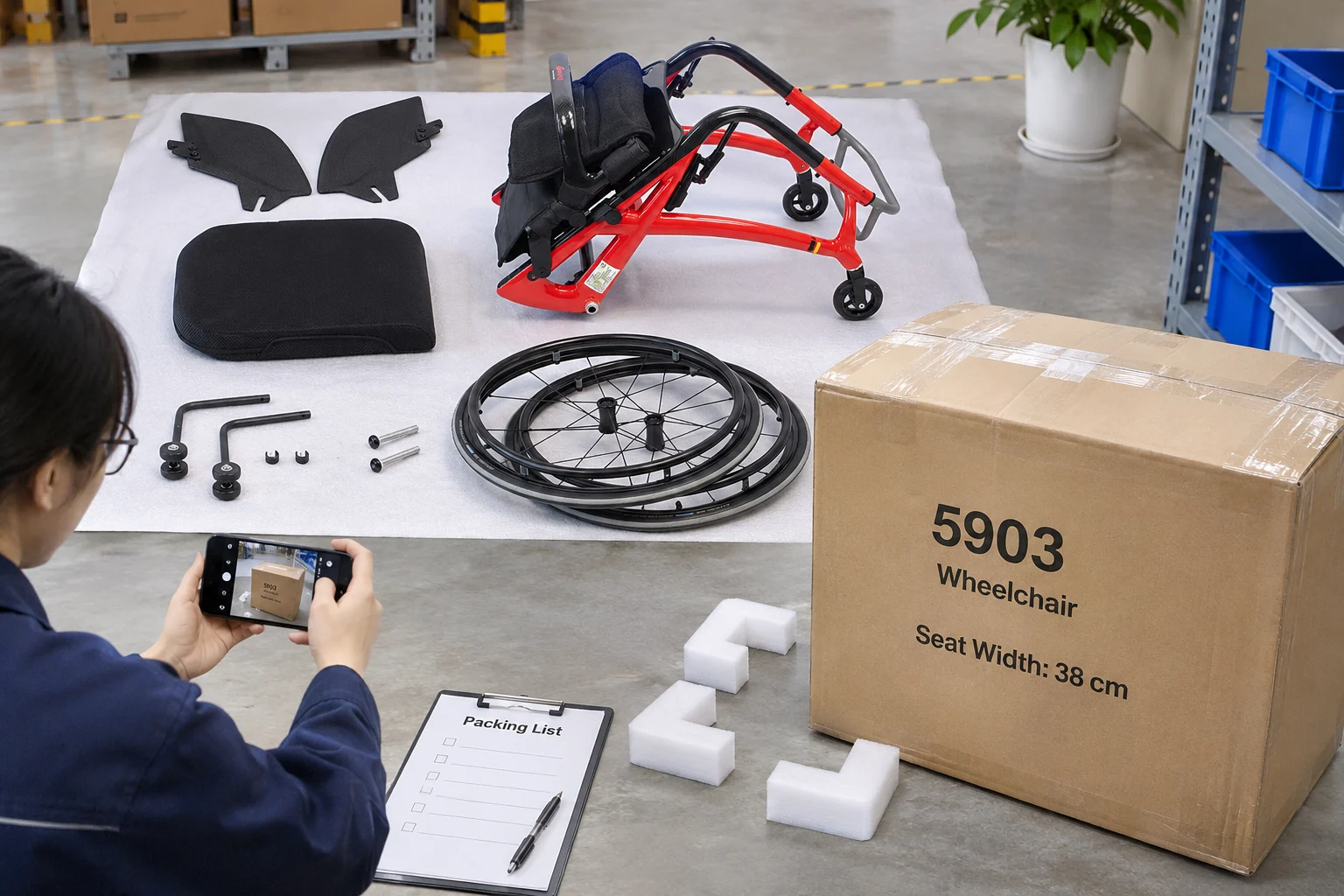
Document packaging condition and visible shipping concerns before unpacking during a wheelchair delivery inspection. At receipt, photograph the 5903 carton and check its contents against the packing list. State observations without assuming when damage occurred or what remedy will apply.
Record the package before losing the context
The outer condition and affected item belong in one report. Use the supplier or carrier's agreed reporting process and requested photos. Keep the outer dimensions and packed mass labeled as measurements of that actual shipment.
- Photograph the box before removing the packing.
- Keep labels and note any damage to the box.
- Record what you find before discarding packing materials.
| Review point | What to confirm |
|---|---|
| Outer condition | Specific visible observations |
| Contents | Agreed packed setup |
| Report | Photos references and required follow-up |
Key Takeaway: You can support a clear receiving report without turning an observation into an unverified damage conclusion.
How should the contents be checked?
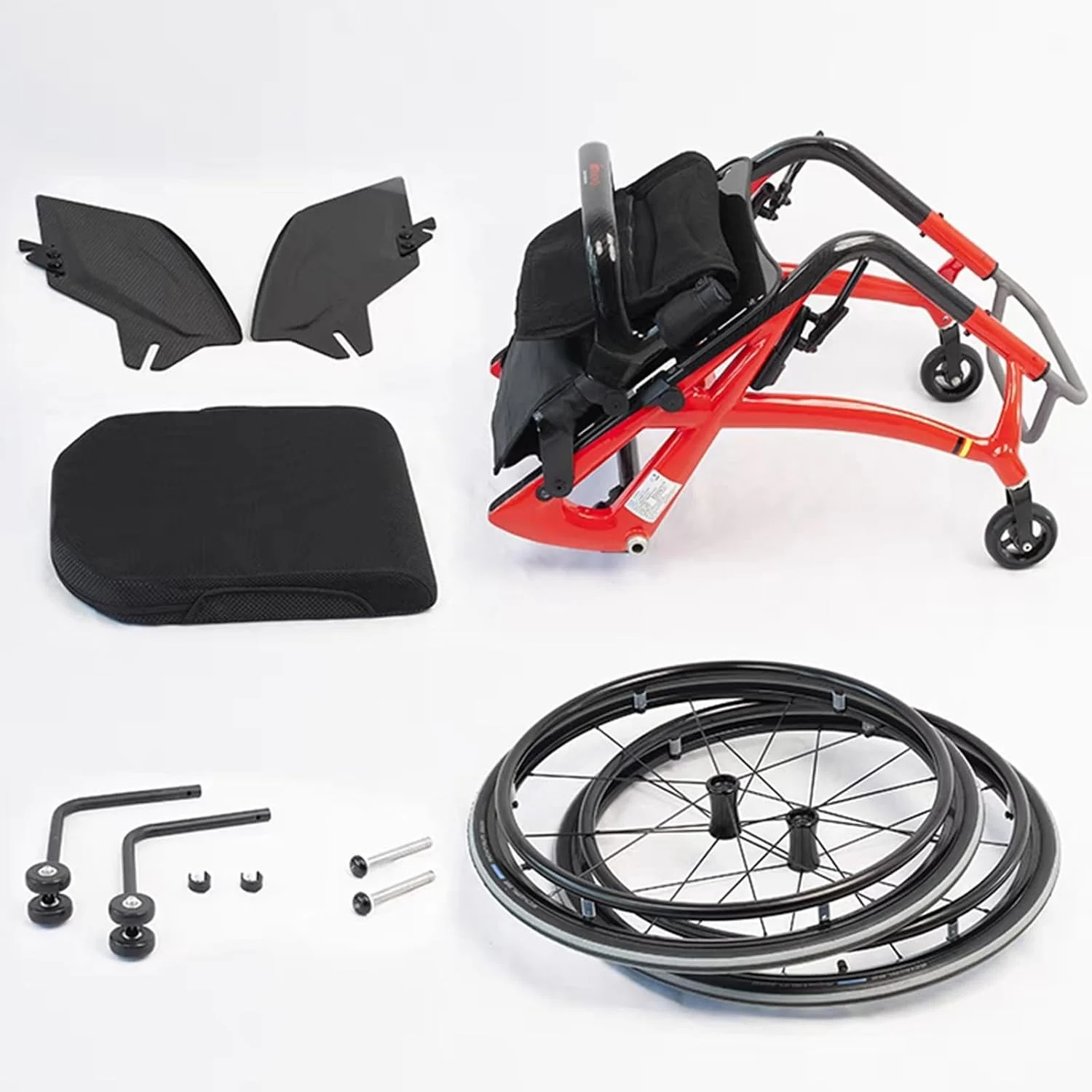
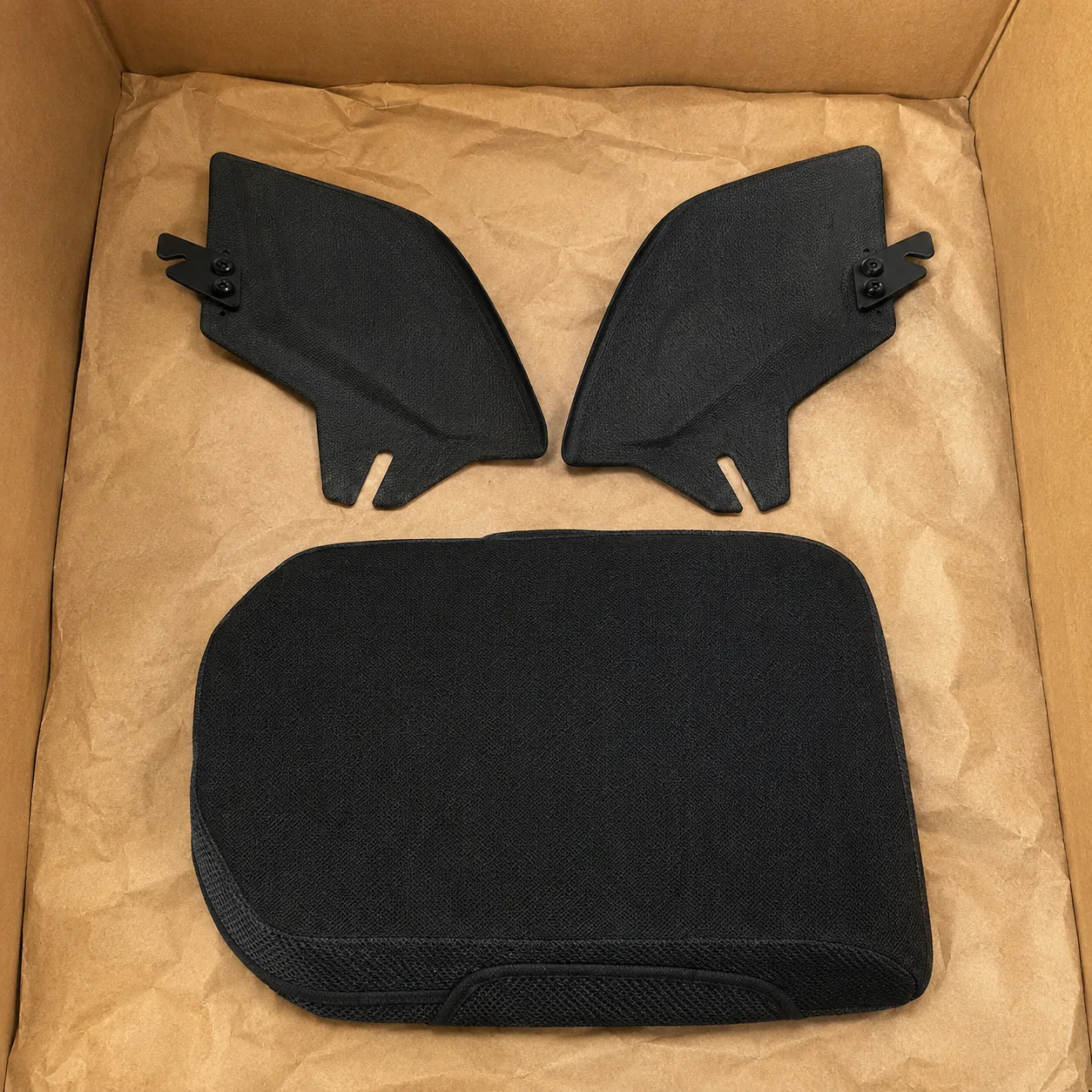
Count the received chair parts, accessories and documents against the packing list during a wheelchair delivery inspection. Check the delivered 5903 against the agreed parts list: chair, wheels, cushion, side guards and rear supports. A source photo showing an accessory does not establish that it was ordered.
Use the agreed list
The box should be checked against the purchase, not every catalog image. Record missing, extra or differently named parts as separate findings. Keep any change proposed by the supplier linked to a clear buyer decision rather than treating it as an automatic substitute.
- Count loose parts against the agreed packing list.
- Record a missing part by its name and quantity.
- Ask the supplier to confirm any unfamiliar item.
| Review point | What to confirm |
|---|---|
| Expected contents | Accepted itemized supply |
| Received contents | Actual named parts |
| Difference | Specific exception and assigned response |
Key Takeaway: You can distinguish a delivery shortfall from an option that was never part of the order.
What dimensions belong in a wheelchair delivery inspection?
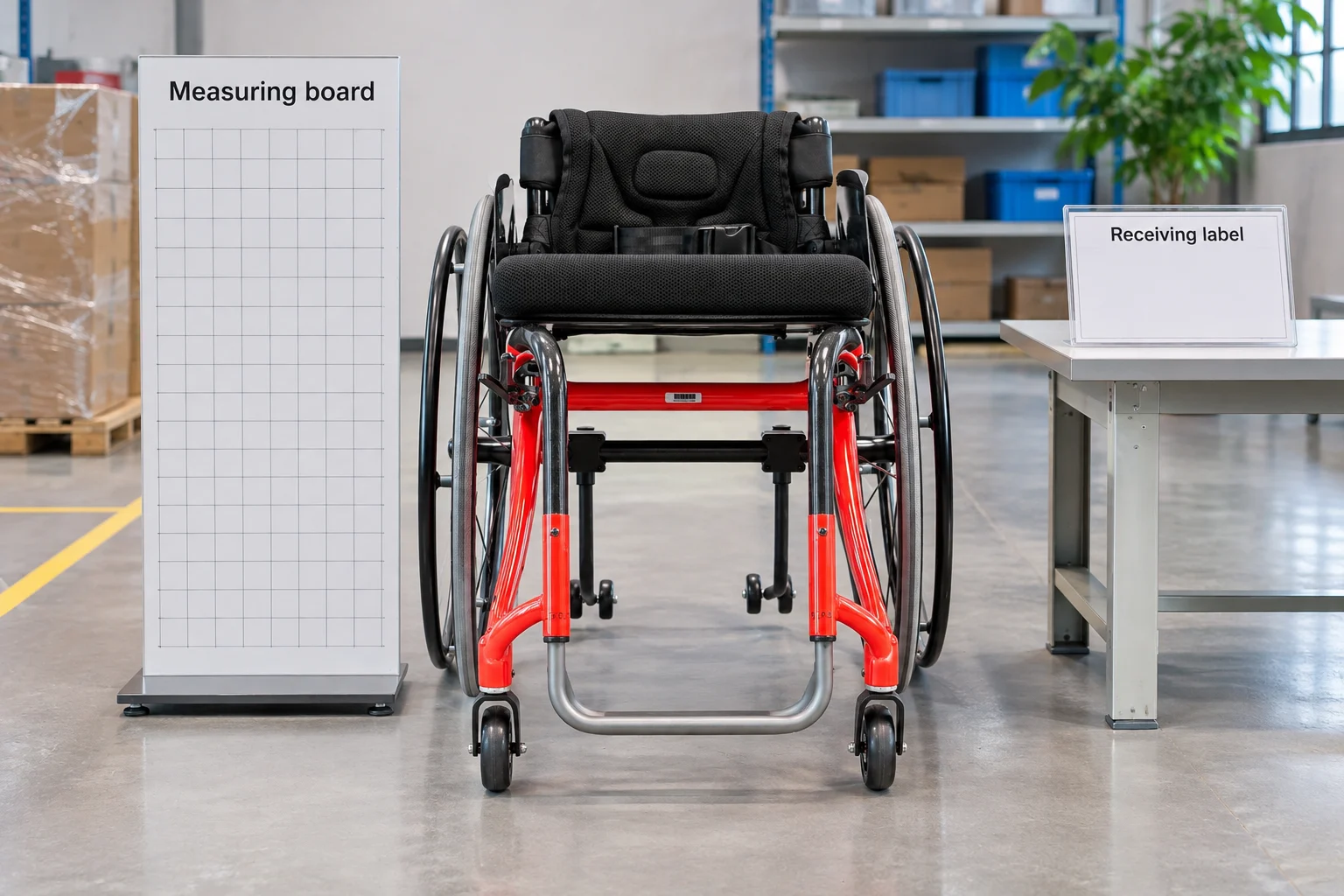
Use the agreed measurement points and setups for dimensional checks in a wheelchair delivery inspection. A 5903 check dimension check should use the same setup and measuring points as the agreed product record. Keep assembled, compact and packed dimensions separate, with the units stated clearly.
Match the endpoints before comparing
A different measuring convention can create an apparent discrepancy. The 5903 sheet lists an 84 × 56 × 68 cm envelope and a 38 × 45 cm seat. Confirm these figures for the received chair and resolve any conflicting model or measuring method. Use outside dimensions consistently with the access review.
- Record the units beside every size reading.
- Show where each measurement starts and ends.
- Keep seat size separate from the carton size.
| Review point | What to confirm |
|---|---|
| Product envelope | Named assembled state |
| Seating dimensions | Defined reference points |
| Discrepancy record | Supplier clarification of the exact difference |
Key Takeaway: You can compare measured dimensions without inventing an unsupported tolerance or combined range.
How should delivered-chair weight be checked?
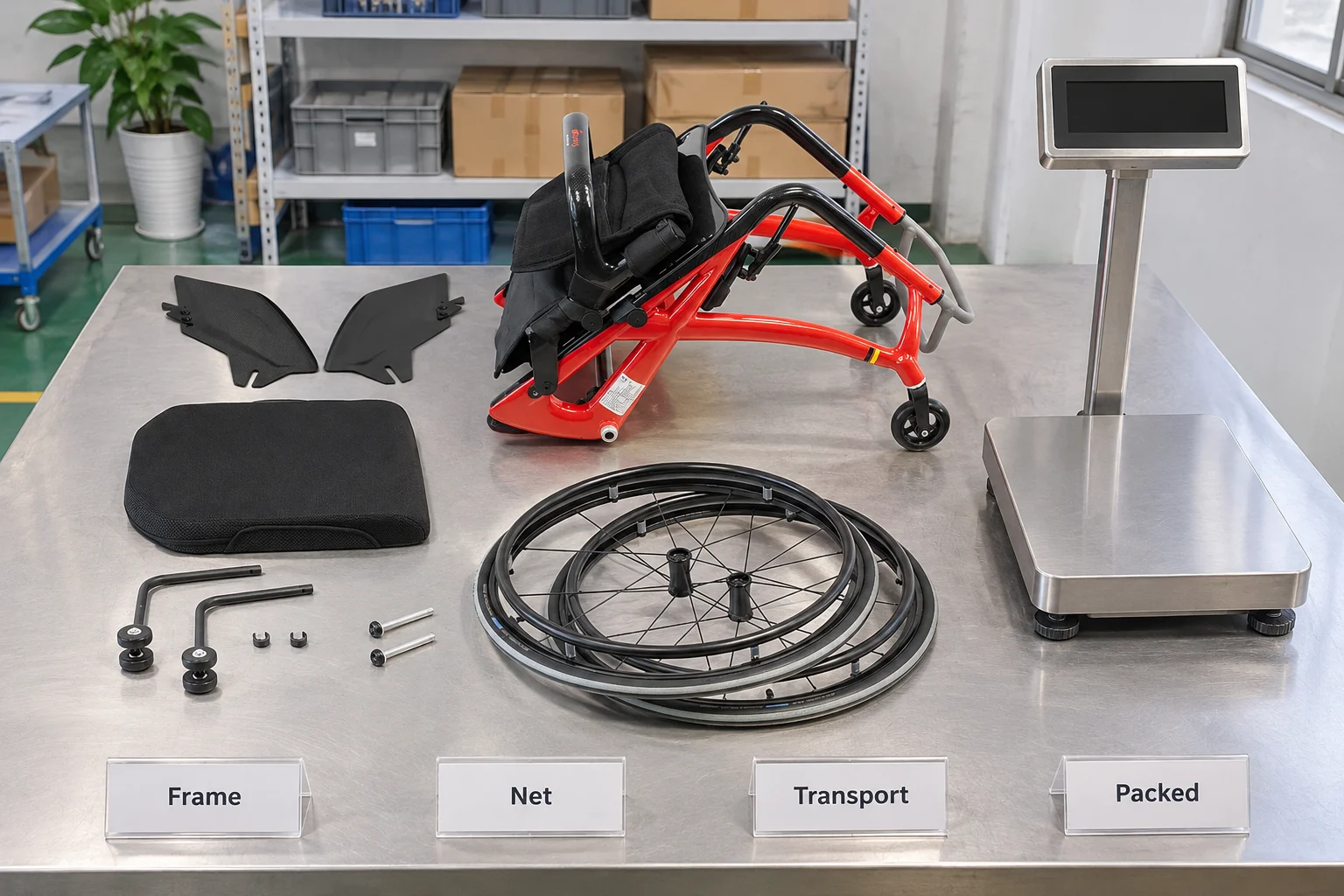
Weigh a defined set of parts and keep the reading when weight forms part of a wheelchair delivery inspection. For the 5903, weigh the actual included parts and keep the scale reading. Frame, net, transport and packed figures should remain separately labeled throughout the check.
Name what was on the scale
An unlabeled reading cannot settle a brochure disagreement. Ask which parts each 5903 weight claim includes. Label 4.5 kg frame, 7.5 kg net and 15 kg gross as product-sheet figures. Repeat checks using the same item set.
- List the parts on the scale for each reading.
- Weigh the packed box separately from the bare chair.
- Keep frame-only claims separate from whole-chair weight.
| Review point | What to confirm |
|---|---|
| Weight category | Frame net transport or gross |
| Included parts | Recorded setup |
| Comparison | Same units and same measurement scope |
Key Takeaway: You can use the delivered-chair weight as evidence without confusing it with a different product state.
What should delivery inspection cover at the wheels?
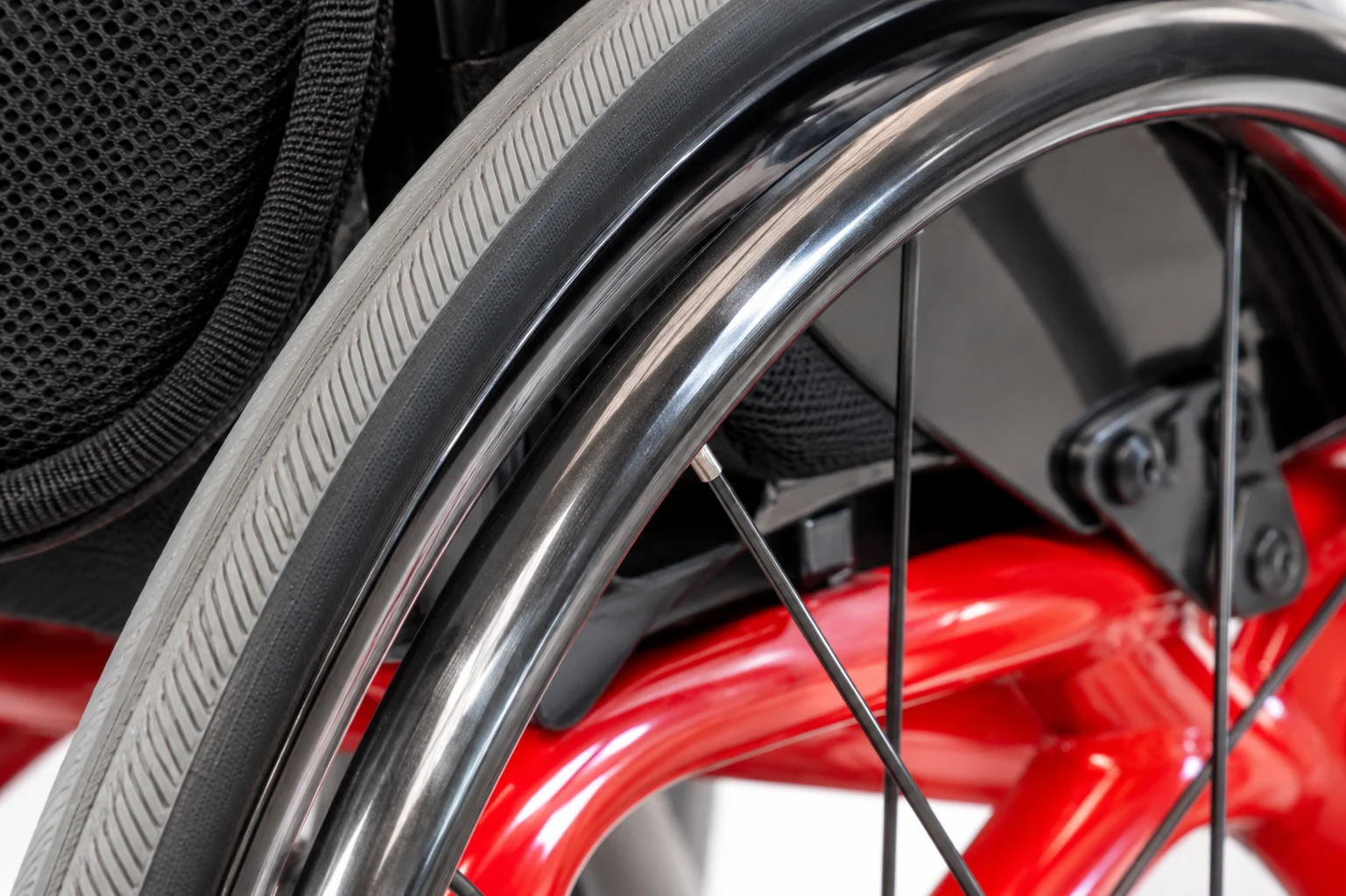
Review the actual wheels and attachment interfaces against matching instructions during a wheelchair delivery inspection. For the delivered 5903, record the rear wheels, front casters, parking locks and fitted anti-tip parts. Technical function checks should follow the matching procedure and assigned provider's scope.
Keep the assemblies distinct
One wheel-related finding may involve a different part from another. Record the exact part and observed concern. Do not turn an informal sample demonstration into a certified performance test or invent acceptance limits that have not been agreed.
- Rear assemblies
- Front and rear supports
- Technical review
| Review point | What to confirm |
|---|---|
| Rear assemblies | Wheels hubs axles and handrims |
| Front and rear supports | Actual caster and anti-tip parts |
| Technical review | Applicable procedure and recorded findings |
Key Takeaway: You can make the sample review specific without overstating what an informal check proves.
What documents should be agreed with the sample?
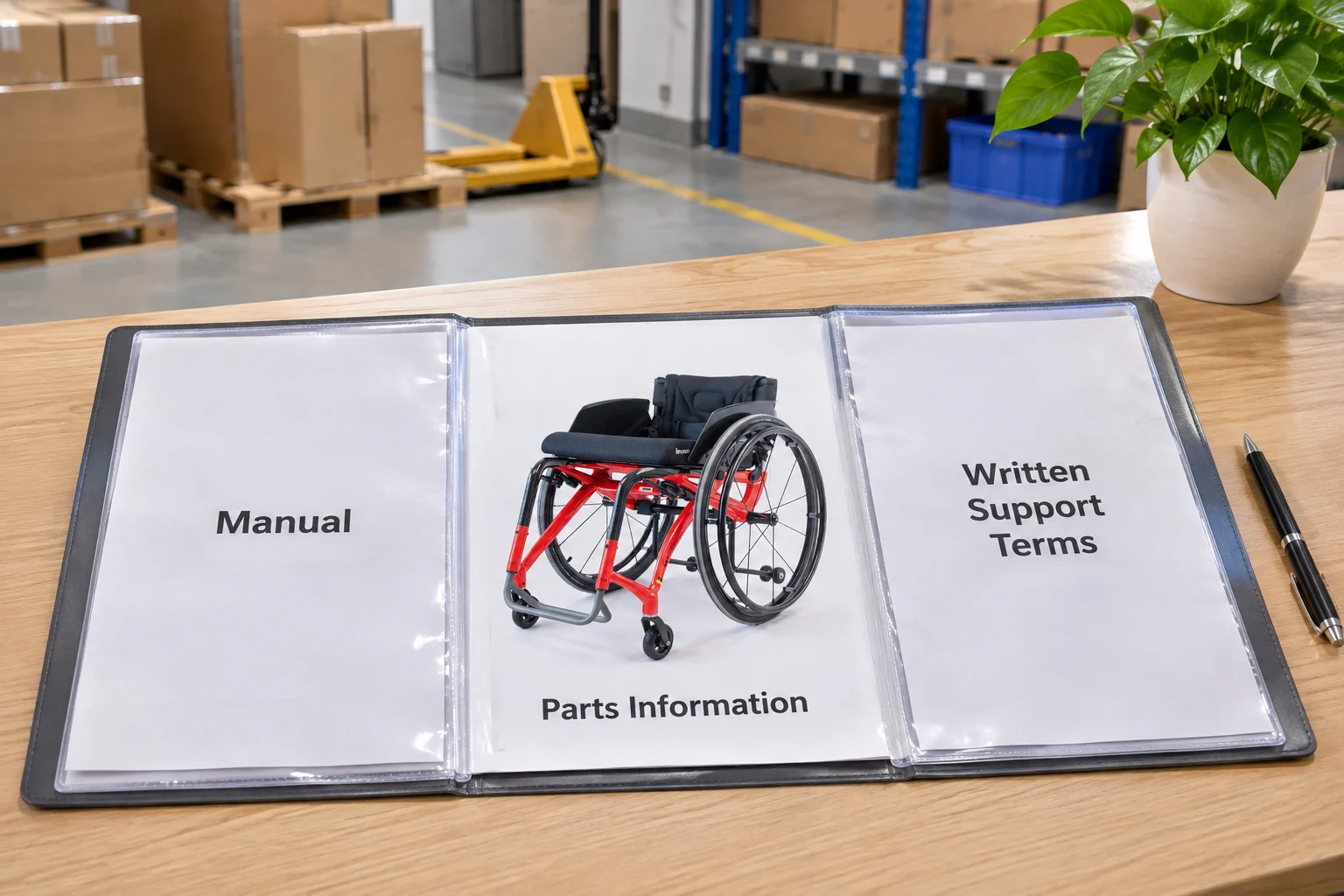
Match the manual, parts information and written support terms to the unit during a wheelchair delivery inspection. A document's presence alone does not establish its scope or suitability.
Read the identity and revision
An unrelated guide can create a faulty handover. Record the model references and any conflicting values for the supplier to resolve. Keep market-specific document questions with the assigned purchasing or regulatory review rather than claiming approval from a logo. Keep the document and part match in the parts record.
- Product match
- Document identity
- Market review
| Review point | What to confirm |
|---|---|
| Product match | Actual model and setup |
| Document identity | Issuer scope and revision |
| Market review | Applicable buyer requirements |
Key Takeaway: You can distinguish useful evidence from a file that merely accompanied the shipment.
How should a wheelchair delivery inspection be closed?
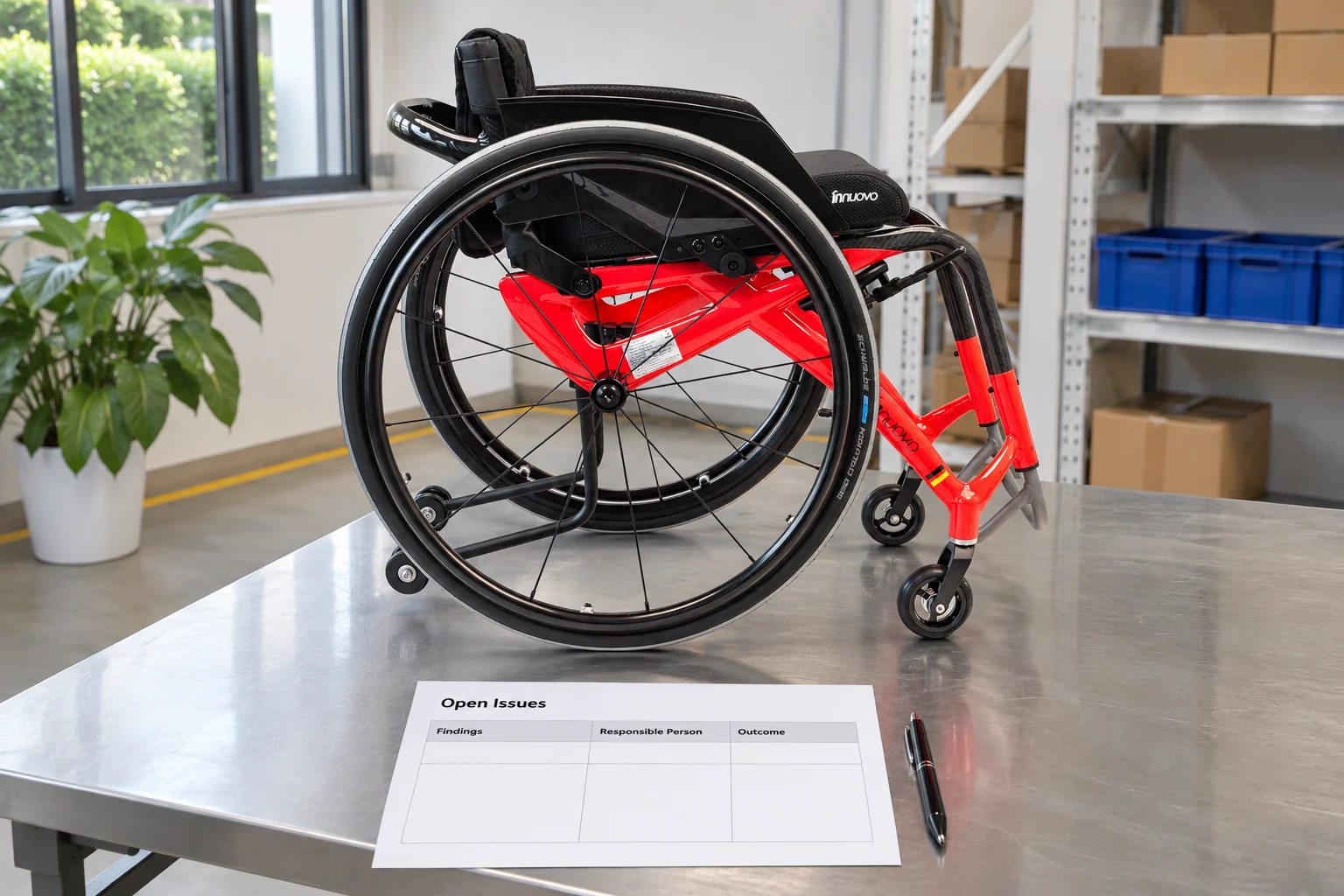
Close a wheelchair delivery inspection with recorded findings, responsible people and an agreed resolution for each difference. A message asking for more information should not be marked as an agreed replacement, resolved defect or final approval.
Give every exception an outcome
The record should show what remains open. Link the supplier's reply with the affected unit and item. Keep order acceptance, technical readiness and individual fit as separate decisions made by the needed people.
- Finding
- Response
- Decision
| Review point | What to confirm |
|---|---|
| Finding | Specific recorded difference or concern |
| Response | Actual supplier or provider action |
| Decision | Named acceptance or follow-up owner |
Key Takeaway: You can preserve a reliable receiving record that supports the next order or service step.
How can you prepare a useful delivery check brief?
Prepare a wheelchair delivery inspection brief from the accepted setup and the evidence receiving staff need to keep. Give each review task an owner and keep any unresolved spec sheet visible.
Send the acceptance questions before dispatch
The supplier can respond to a defined sample purpose. Give AryMD your proposed sample setup, destination and buying needs. We can discuss the product information and written scope needed for the sample and subsequent offer.
- Sample purpose
- Expected supply
- Review record
| Review point | What to confirm |
|---|---|
| Sample purpose | Specific questions to resolve |
| Expected supply | Configuration contents and documents |
| Review record | Findings owners and next decisions |
Key Takeaway: You can use a sample as a traceable purchasing step rather than an informal product impression. Contact us with your 5903 setup, quantity and destination so we can discuss the product information and written supply scope. AryMD puts clear specs before purchasing promises.
Frequently asked questions
Q1: Can a delivery inspection establish every user's fit?
No. Product and receiving checks do not replace the suitable individual fitting assessment.
Q2: What's the best reference for checking sample contents?
Use the final accepted offer and itemized parts list. Do not assume that every accessory shown elsewhere was ordered.
Q3: How do I know whether a dimension difference is a defect?
Check the same measuring points, setup and agreed spec first. Ask the supplier to resolve the difference rather than inventing a tolerance.
Q4: Should visible damage be reported with an assumed cause?
No. Describe the observation and preserve the needed context; the cause and remedy need the actual case review.
Q5: Does an informal demonstration prove certified performance?
No. Keep the scope of the sample check distinct from formal testing or certification evidence.