
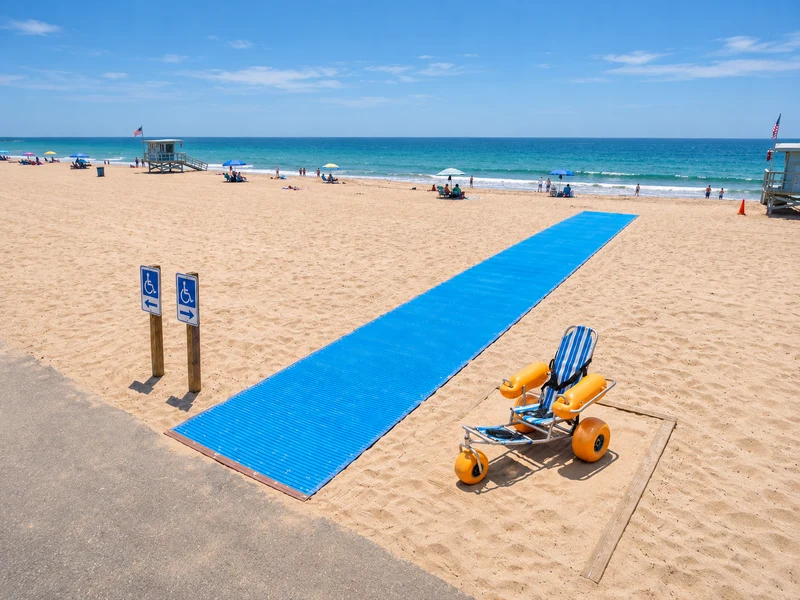
Choose beach mat colour by checking how clearly visitors can distinguish the route from its surroundings at your beach. A blue path that stands out on pale sand can be harder to pick out where it meets a painted deck or deep shade. Take samples to the entrance before signing off the order.
How do you choose beach mat colour for your site?
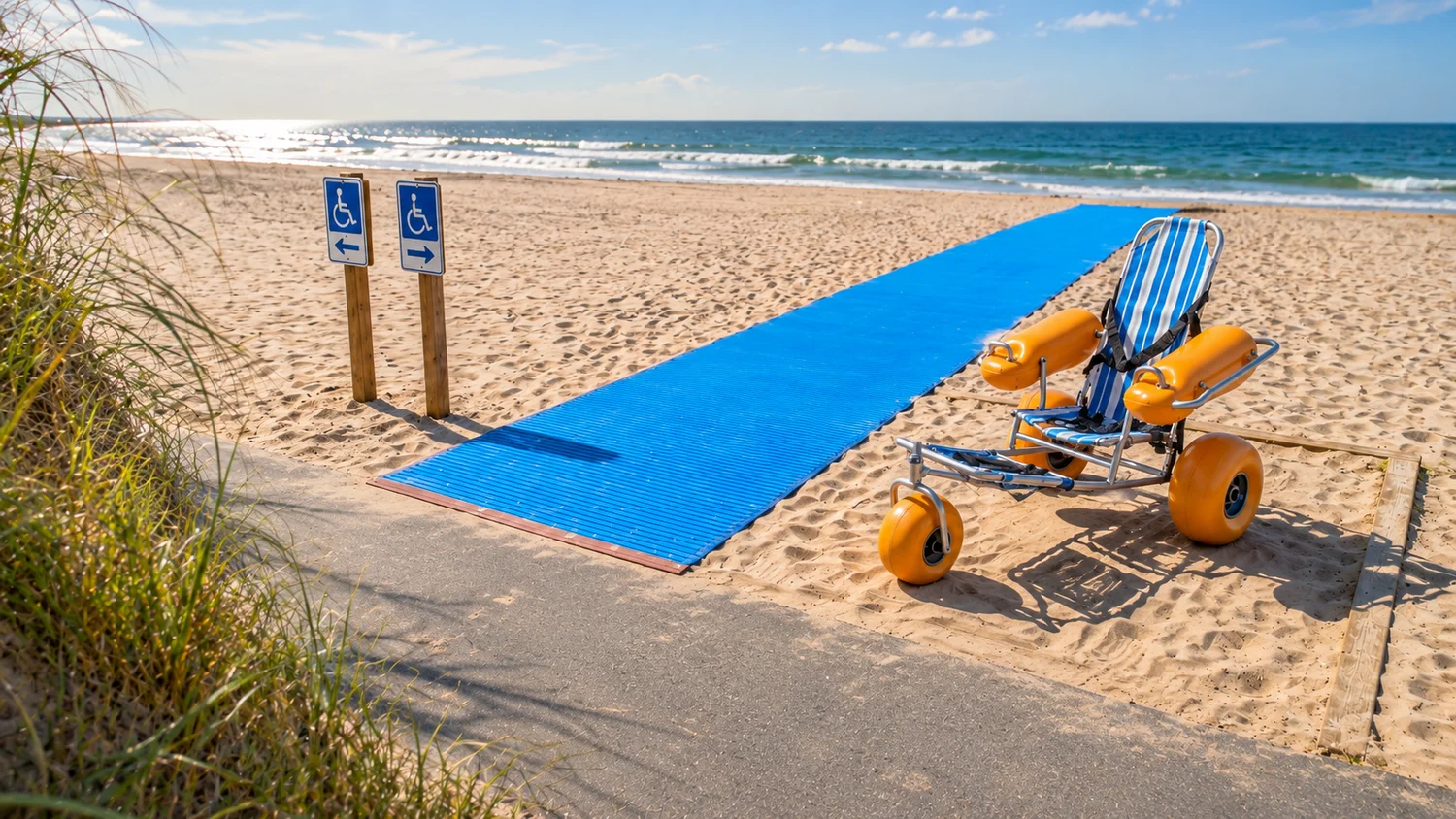
Choose beach mat colour by comparing candidate samples against the real surfaces and backgrounds along the approach.
What should the first photograph include?
Step back to the arrival point. A close-up can show an attractive colour without showing whether a visitor can find the beginning of the route.
- Photograph the entry from a normal approach.
- Keep surrounding sand and paving in the frame.
| Check | What to look for |
|---|---|
| Sample view | Material appearance |
| Arrival view | Route visible in context |
Key Takeaway: The entrance view tests the job the colour has to do.
Which backgrounds should you compare?
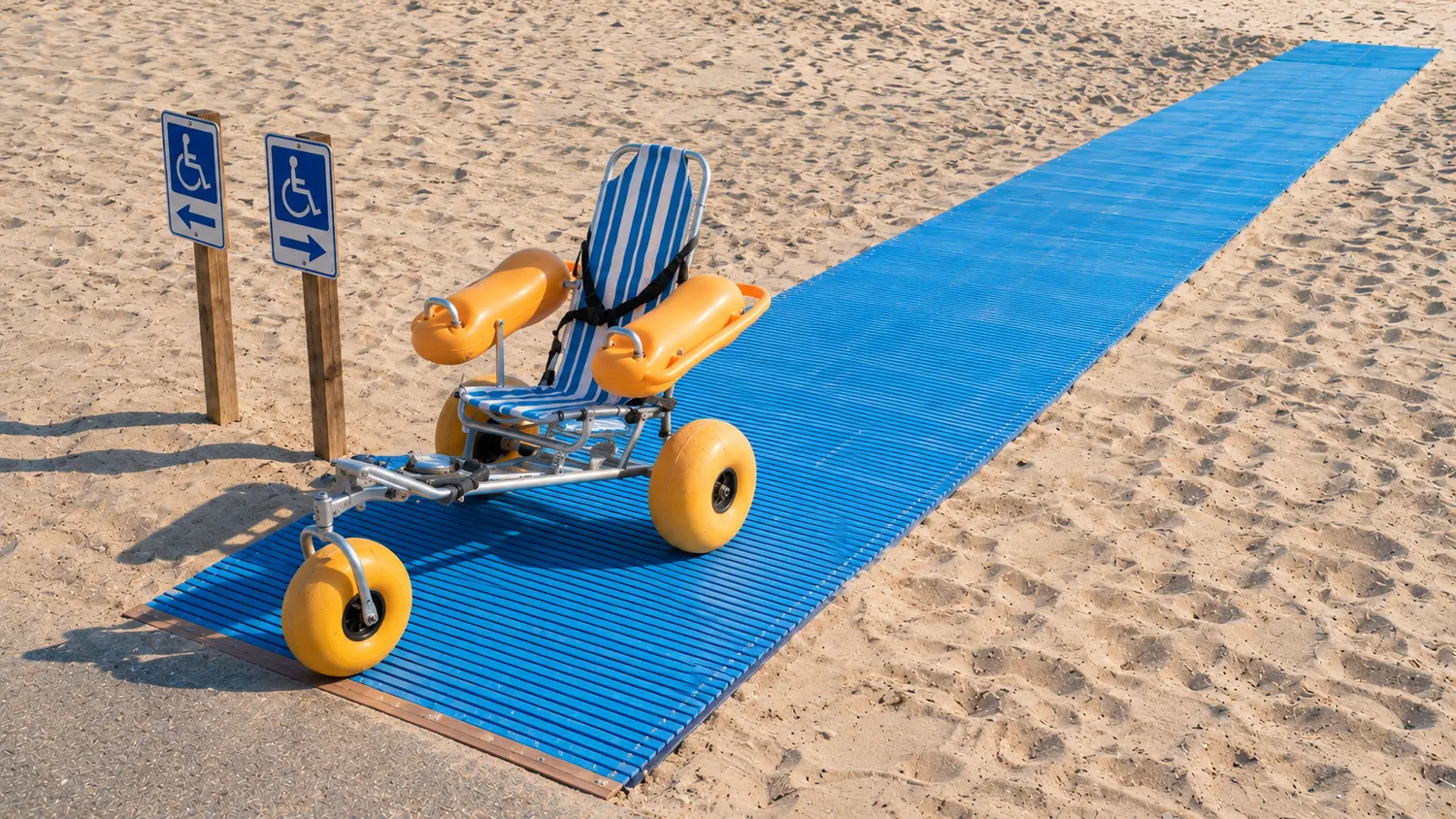
Compare beach mat colour with sand, deck surfaces, shadows and other materials that sit immediately beside the route.
Can one sample location represent the whole path?
Walk it end to end. A colour that is distinct on light sand may meet a similarly coloured surface near a kiosk or landing. Identify the beach equipment that people will approach from this point.
- List each adjacent surface.
- Photograph the hardest boundary to distinguish.
| Check | What to look for |
|---|---|
| Entry | First boundary |
| Destination | Last boundary |
Key Takeaway: The most difficult boundary can matter more than the most attractive catalogue image.
Does a catalogue photo establish visibility?
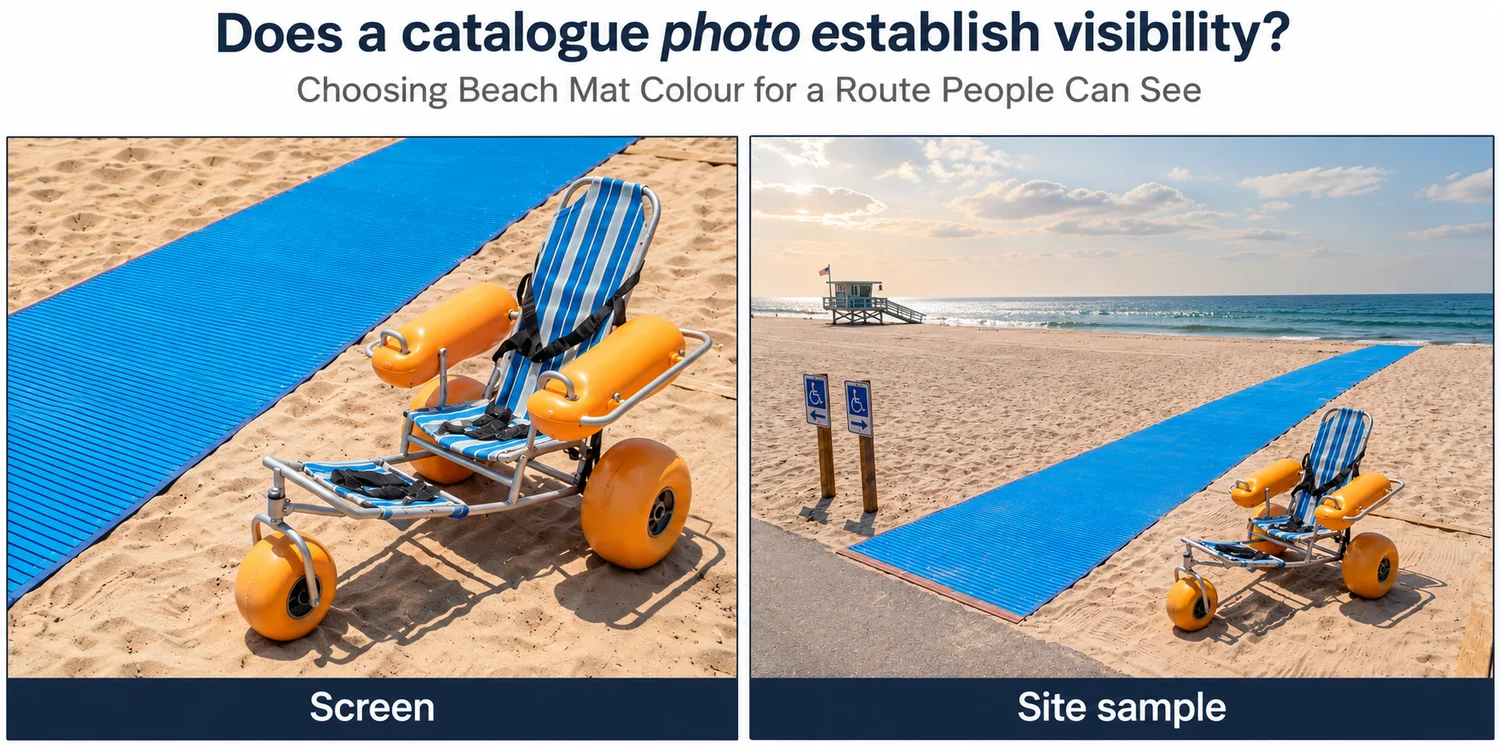
No, beach mat colour in a catalogue is a starting point for your site review.
How does a screen change the decision?
Ask for a physical sample. Lighting, exposure and displays can each change how a colour appears before a sample reaches your beach.
- Request the named colour reference.
- Compare the actual sample outdoors.
| Check | What to look for |
|---|---|
| Screen | Illustrative appearance |
| Site sample | Material in local light |
Key Takeaway: An approved sample gives purchasing and receiving a shared reference.
Whose view should the team consider?
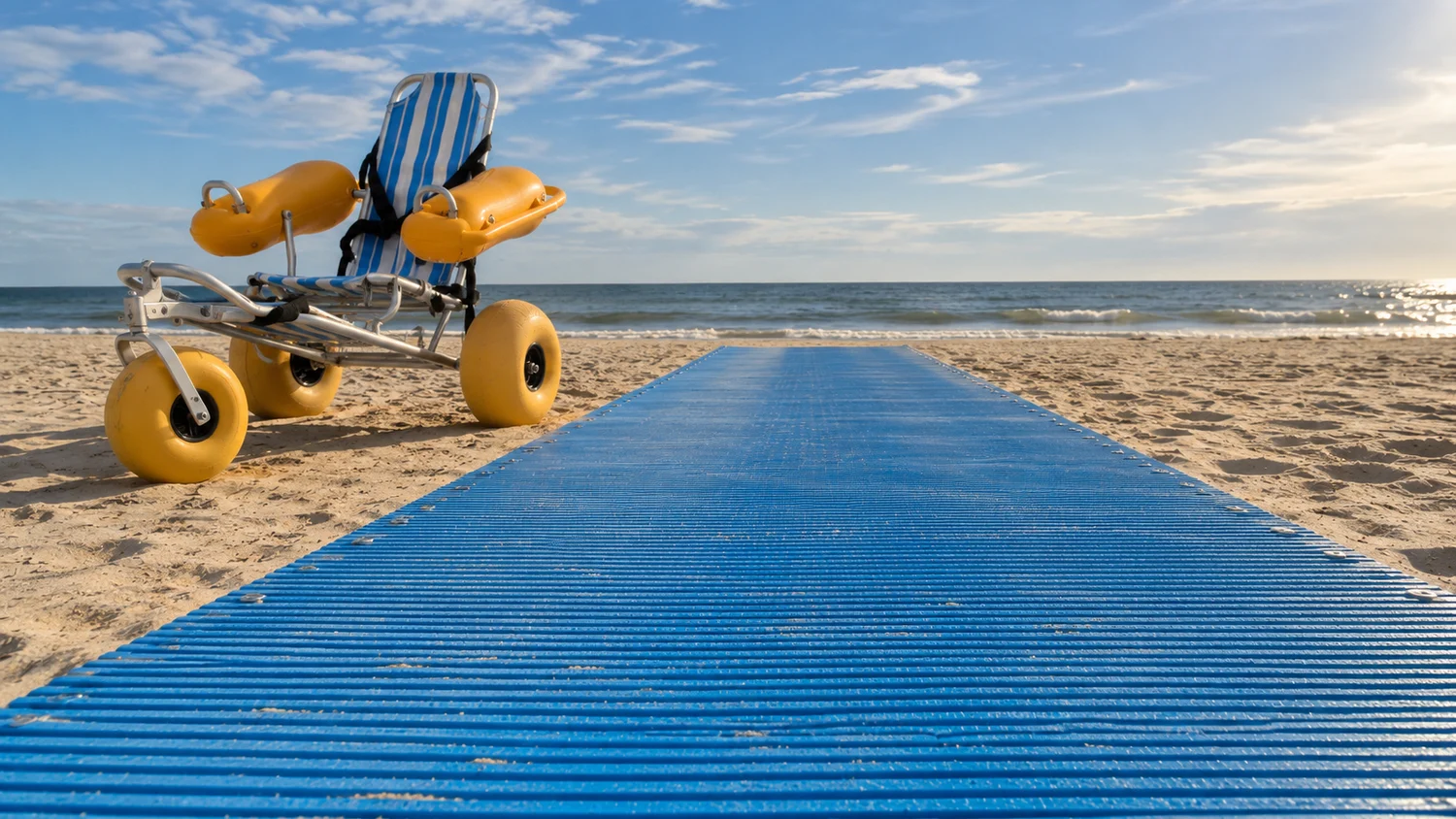
Review beach mat colour from the positions visitors use to approach, including seated eye level where relevant.
What does the operator's view omit?
Try a lower viewpoint. The path edge, background and competing signs can look different from a standing staff member's photograph.
- Invite feedback from intended users.
- Review both the approach and the return journey.
| Check | What to look for |
|---|---|
| Standing view | One approach perspective |
| Seated view | Another practical perspective |
Key Takeaway: Different viewpoints can reveal an entrance that staff assumed was obvious.
How do glare and shade affect the review?
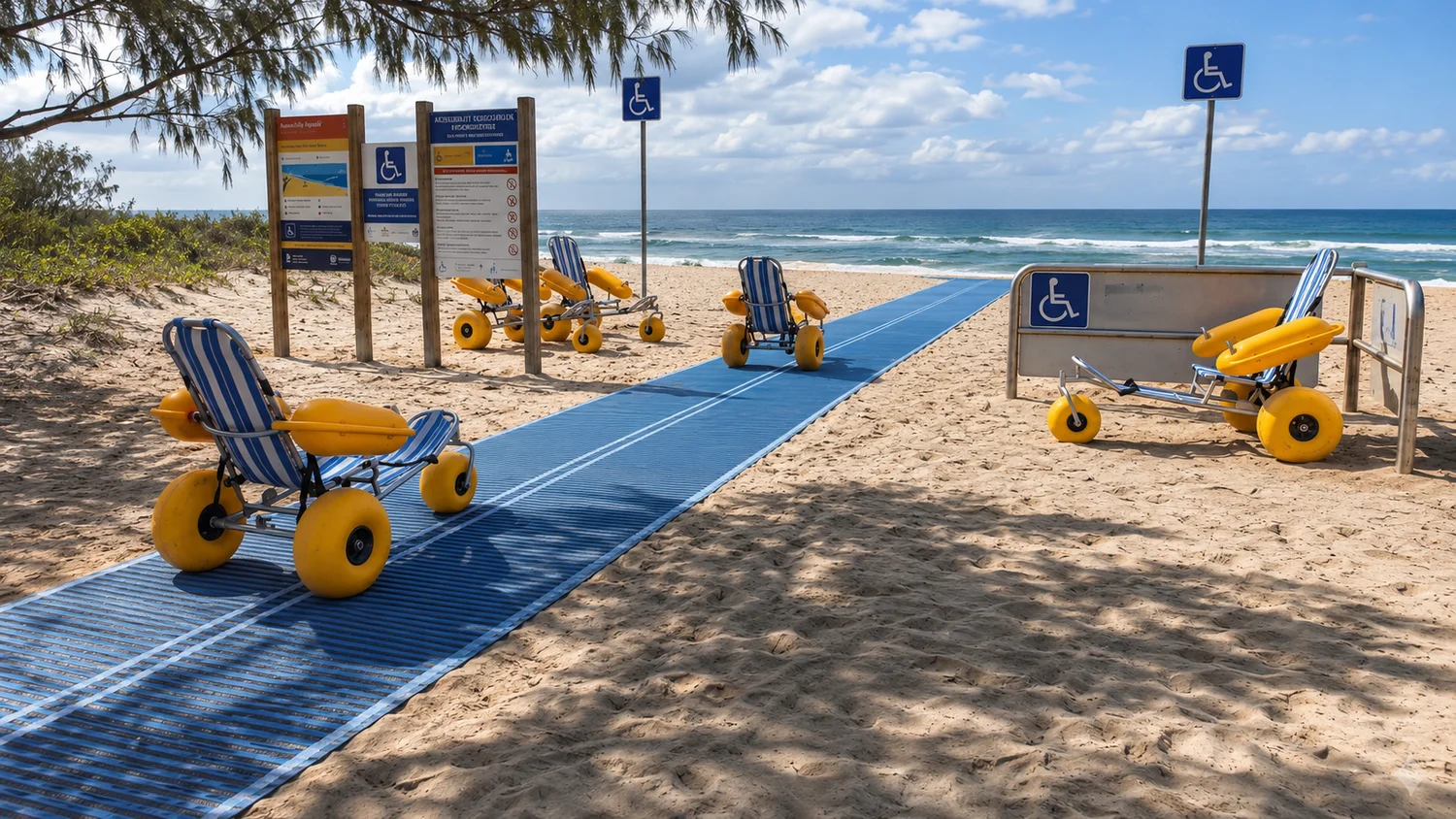
Check beach mat colour under representative light conditions, especially where the path passes between sun and shade.
When should you revisit the site?
Choose a second time of day. A bright morning photograph may hide the low-angle glare or canopy shadow visitors encounter later.
- Record the time and lighting.
- Keep the camera position comparable.
| Check | What to look for |
|---|---|
| First observation | Named lighting condition |
| Second observation | Changed light at the same point |
Key Takeaway: A repeat visit tells you whether a poor boundary is persistent or time-specific.
Does colour settle slip or heat questions?
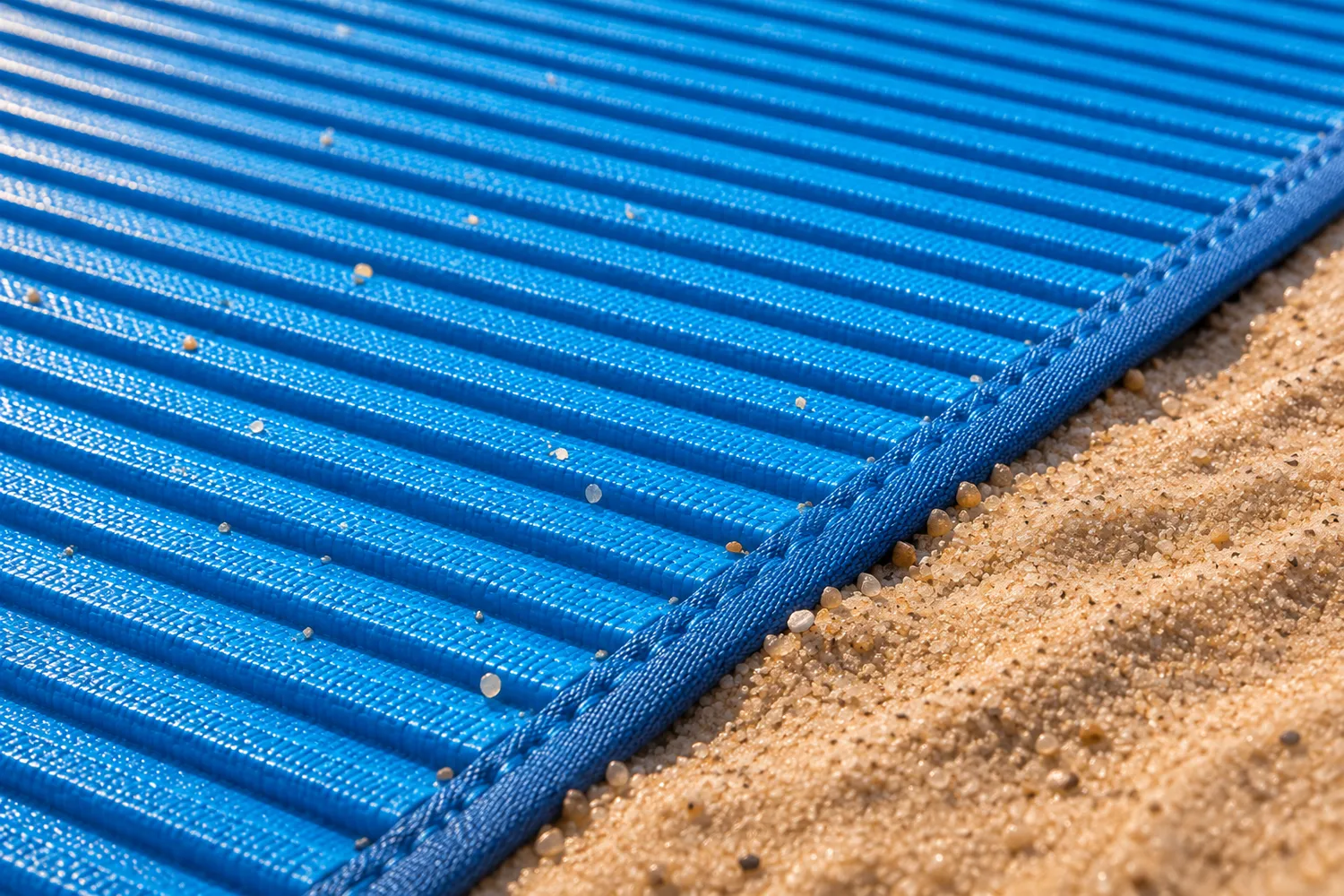
No, beach mat colour alone cannot establish slip resistance, surface temperature or suitability for bare feet.
Which questions need their own evidence?
Separate the test requests. A colour sample supports an appearance discussion, while performance claims require evidence for the material and use conditions. Keep route and surface evidence separate from the chair selection decision.
- Request relevant product information.
- Record each claim and its evidence independently.
| Check | What to look for |
|---|---|
| Colour | Visual selection |
| Performance | Specific supporting evidence |
Key Takeaway: Buyers can approve a shade while leaving performance claims open for verification.
Can a route rely on colour alone?
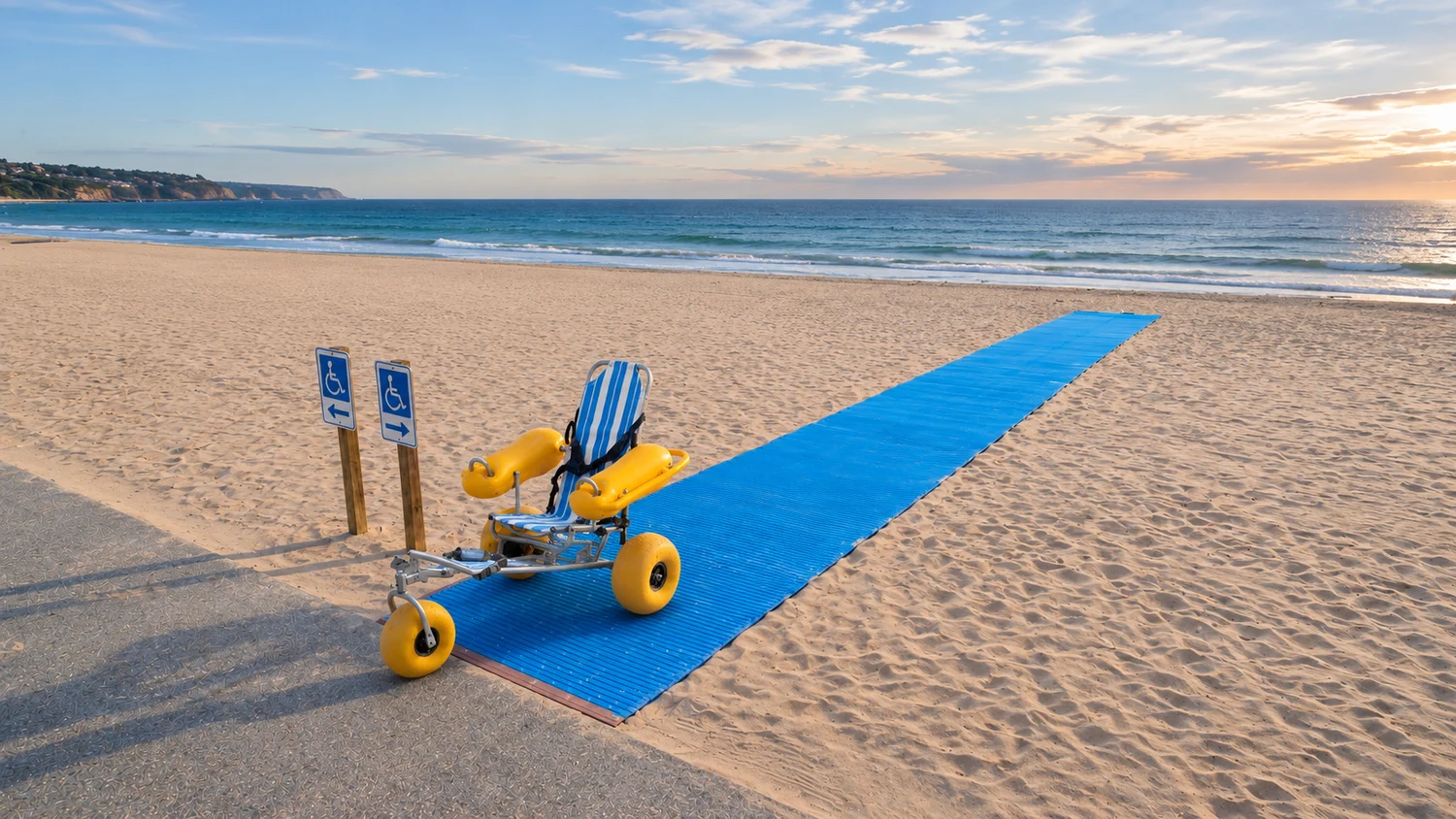
Support beach mat colour with appropriate wayfinding and local accessibility review for the actual site.
Where do visitors hesitate?
Watch the decision point. A turn, temporary closure or competing blue surface can leave someone unsure even when the mat edge is easy to see. The National Park Service visitor information shows how one operator describes seasonal mat access to a beach.
- Identify places where a visitor must choose.
- Ask the site team how those choices are communicated.
| Check | What to look for |
|---|---|
| Visible strip | Path can be seen |
| Wayfinding | Direction or service can be understood |
Key Takeaway: Colour helps people find a route, while its destination and current status need clear information.
How should replacement rolls be compared?

Compare replacement beach mat colour to the named product reference and the existing installed material in its present condition.
Will a new roll look identical?
Ask before promising a match. A fresh sample and an exposed installed path can look different even if both carry the same nominal colour name. Include both the sample and current installed view in your colour enquiry.
- Keep an approved reference swatch.
- Photograph the intended meeting point.
| Check | What to look for |
|---|---|
| New roll | Current supply colour |
| Existing mat | Appearance at the installed site |
Key Takeaway: The site can choose whether a visible difference affects the wayfinding plan.
Which wording belongs in the quotation?
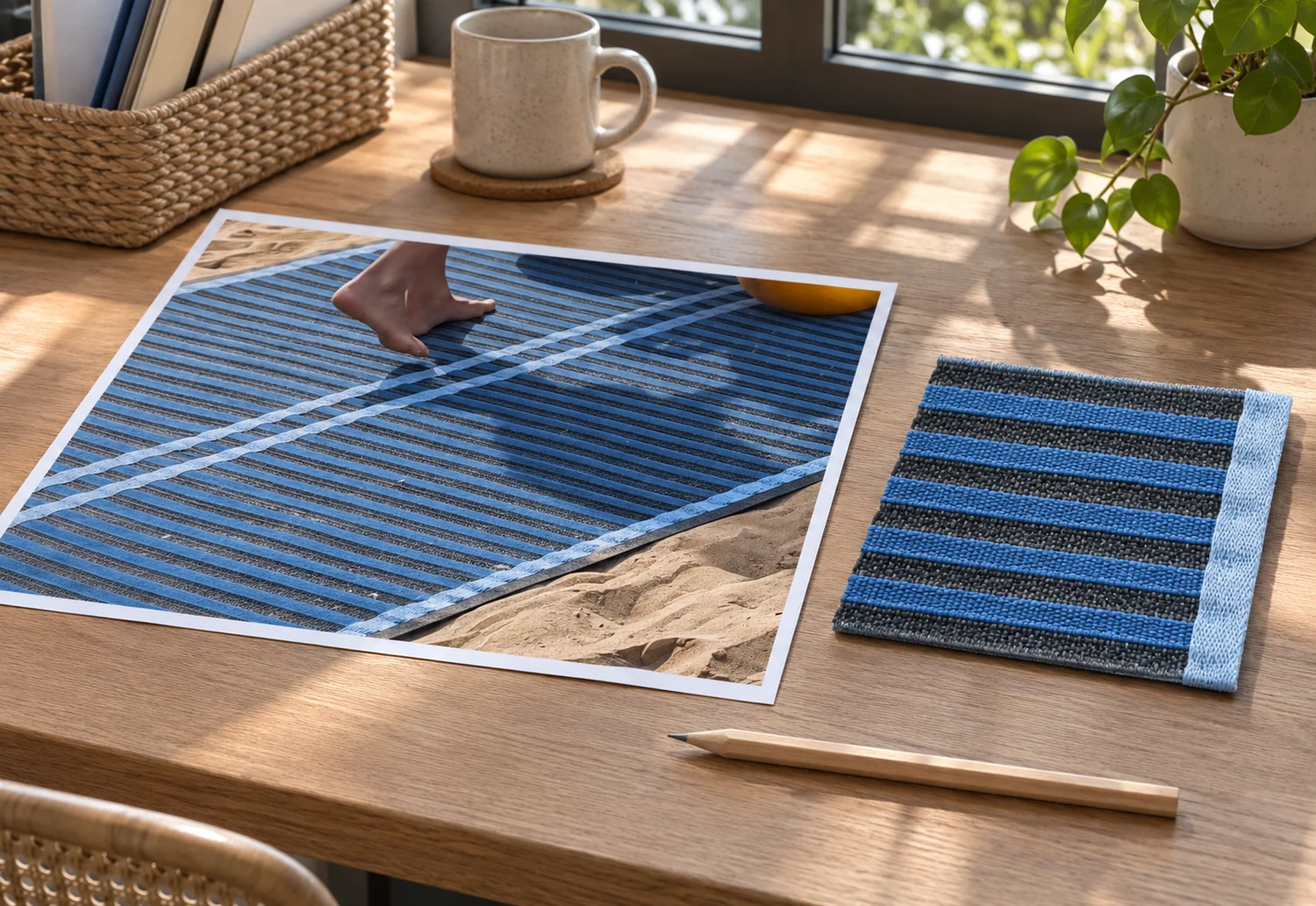
Specify the beach mat colour reference, product version and approved physical sample in the quotation.
Can you just ask for blue?
Use the supplier's identifier. Colour names can cover several shades, especially when two material series are shown on the same website.
- Request the current colour code or sample ID.
- Note any agreed tolerance or substitution policy.
| Check | What to look for |
|---|---|
| Supply reference | Quoted colour and version |
| Approval | Physical sample or dated photograph |
Key Takeaway: The receiving team needs a practical basis for accepting or querying a delivery.
What makes a site colour decision complete?
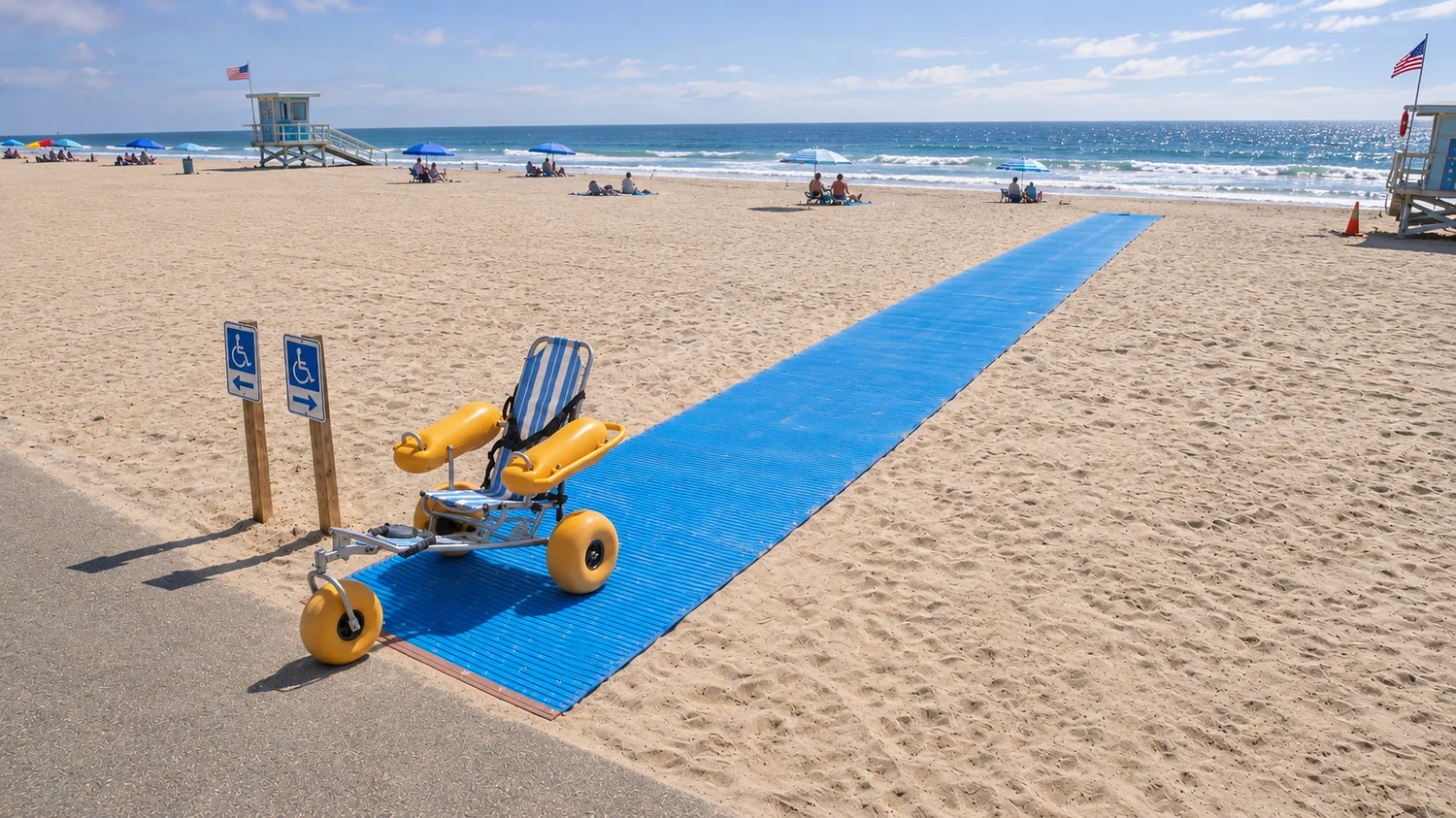
Accept the beach mat colour after the relevant team reviews the sample, route boundaries and visitor viewpoints.
What should the next season inherit?
Keep the site record. Include the hardest boundary and the lighting conditions so a future change to decking, signage or mat can trigger a meaningful review.
- Save the accepted sample ID.
- Record which boundary should be checked again.
| Check | What to look for |
|---|---|
| Decision | Chosen colour and evidence |
| Recheck | Change to surroundings or product |
Key Takeaway: Your team can explain both the colour choice and when it deserves another look. Contact us with a route sketch and the mobility equipment you expect to use. A beach route earns its place when visitors can find it from where they arrive.
Frequently asked questions
Q1: Can I assume blue works at every beach?
No. Compare it with the actual site backgrounds and lighting.
Q2: What's the best way to compare two colours?
Take physical samples to the same location and check them from the normal arrival viewpoints.
Q3: Does a darker colour prove the surface gets too hot?
No. Seek evidence for the exact material and conditions before making a temperature claim.
Q4: Can colour replace a sign at a route junction?
A colour alone may leave the direction unclear. Review the full wayfinding arrangement at that junction.
Q5: Can I reorder using the word blue alone?
Request the supplier's colour and product identifiers and compare a current sample when appearance matters.