
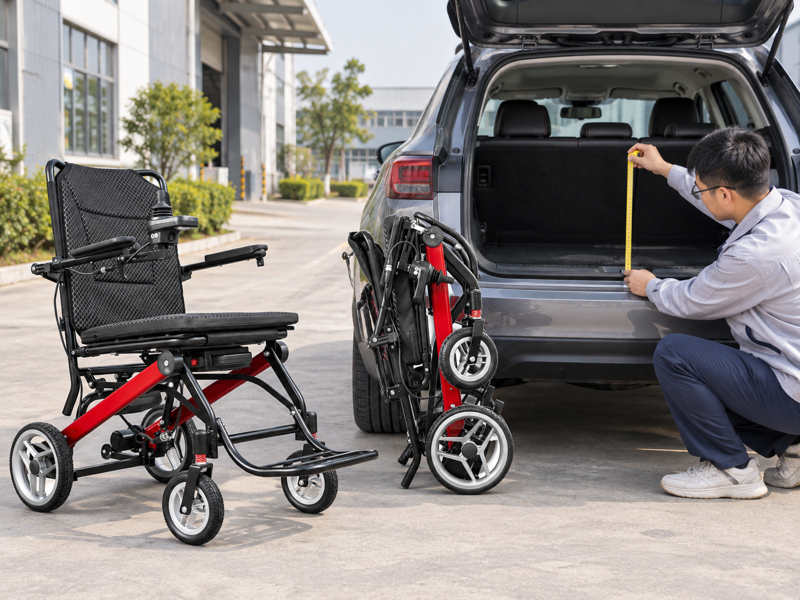
Easier car travel starts with a Lightweight electric wheelchair that your handler can fold, load, secure, and unload without guesswork. A customer arrives for collection with a small hatchback, only to find that its boot lip blocks a chair demonstrated beside a van. Your team now faces a return, another delivery, and an unhappy buyer. Use a vehicle-specific loading trial before approving stock or promising easy transport.
1. What Makes Lightweight Electric Wheelchair Loading Hard?
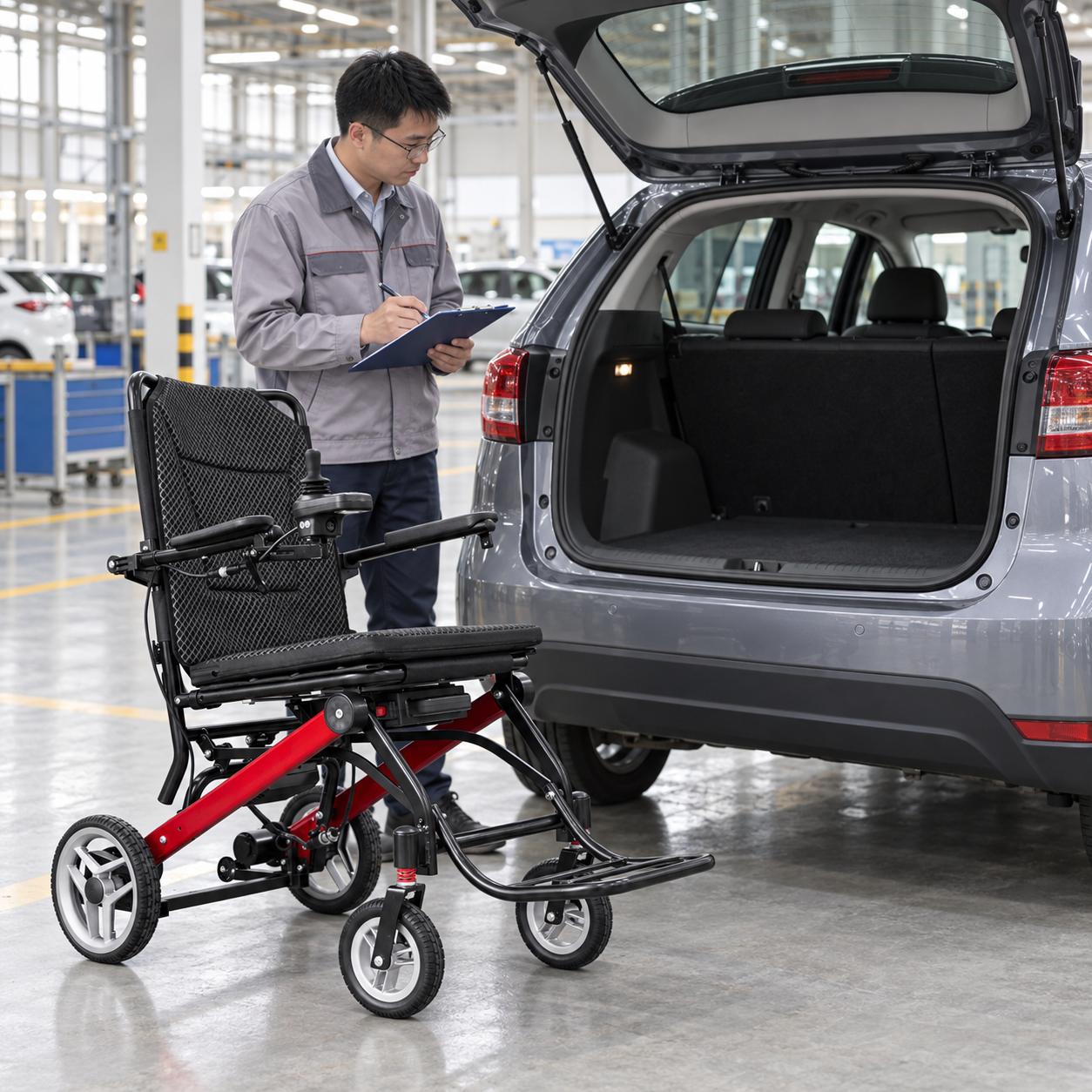
Lightweight electric wheelchair loading gets difficult when folded shape, grip, lifting height, and human reach do not suit one another. A low frame weight does not settle those questions. For example, a deep boot may force your handler to reach forward while supporting a bulky frame.
Which part of a normal trip causes trouble?
Walk through the whole handoff. Ask your customer to describe parking, getting out, folding, loading, arrival, and storage. You may find that tight parking space creates more trouble than chair mass, because a door cannot open far enough. Record who handles each task when regular help is absent.
- Note usual vehicle model and rear opening.
- Record available room beside a parked car.
- Name anyone expected to fold or lift.
- Include loose parts, luggage, and storage space.
| Trip stage | Possible obstacle | Evidence to collect |
|---|---|---|
| Parking | Tight side clearance | Photo of normal space |
| Loading | High lip or deep reach | Actual loading trial |
| Arrival | No room to unfold | Destination floor plan |
A route record reveals problems a showroom cannot show. Key Takeaway: Approve a handling plan that works at both ends of a trip.
2. Which Lightweight Electric Wheelchair Weight Should You Use?
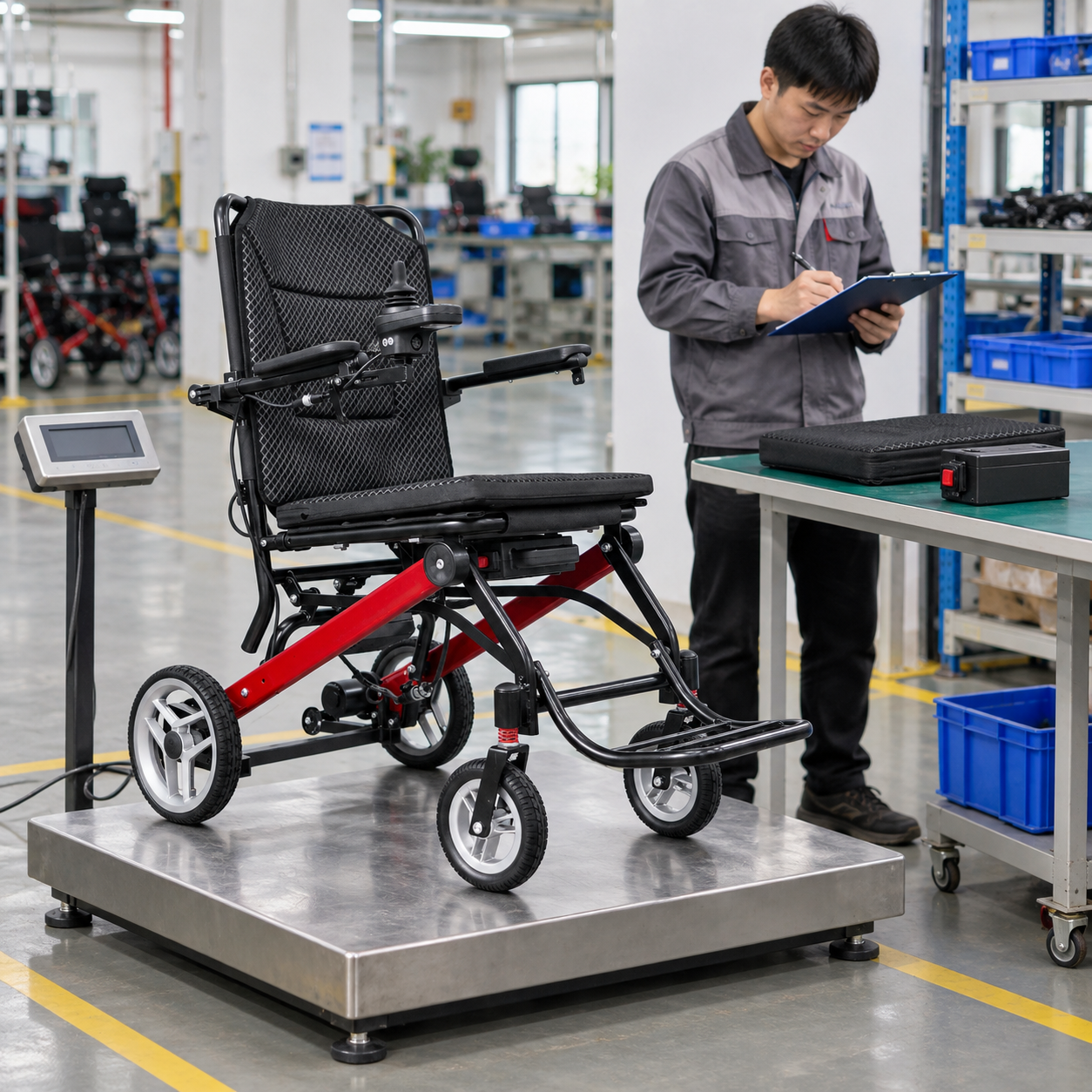
Lightweight electric wheelchair handling weight should include everything your customer lifts in one movement. Ask whether a quoted figure excludes the battery, cushion, foot support, or control module. Keep those definitions beside your measurements, because two attractive specifications may describe different loads.
Can a lower frame figure hide extra handling?
Put the complete load on a scale. Weigh an assembled sample, then weigh each permitted removable part separately. The wheelchair weight guide provides terminology to discuss, while your own sample record settles what enters a vehicle. Removal may reduce one lift but add more tasks and loose items.
- State the exact configuration beside every weight.
- Include accessories ordered for normal use.
- Record the heaviest individual lift after approved removal.
- Keep packing weight separate from chair weight.
| Weight label | What it should describe | Why it matters |
|---|---|---|
| Assembled | Chair ready for stated use | Normal loading load |
| Reduced | Defined parts removed | Repeatable handling plan |
| Packed | Carton plus equipment | Freight planning only |
Clear labels prevent a shipping figure from becoming a lifting claim. Key Takeaway: Quote the weight your buyer actually handles and identify exclusions.
3. Will a Lightweight Electric Wheelchair Fit Your Car?
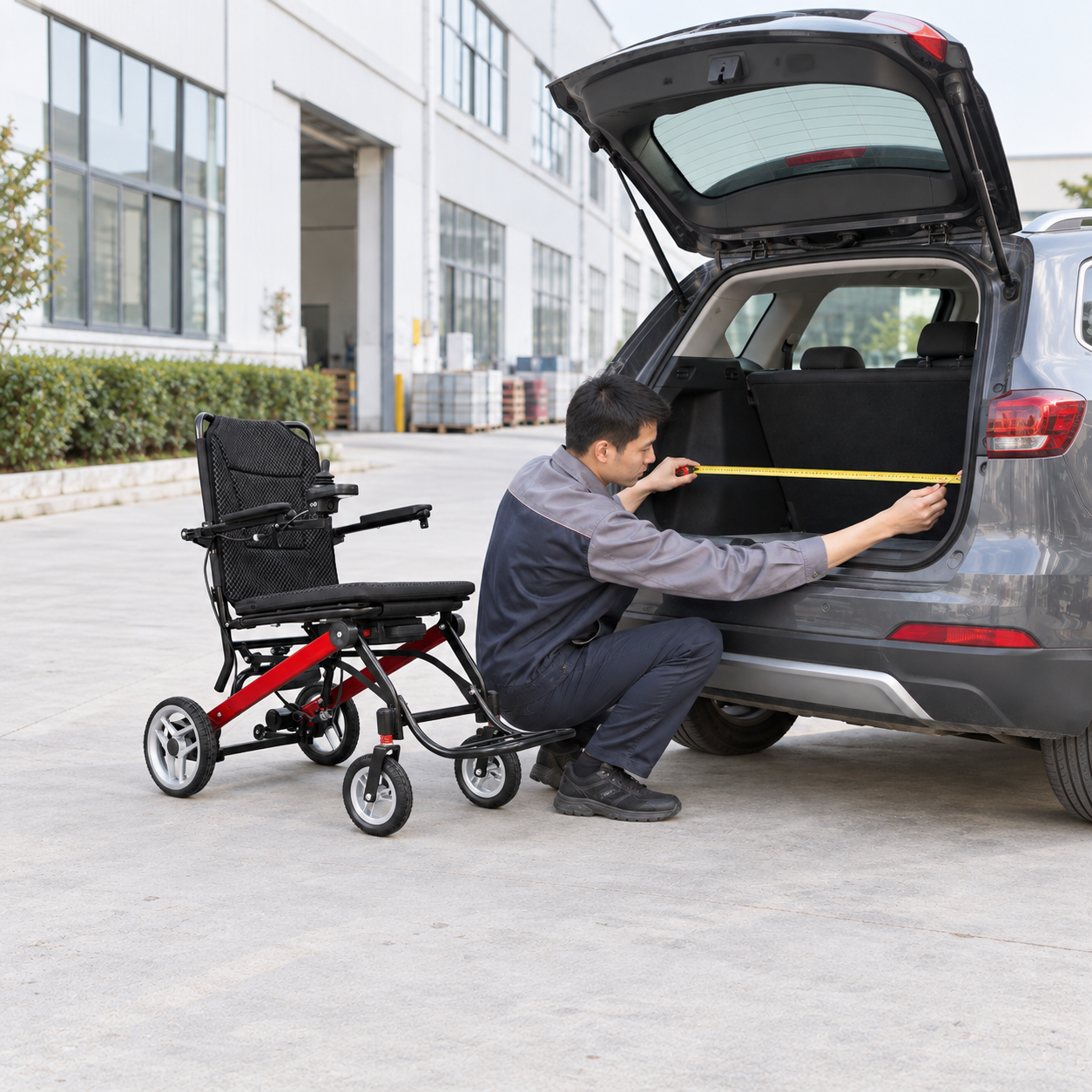
Lightweight electric wheelchair fit depends on the opening, loading angle, boot lip, and usable space inside. Boot volume alone cannot prove access. Measure with normal rear seats and luggage in place, then check whether your planned loading motion clears each obstruction.
What should a dealer measure at the vehicle?
Test the narrowest part. A large storage space may sit behind a much smaller opening. Use folded chair dimensions to prepare a simple template before bringing a sample outside. However, a template cannot reproduce weight or balance, so finish with a controlled trial using actual equipment.
- Measure clear width and height at entry.
- Note the lip height and reach into storage.
- Allow space for control parts and cables.
- Check door closure without pressing against equipment.
| Measurement | Test method | Reject when |
|---|---|---|
| Opening | Rigid size template | Required angle blocks entry |
| Interior | Full folded sample | Trim bears on controls |
| Door clearance | Gentle closure check | Latch needs force |
These checks distinguish physical fit from usable loading. Key Takeaway: Record vehicle identity and configuration with every successful trunk trial.
4. How Should a Lightweight Electric Wheelchair Fold?
Lightweight electric wheelchair folding should follow its current manual and end with a stable, clearly locked form. Your team should see which parts stay attached and where hands remain clear. Ask staff to repeat the sequence after instruction, because watching a practiced demonstration can hide confusing steps.
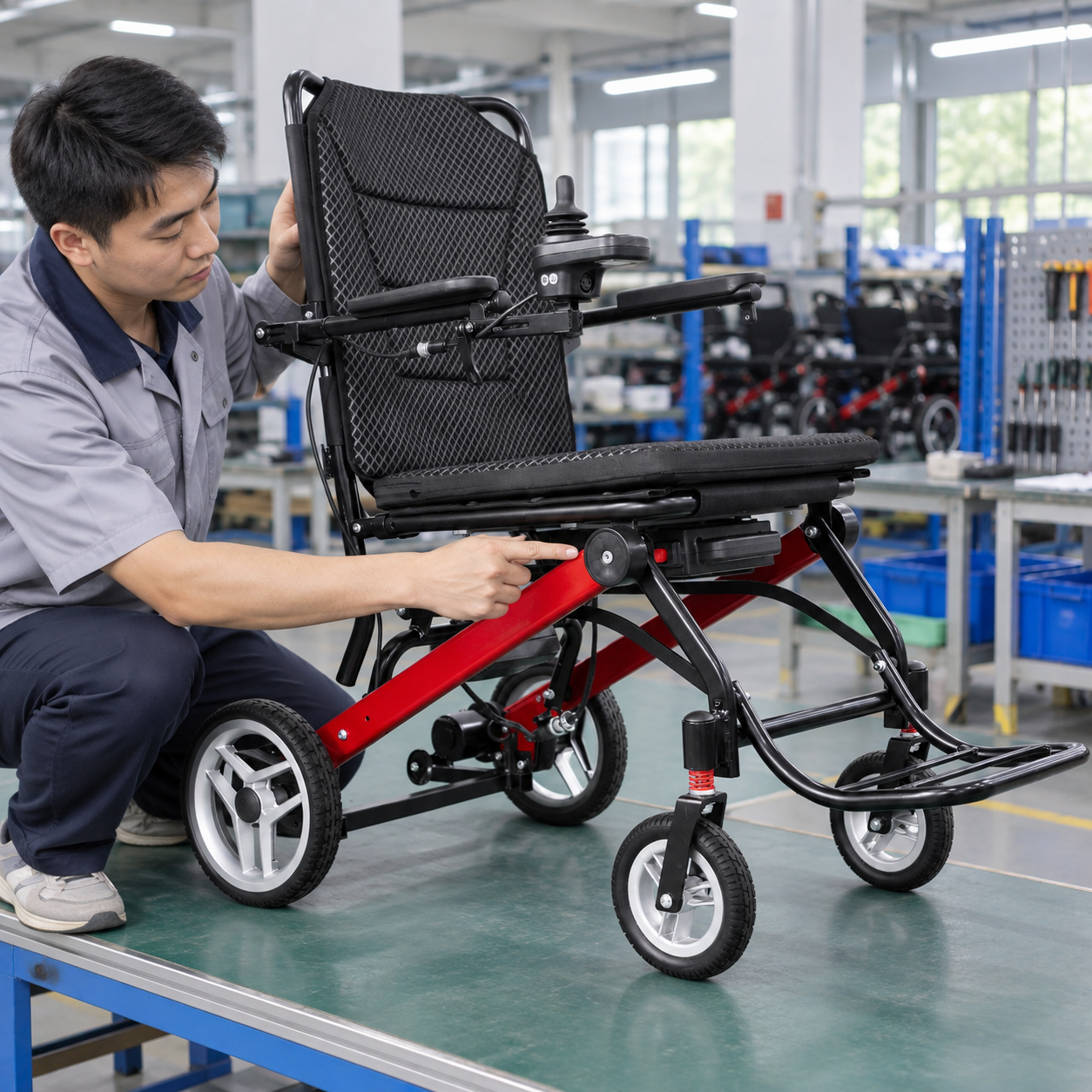
What makes a folding demonstration useful?
Let a new operator try. Use the folding wheelchair comparison to organize questions about shape, parts, and storage. Then follow the supplied manual for the exact sample. Stop if a lock needs force, a cable catches, or staff cannot identify the fully secured position.
- Identify permitted release points before moving the frame.
- Protect the joystick using the approved method.
- Count every loose item before and after folding.
- Check the latch again once the chair opens.
| Folding stage | Required observation | Record |
|---|---|---|
| Preparation | Correct parts moved | Setup photograph |
| Closure | No trapped cable or fabric | Repeat trial notes |
| Opening | Lock fully engaged | Operator demonstration |
A repeatable sequence reduces rushed improvisation beside a car. Key Takeaway: Buy a folding process your team can teach and check.
5. Can One Person Lift a Lightweight Electric Wheelchair?
Lightweight electric wheelchair weight does not establish whether one person can lift it safely. Capability, balance, grip, frequency, and loading height all affect the task. For workplace handling, use HSE manual-handling guidance to frame a task assessment and choose suitable assistance where needed.
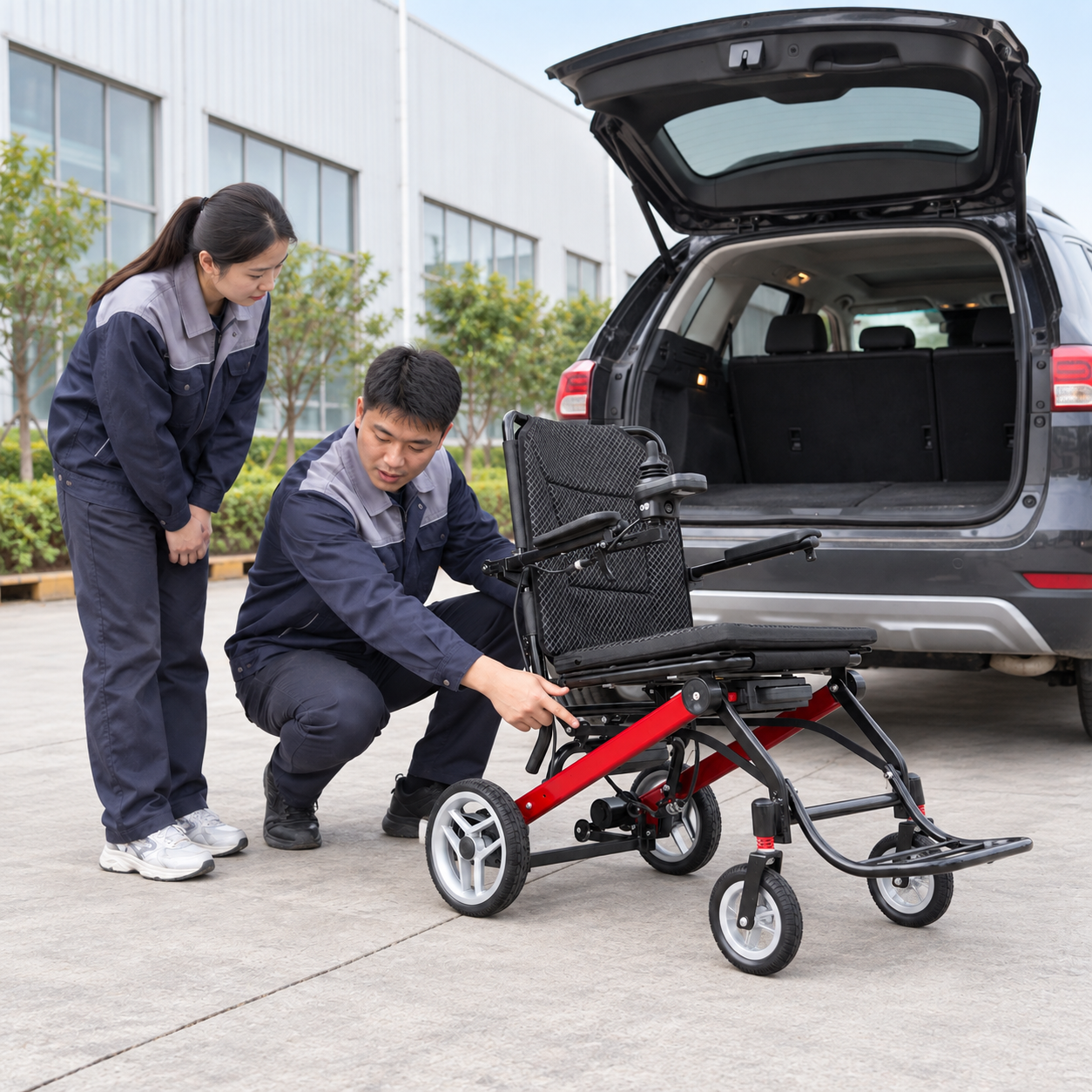
What should change when a lift looks awkward?
Change the task before repeating it. Ask the supplier to identify approved lifting points and methods. A removable armrest, joystick bracket, or cable is not an assumed carrying handle. If a person must twist, overreach, or hold equipment at an unstable angle, review assistance and equipment instead of encouraging another attempt.
- Use only documented load-bearing grip points.
- Include loading frequency in the assessment.
- Keep the path clear and vehicle stationary.
- Stop when control of the load feels uncertain.
| Handling concern | Possible response | Verification |
|---|---|---|
| Awkward grip | Approved handling method | Supplier demonstration |
| Deep reach | Suitable loading assistance | Vehicle-specific assessment |
| Variable helper | Revised transport plan | Repeat with actual team |
Assistance needs belong in a quotation discussion. Key Takeaway: Avoid promising solo loading from a catalog weight alone.
6. Does a Lightweight Electric Wheelchair Need a Ramp?
Lightweight electric wheelchair loading may need a ramp or lift when manual handling is unsuitable. Compatibility depends on load rating, track width, gradient, attachment, clearance, and vehicle geometry. A folding label does not prove that any portable ramp will suit your chair or car.
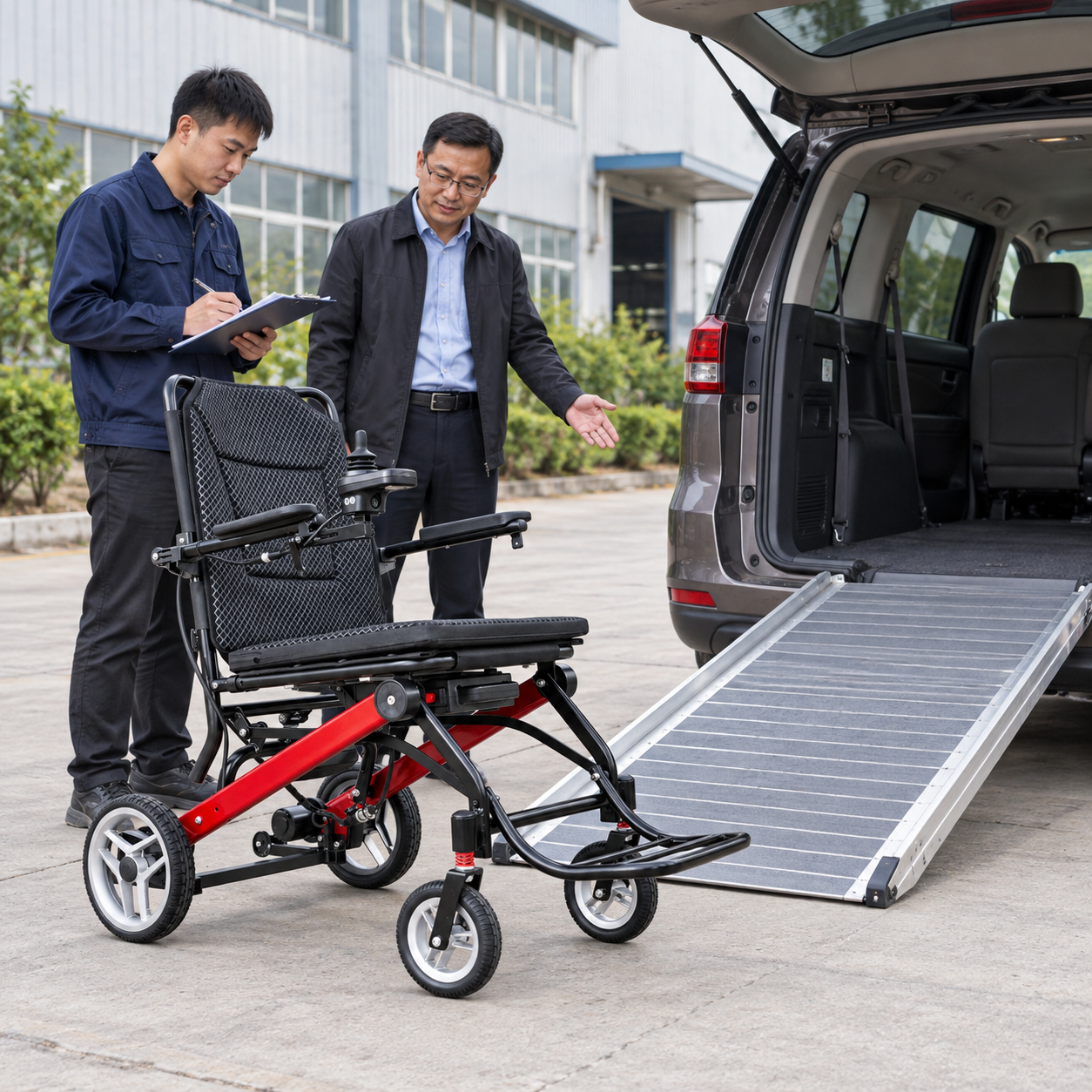
How should buyers compare loading aids?
Check the chair and vehicle as a pair. Ask both equipment suppliers to confirm a permitted method before a trial. List storage and handling questions with your transport team. Assess the unloaded chair configuration; occupied vehicle transport requires separate suitability evidence and qualified advice.
- Match equipment capacity to the defined load.
- Check edge protection, attachment, and wheel paths.
- Confirm storage space for the loading aid itself.
- Follow manufacturer directions for power and brakes.
| Aid option | Main question | Extra space needed |
|---|---|---|
| Ramp | Is the complete route approved? | Approach and storage |
| Vehicle lift | Does installation suit this car? | Loading clearance |
| Assisted handling | Can staff repeat the method? | Working room |
The aid becomes part of the transport specification. Key Takeaway: Include its weight, setup, and storage in your sample test.
7. How Do You Secure a Lightweight Electric Wheelchair?
Lightweight electric wheelchair transport requires a documented method that keeps empty equipment from moving as cargo. Check vehicle and chair instructions for restraint points, orientation, and loose-part storage. Carrying a folded chair in a boot does not establish suitability for riding in it during road travel.
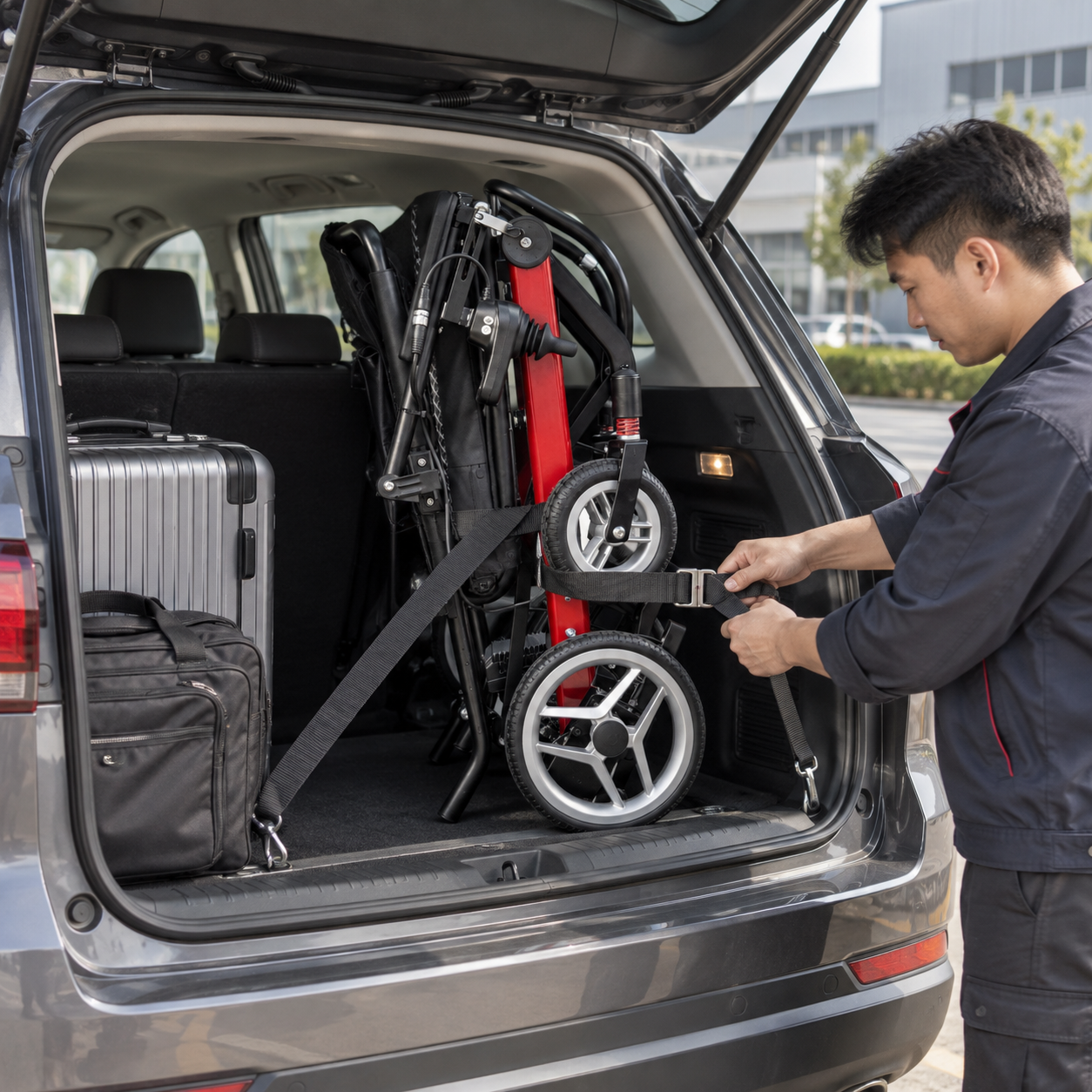
What should stay separate from loose luggage?
Give each part a storage place. Heavy bags should not press on a joystick, harness, or folding release. Protect removed parts with suitable cases and keep them with their chair identity. Battery handling must follow the applicable product instructions rather than a routine removal rule for every model.
- Restrain equipment using an approved cargo method.
- Protect control parts from impact or accidental activation.
- Keep chargers and removable supports together.
- Check restraint again after loading other bags.
| Item | Transport concern | Planned protection |
|---|---|---|
| Folded frame | Movement in transit | Suitable cargo restraint |
| Joystick | Pressure from luggage | Protected clear space |
| Loose components | Loss or impact | Named storage pouch |
A packing photo makes repeat journeys easier to check. Key Takeaway: Separate empty-chair cargo planning from occupied transport requirements.
8. What Follows Lightweight Electric Wheelchair Unloading?
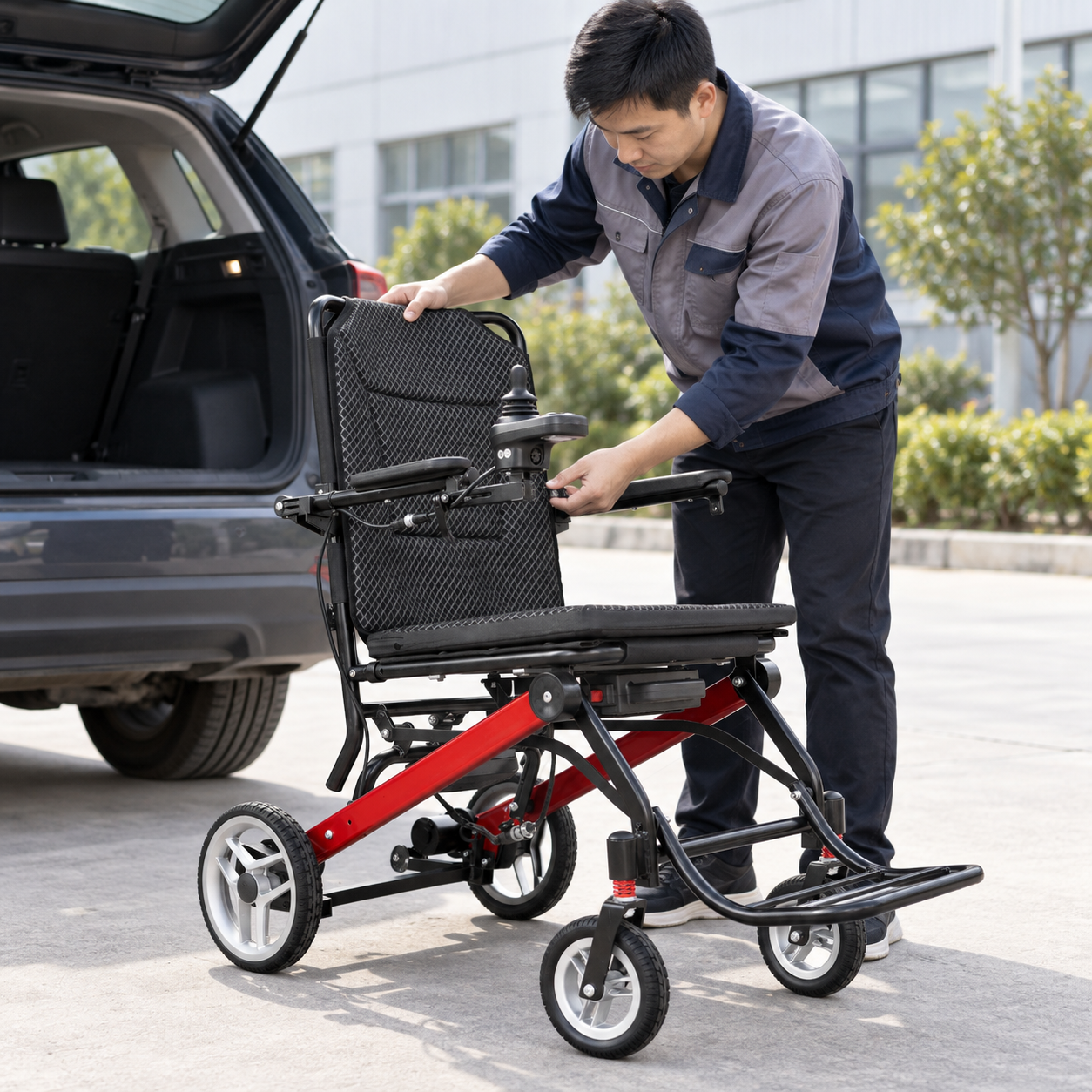
Lightweight electric wheelchair unloading should end with a setup and condition check before use. Open and lock the chair on suitable level ground, following its manual. Inspect exposed parts for damage or displacement, because a successful loading trial can still leave a joystick loose or a cable pinched.
Which checks belong in a short arrival routine?
Check before anyone sits down. Confirm frame locks, controls, supports, and installed battery state using the supplier's steps. Apply the same discipline used in a delivery receiving check. If transport caused visible damage or a new fault, hold the chair for review.
- Confirm every permitted removable part is fitted.
- Check folding locks and external wiring.
- Position foot supports and controls correctly.
- Complete the prescribed function check in a clear area.
| Arrival check | Expected result | Response to concern |
|---|---|---|
| Frame lock | Fully secured | Stop and inspect |
| Control mount | Stable position | Follow setup instructions |
| Visible condition | Matches departure | Record and seek service |
This routine catches changes while the trip remains easy to recall. Key Takeaway: Treat unloading as a fresh handover.
9. How Do You Record Lightweight Electric Wheelchair Trials?
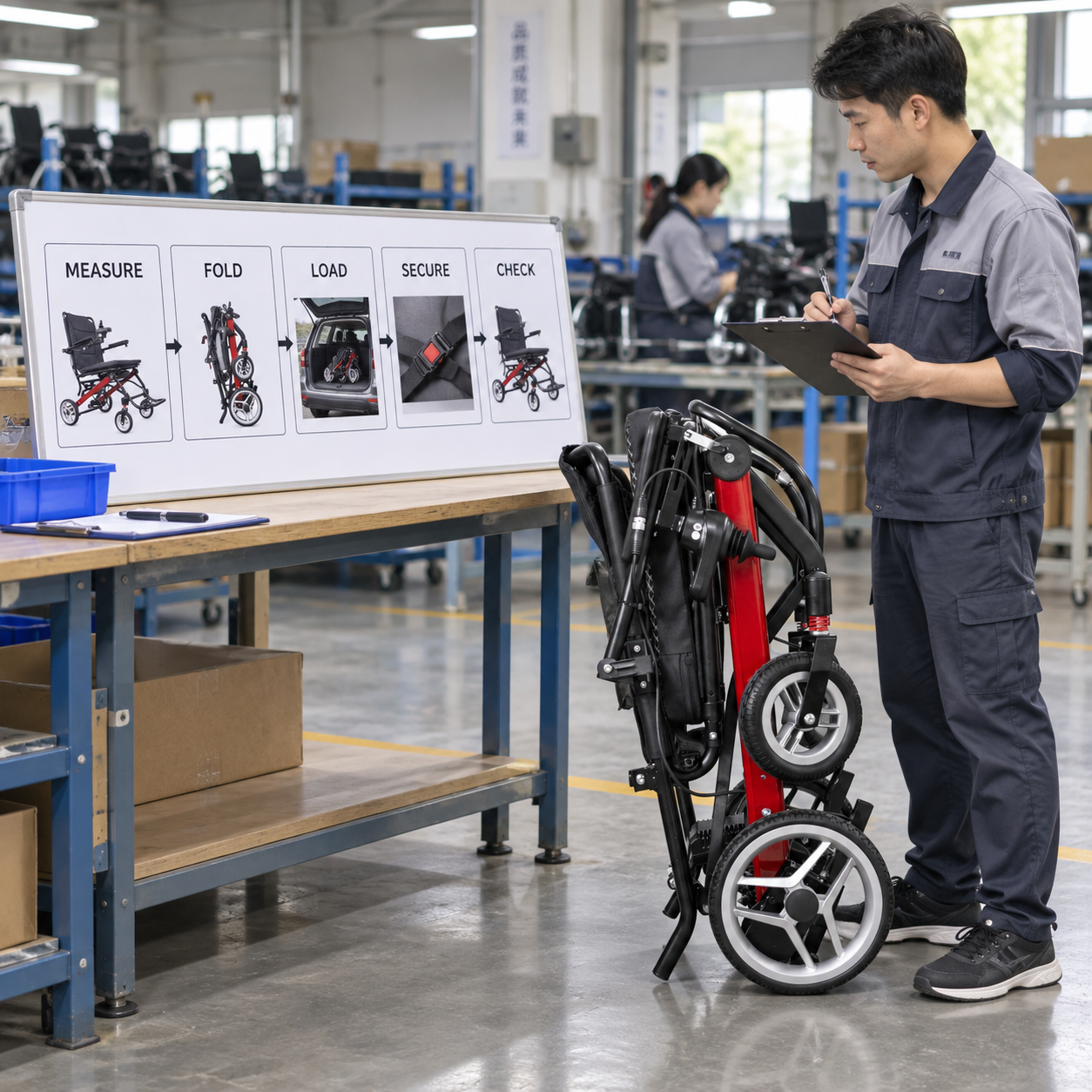
Lightweight electric wheelchair transport trials need enough detail for another dealer to repeat the result. Record model revision, battery setup, vehicle identity, operator, tools, and handling method. Keep customer-specific capability separate from a general product claim, because a successful trial does not prove universal fit.
What belongs on a one-page loading record?
Write down the conditions behind the pass. Photograph folded orientation and any approved assistance. List unresolved issues in plain language, with an owner and next check. A measured workflow gives sales staff something more useful than an unqualified promise that a chair fits standard cars.
- Record configuration, vehicle, and lifting method.
- Note awkward steps and permitted workarounds.
- Attach photos with consent where people appear.
- Set a new trial when equipment changes.
| Record | Why retain it? | Update trigger |
|---|---|---|
| Folded orientation | Repeats a tested arrangement | Product change |
| Vehicle details | Limits fit claims | Different vehicle |
| Operator feedback | Flags handling demands | Different handler |
The diagram describes a process, not measured product performance. Key Takeaway: A transport claim should carry the conditions that make it true.
10. What Completes a Lightweight Electric Wheelchair Handover?
Lightweight electric wheelchair transport handover is complete when a buyer can repeat preparation, loading, restraint, unloading, and checking. Weight definitions, vehicle measurements, and assistance decisions should agree across sales and service records. Ask for a demonstration back from the person who will perform those tasks at home.

What should you send before a sample order?
Bring your actual constraints. Share vehicle dimensions, route photos, handler needs, and planned accessories with Ary Medical. We can discuss suitable folding options and the product records needed for your sample review. Our position is that portability claims should match a handling task you can repeat.
- Agree on a sample configuration and current manual.
- Plan a vehicle trial with suitable assistance.
- Review results before making retail claims.
| Decision | Required evidence | Next action |
|---|---|---|
| Fits | Vehicle trial | Record orientation |
| Handles well | Assessed loading method | Train actual handler |
| Travels securely | Restraint and arrival checks | Approve handover |
Use this sequence to settle weight, fit, handling, and transport questions before ordering. Key Takeaway: Contact us with your vehicle brief so we can help prepare a practical sample comparison.
Frequently Asked Questions
Q1: Can I lift a lightweight chair on my own?
Possibly, but weight alone cannot settle it. Review your capability, chair balance, loading height, and approved handling method before attempting a lift.
Q2: How do I know if it fits my hatchback?
Use a measured trial. Check the opening, boot lip, loading angle, luggage space, and door closure with the configured chair.
Q3: Can I leave the battery fitted during a car trip?
Follow the model's instructions. Battery design, restraint, and vehicle conditions determine the permitted arrangement; removal is not a universal rule.
Q4: What's the best way to protect the joystick?
Use the supplier-approved method. Keep luggage off the control and verify its mount after unloading.
Q5: Can I use a folding chair as a seat in a moving vehicle?
Only with separate evidence that the chair and complete transport setup support that use. A folding design or successful boot trial does not establish approval.