
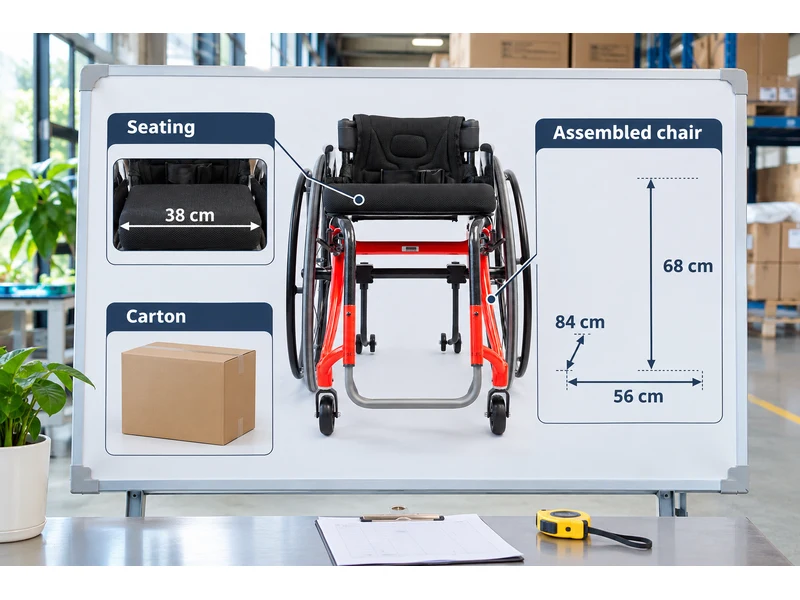
Begin a wheelchair measurement checklist with the assembled chair, its seating dimensions and its packed or stored state recorded separately. A chair may appear narrow in a catalog while a different wheel setup or rear accessory changes the space it occupies. Finding that difference at delivery can disrupt the planned use. Examples use the 5903, a manual carbon-frame chair with one fixed 38 cm seat width.
What belongs in a wheelchair measurement checklist?
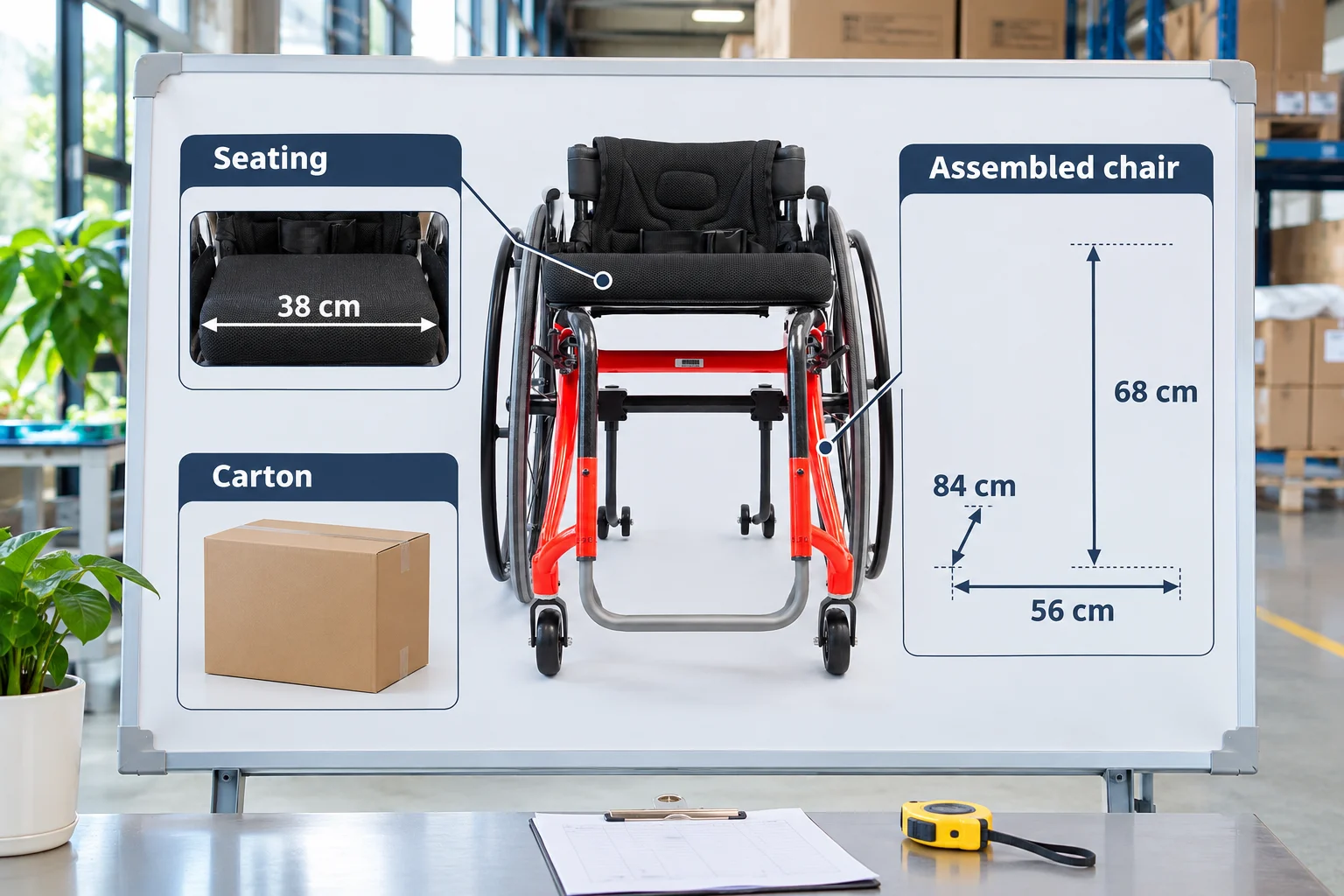
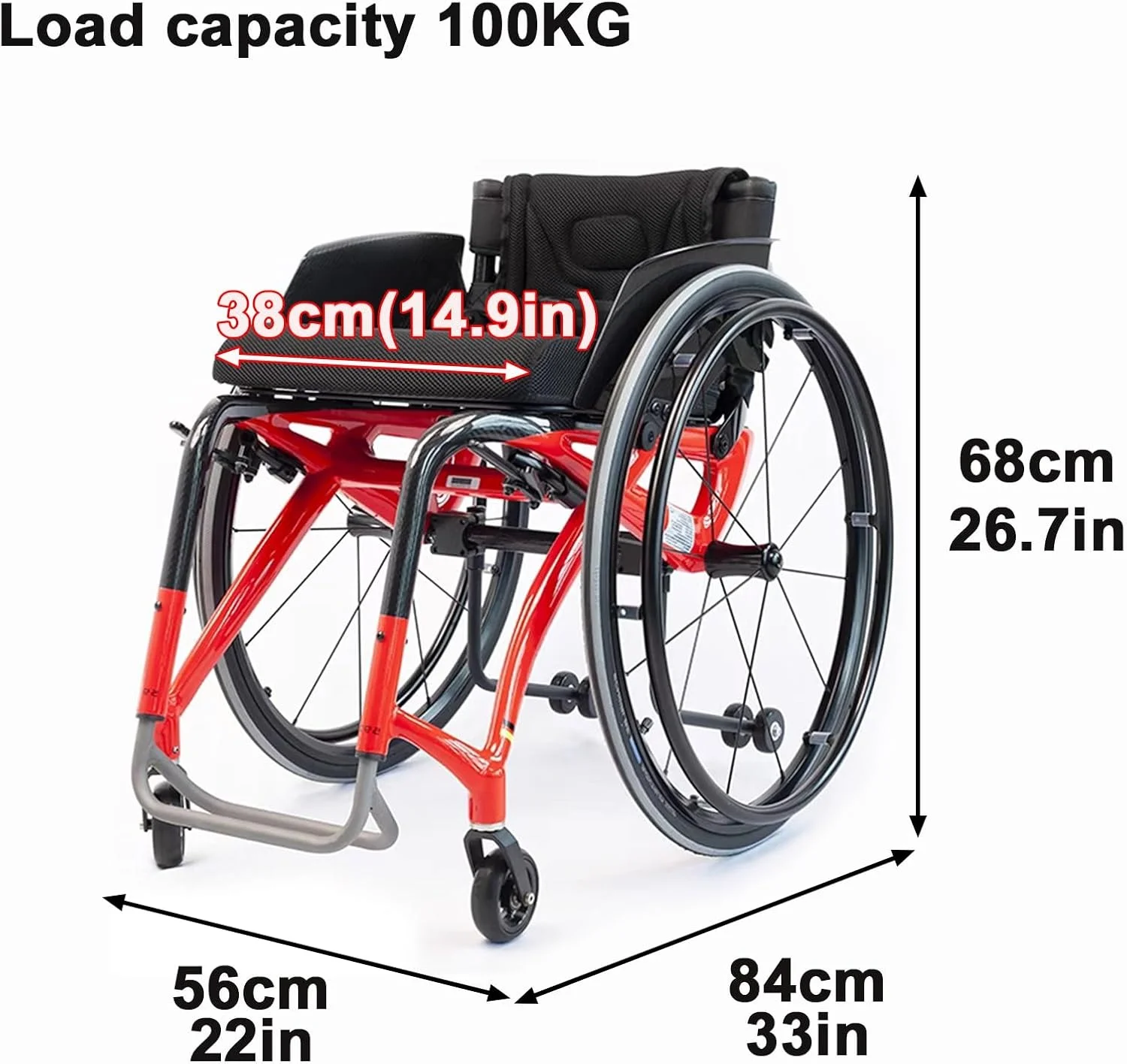
Begin a wheelchair measurement checklist with the assembled chair, its seating dimensions and its packed or stored state recorded separately. Start with the listed 5903 wheelchair dimensions of 84 cm long, 56 cm wide and 68 cm high, then confirm the offered build. Those values describe an assembled product envelope, not its turning path or individual seating fit.
Identify the measurement state
Every dimension needs a named setup. Keep wheels, cushion, foot support and rear accessories in the measurement record. A dimension from a stripped frame cannot stand in for the assembled chair when you assess an access route. WHO guidance supports assessment, fitting and follow-up.
- Length
- Width
- Height
| Review point | What to confirm |
|---|---|
| Length | 84 cm listed |
| Width | 56 cm listed |
| Height | 68 cm listed |
Key Takeaway: You can begin a space review with the supplied envelope while keeping its setup clear.
How does overall width differ from seat width?
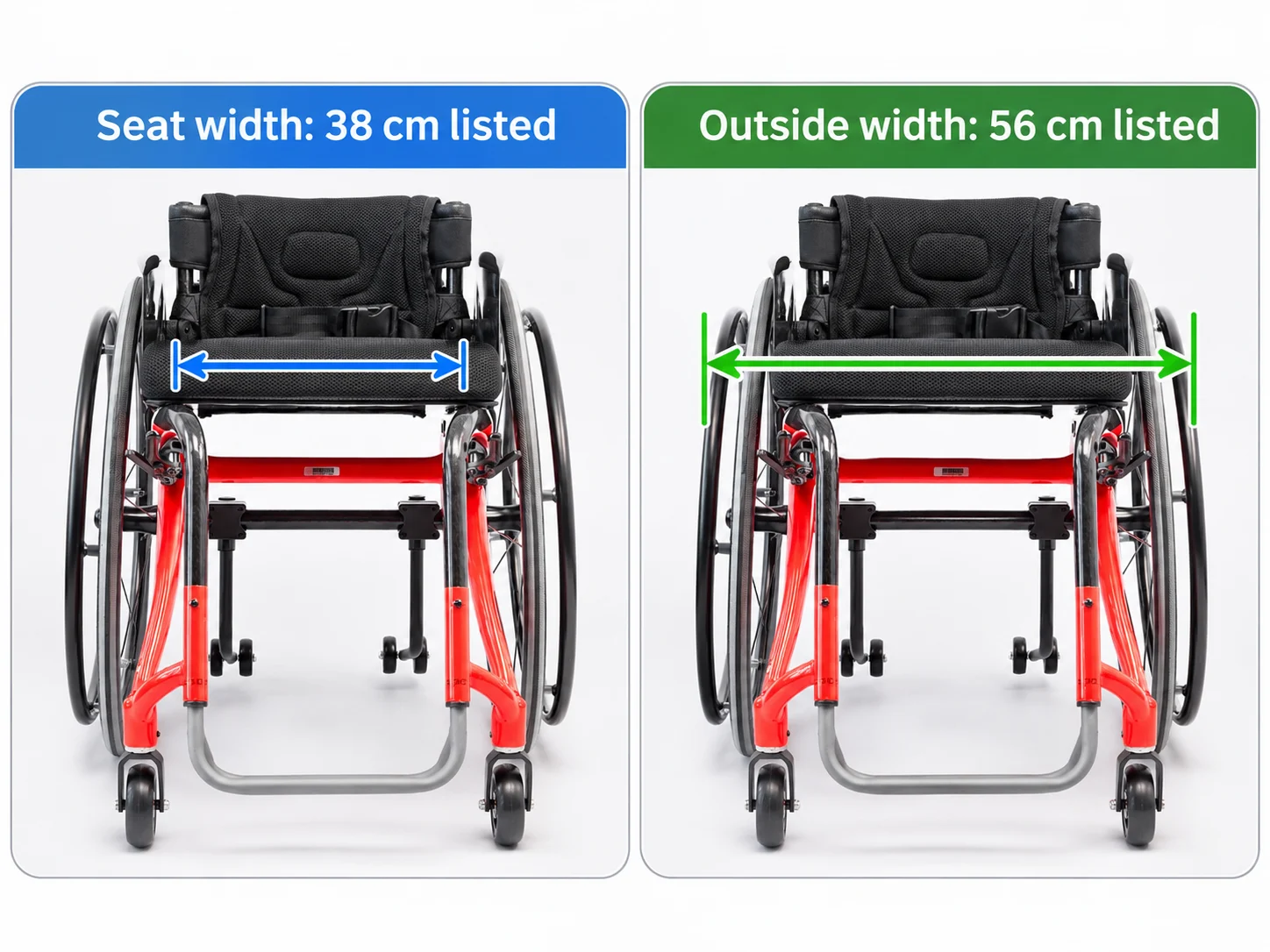
Keep seat width and outside width in different fields on a wheelchair measurement checklist. Overall 5903 wheelchair dimensions include a listed 56 cm outside width, while the seat is fixed at 38 cm wide. No other seat widths are available for this model. Use outside width for product clearance and seat width as one input to the individual fitting review.
Which edges are being measured?
The seat and wheel envelope answer different questions. Ask the supplier to show the measurement endpoints on a photo or drawing. Handrims, side guards and any changed wheel setup should be accounted for in the actual maximum width. Include the actual handrim arrangement in the outside-width check.
- Seat width
- Outside width
- Measurement endpoints
| Review point | What to confirm |
|---|---|
| Seat width | 38 cm only |
| Outside width | 56 cm listed |
| Measurement endpoints | Defined on the supplied build |
Key Takeaway: You can avoid using a seating dimension to judge whether the complete chair passes through an opening.
How should wheelchair dimensions be checked at a doorway?
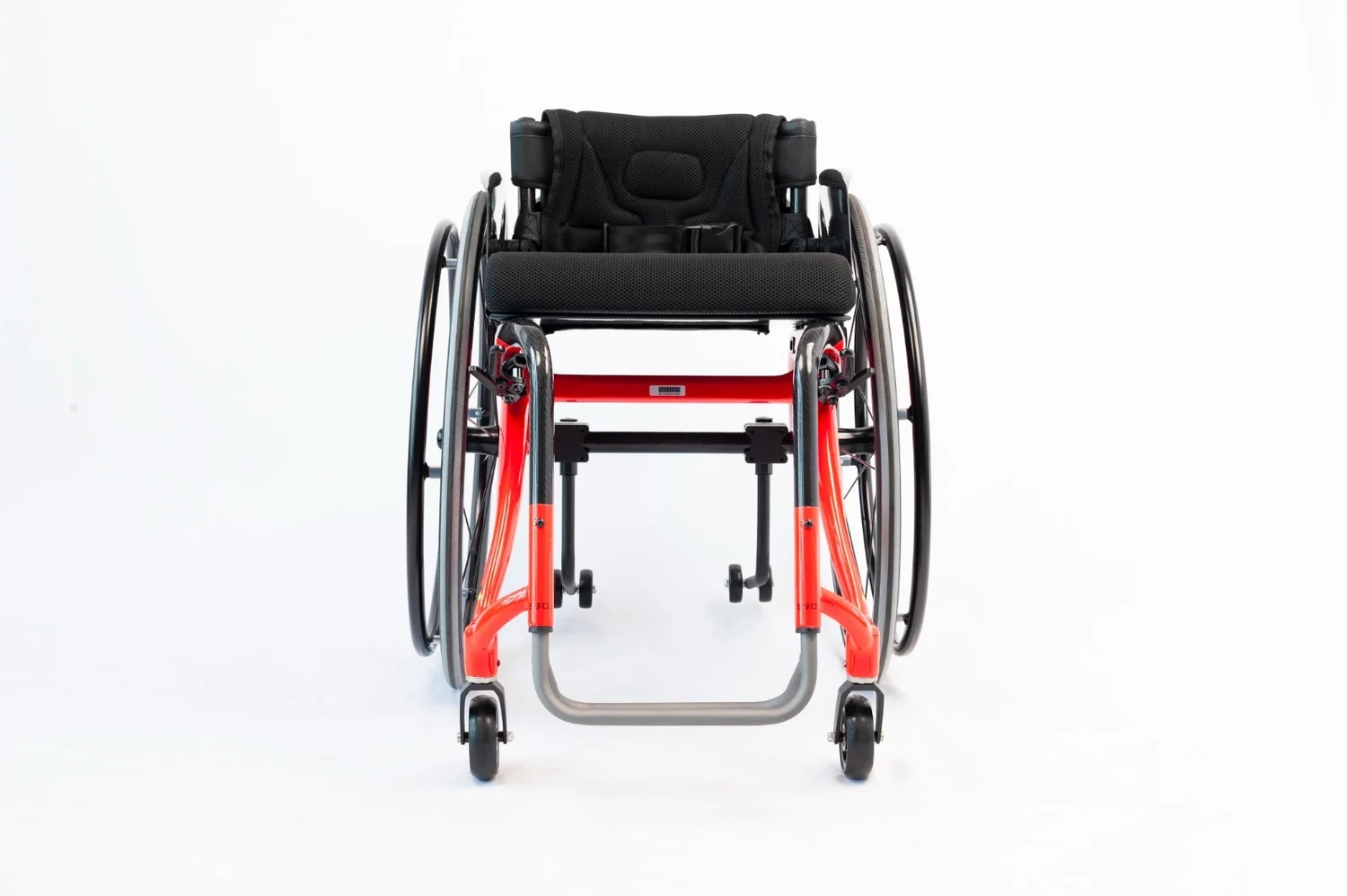
Use the complete outside envelope for doorway checks in a wheelchair measurement checklist, with approach space recorded separately. Compare the actual maximum width in the 5903 wheelchair dimensions record with the clear opening available during use. A doorway check also needs the approach, door position and the user's space for controlled passage.
Measure the usable opening
The building's nominal door size may not be the clear gap. Record obstructions such as handles, trim and furniture near the approach. Have the relevant access or fitting provider review the complete route rather than assuming that a small positive width difference proves usability.
- Product envelope
- Opening
- Route context
| Review point | What to confirm |
|---|---|
| Product envelope | Actual widest point |
| Opening | Clear usable width |
| Route context | Approach and nearby obstructions |
Key Takeaway: A documented route review is more useful than comparing two nominal numbers without context.
What does the listed length leave unresolved?
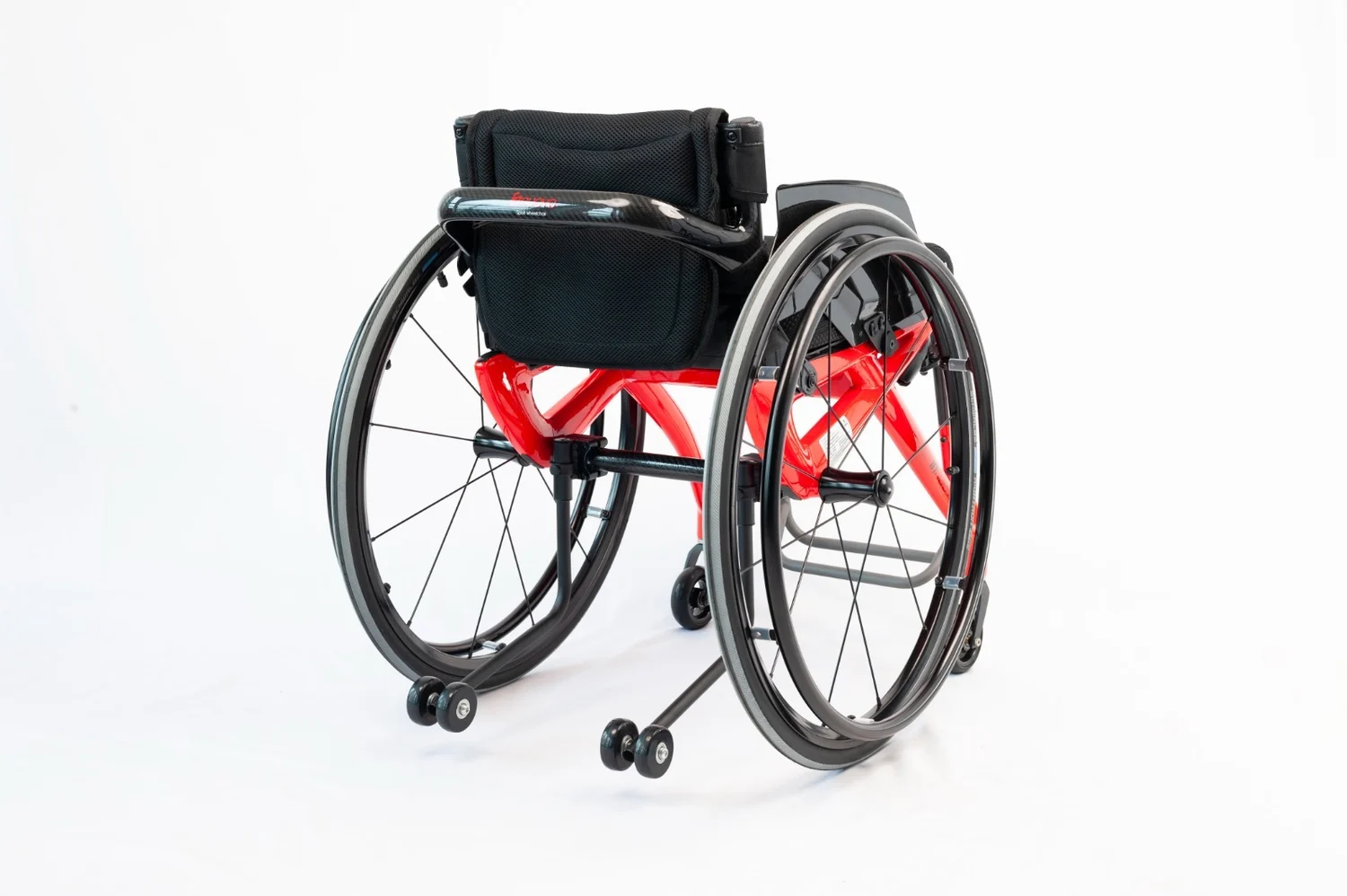
Record the endpoints and attached parts behind any length entry in a wheelchair measurement checklist. The length within 5903 wheelchair dimensions is listed as 84 cm, but the drawing's endpoints and fitted rear accessories still need confirmation. An added or differently positioned part can change the space that needs review.
Trace the full outline
Rear attachments deserve their own check. The red reference photos show anti-tip assemblies behind the main wheels. Ask whether the quoted length includes those parts and the foot support in the intended use position.
- Listed length
- Front endpoint
- Rear endpoint
| Review point | What to confirm |
|---|---|
| Listed length | 84 cm |
| Front endpoint | Foot support in the named position |
| Rear endpoint | Included accessory envelope |
Key Takeaway: You can identify which parts belong in a length measurement before planning storage or access.
Where does seat height fit in a wheelchair measurement checklist?
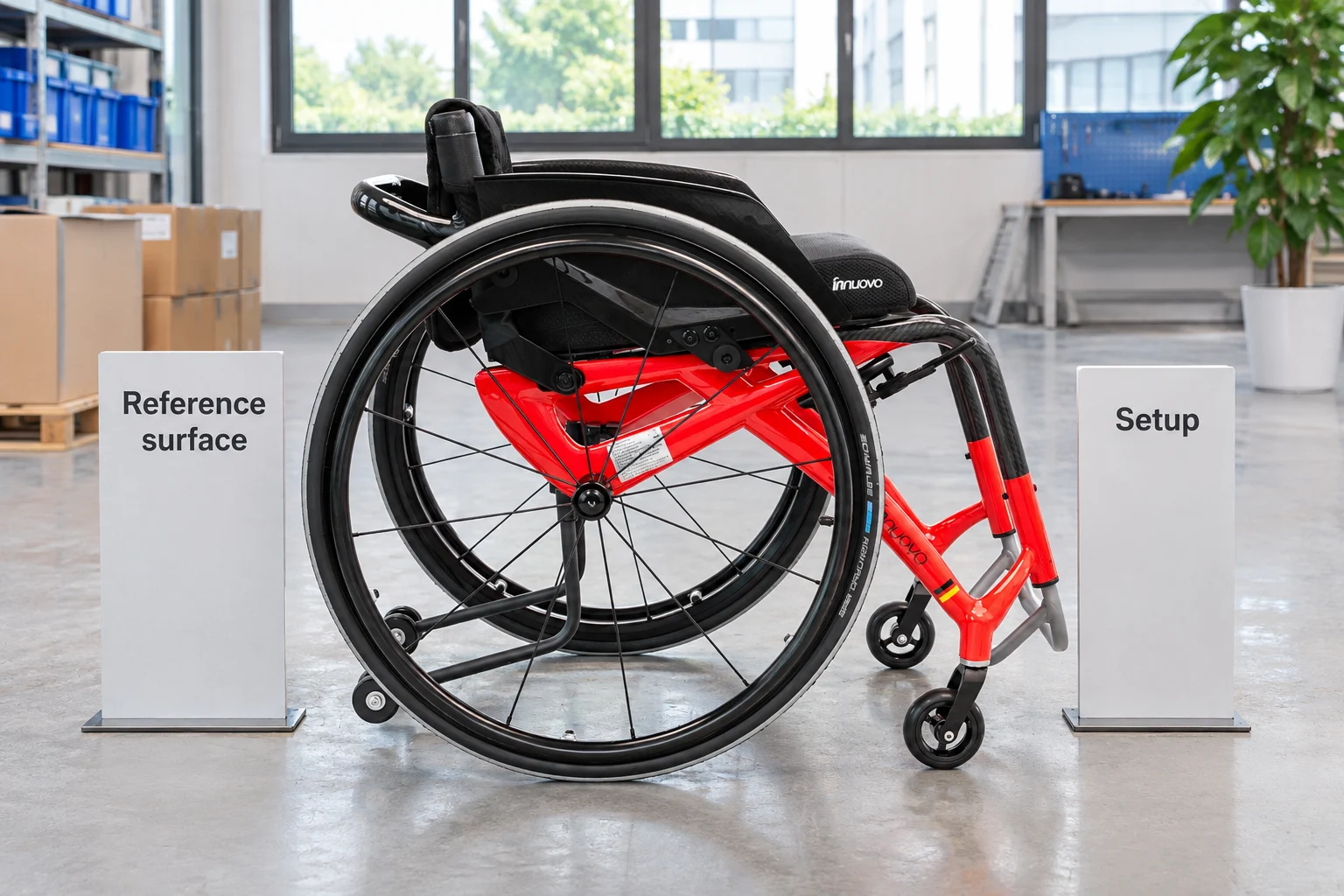
State the seat-height reference surface and setup on a wheelchair measurement checklist. The 5903 wheelchair dimensions sheet lists seat height as 48–53 cm, but the measurement point and setup need explanation. Do not read that range as proof of powered lifting or assume it describes adjustment during use.
Ask where the measurement begins and ends
The cushion can change the reported height. Record whether the figure ends at the seat plate, unloaded cushion or another defined surface. Keep front and rear seat-height definitions distinct when the provider's fitting review requires them. Keep the stated surface consistent with the cushion setup.
- Listed range
- Surface reference
- Configuration
| Review point | What to confirm |
|---|---|
| Listed range | 48–53 cm |
| Surface reference | Clearly defined seat or cushion point |
| Configuration | Actual supplied setting |
Key Takeaway: A defined seat-height record supports fitting discussions without inventing a lift function.
Can turning space be calculated from the overall dimensions?
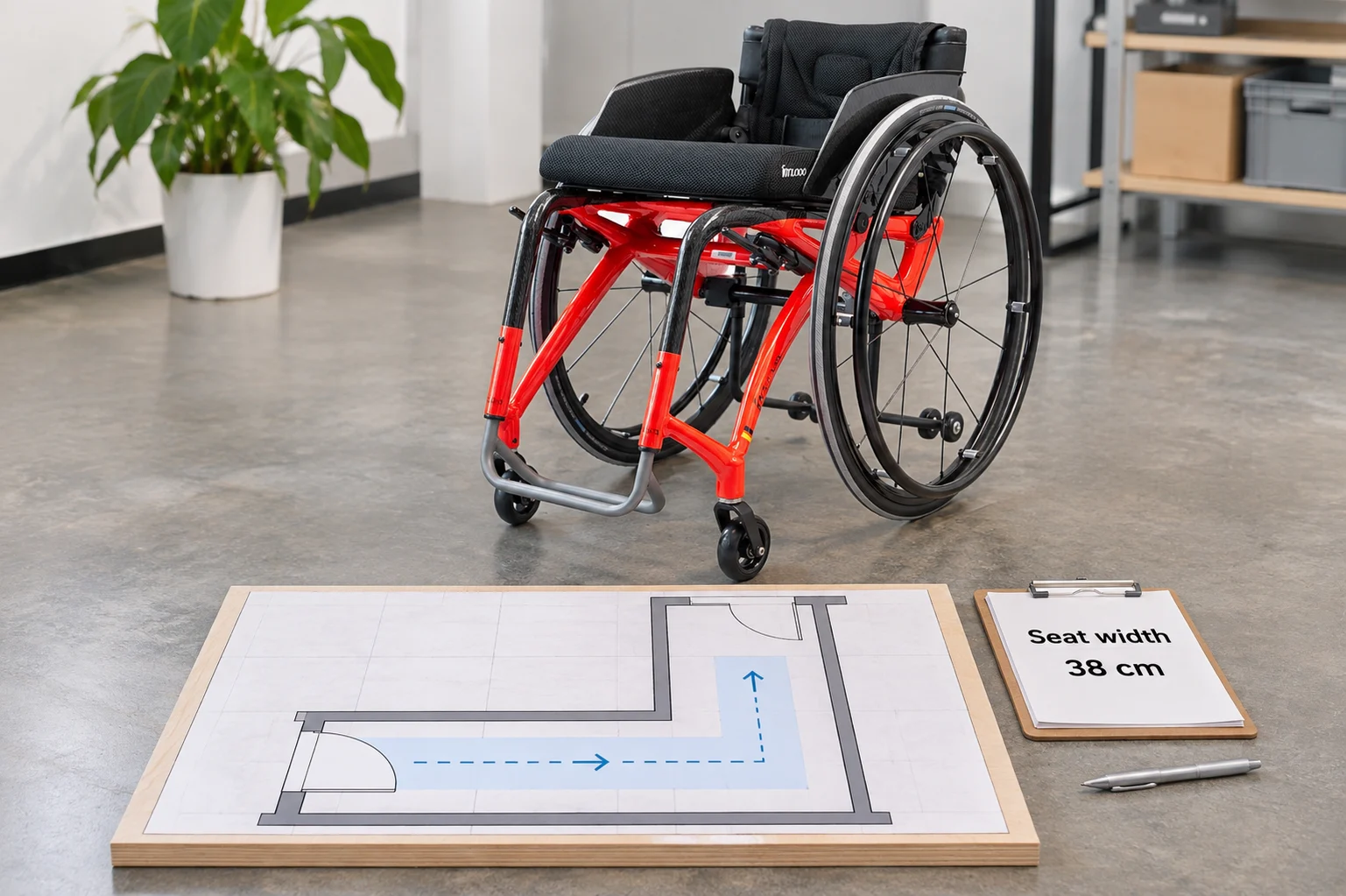
Do not calculate a verified turning space from length and width alone in a wheelchair measurement checklist. No; the outside 5903 wheelchair dimensions alone do not establish a verified turning radius or the clearance needed in every room. The source material does not provide a validated maneuvering-space result for the offered setup.
Use a route-specific review
Length and width do not describe every movement. Give the relevant provider a drawing of the room, its openings and the intended tasks. Avoid publishing a turning-circle figure obtained by guessing from the wheelbase or a product photograph.
- Available data
- Missing evidence
- Review input
| Review point | What to confirm |
|---|---|
| Available data | Outside product envelope |
| Missing evidence | Verified turning-space result |
| Review input | Actual room and intended movement |
Key Takeaway: You can identify the need for a maneuvering review without presenting a guessed turning specification.
Which wheelchair dimensions belong in a transport plan?
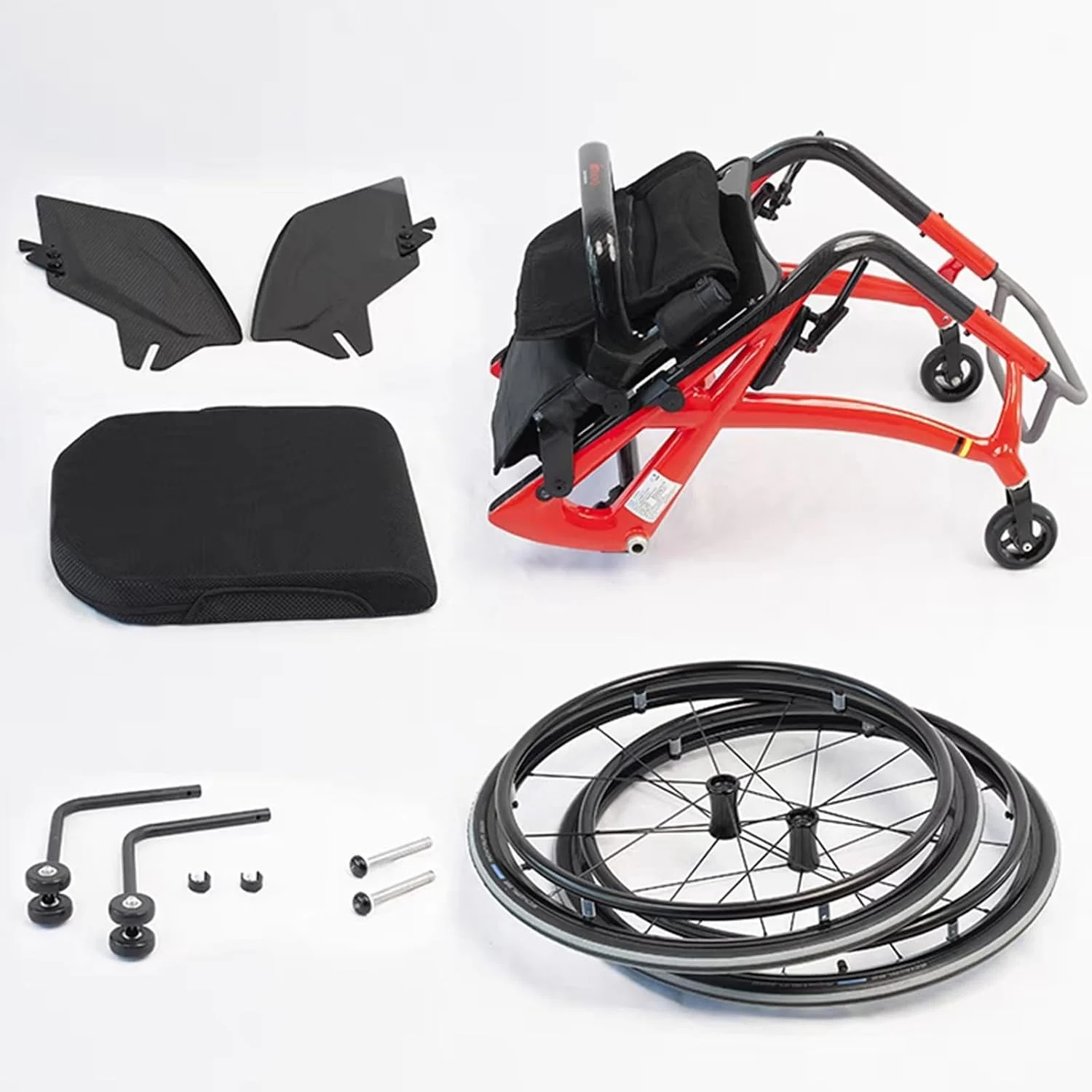
Add dimensions of the exact folded or separated arrangement to the transport section of a wheelchair measurement checklist. Use 5903 wheelchair dimensions measured in the exact folded or separated state that will be transported. Include the remaining frame and the separate wheel or accessory packages in the plan.
List every carried item
The smallest frame photo does not show the whole load. The supplied images show both a folded backrest and a more separated layout. Ask for measurements and a contents list for the chosen arrangement instead of transferring dimensions between those states.
- Main load
- Separate items
- Complete plan
| Review point | What to confirm |
|---|---|
| Main load | Named compact frame state |
| Separate items | Wheels cushions and accessories |
| Complete plan | All envelopes and handling masses |
Key Takeaway: You can compare a vehicle or storage area with the complete transport arrangement.
How do carton dimensions differ from product dimensions?
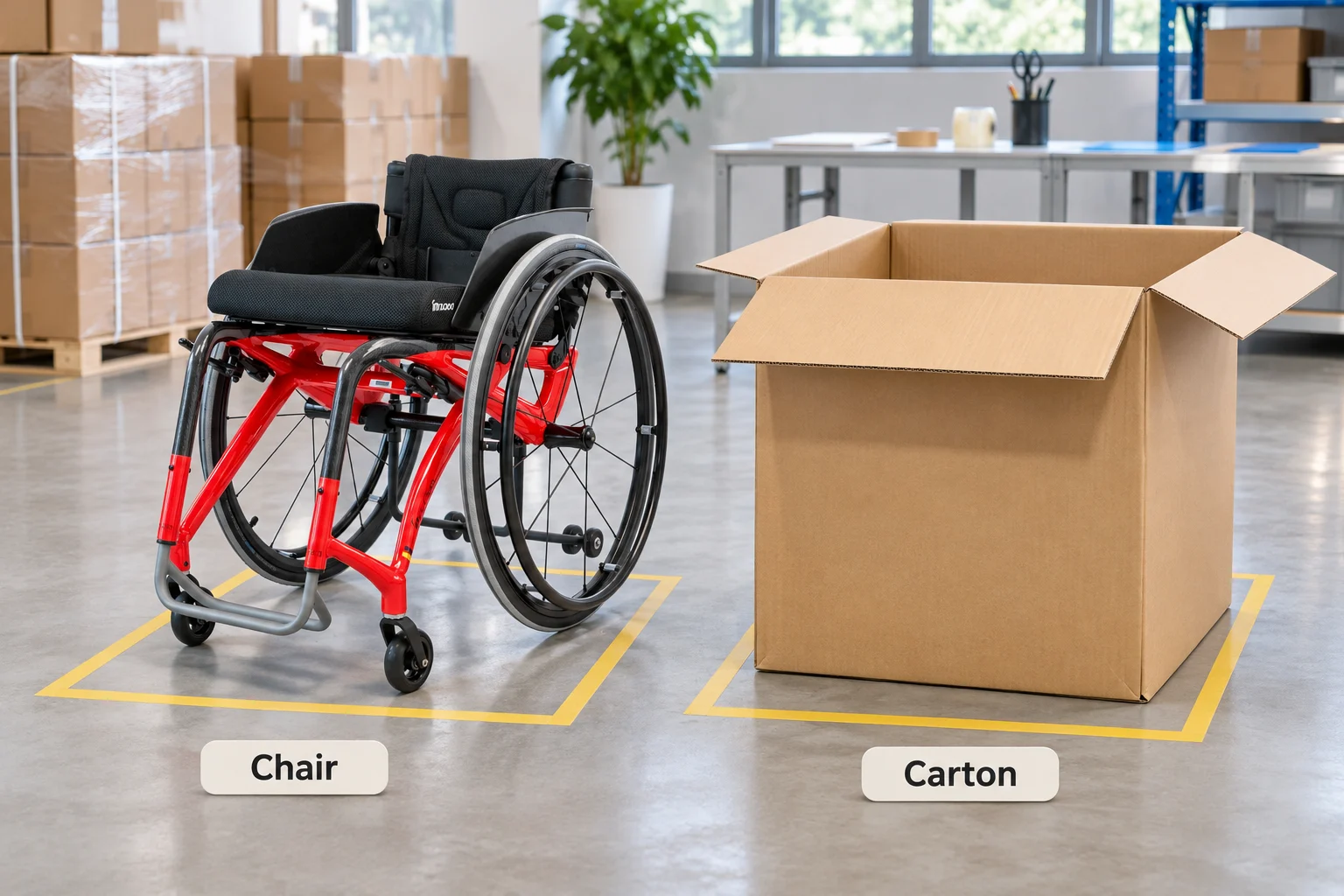
Record carton dimensions as packing data, separate from the product dimensions on a wheelchair measurement checklist. Packing 5903 wheelchair dimensions are listed as 78 × 64 × 52 cm, describing a carton category rather than the chair's in-use size. The goods inside may be folded or separated, so the two envelopes should remain distinct.
Check the outer package
Freight planning needs the shipped carton measurement. Confirm the actual length, width, height and gross weight after the packing scope is defined. Do not assume the listed carton is available for every accessory set or shipment arrangement. Use the same state definition as the folding-chair review.
- Listed carton
- Contents
- Shipment record
| Review point | What to confirm |
|---|---|
| Listed carton | 78 × 64 × 52 cm |
| Contents | Defined packed setup |
| Shipment record | Actual outer size and gross weight |
Key Takeaway: You can use a packing figure for freight without confusing it with doorway or seating dimensions.
How should a wheelchair measurement checklist handle conflicts?
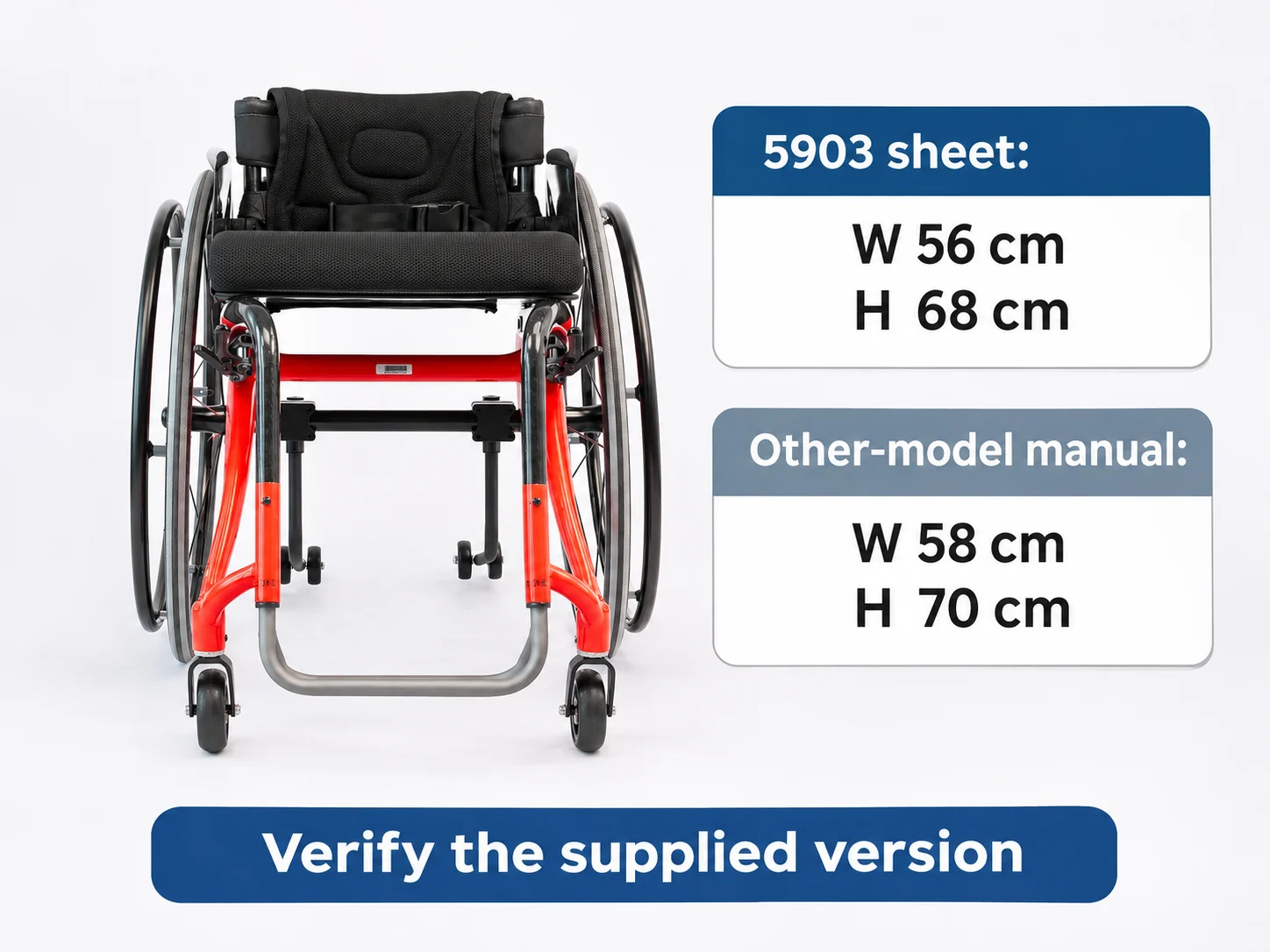
Keep conflicting sheets separate in a wheelchair measurement checklist until the supplier confirms their model and revision. Keep conflicting 5903 wheelchair dimensions sheets separate and ask which one applies to the order. The product images list 56 cm width and 68 cm height; the accompanying manual names another model and gives different values.
Resolve the version before ordering
An average would create an unsupported specification. Send both records with the exact unit or quotation reference. Request one current drawing with labeled endpoints and a named part setup for the proposed supply.
- Source identity
- Difference record
- Required response
| Review point | What to confirm |
|---|---|
| Source identity | Model and document revision |
| Difference record | Values kept separately |
| Required response | Applicable drawing and setup |
Key Takeaway: A version check prevents incompatible dimensions from becoming part of the accepted order.
How can you prepare a useful wheelchair dimensions brief?
Complete a wheelchair measurement checklist with labeled measurements, setup photos and a list of unresolved points. Prepare a 5903 wheelchair dimensions brief by linking the offered build with the seating, access, transport and packing decisions you need to make. Give each measurement a defined state and a clear reader purpose.
Ask for one consistent measurement set
The supplier needs to know which space you are comparing. Send AryMD your required setup and the relevant vehicle, doorway or storage measurements. Request the current drawing and any unresolved dimension definitions with the quotation.
- Product state
- Measurement meaning
- Buyer decision
| Review point | What to confirm |
|---|---|
| Product state | Assembled folded separated or packed |
| Measurement meaning | Named endpoints and units |
| Buyer decision | Fit access storage or freight |
Key Takeaway: You can compare the correct dimensions with the correct task before making a purchase commitment. Contact us with your 5903 setup, quantity and destination so we can discuss the product information and written supply scope. AryMD puts clear specifications before purchasing promises.
Frequently asked questions
Q1: Can I use seat width to judge doorway access?
No. Use the complete chair's actual outside envelope for access planning and keep seat width within the fitting review.
Q2: What's the best size record for vehicle storage?
Request length, width and height for the precise folded or separated state. Include every separately carried part in the transport plan.
Q3: How do I know whether the listed length includes anti-tip parts?
Ask the supplier to mark the endpoints on a current drawing or photo. Keep the accessory setup with that measurement.
Q4: Does the 48–53 cm seat-height entry mean there is a powered lift?
No. The base product is manual; ask how the listed range and measurement surface are defined for the supplied setup.
Q5: Can I average conflicting dimensions from the product sheet and manual?
No. Resolve the model and version difference instead of inventing a combined specification.