
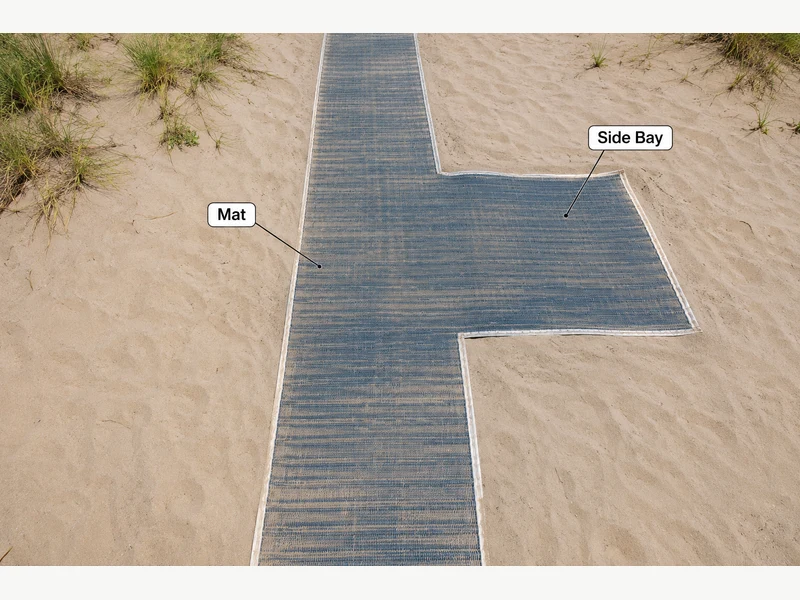
Choose beach mat width from the clear space people need along the whole proposed route, including turns, entrances and places to pass. A generous-looking strip can still end at a narrow gate or leave two visitors facing each other with nowhere to wait. Sketch those locations before choosing a catalog width.
Which beach mat width should the drawing show?
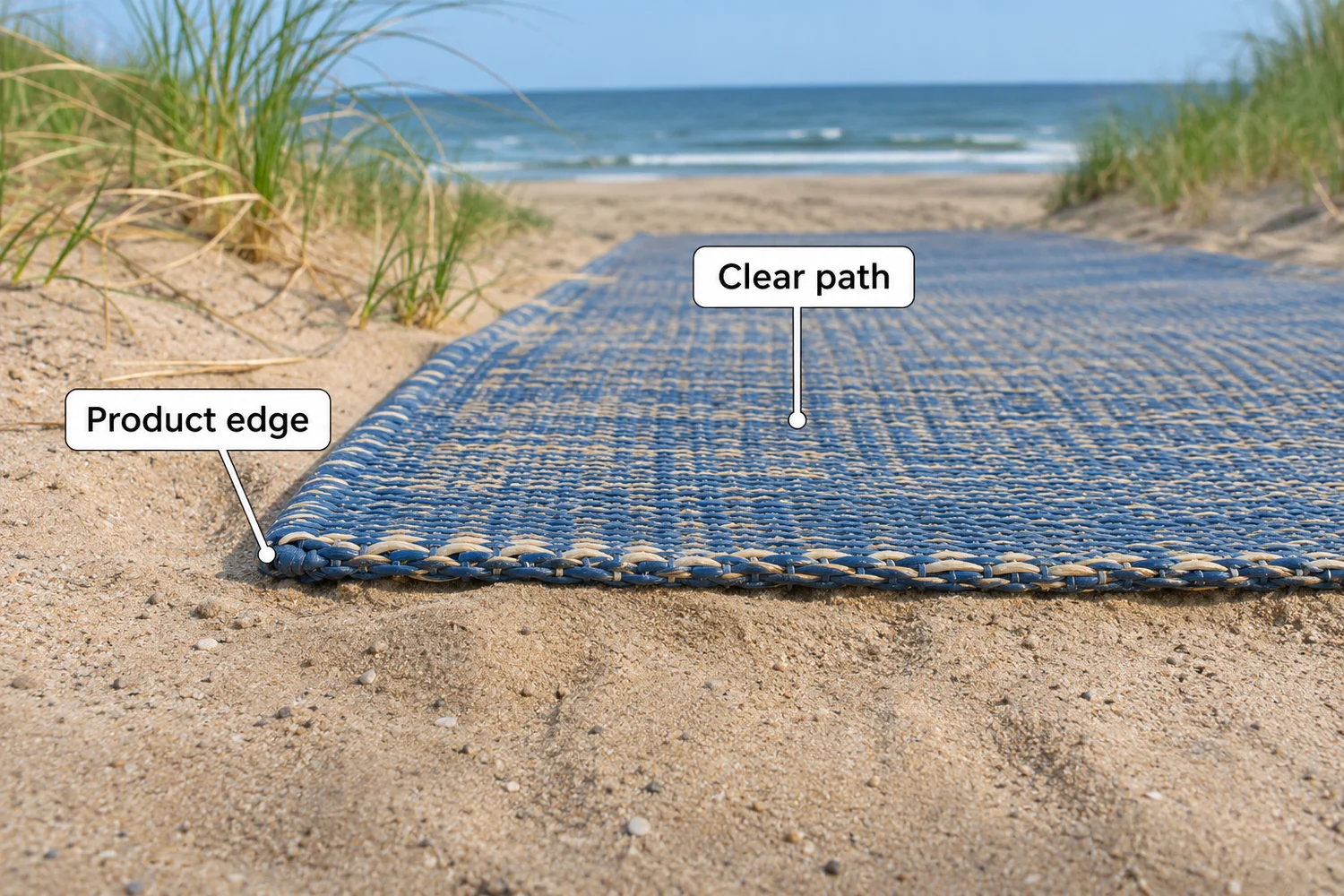
Show both nominal beach mat width and the usable clear width in the proposed installation.
Where are the outside edges?
Ask for a cross section. A supplier may measure a product edge to edge. The site team needs to know which part of the finished path is intended for travel and how the edge treatment fits within the layout.
- Identify the measurement reference.
- Record features that occupy either side.
| Review point | What to record |
|---|---|
| Nominal width | Product dimension |
| Clear width | Usable path in the proposed setup |
Key Takeaway: A labeled drawing gives purchasing and site teams the same definition.
Who will use the route together?
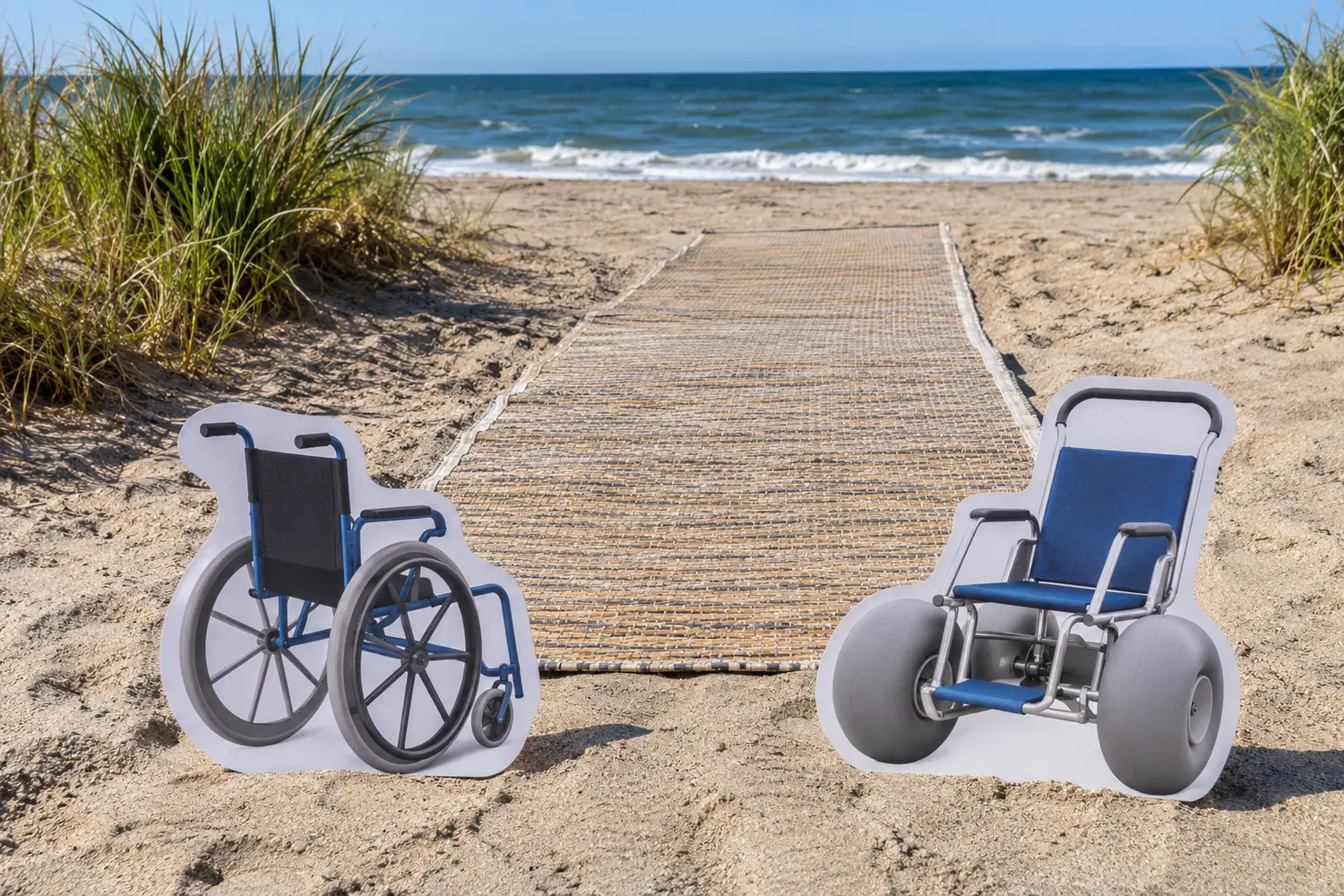
Select beach mat width after describing the devices, companions and traffic patterns the site expects.
Is travel one-way or two-way?
Observe a normal busy period. A wheelchair and its companion may share the path with someone arriving from the other direction. Record where people meet and how the site intends to manage that encounter.
- List likely device types.
- Mark locations where people already pause or turn.
| Review point | What to record |
|---|---|
| Traffic pattern | Direction and frequency |
| User envelope | Device and accompanying person |
Key Takeaway: The designer receives a practical brief beyond one chair's catalog width.
How should chair dimensions enter the comparison?
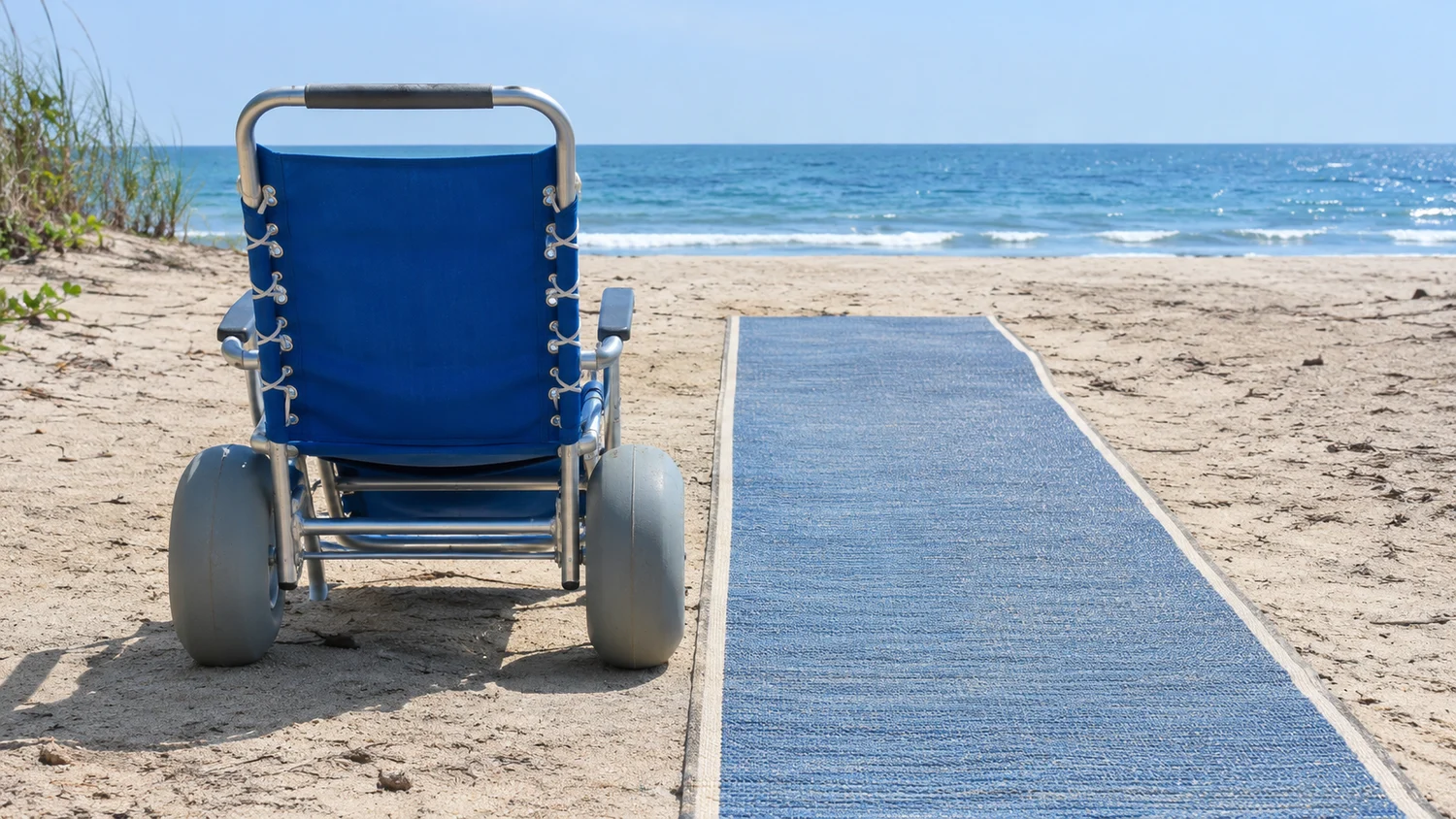
Compare proposed beach mat width with the chair's maximum occupied operating envelope as reviewed for the actual use.
Which part is widest?
Measure the configured equipment. Outside tires, handrims or a fitted accessory may extend beyond the seat. The user's space and the companion's working position also need review with appropriate personnel.
- Name the chair and fitted equipment.
- Keep seat width and outside width in separate fields.
| Review point | What to record |
|---|---|
| Seat dimension | Fitting information |
| Outside envelope | Input for route review |
Key Takeaway: You can explain why a seat-width figure alone cannot select the pathway.
What happens at the entrance gate?
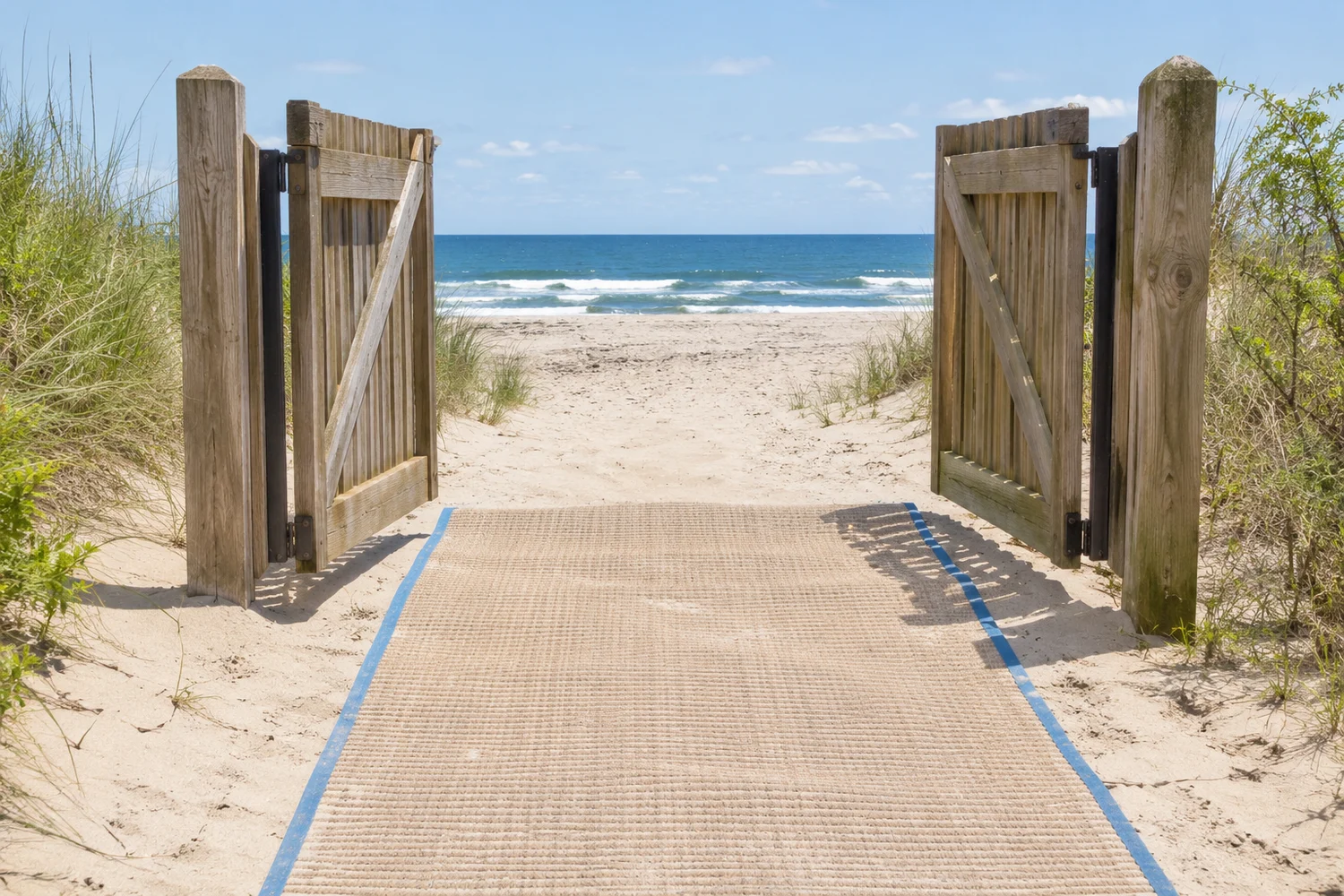
Check the gate opening separately from beach mat width at the start of the route.
Does the narrowest point come before the mat?
Measure the gate in service position. A fixed post, gate leaf or handrail can reduce the clear opening. Include the approach on both sides so the designer can see whether the chair reaches the entrance squarely or at an angle.
- Record the open position used by visitors.
- Photograph both approaches.
| Review point | What to record |
|---|---|
| Mat start | Usable width at connection |
| Gate | Clear opening and approach |
Key Takeaway: The first metre of the installation receives the same scrutiny as the main run.
Does a bend need more room than a straight run?
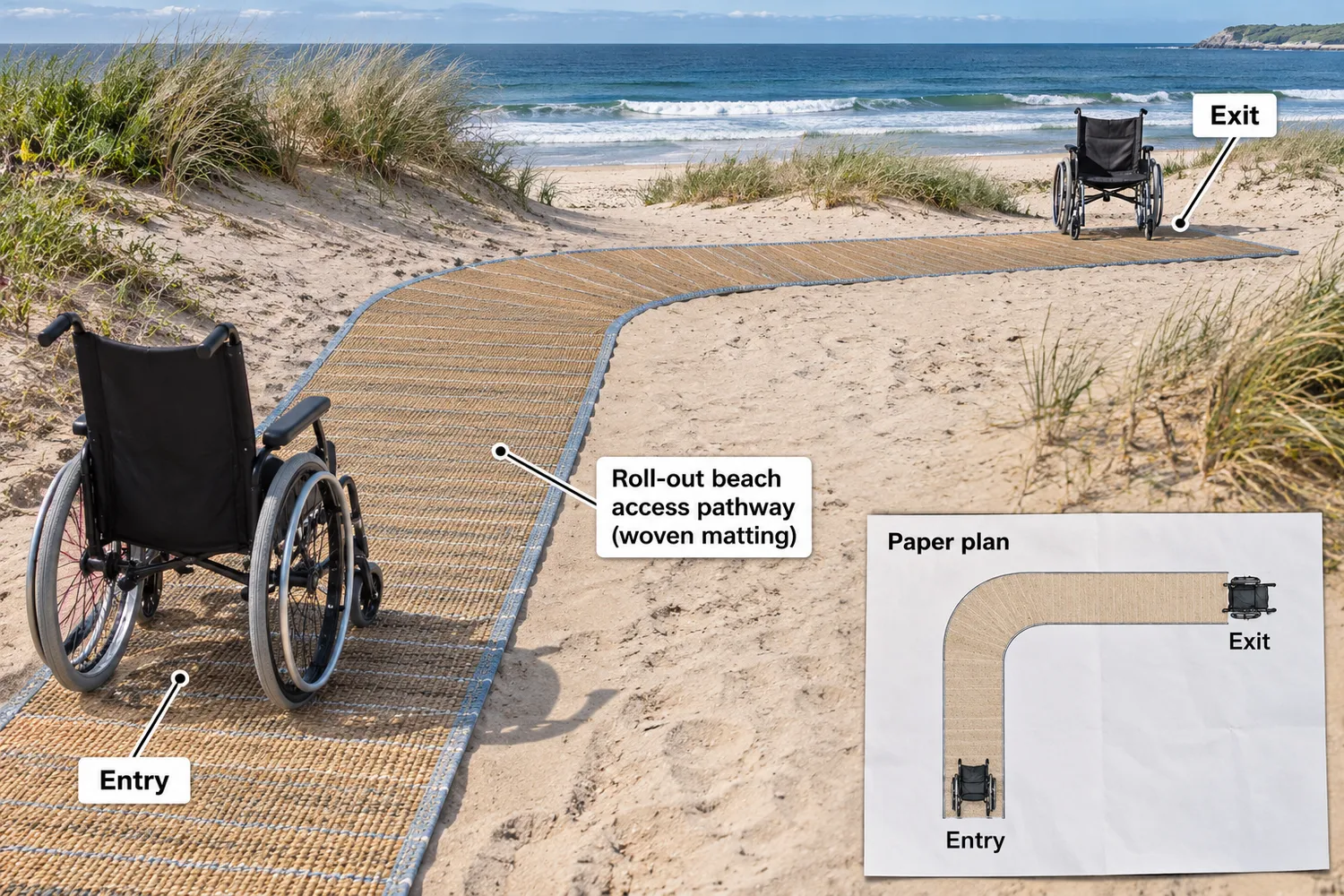
Review the turning space as a separate design question alongside beach mat width.
What path do the wheels follow?
Trace the turn on the plan. A device changes orientation through a bend. A straight-width comparison cannot show the complete movement, particularly where a rail, wall or deep soft edge borders the path.
- Mark the inside and outside of the bend.
- Ask the designer to assess the intended device and approach.
| Review point | What to record |
|---|---|
| Straight run | Clear travel strip |
| Bend | Turning envelope and adjacent constraints |
Key Takeaway: The buyer can request a suitable corner arrangement before the rolls are priced.
Where can two visitors pass?
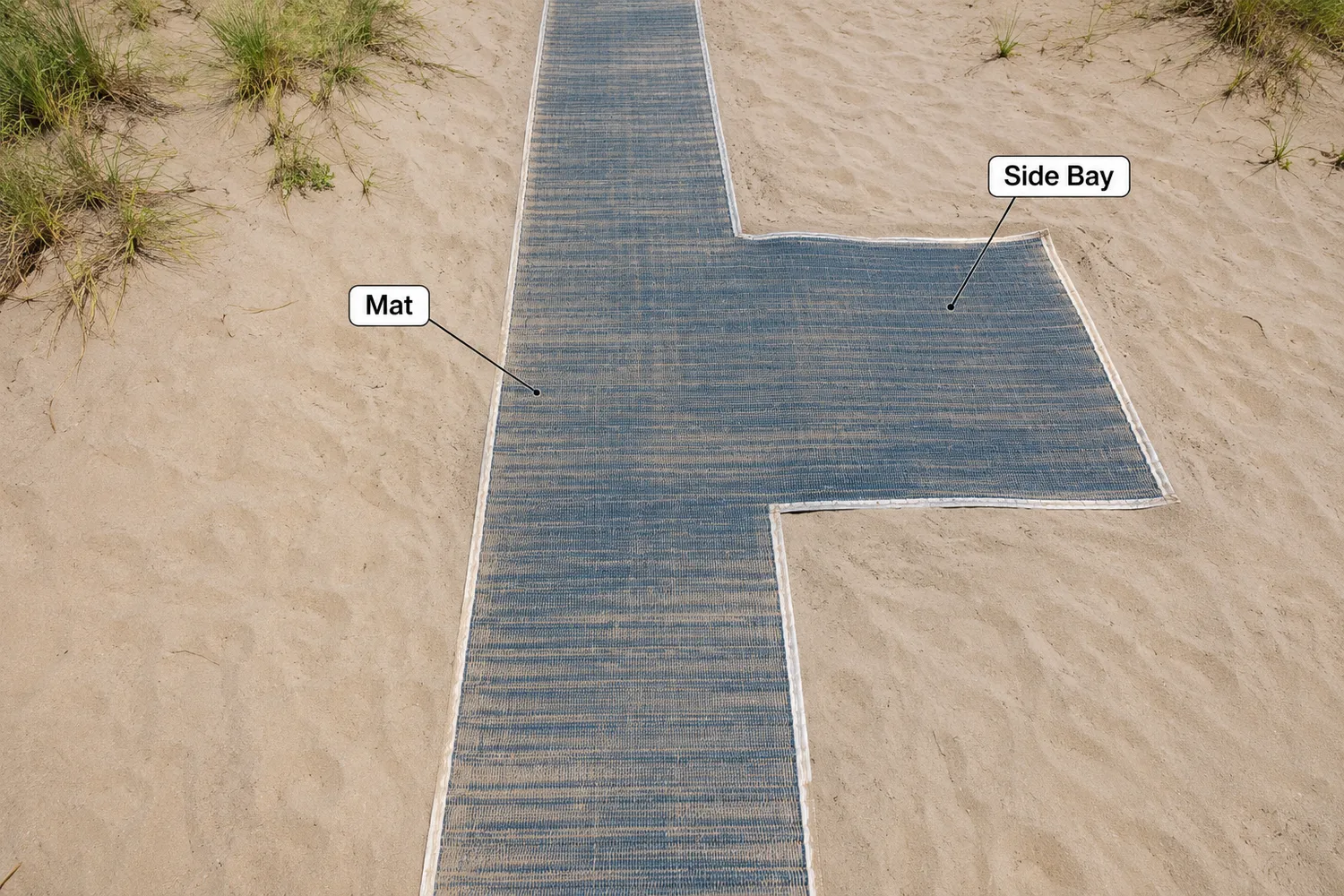
Agree on passing places when the selected beach mat width and expected traffic make them part of the design.
Who has to move out of the way?
Choose an actual waiting space. A passing place should be shown on the plan with a usable approach and destination. Sending a visitor off the mat onto loose sand defeats the purpose of the planned access arrangement.
- Mark each proposed passing location.
- Check the space with the site access lead.
| Review point | What to record |
|---|---|
| Passing bay | Defined clear area |
| Approach | Connection to the main path |
Key Takeaway: A named passing space gives the team a design decision it can evaluate.
What do joins and branches change?
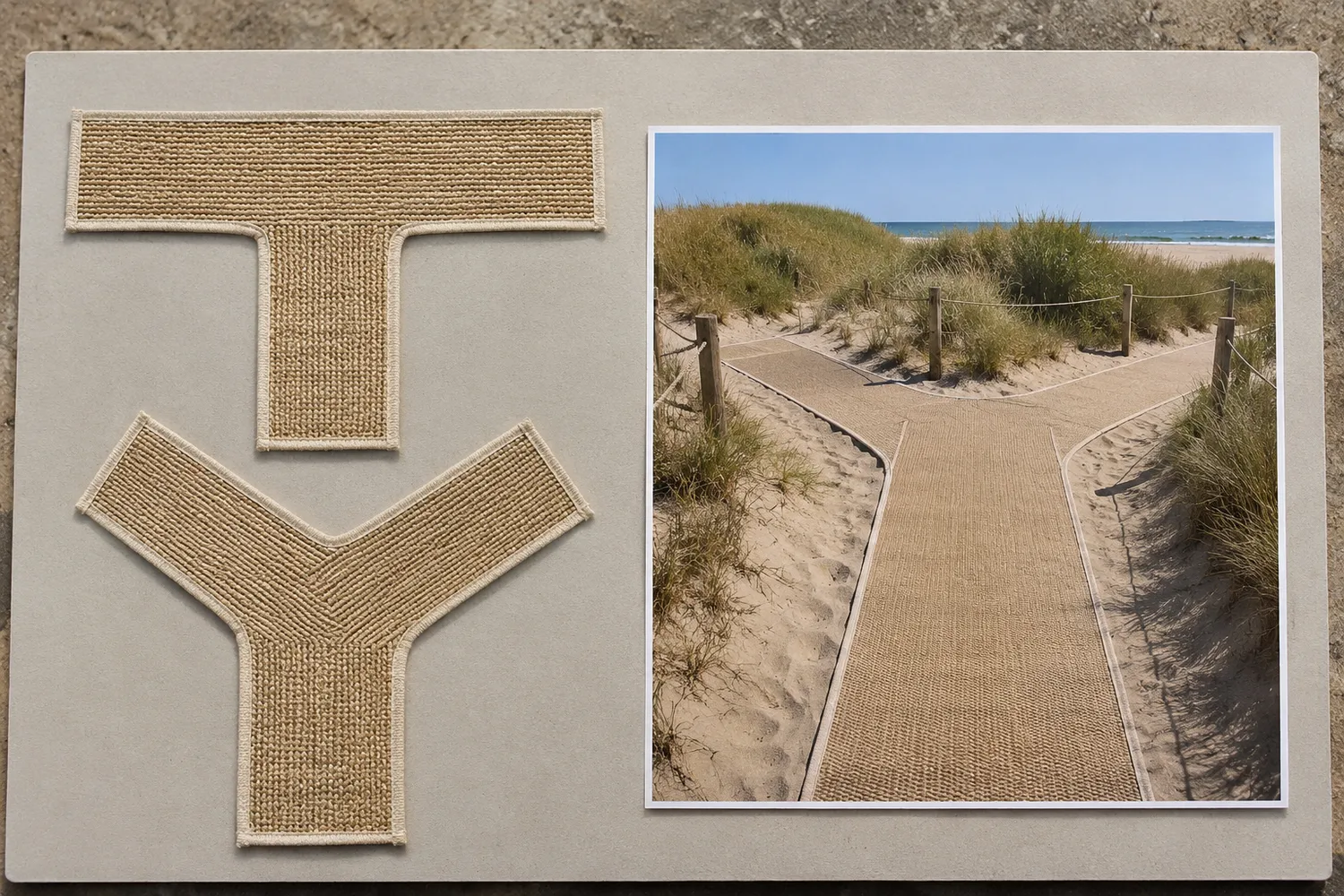
Check beach mat width at every planned junction, including any extra profile or connector in the travel area.
Will two widths meet cleanly?
Use the supplier's junction drawing. A narrower branch or a change of system can alter the usable line through the junction. Obtain the approved connection and ask how each section is identified on the bill of materials.
- Show both adjoining products.
- Name the permitted connection or unresolved interface.
| Review point | What to record |
|---|---|
| Main run | Specified width and system |
| Branch | Matching connection detail |
Key Takeaway: The join can be priced and reviewed as part of the route rather than discovered on site.
Which access requirements apply to this site?
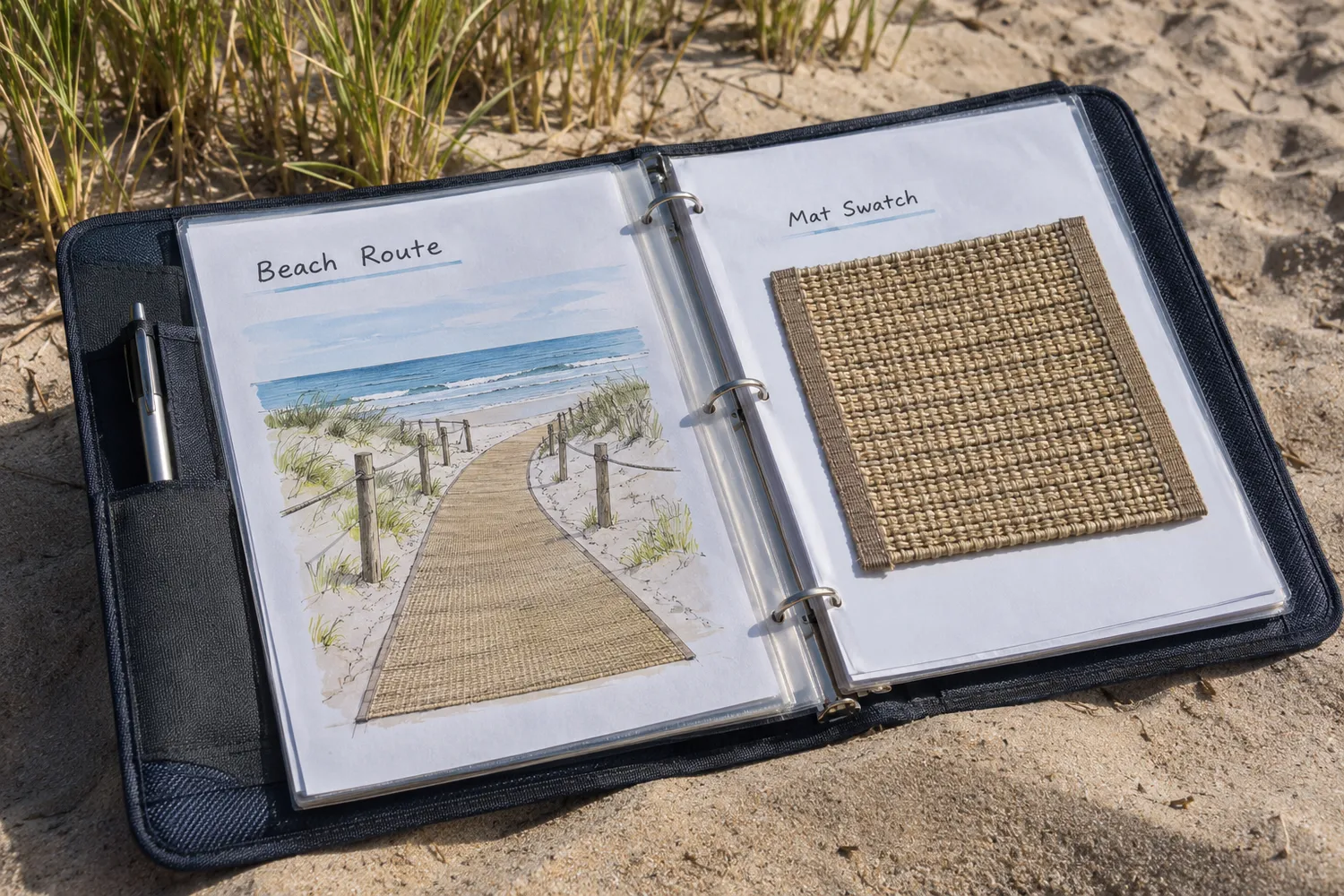
Have the responsible designer assess beach mat width against the requirements that apply to this location and project.
Is a general online figure enough?
Identify the governing brief. For projects within its scope, the U.S. Access Board outdoor guide is a reference for the design team. A hotel or beach in another jurisdiction needs its own applicable requirements and review.
- Record the jurisdiction and project type.
- Ask who signs off on the site design.
| Review point | What to record |
|---|---|
| Site requirements | Source identified by project team |
| Product proposal | Evidence for the proposed setup |
Key Takeaway: The quote can support a design review without standing in for it.
How do you review a representative sample?
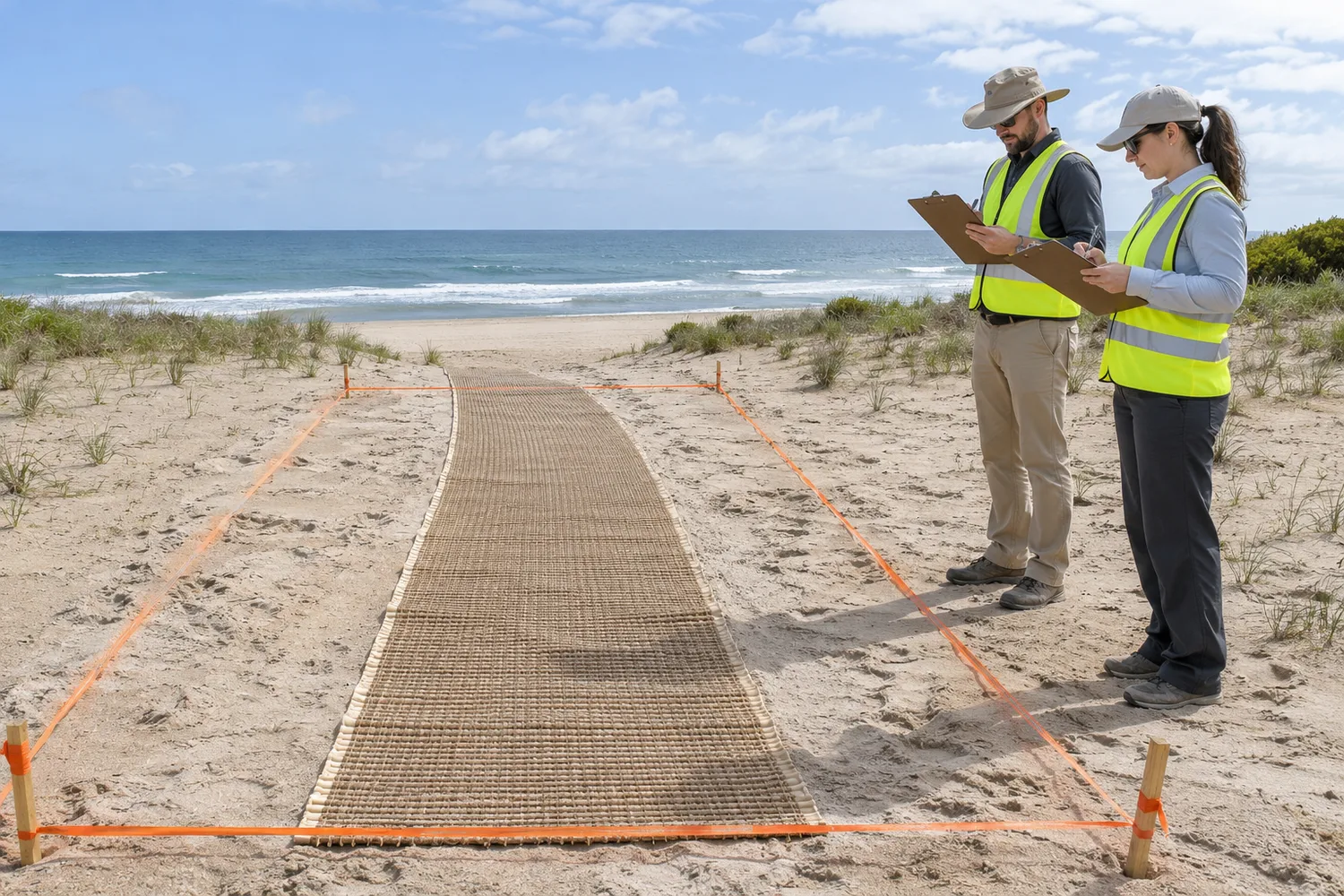
Use an agreed sample or marked layout to review beach mat width with the site team and intended equipment.
Which observation is repeatable?
Define the setup first. Record the location, clear edges and approach used for the review. Follow site and equipment guidance for any practical evaluation and document unresolved questions before wider rollout.
- Name the equipment and route state.
- Keep a clear plan or photograph with the result.
| Review point | What to record |
|---|---|
| Observation | What the team actually saw |
| Decision | Who accepts or revises the design |
Key Takeaway: The next reviewer can understand exactly which arrangement was considered.
What should a width enquiry contain?
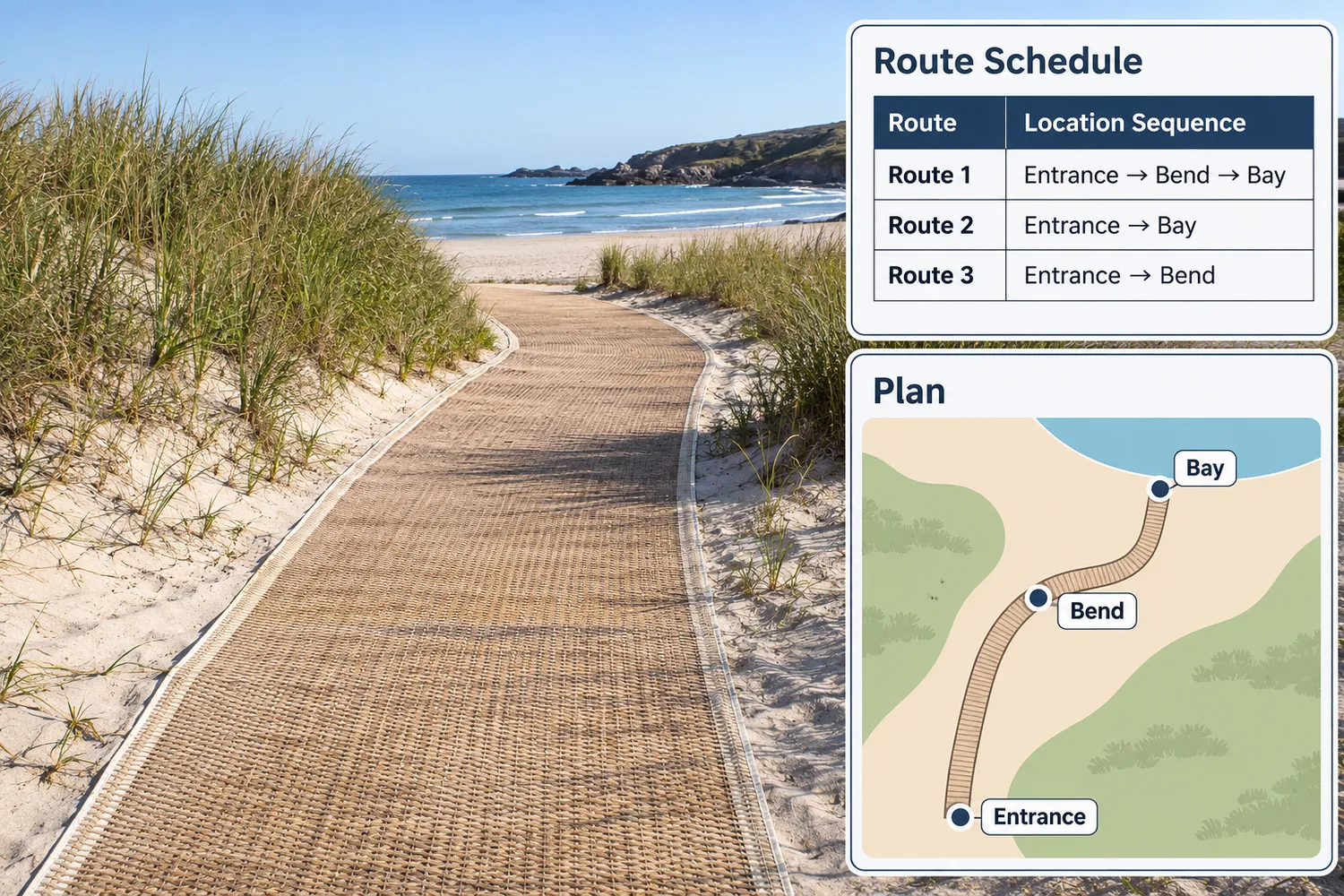
Send the route sketch, required clear beach mat width, intended devices and all bends or bays with the enquiry.
Can the supplier price the whole layout?
Ask for the modules by location. A single price for a straight strip may exclude junctions or wider areas. Ask AryMD which beach mobility equipment details can be supplied for your designer's comparison.
- Attach the dated plan.
- Request a list of supplied and optional modules.
| Review point | What to record |
|---|---|
| Drawing | Clear route and special areas |
| Quotation | Identified modules and interfaces |
Key Takeaway: You can compare offers against the same usable route, including its tightest points. Contact us with the route sketch and proposed equipment so we can discuss the available product dimensions.
Frequently asked questions
Q1: Can I choose a mat just wider than the wheelchair wheels?
That comparison is incomplete. Ask the designer to consider approach, use, companion space and site requirements.
Q2: How do I know whether two people can pass?
Review the actual available area and the intended users with the site's access lead.
Q3: What's the best way to describe a narrow gate?
Give its clear opening in the normal open position and show the approach on both sides.
Q4: Can two narrow mats simply be placed side by side?
Only use a combination approved for that system and accepted in the site design.
Q5: Does a wider roll automatically make the route compliant?
No. The applicable requirements concern the project and the complete route.