

Begin rigid wheelchair car transport by defining the empty chair's exact folded or separated state. A compact frame photograph can hide the separate wheels, cushion or rear parts that also need space. Discovering that gap at collection makes the load difficult to manage. Examples use the 5903, a manual carbon-frame chair with one fixed 38 cm seat width.
How should rigid wheelchair car transport planning begin?
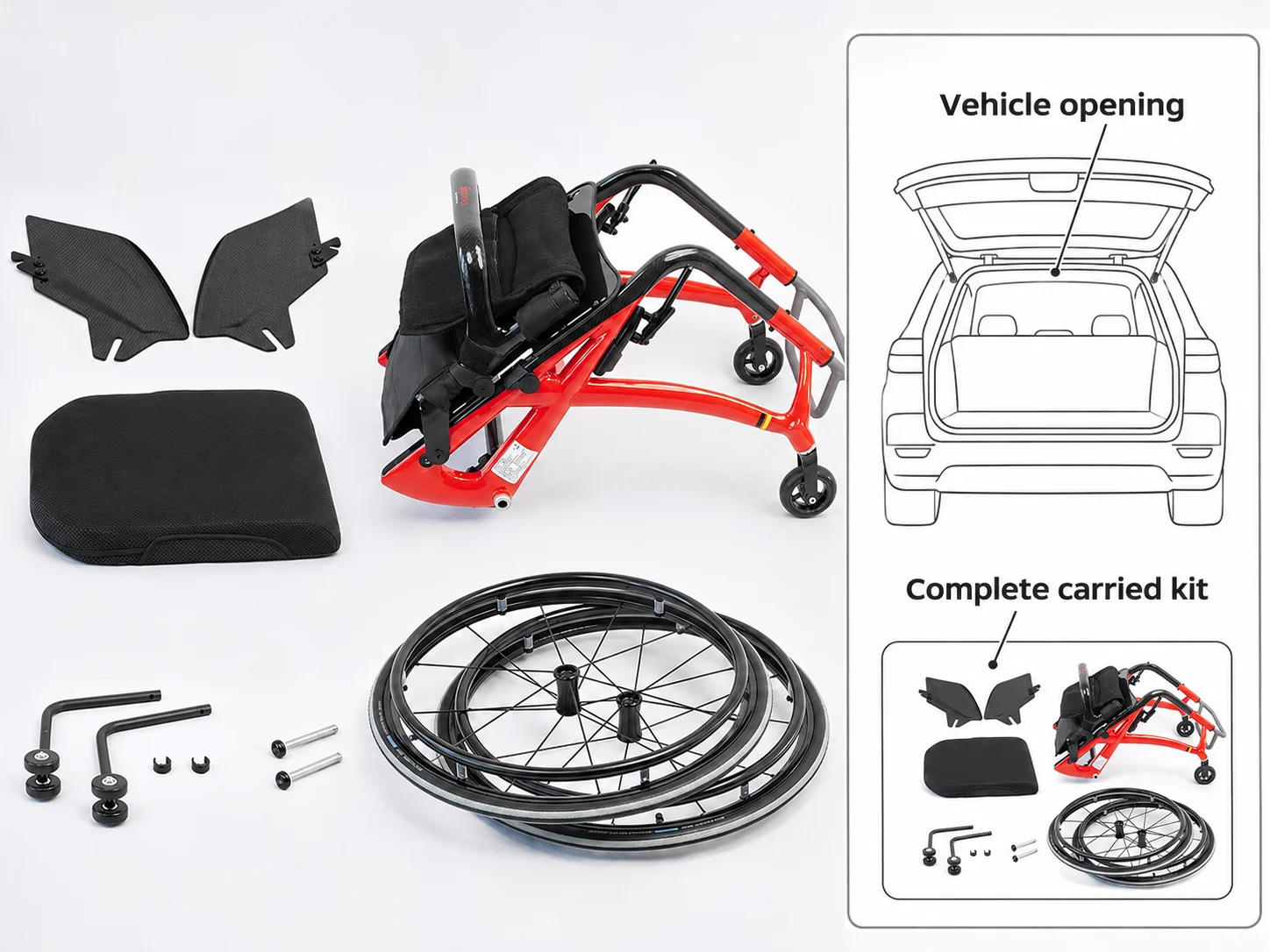
Begin rigid wheelchair car transport by defining the empty chair's exact folded or separated state. Begin a 5903 car transport plan with the actual vehicle opening and the exact chair state you intend to carry. The assembled model, folded backrest and separated-parts layout need different measurements and handling records.
Name the load before measuring the car
A compact product photo may omit loose parts. Ask for the length, width, height and mass of the chosen frame state. Record detached wheels, cushions and rear parts as additional items in the same transport plan. WHO guidance supports assessment, fitting and follow-up.
- Vehicle
- Frame state
- Additional items
| Review point | What to confirm |
|---|---|
| Vehicle | Actual opening and load area |
| Frame state | Named retained parts |
| Additional items | Every separately carried part |
Key Takeaway: You can compare the complete load with the vehicle instead of relying on a broad fits-the-boot claim.
Which vehicle measurements should be recorded?
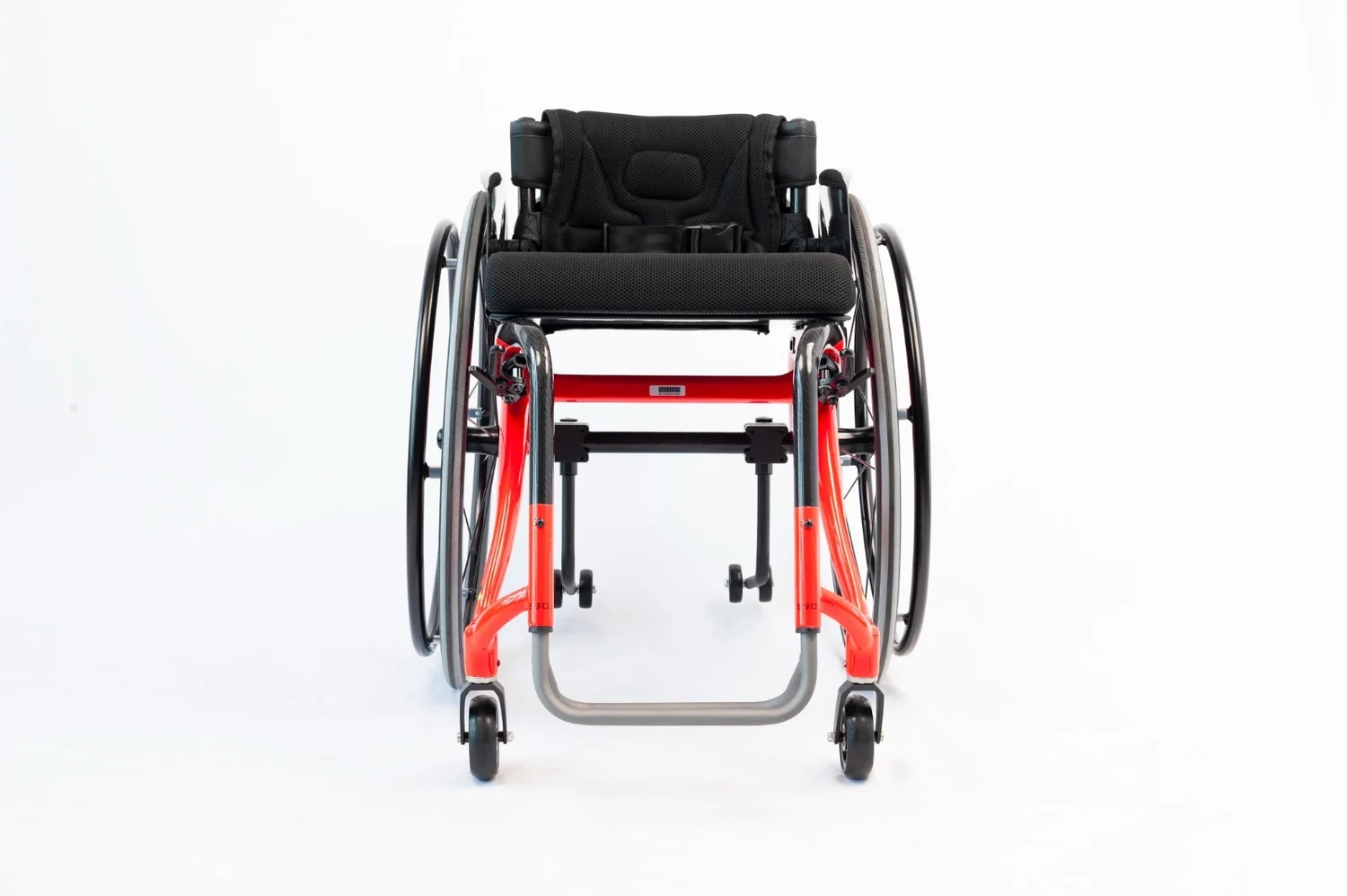
Measure the car opening, available loading space and placement area before planning rigid wheelchair car transport. A 5903 car transport review should record the usable entry opening, available load area and any constraints along the placement path. A published boot volume does not show every opening or obstruction.
Which gap must the load pass through?
The largest storage area may sit behind a smaller entrance. Measure the actual arrangement with the relevant seats and covers in their intended positions. Give the handling provider the dimensions and photos needed to review the task. Use the same clear-opening approach as the access review.
- Entry opening
- Storage area
- Placement path
| Review point | What to confirm |
|---|---|
| Entry opening | Usable height and width |
| Storage area | Available length width and height |
| Placement path | Obstructions and required movement |
Key Takeaway: You can identify a fit problem before treating a nominal cargo capacity as a loading guarantee.
How does wheel removal change car transport?
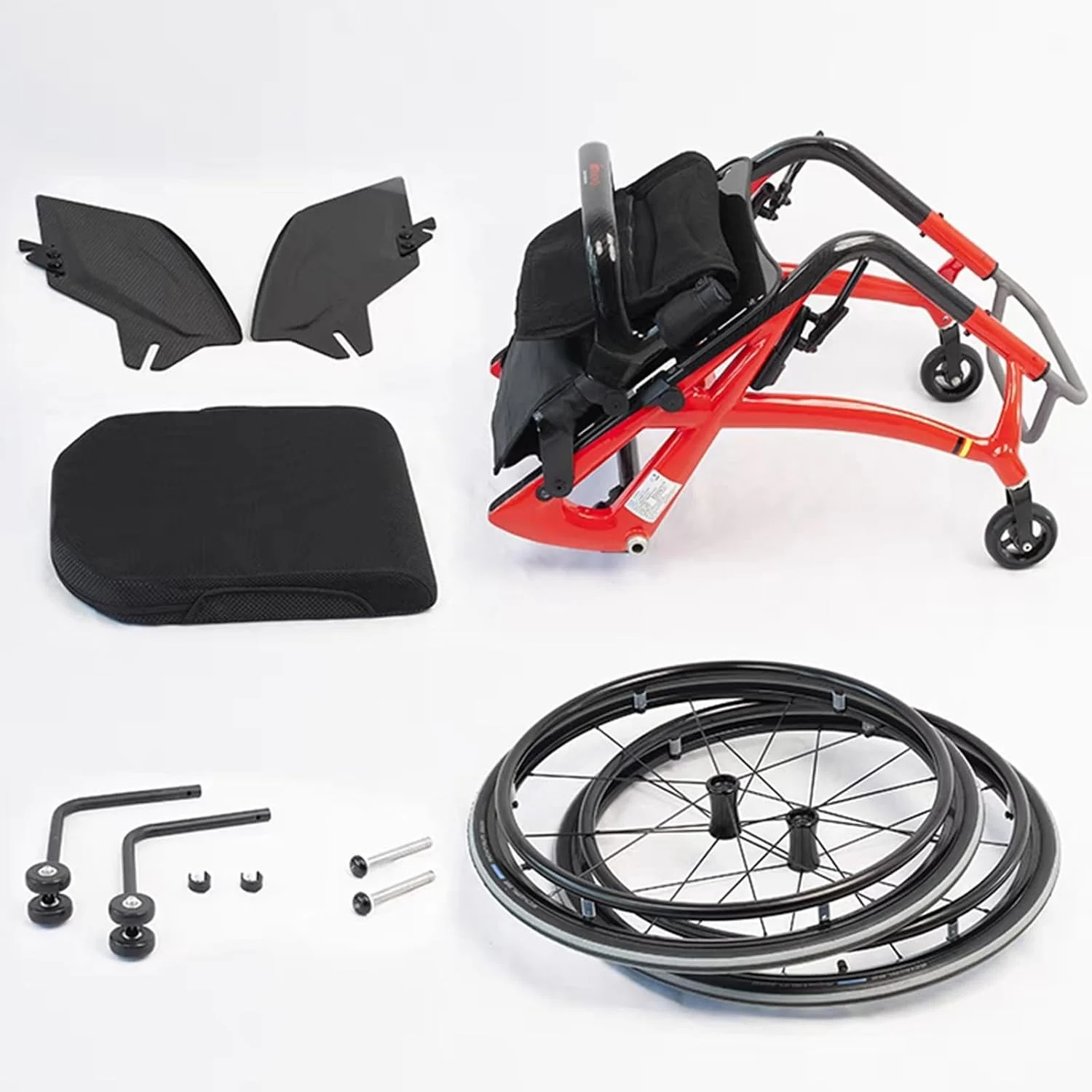
Wheel removal creates separate loads and a changed frame envelope for rigid wheelchair car transport. Rear-wheel removal changes 5903 car transport by reducing the remaining frame's envelope and creating separate wheel loads. The total transport arrangement still needs space and protection for those detached parts.
Keep the complete kit in view
The wheels do not disappear when the frame becomes smaller. Ask for the dimensions and measured mass of each carried item set. Keep the wheel and axle identities together so the return process can follow the matching instructions.
- Remaining frame
- Wheel loads
- Return process
| Review point | What to confirm |
|---|---|
| Remaining frame | Defined compact state |
| Wheel loads | Separate dimensions and masses |
| Return process | Matched parts and applicable guidance |
Key Takeaway: You can compare different loading arrangements without omitting part of the product.
How does backrest folding affect the load?
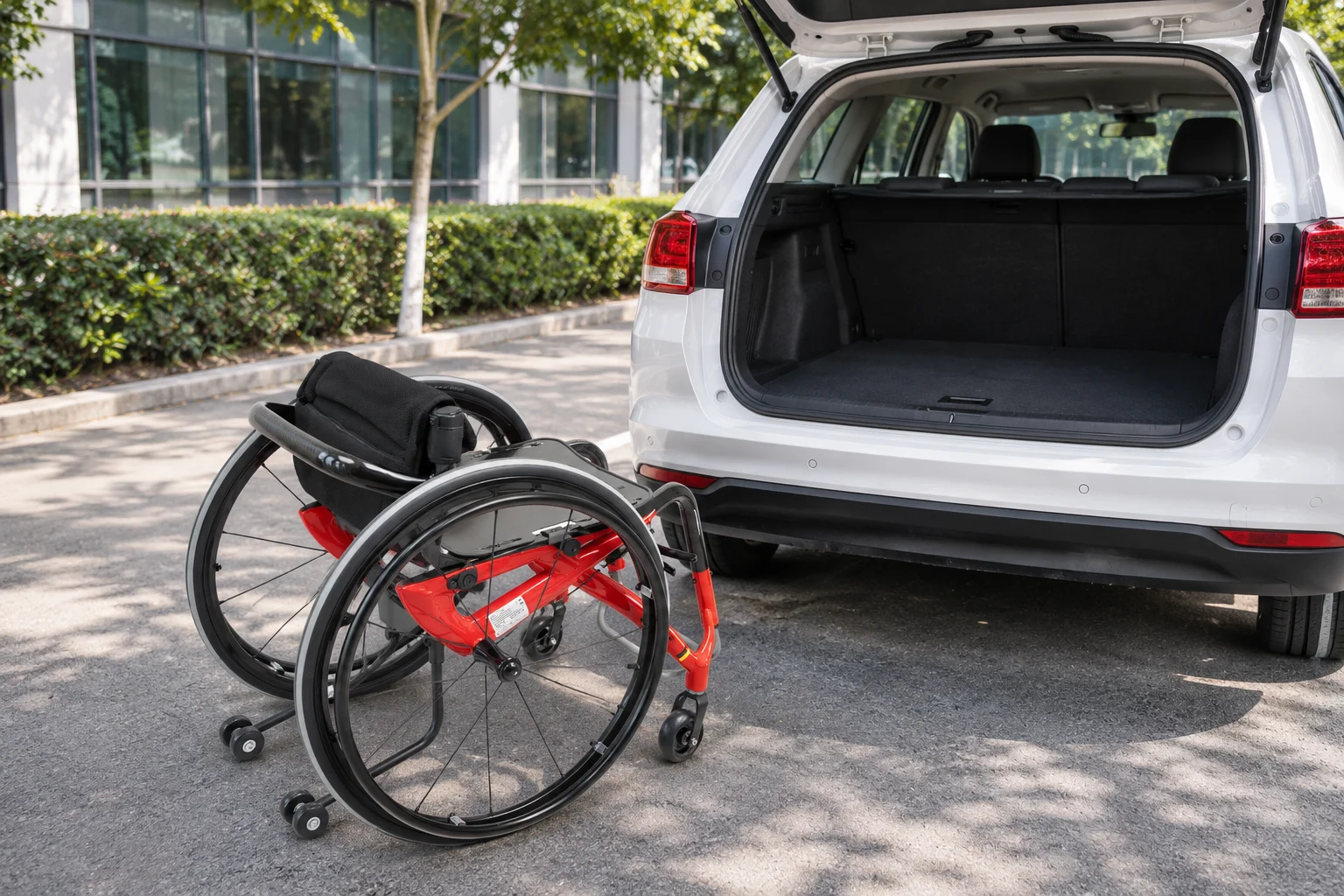
Backrest folding changes the upper profile without proving a narrower frame for rigid wheelchair car transport. Backrest folding affects 5903 car transport by changing the upper profile while the main rigid frame stays in place. It does not prove a narrower frame or establish the final transport envelope without measurement.
Trace the retained outline
A lower backrest may leave another part as the highest point. Ask which parts remain fitted in the proposed state. Record the maximum dimensions for that arrangement rather than using the assembled height or a carton measurement.
- Folding feature
- Retained structure
- Required envelope
| Review point | What to confirm |
|---|---|
| Folding feature | Changed backrest position |
| Retained structure | Rigid frame and named parts |
| Required envelope | Actual maximum dimensions |
Key Takeaway: You can use the folding feature in a transport plan without assuming what it changes in every direction.
Which weight should a rigid wheelchair car transport plan use?
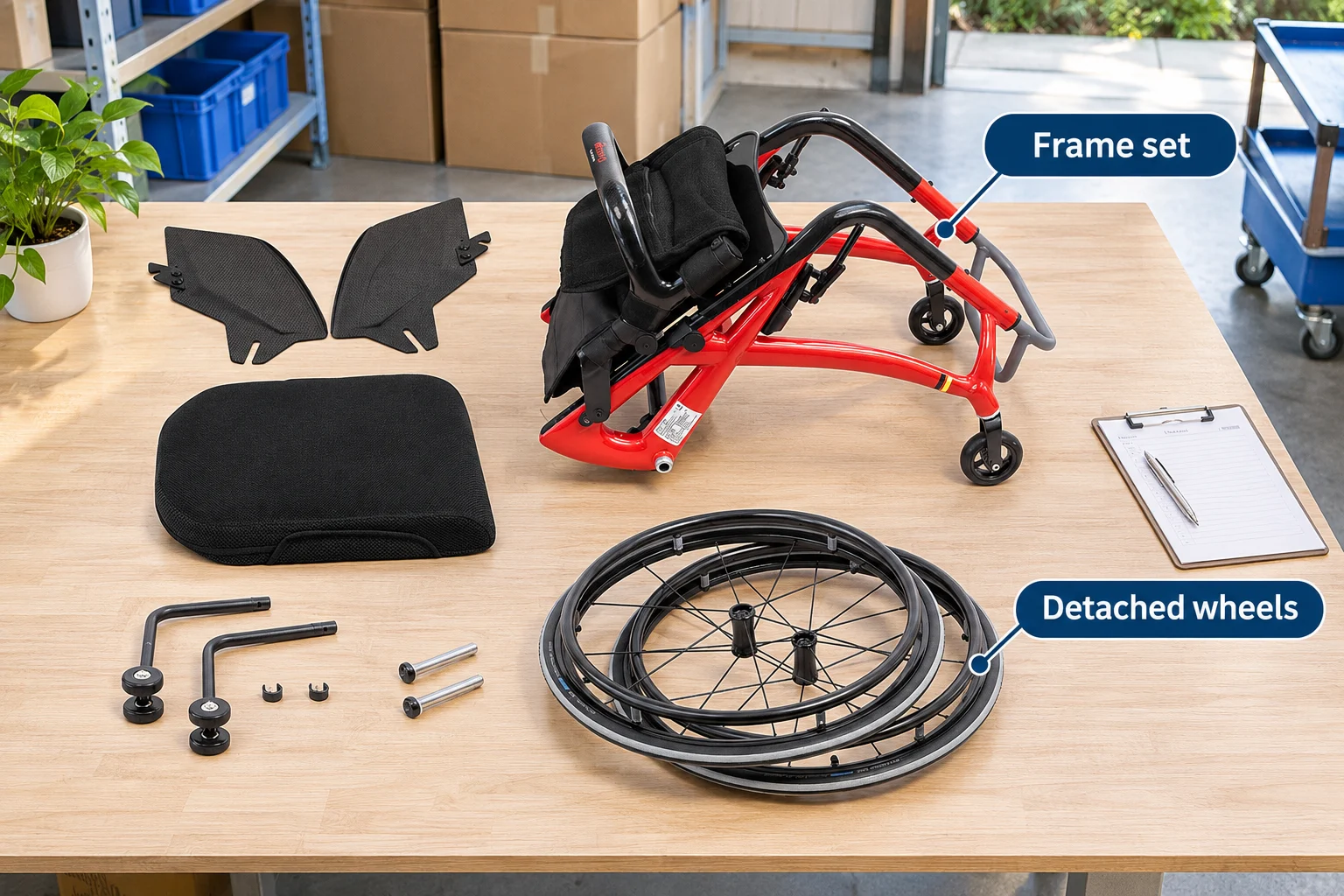
Use the measured weight of each load being handled when reviewing rigid wheelchair car transport. Use the measured weight of the actual carried state in a 5903 car transport review. The 4.5 kg frame claim and 7.5 kg net listing do not automatically define the load remaining after your chosen removals.
Weigh the intended load
Handling mass must follow the same part list as the dimensions. Ask for separate records for the frame and wheel packages where relevant. Keep the task's geometry and approved lifting points beside the mass rather than deciding on handling from weight alone. Keep the weight category clear in the carbon-chair comparison.
- Frame mass
- Separate masses
- Handling context
| Review point | What to confirm |
|---|---|
| Frame mass | Measured retained item set |
| Separate masses | Wheels and other carried parts |
| Handling context | Shape reach and permitted grip points |
Key Takeaway: You can give the handling provider the correct load instead of an estimated weight borrowed from another state.
How should the frame and wheels be protected?
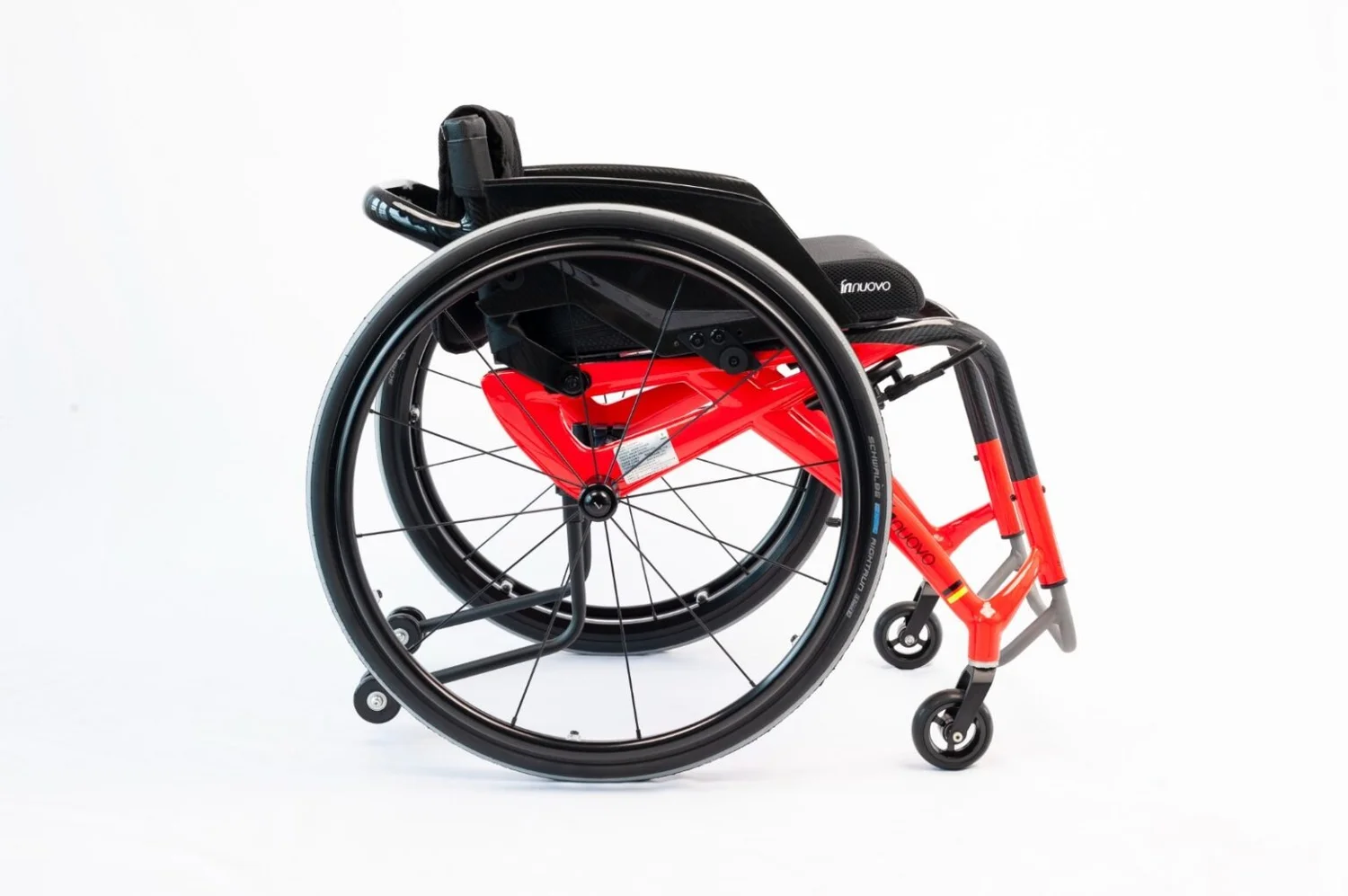
Protect and secure the frame and detached parts according to applicable guidance during rigid wheelchair car transport. Protection in 5903 car transport should follow the applicable guidance for supporting and securing the actual parts. Identify contact points, exposed parts and the means of keeping each item from moving in the intended arrangement.
Plan the contact surfaces
A soft-looking part is not automatically an approved support point. Ask the provider to define the permitted method for the vehicle and product combination. Do not copy a seat-belt routing, clamp location or lifting grip from a different chair's example.
- Product support
- Vehicle arrangement
- Loose parts
| Review point | What to confirm |
|---|---|
| Product support | Confirmed contact and handling points |
| Vehicle arrangement | Reviewed placement and retention |
| Loose parts | Named protection and inventory |
Key Takeaway: You can make the protection plan specific without presenting an improvised restraint method as approved.
Does car transport approve remaining seated in the chair?
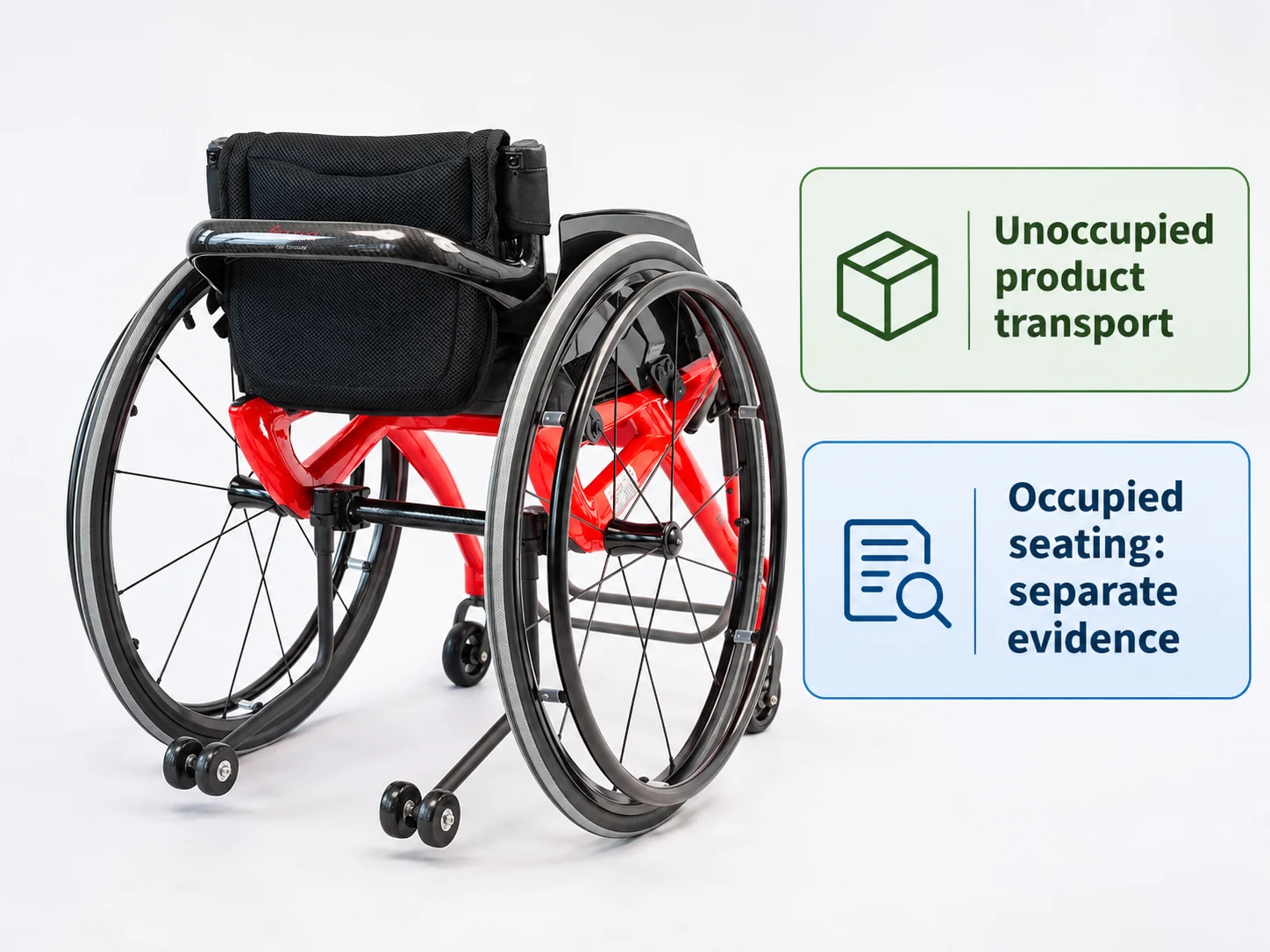
An empty-chair plan for rigid wheelchair car transport does not establish approval to travel seated in the wheelchair. No; a 5903 car transport storage or loading plan does not approve occupied vehicle travel in the wheelchair. The provided material does not establish the required evidence for using this model as a vehicle seat.
Keep the seating use separate
A chair that fits inside a car has not passed that other review. Ask the relevant transport and product providers about the evidence and arrangement required for the intended travel. Do not describe a product-image belt or frame shape as proof of occupied-transport approval.
- Current plan
- Separate question
- Evidence needed
| Review point | What to confirm |
|---|---|
| Current plan | Transporting the unoccupied product |
| Separate question | Occupied vehicle seating |
| Evidence needed | Applicable product and transport confirmation |
Key Takeaway: You can avoid turning a storage feature into an unsupported vehicle-seat claim.
What should happen when the chair is taken out again?
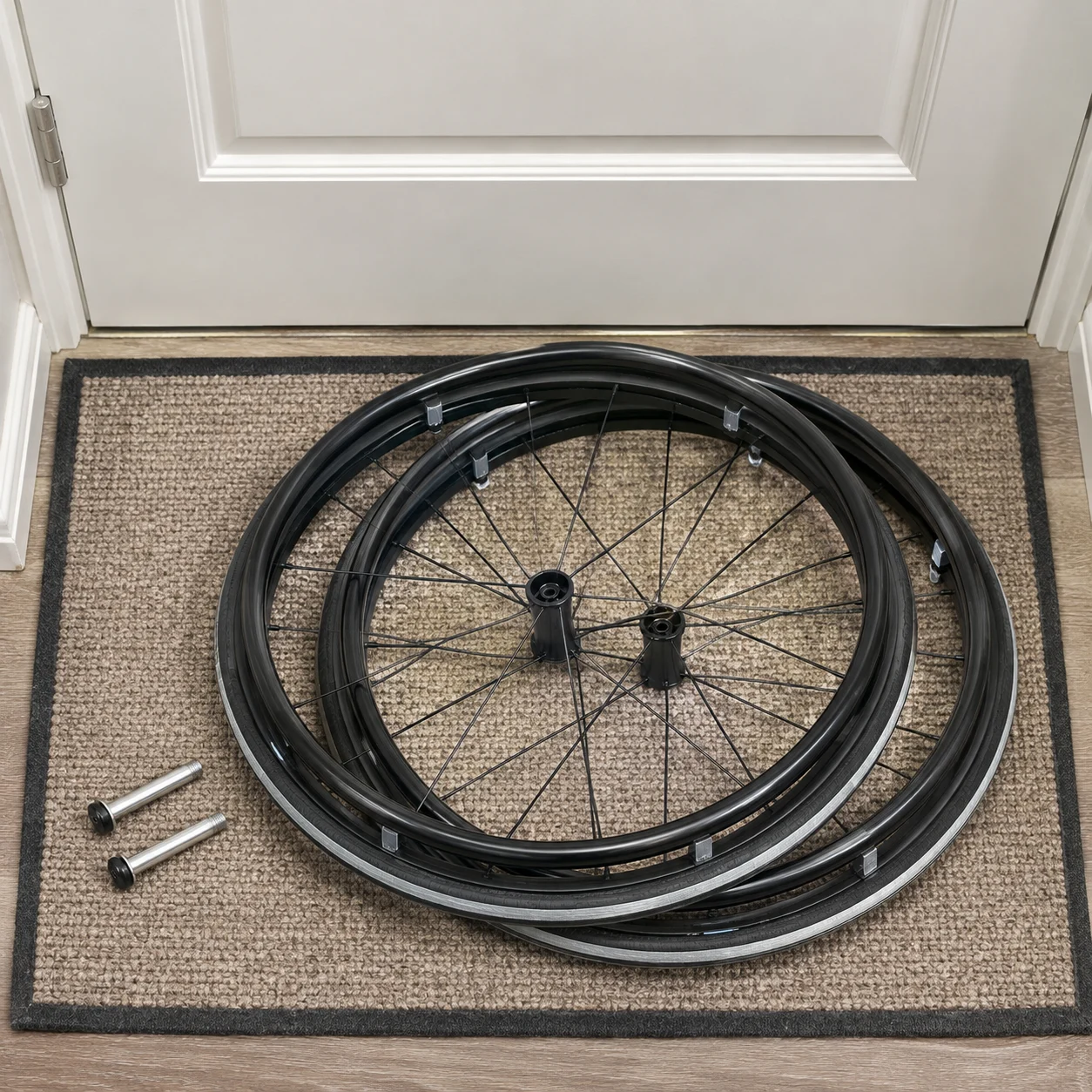
Complete the matching reassembly and return-to-use checks after rigid wheelchair car transport. After 5903 car transport, return the product to its intended setup using the matching instructions and responsible handover or service process. Account for the wheels, axles, cushion, guards and any removed rear parts.
Include the return step in the plan
Loading is not the end of the handling cycle. Record any damage, missing part or uncertain retention before the chair is treated as ready. Keep unresolved concerns with the provider responsible for the relevant assessment. Retain completed return steps in the user handover record.
- Parts inventory
- Product setup
- Open concern
| Review point | What to confirm |
|---|---|
| Parts inventory | All carried parts returned |
| Product setup | Applicable reassembly and checks |
| Open concern | Specific technical or fitting follow-up |
Key Takeaway: You can make transport planning include the product's condition at the next point of use.
What should a rigid wheelchair car transport trial record?
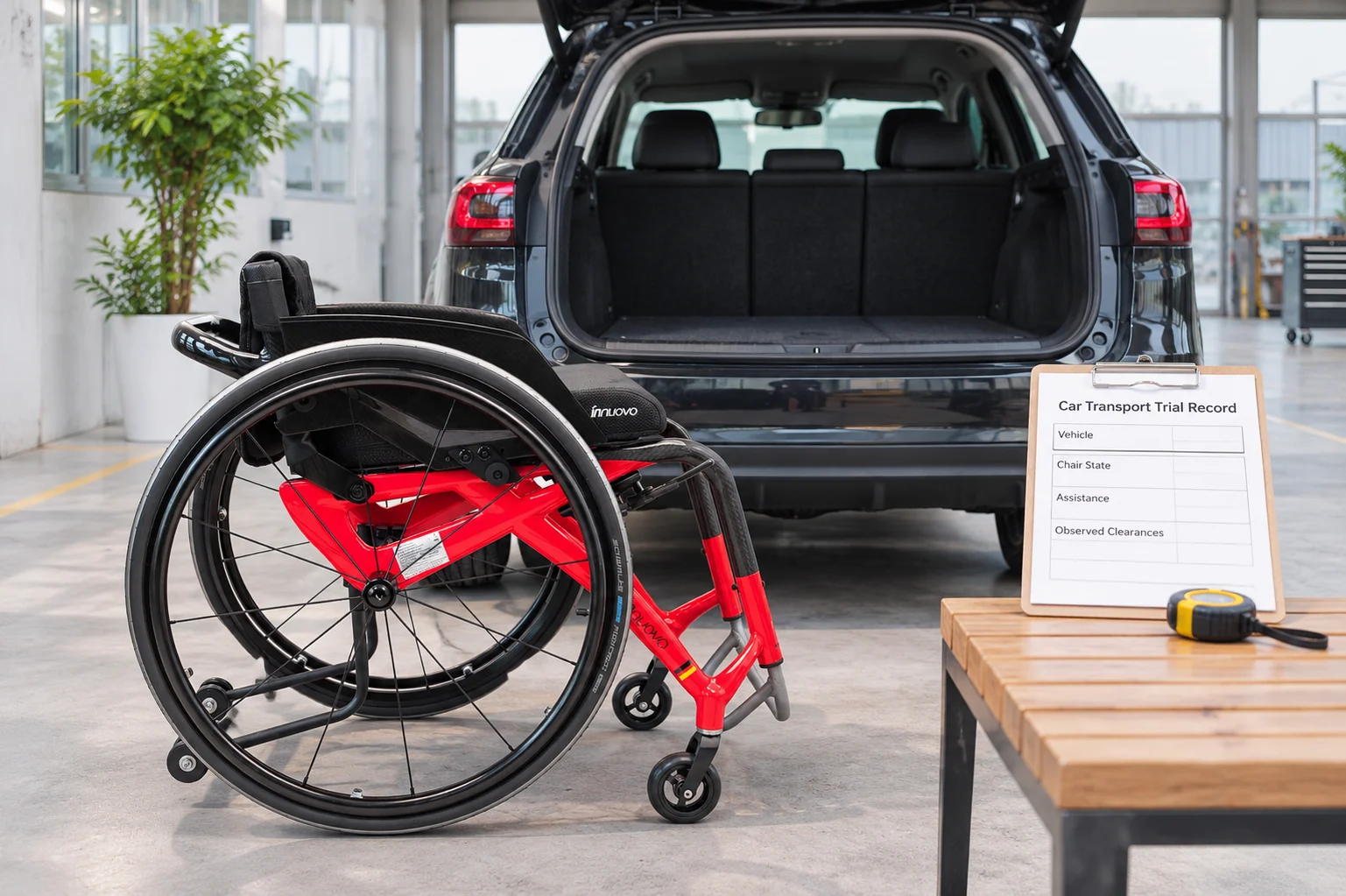
Record the vehicle, chair state, assistance and observed clearances in a rigid wheelchair car transport trial. Document a 5903 car transport trial with the vehicle, exact load state and the findings from the responsible handling review. Separate a measured space comparison from proof that every user can perform the task independently.
Record the actual combination
A different vehicle or accessory can change the result. Keep photographs, dimensions and the named handling arrangement together. If any part of the task remains unresolved, assign the next review before using the trial as a sales claim.
- Vehicle record
- Product state
- Trial outcome
| Review point | What to confirm |
|---|---|
| Vehicle record | Actual model and arrangement |
| Product state | Named parts dimensions and masses |
| Trial outcome | Specific findings and open actions |
Key Takeaway: You can reuse the record for the same arrangement without overstating its relevance to every buyer.
How can you request a useful car transport review?
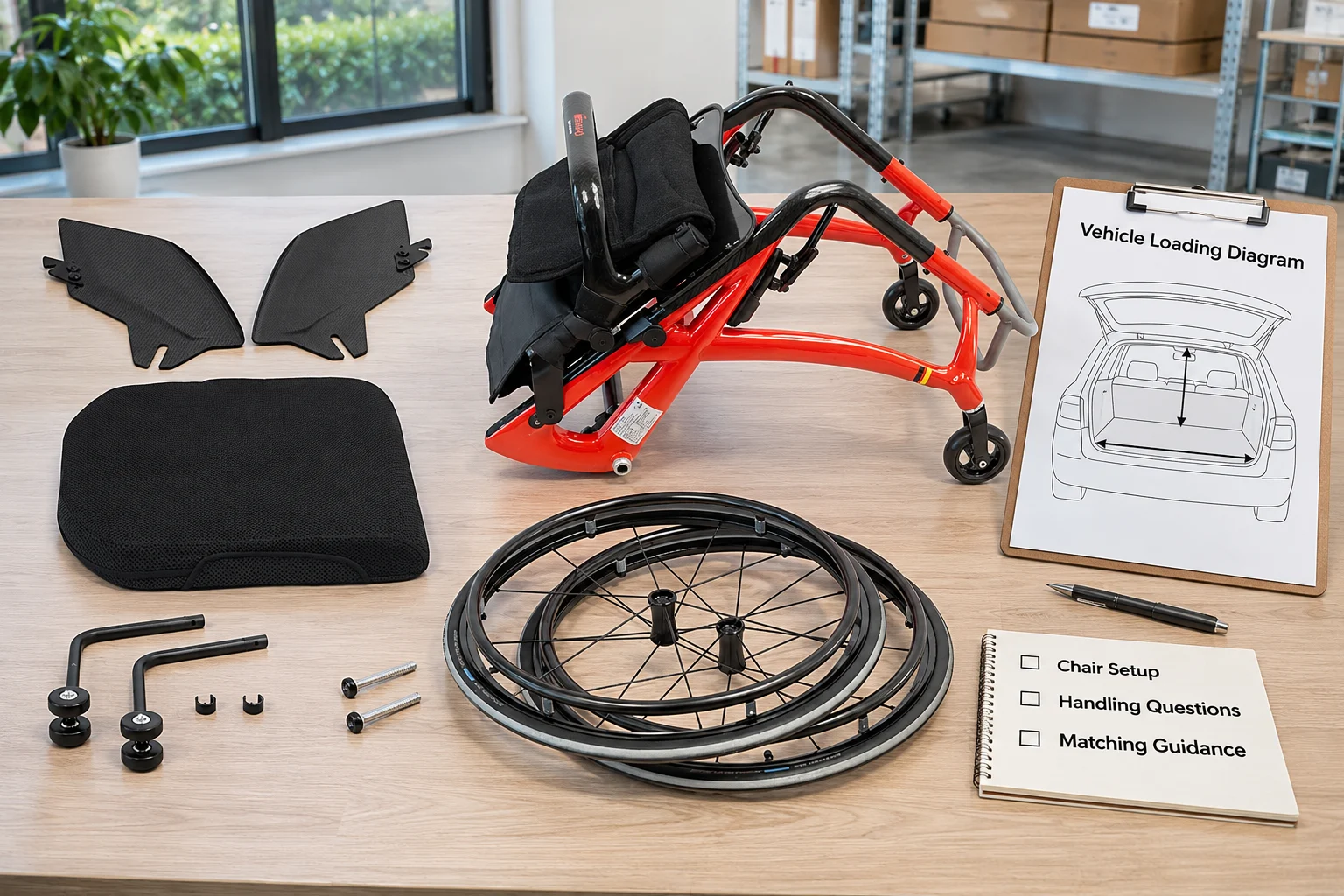
Request a rigid wheelchair car transport review with actual measurements and setup photos rather than a generic portability claim. Request a 5903 car transport review with the intended vehicle measurements, chair setup and handling questions. Ask for compact-state product data and matching guidance that correspond to that specific task.
Send the vehicle and product together
The supplier needs both sides of the comparison. Give AryMD the proposed order, destination and required storage arrangement. We can discuss the product records and written scope your team needs before accepting a portability claim.
- Vehicle input
- Product input
- Required response
| Review point | What to confirm |
|---|---|
| Vehicle input | Opening and available load space |
| Product input | Exact transport state |
| Required response | Dimensions masses and handling guidance |
Key Takeaway: You can turn a broad car-fit question into a defined and reviewable transport plan. Contact us with your 5903 setup, quantity and destination so we can discuss the product information and written supply scope. AryMD puts clear specifications before purchasing promises.
Frequently asked questions
Q1: Can I rely on a general fits-most-cars statement?
No. Review the actual entry opening, available space and handling task for the proposed product state.
Q2: What's the best weight to use in the loading review?
Use the measured mass of the exact load being carried. Keep detached wheels and other parts separately identified.
Q3: How do I know whether the quoted dimensions include every carried part?
Request a state-specific contents list and measurements. A frame envelope alone does not account for wheel bags or loose accessories.
Q4: Does fitting in a car approve occupied travel in the wheelchair?
No. Using the model as an occupied vehicle seat requires separate applicable evidence that the supplied material does not establish.
Q5: Should the return-to-use checks be part of the transport plan?
Yes. Account for every part and follow the matching reassembly, inspection and handover process.