
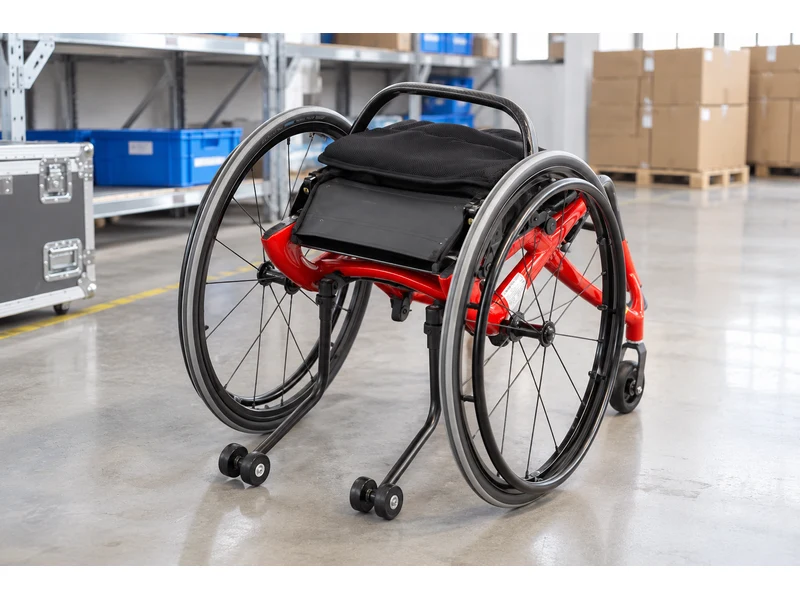
A rigid wheelchair folding backrest reduces the upper profile while the main frame may remain the same width and length. A buyer may see the word folding and expect a narrow side-folding frame, then discover that wheels and other parts need separate space. That changes the storage plan. Examples use the 5903, a manual carbon-frame chair with one fixed 38 cm seat width.
What does a rigid wheelchair folding backrest change?
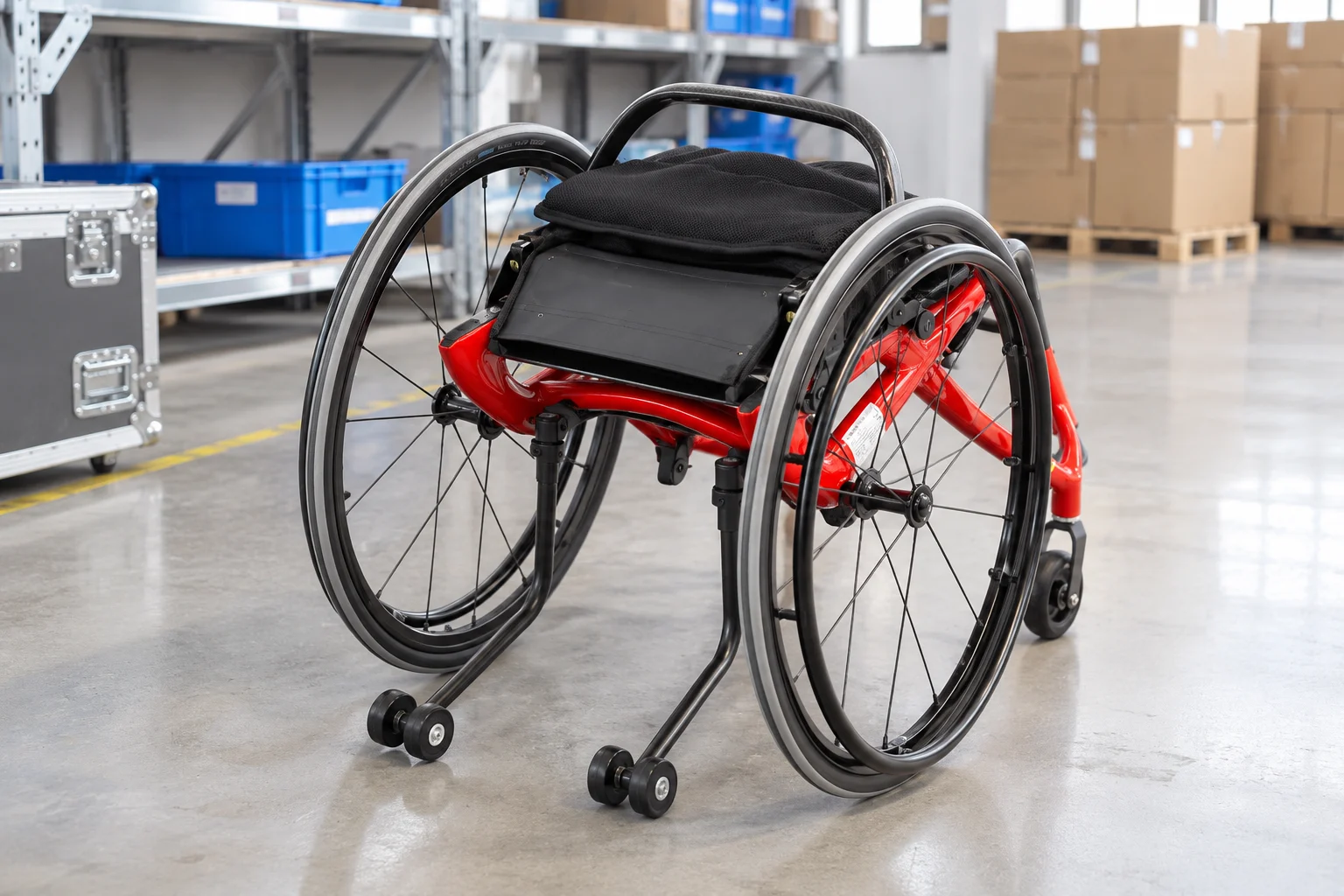
A rigid wheelchair folding backrest reduces the upper profile while the main frame may remain the same width and length. The supplied 5903 backrest folding images show the low backrest folded forward while the main carbon frame remains rigid. This changes the upper profile without turning the chair into a side-folding cross-brace design.
Name the structure that moves
The frame and backrest perform different roles. Use the illustrated compact state as a starting point for supplier questions. Ask which parts must remain fitted and which removals belong to the current product instructions. WHO guidance supports assessment, fitting and follow-up.
- Moving structure
- Retained structure
- Applicable guidance
| Review point | What to confirm |
|---|---|
| Moving structure | Fold-down backrest |
| Retained structure | Rigid main frame |
| Applicable guidance | Instructions for the supplied build |
Key Takeaway: You can describe the folding feature accurately without promising a width reduction that has not been documented.
Is folding the same as separating the rear wheels?
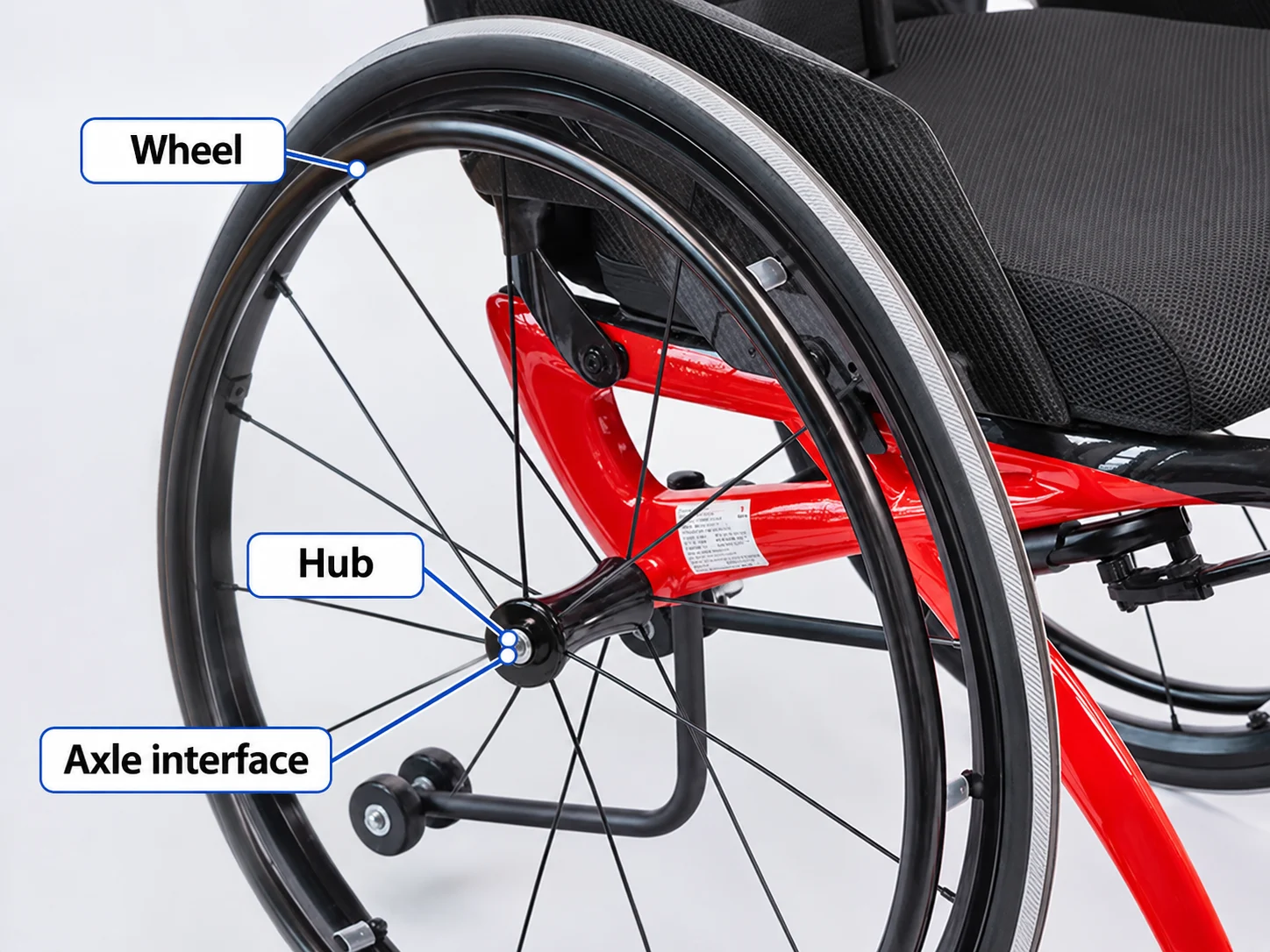
Rear-wheel removal is a separate operation from a rigid wheelchair folding backrest; record both states when comparing storage size. No; 5903 backrest folding changes the backrest position, while rear-wheel removal separates additional parts. The source images show both states, and their size and handling records should remain distinct.
Which state will you store?
A folded chair and a separated kit occupy different spaces. Ask for a contents list and measurements for the setup you intend to use. Record the rear wheels as separate loads only when the chosen transport plan includes their removal. Keep the separate wheel assemblies on the transport inventory.
- Folded chair
- Separated kit
- Comparison record
| Review point | What to confirm |
|---|---|
| Folded chair | Backrest changed with named parts attached |
| Separated kit | Additional parts removed |
| Comparison record | State-specific dimensions and contents |
Key Takeaway: You can compare storage options without using measurements from the wrong setup.
Which parts should be identified before backrest folding?
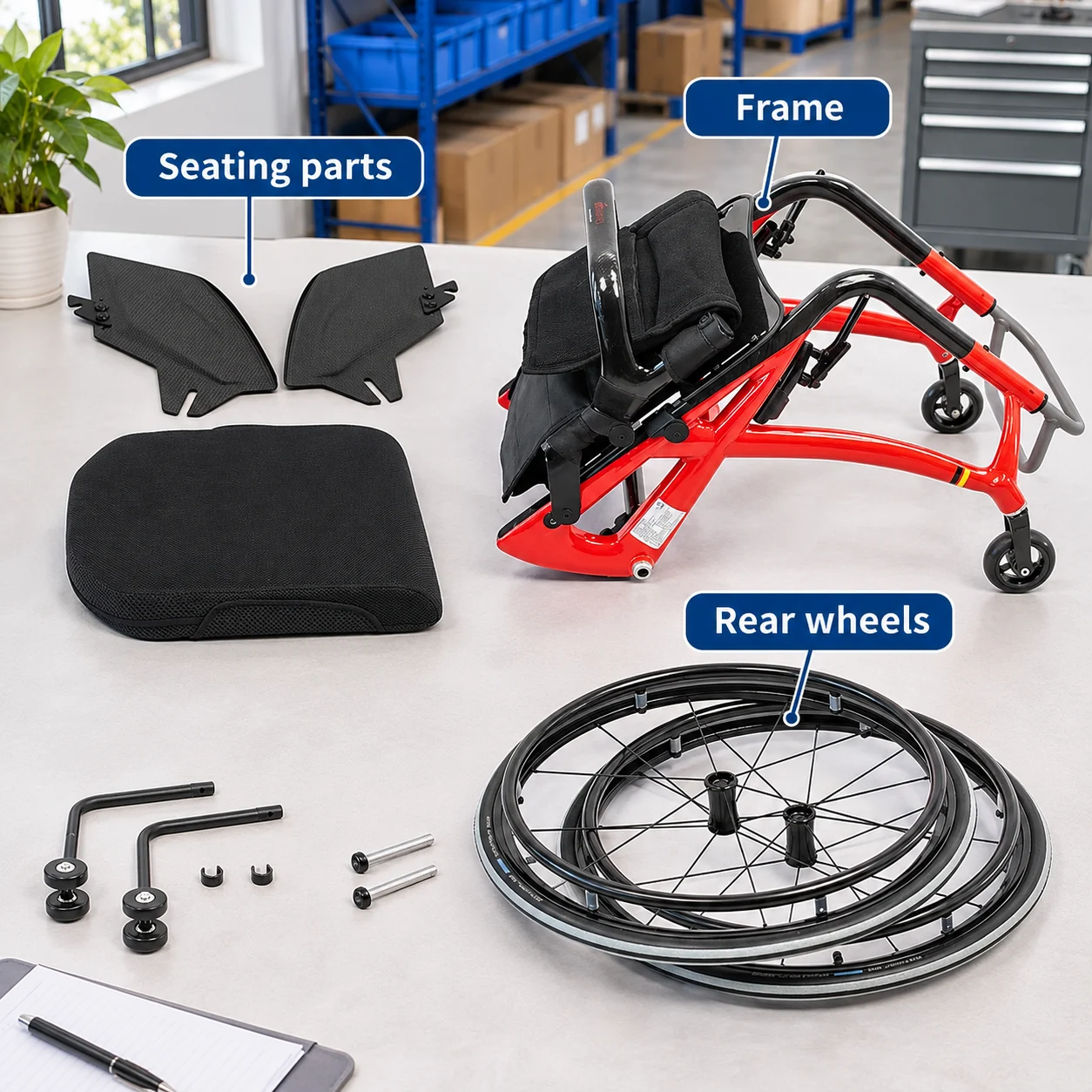
Identify the cushion, side guards, upholstery and rear parts before reviewing a rigid wheelchair folding backrest. Before planning 5903 backrest folding, identify the cushion, side guards, back upholstery and backrest mechanism shown on the supplied build. Their relationship to the fold-down process should come from the matching instructions.
Check the actual component set
A similar-looking chair may use another mechanism. The source sequence illustrates several seating parts removed around the folding task. Treat that sequence as evidence of the design, then obtain the current guide for the delivered setup before handling it.
- Cushion
- Guards and upholstery
- Backrest mechanism
| Review point | What to confirm |
|---|---|
| Cushion | Exact fitted type and attachment |
| Guards and upholstery | Actual removable parts |
| Backrest mechanism | Matching guide and revision |
Key Takeaway: A part list gives the provider a clear basis for explaining the permitted folding process.
How should folded height be measured?
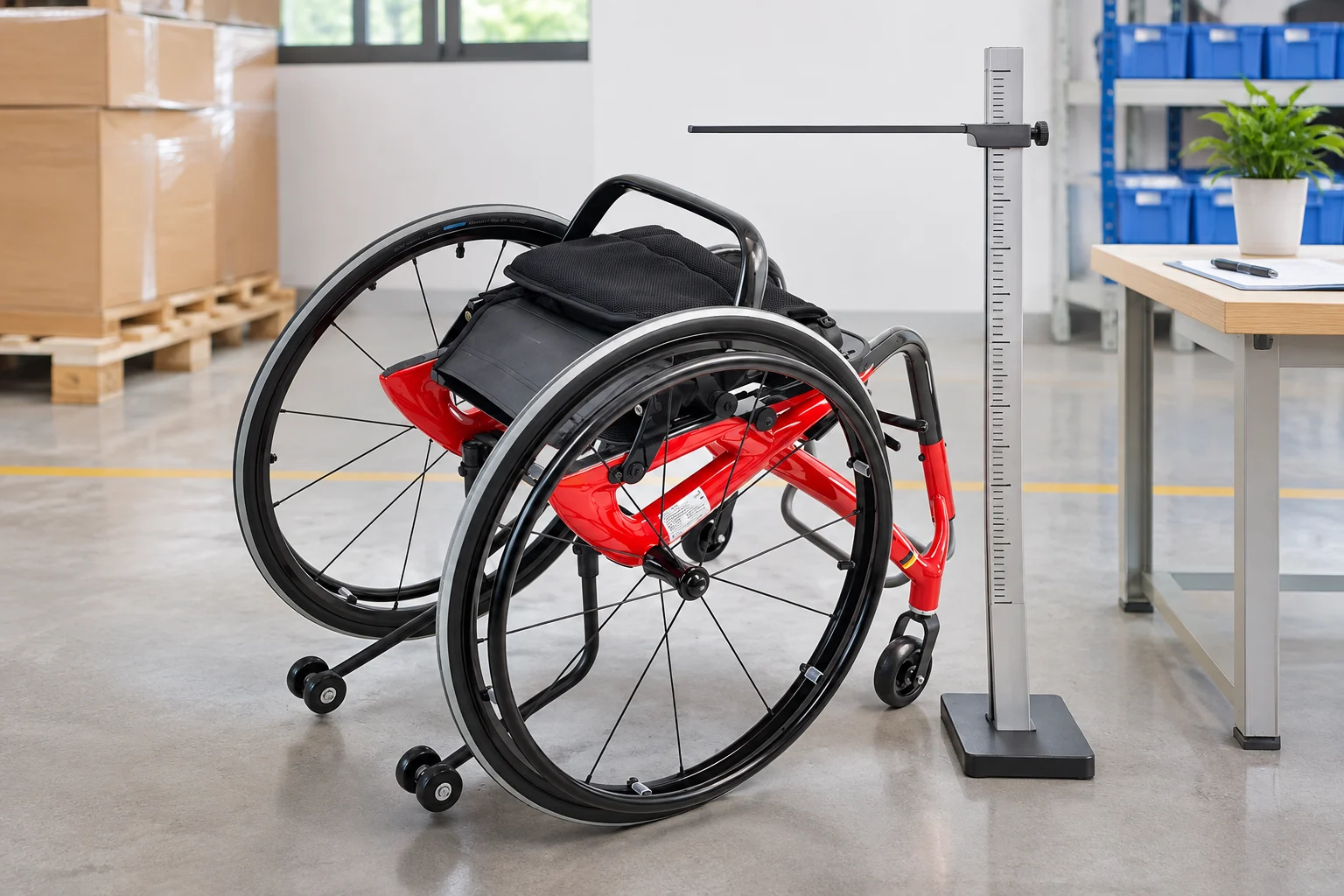
Measure the actual compact arrangement to establish the stored height of a rigid wheelchair folding backrest. Measure the 5903 backrest folding height in the exact compact state being proposed, with all retained parts identified. Do not use the assembled 68 cm height or the carton height as a substitute.
Measure the highest remaining point
The folded state needs its own record. Ask for a labeled side view and the corresponding length and width. If loose parts will be carried elsewhere, list their dimensions separately rather than hiding them outside the frame photo.
- State
- Envelope
- Separate loads
| Review point | What to confirm |
|---|---|
| State | Defined folded arrangement |
| Envelope | Length width and height |
| Separate loads | Named removed parts |
Key Takeaway: You can check a storage compartment against the actual folded load instead of a marketing image.
What does a rigid wheelchair folding backrest leave unchanged?
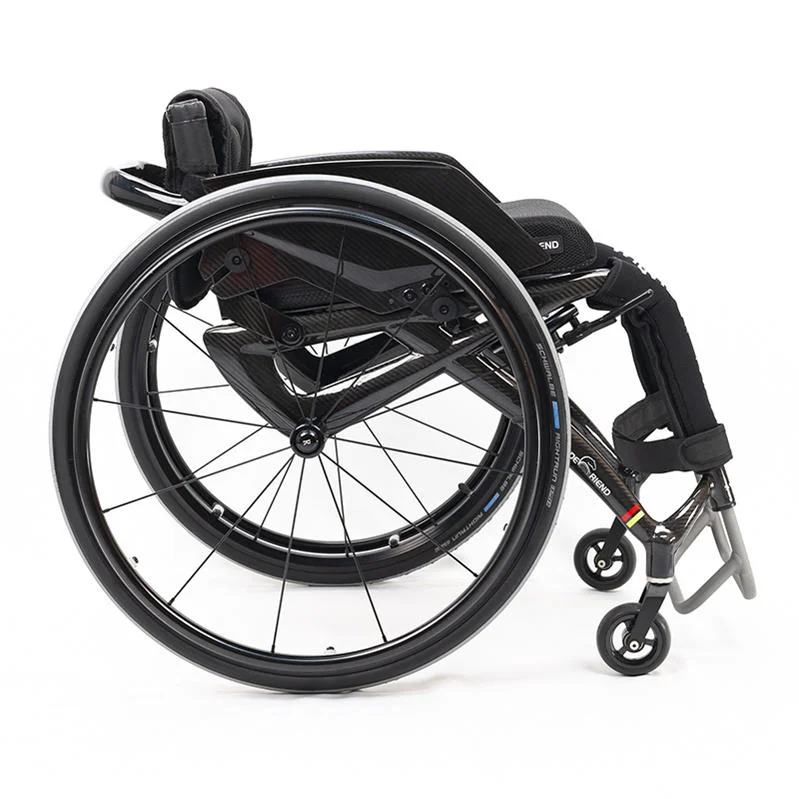
A rigid wheelchair folding backrest does not automatically make the main frame narrower. The 5903 backrest folding feature leaves the main rigid frame in place, so some parts of the footprint remain. The source does not establish a narrower frame or a complete folded envelope for every setup.
Trace the remaining outline
A lower profile does not prove a smaller width. Review the wheels, foot support and any rear extensions in the chosen state. Ask the supplier to show which part determines the maximum dimension in each direction. Include the actual rear anti-tip parts in the retained outline.
- Main frame
- Width reference
- Length reference
| Review point | What to confirm |
|---|---|
| Main frame | Rigid geometry retained |
| Width reference | Widest retained part |
| Length reference | Front and rear retained endpoints |
Key Takeaway: You can identify the dimensions that still constrain storage after the backrest moves.
How should the folded parts be protected?
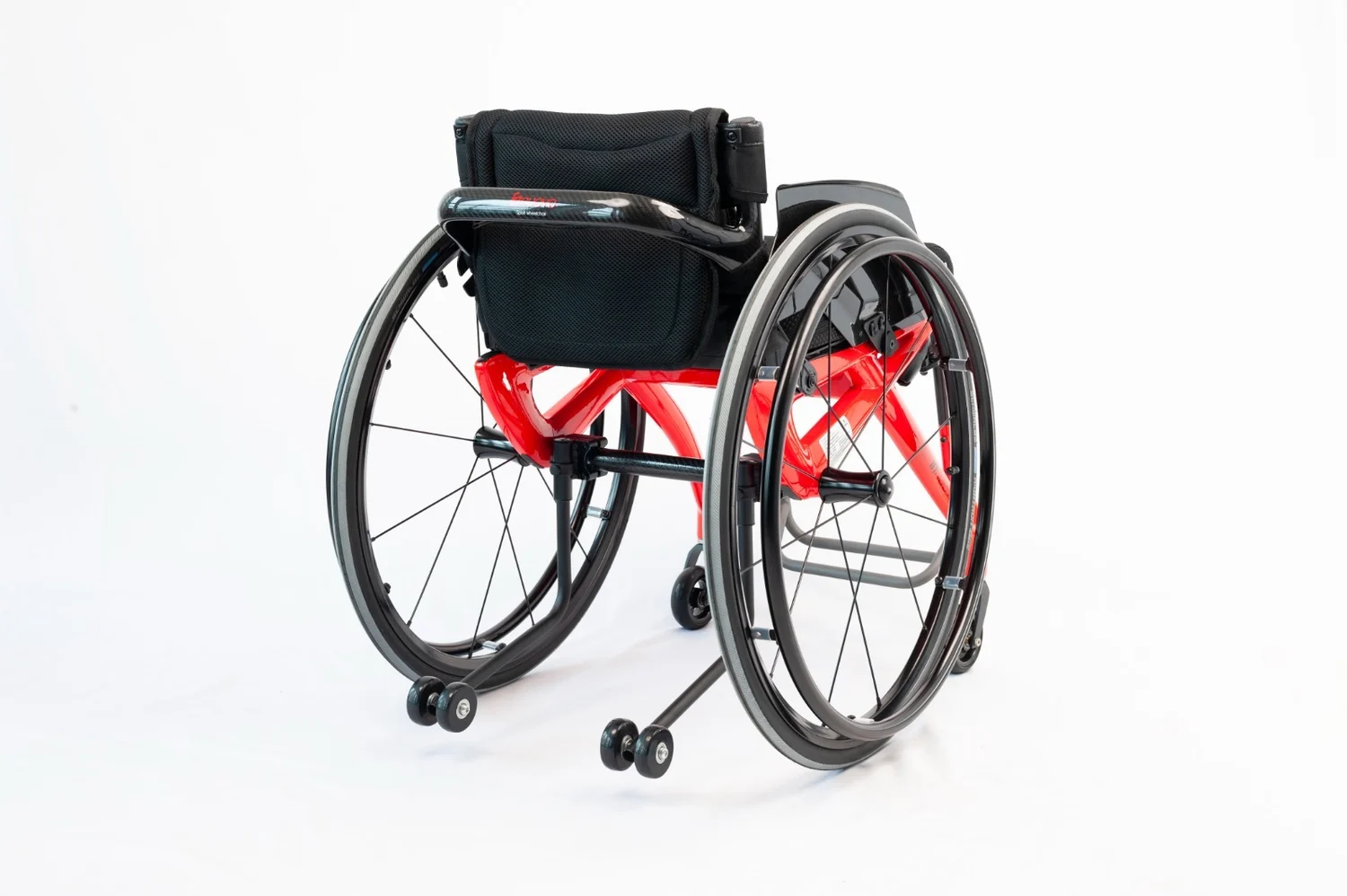
Protect folded and detached parts according to the applicable handling guidance for a rigid wheelchair folding backrest. Protection for 5903 backrest folding should address the cushion, backrest, frame surfaces and any separately carried parts. The applicable handling and packing guidance should define contact points and permitted support.
Plan the contact surfaces
A compact load can still contain vulnerable parts. Ask how the folded setup should be supported and kept from shifting in the intended space. Avoid assuming that the fabric, guards or handrims are approved lifting or restraint points.
- Contact areas
- Loose parts
- Handling points
| Review point | What to confirm |
|---|---|
| Contact areas | Confirmed support surfaces |
| Loose parts | Separate retention and protection |
| Handling points | Maker or provider guidance |
Key Takeaway: You can reduce ambiguity in the packing plan without inventing a securing method.
What should be checked after backrest folding and return?
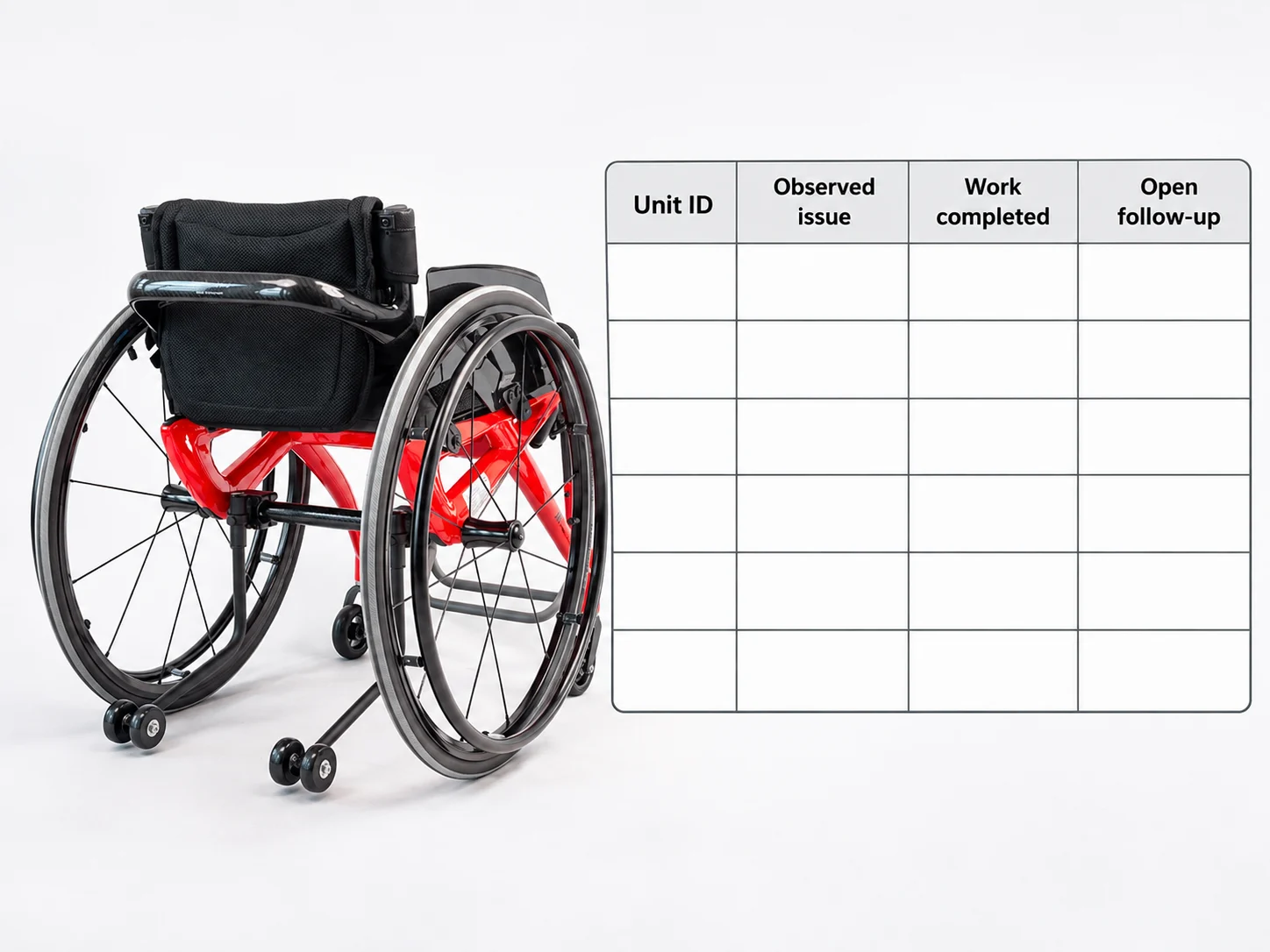
Use the matching return-to-use checks after operating a rigid wheelchair folding backrest. After a 5903 backrest folding handling cycle, the responsible provider should follow the matching guide for returning the chair to its intended setup. A completed-looking photograph does not establish that every lock, attachment and seating part is ready.
Record the return-to-use step
Transport preparation is only part of the task. Keep the reassembly and handover requirements with the folding instructions. Any uncertain retention, damaged part or unexplained change should go through the service process before use resumes.
- Product state
- Required checks
- Open issue
| Review point | What to confirm |
|---|---|
| Product state | Intended assembled setup |
| Required checks | Matching guide and responsible review |
| Open issue | Specific service follow-up |
Key Takeaway: You can prevent a storage task from ending with an undocumented readiness assumption.
Can the folding feature prove independent handling?
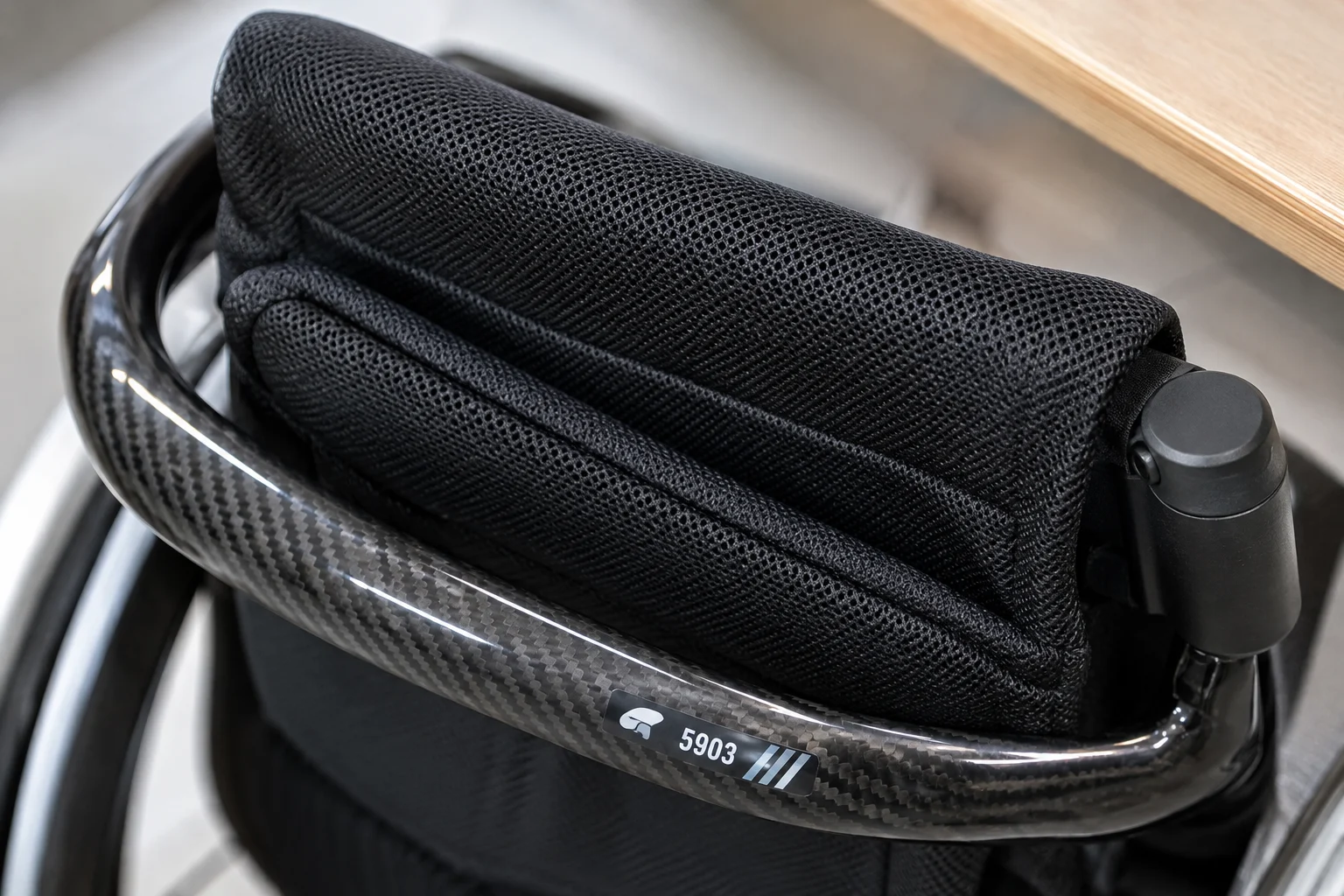
A rigid wheelchair folding backrest can change the package shape without proving that every user can lift or handle it alone. No; 5903 backrest folding alone does not prove that every user can fold, lift or store the chair without assistance. The actual task includes reach, handling mass, space and the individual's capabilities.
Review the full task
Fewer parts in one load do not settle every handling question. Give the relevant provider the exact product state and intended environment. Ask for the appropriate handling arrangement instead of promising one-person portability from the fold-down feature. Record unresolved handling questions in the inspection brief.
- Task scope
- Product load
- Individual review
| Review point | What to confirm |
|---|---|
| Task scope | Folding carrying and placement |
| Product load | Measured setup |
| Individual review | Suitable assistance or handling method |
Key Takeaway: You can discuss convenience in terms of a reviewed task rather than an unsupported promise.
What belongs in a rigid wheelchair folding backrest handover?
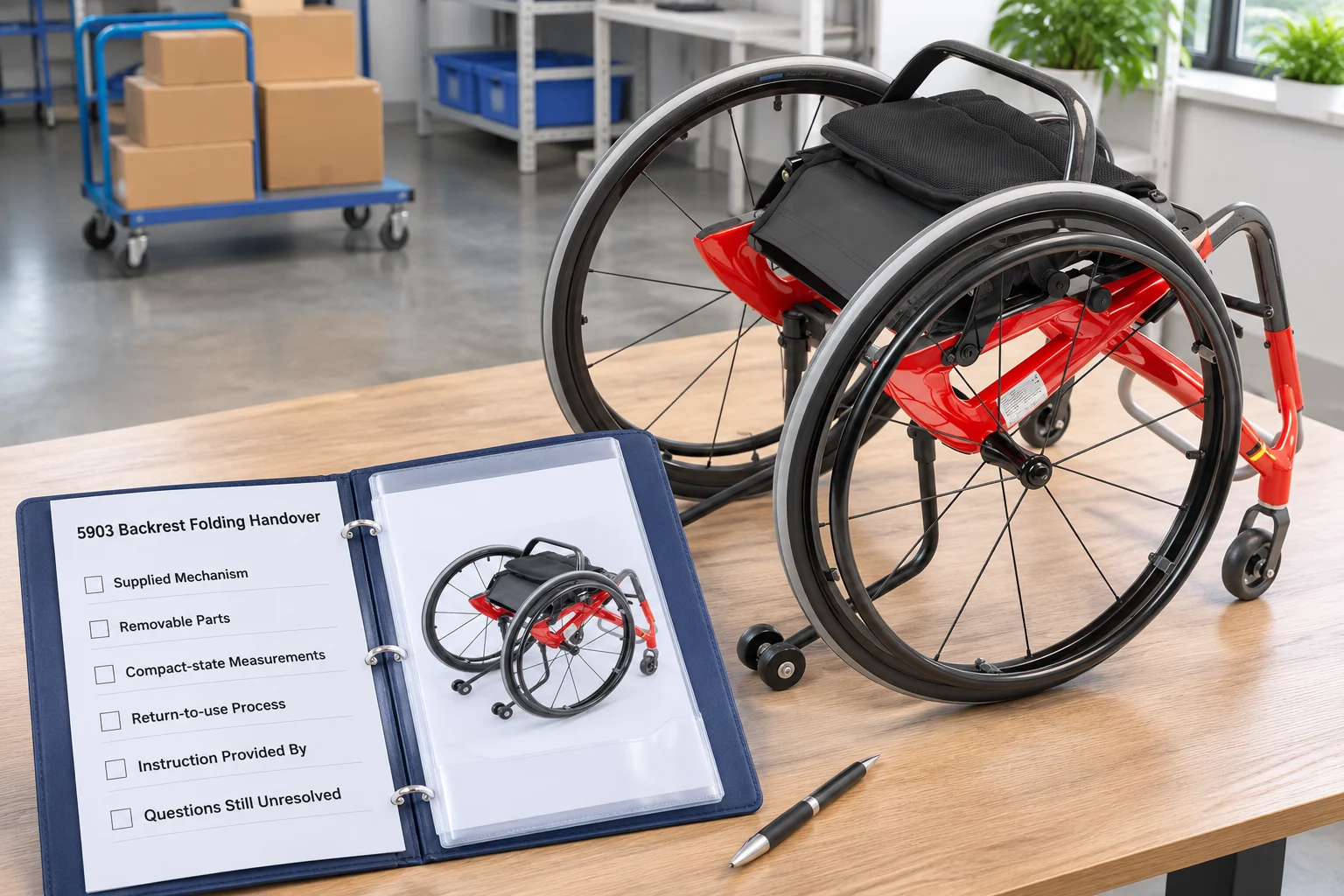
Keep the demonstrated sequence, included parts and matching instructions in a rigid wheelchair folding backrest handover. A 5903 backrest folding handover should identify the supplied mechanism, named removable parts, compact-state measurements and the return-to-use process. Record who provides the instruction and any questions still unresolved.
Keep the guide with the unit
The next person needs the same version of the instructions. Ask the supplier to explain the exact setup during the agreed handover. Retain the part inventory so removed cushions, guards and wheels stay associated with the correct chair.
- Guide identity
- Component inventory
- Handover record
| Review point | What to confirm |
|---|---|
| Guide identity | Current matching instructions |
| Component inventory | Parts removed and retained |
| Handover record | Completed instruction and open actions |
Key Takeaway: You can make the storage feature usable through a clear and traceable handover.
How can you request useful backrest folding information?
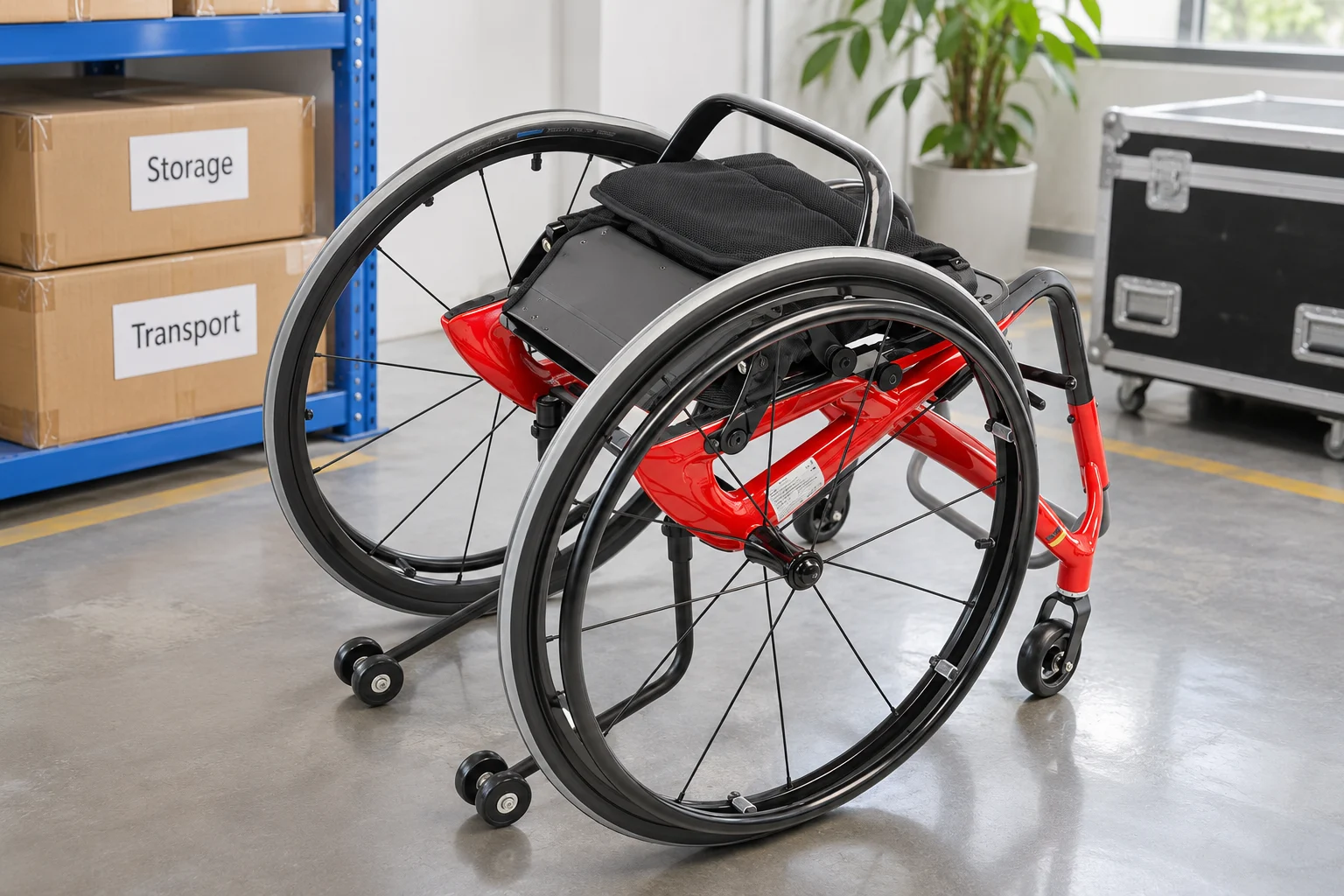
Request measurements and photos of the exact storage state when asking about a rigid wheelchair folding backrest. Request 5903 backrest folding information by naming the storage or transport space you need to assess. Ask for the compact-state dimensions, parts list and current handling guidance for the actual offered build.
Send the intended storage state
The requested evidence should match the task. Give AryMD your setup, quantity and destination with the available-space measurements. We can discuss the product records needed to compare the proposal and its handling requirements.
- Storage task
- Product state
- Supplier response
| Review point | What to confirm |
|---|---|
| Storage task | Named space and access opening |
| Product state | Exact folded or separated arrangement |
| Supplier response | Dimensions instructions and scope |
Key Takeaway: You can evaluate the folding feature through a defined task and a documented product setup. Contact us with your 5903 setup, quantity and destination so we can discuss the product information and written supply scope. AryMD puts clear specifications before purchasing promises.
Frequently asked questions
Q1: Can the rigid frame be assumed to fold sideways?
No. The supplied material shows a fold-down backrest and removable parts, not a side-folding cross-brace structure.
Q2: What's the best size to request for storage?
Request the full envelope of the exact compact state. Add every separately carried part to the space plan.
Q3: How do I know which seating parts should be removed?
Use the current instructions for the actual supplied build. A source illustration does not replace the matching handling guidance.
Q4: Does the folding feature prove that I can lift the chair alone?
No. The individual handling task needs review using the actual load, space and permitted lifting points.
Q5: Should reassembly be included in handover?
Yes. The return-to-use process and any required checks belong with the removal and folding guidance.