
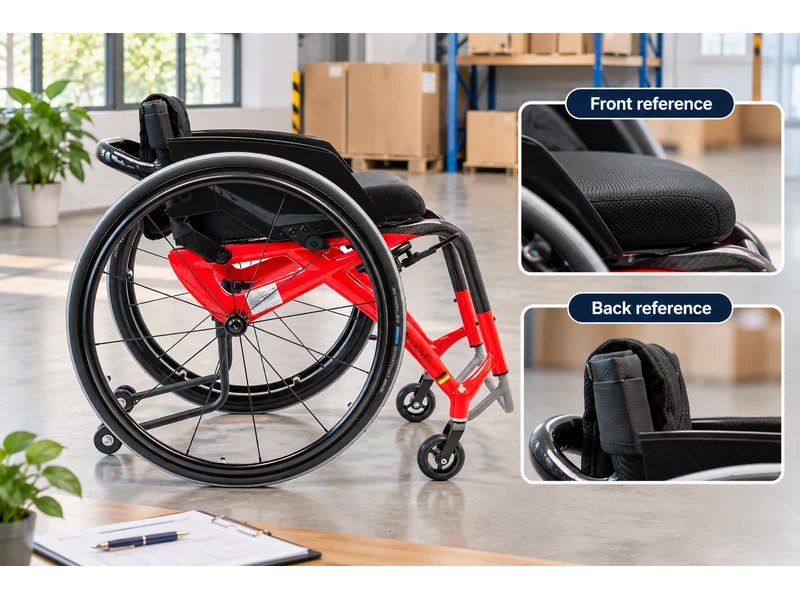
A wheelchair seat depth measurement is useful only when the supplier identifies the surfaces and endpoints behind the figure. A buyer can see 45 cm in a product image and 50 cm in a nearby manual, then assume the chair offers both settings. The documents do not establish that range. Examples use the 5903, a manual carbon-frame chair with one fixed 38 cm seat width.
What does wheelchair seat depth measurement describe?
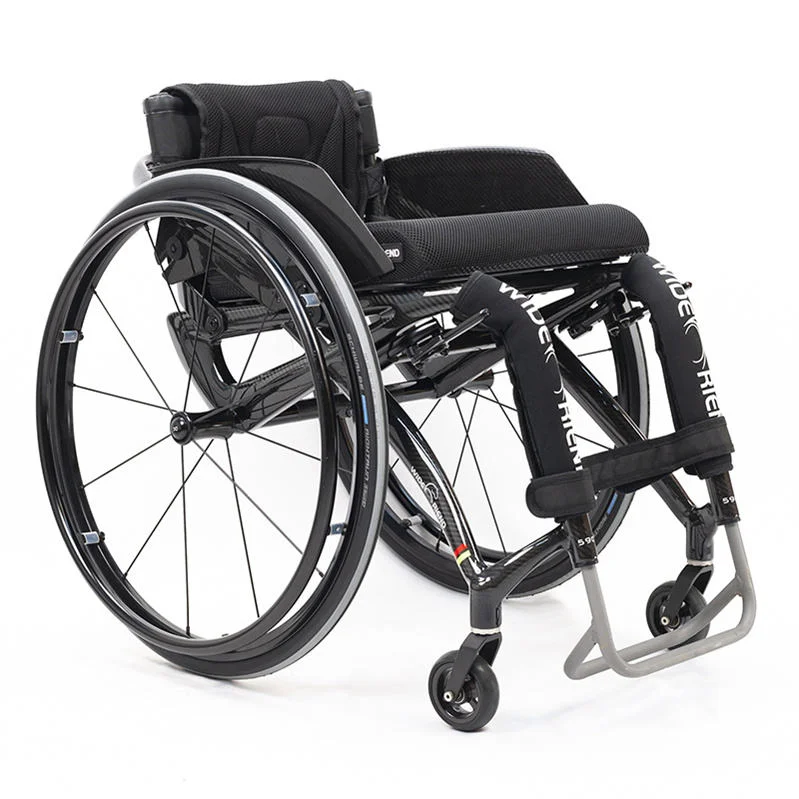
A wheelchair seat depth measurement is useful only when the supplier identifies the surfaces and endpoints behind the figure. The listed 5903 seat depth is 45 cm in the product images, giving you a starting dimension for the seating review. It does not establish the space used by a particular person once the cushion and back support are fitted.
Identify the supported surface
The catalog number needs a measuring definition. Ask where the measurement starts and ends on the offered chair. Keep the seat plate, cushion edge and installed back support visible in the record so the fitter can compare the correct surfaces. WHO guidance supports assessment, fitting and follow-up.
- Product listing
- Reference points
- Seating state
| Review point | What to confirm |
|---|---|
| Product listing | 45 cm seat depth |
| Reference points | Defined front and rear endpoints |
| Seating state | Actual cushion and back support |
Key Takeaway: You can use the listed depth without treating it as a complete fitting instruction.
How can nominal and effective depth differ?
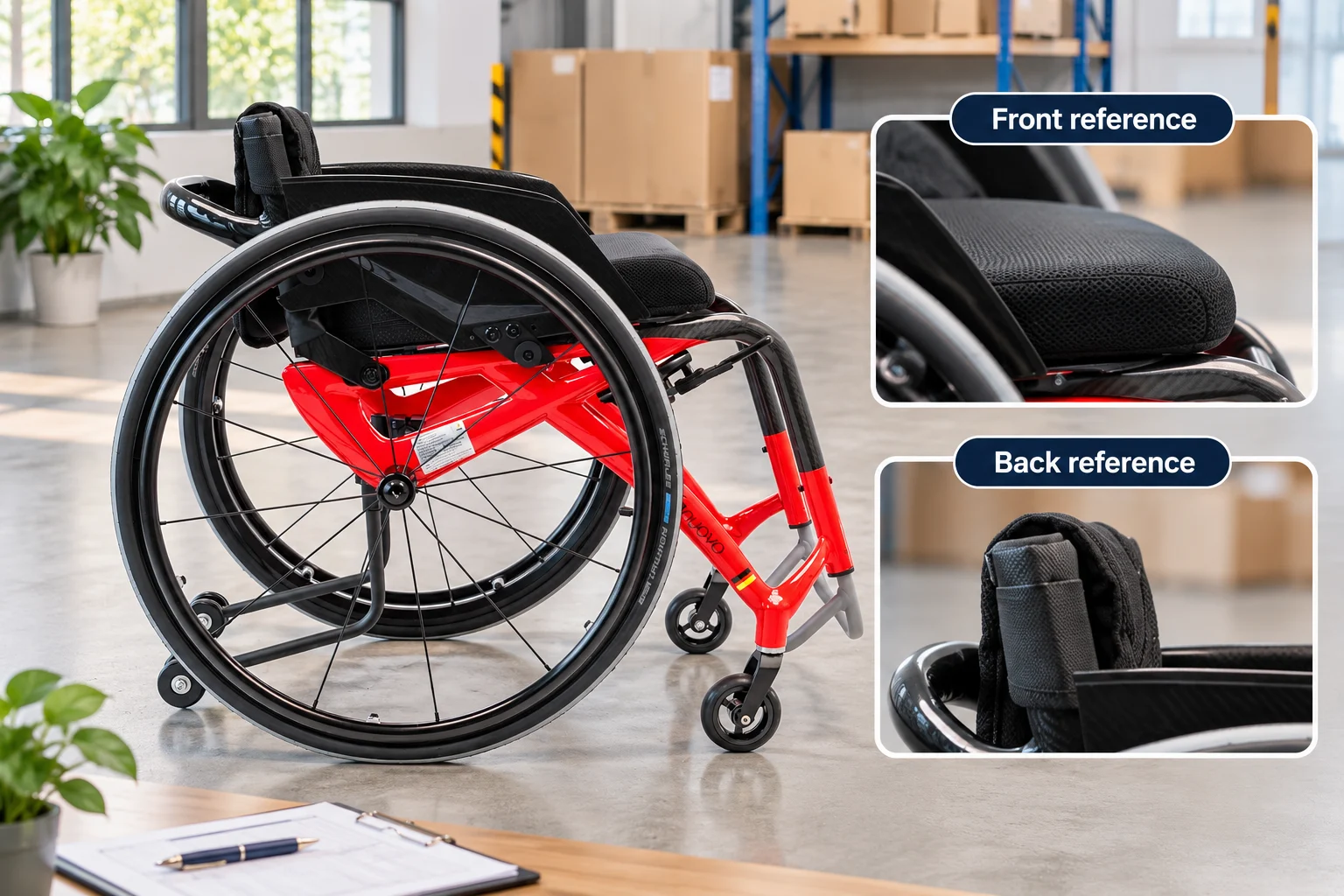
Nominal and usable dimensions can differ, so define both references in a wheelchair seat depth measurement. Nominal and effective 5903 seat depth can differ when the rear measuring point or installed back support changes the usable surface. The relevant question is which definition the supplier uses for the 45 cm entry.
Which rear point was used?
A back tube and a loaded support surface are different references. Request a labeled side view showing the measurement convention. Describe any cushion or backrest change separately so the fitting provider can assess its effect on the available seating space. Use the same clarity when recording the related seat-width dimension.
- Nominal dimension
- Usable surface
- Changed part
| Review point | What to confirm |
|---|---|
| Nominal dimension | Supplier's stated convention |
| Usable surface | Installed seating arrangement |
| Changed part | Recorded as part of the review |
Key Takeaway: Matching definitions helps your team avoid transferring a depth figure between incompatible setups.
Why should the cushion be checked with seat depth?
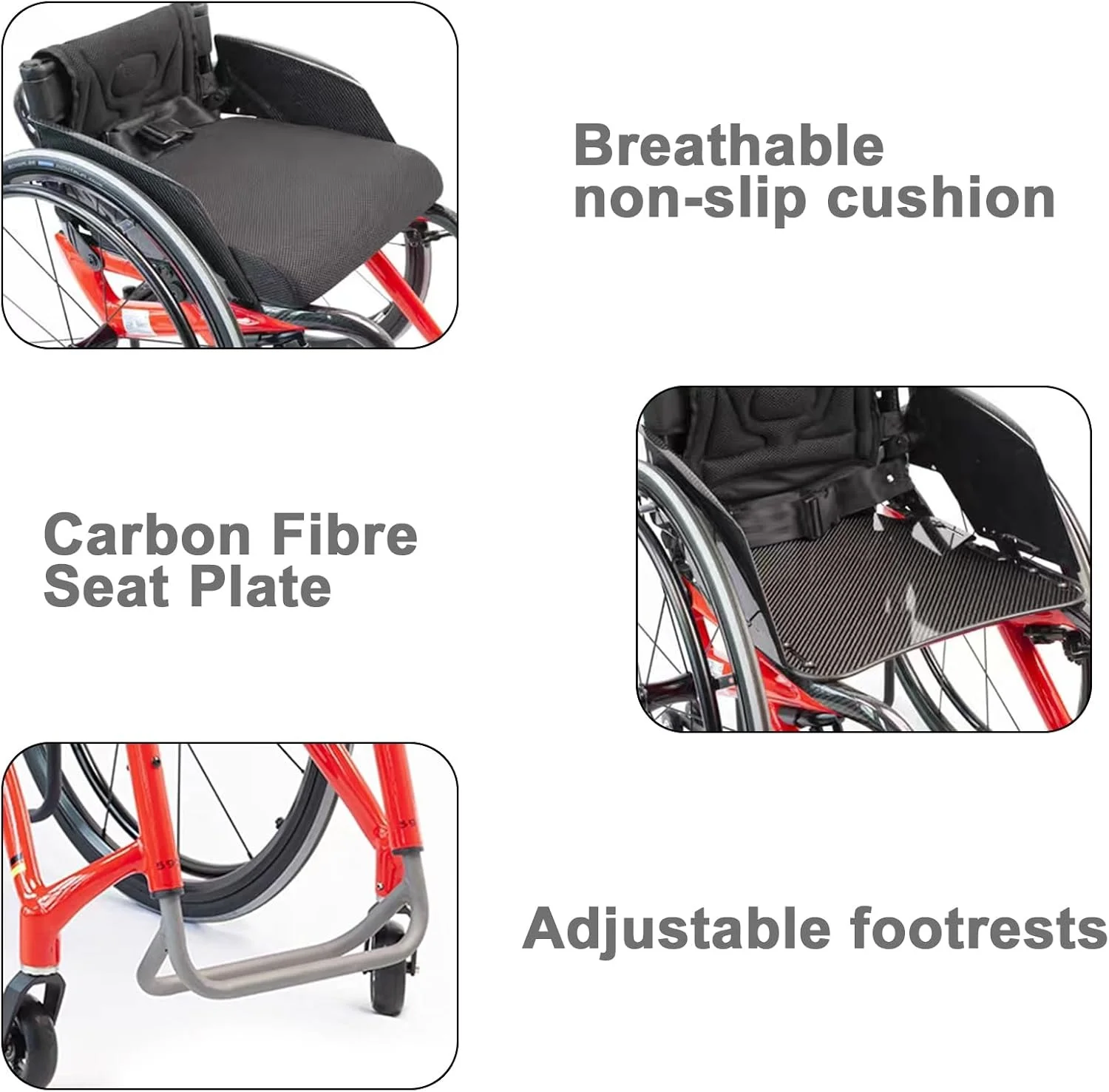
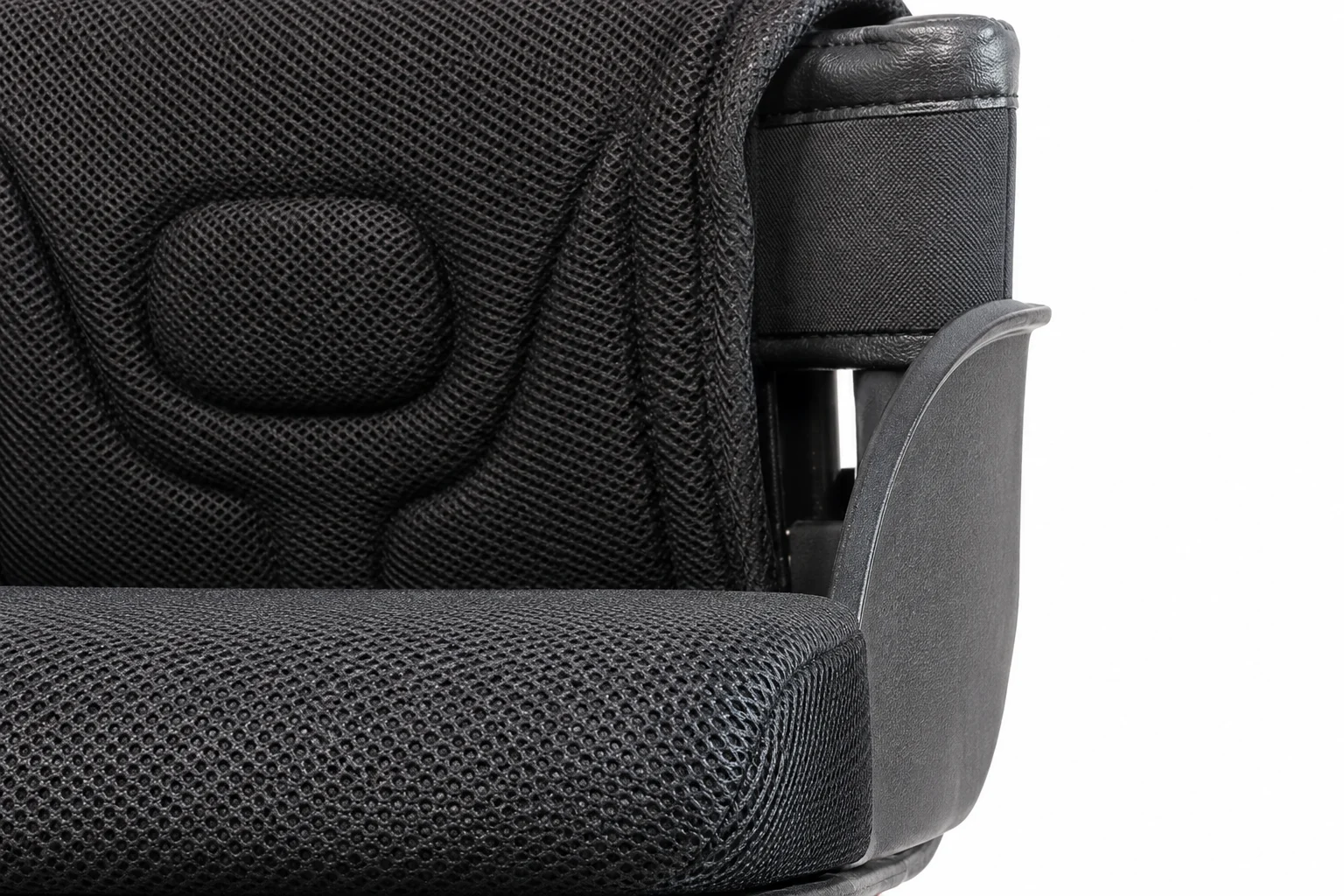
Check the cushion and its position alongside a wheelchair seat depth measurement, rather than treating the catalog depth as a complete fit assessment. The cushion belongs in a 5903 seat depth review because its length, contour and attachment define part of the seating surface the user experiences. A cushion that merely carries a familiar size label still needs a proper base and fit review.
Place the cushion in the specification
Its actual outline affects the discussion. Ask for the cushion's dimensions and its intended position on the carbon seat plate. Keep any proposed overhang or replacement within the fitting and supplier review rather than assuming it is acceptable.
- Cushion identity
- Seat base
- Placement
| Review point | What to confirm |
|---|---|
| Cushion identity | Exact model and size |
| Seat base | Supported area on the plate |
| Placement | Confirmed installed position |
Key Takeaway: You can compare the offered cushion with the seat rather than matching two labels alone.
How does the low backrest affect the depth review?
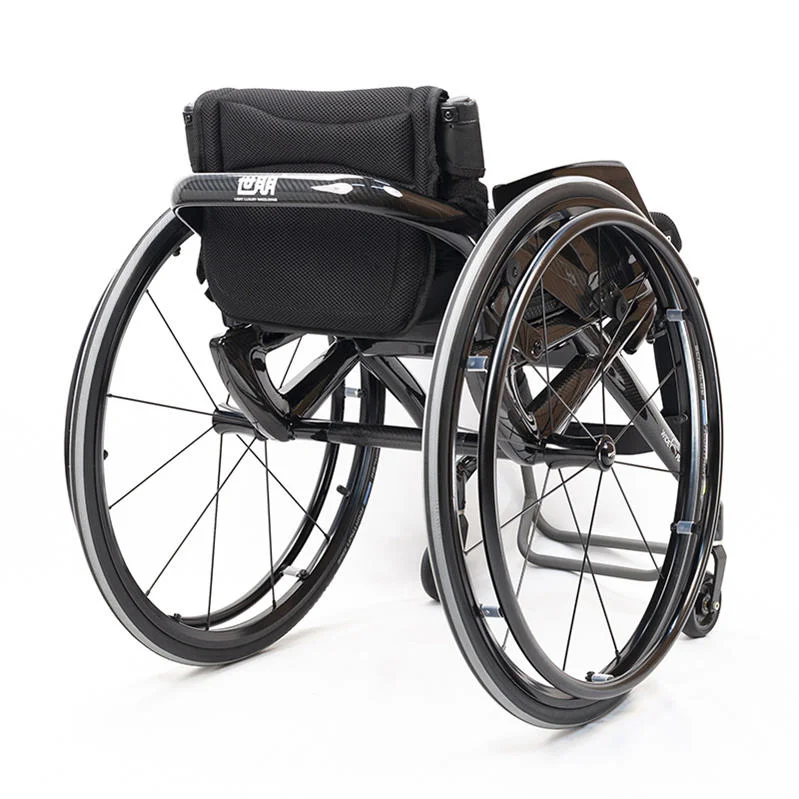
The actual back-support surface belongs in a wheelchair seat depth measurement, especially when comparing different backrest arrangements. The low backrest affects 5903 seat depth review through its installed support surface and the user's assessed position. Its listed 26 cm height describes a separate dimension and does not define how far forward a person will sit.
Review the back support as fitted
A rear photograph cannot settle the seating position. Give the fitting provider the actual back upholstery and mounting arrangement. Ask the supplier to identify any supported adjustments instead of borrowing settings from another rigid-chair design.
- Backrest listing
- Support arrangement
- Fit assessment
| Review point | What to confirm |
|---|---|
| Backrest listing | 26 cm height |
| Support arrangement | Actual upholstery and mount |
| Fit assessment | Individual position and required support |
Key Takeaway: You can keep backrest height, seat depth and personal positioning distinct but connected.
What can wheelchair seat depth measurement show at the knee?
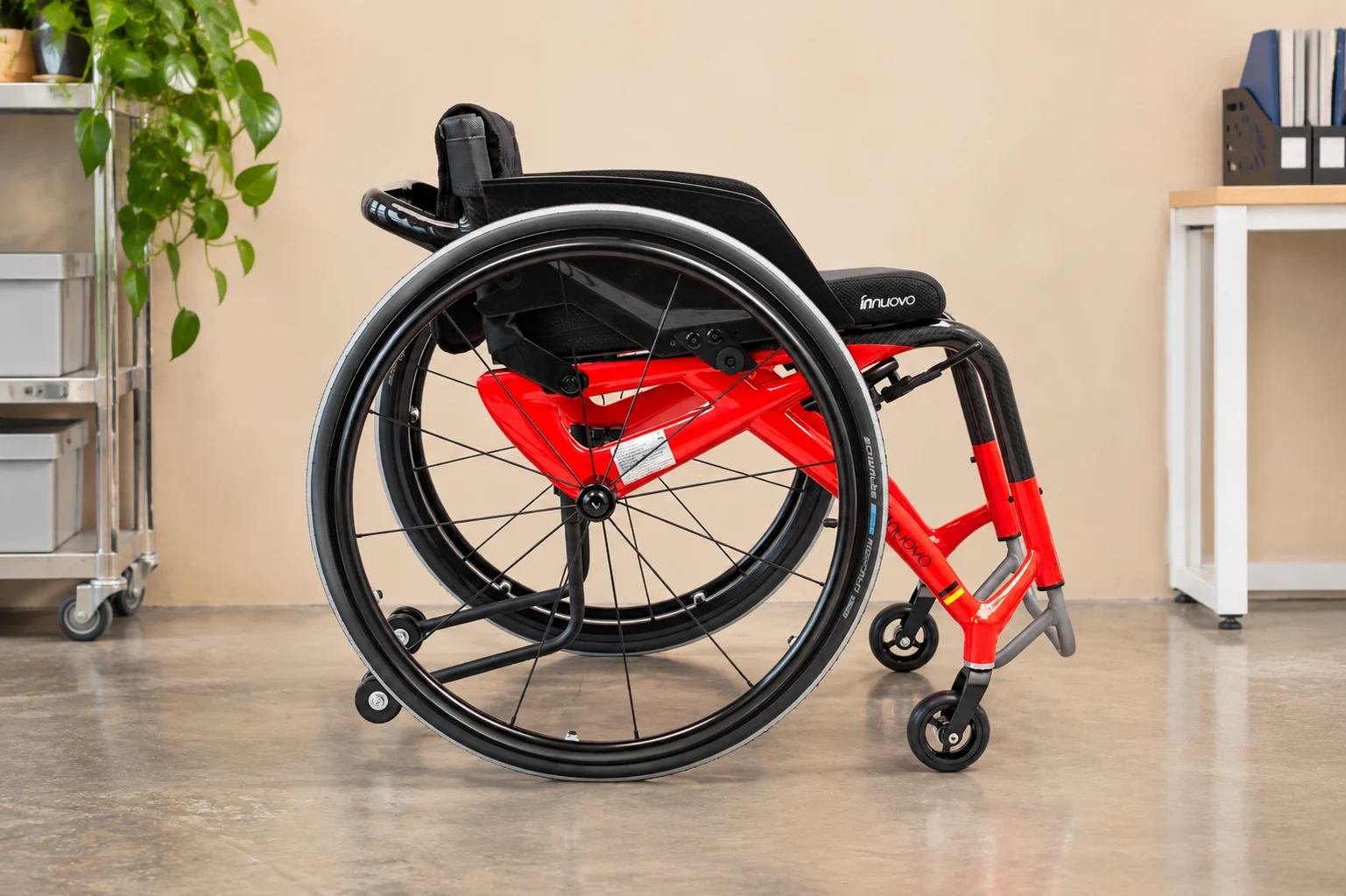
Leave personal knee-clearance decisions to the fitting assessment and record the relevant wheelchair seat depth measurement with its setup. A 5903 seat depth assessment should consider the individual's support and clearance needs at the front of the seat. The catalog dimension alone cannot prescribe a suitable gap behind every person's knee.
Leave the fit decision with the assessment
A generic subtraction rule is not a model specification. Provide the proposed cushion, back support and footrest setup for the review. Record the provider's findings rather than converting a general measurement guide into a universal adjustment instruction. Keep the findings connected to the foot-support review.
- Assessment input
- Product setup
- Recorded finding
| Review point | What to confirm |
|---|---|
| Assessment input | User's relevant measurements and needs |
| Product setup | Cushion back and foot support |
| Recorded finding | Provider's setup decision |
Key Takeaway: You can request useful fitting evidence without publishing a one-size-fits-all clearance rule.
How are seat depth and foot support connected?
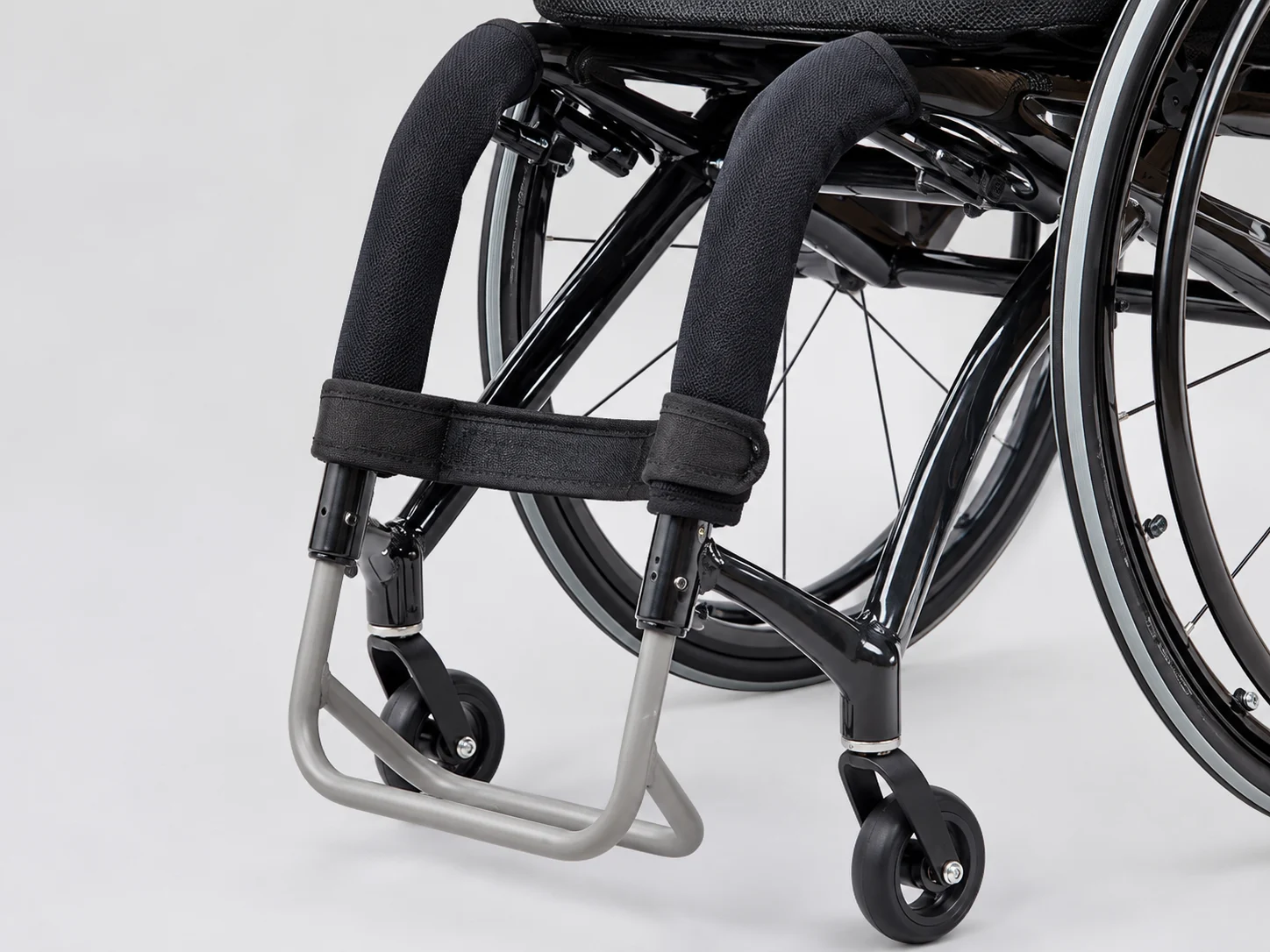
Review lower-leg support with the seating setup whenever a wheelchair seat depth measurement informs a fitting or purchasing decision. A 5903 seat depth review should include the foot support because the seating arrangement is assessed as a whole. The supplied model has an adjustable foot support, but its permitted range and settings must match the actual guide.
Keep the lower-leg setup in view
Changing one part can change the fitting task. Ask for the supplier's adjustment scope and the relevant measurement points. Have the fitting provider review the combined seat, cushion and foot support before the proposed setup becomes an order assumption.
- Seat surface
- Foot support
- Combined review
| Review point | What to confirm |
|---|---|
| Seat surface | Defined depth and cushion |
| Foot support | Confirmed product adjustment scope |
| Combined review | Individual lower-leg and seating needs |
Key Takeaway: You can avoid evaluating depth while leaving a related support part undefined.
Why do the seat depth sources disagree?
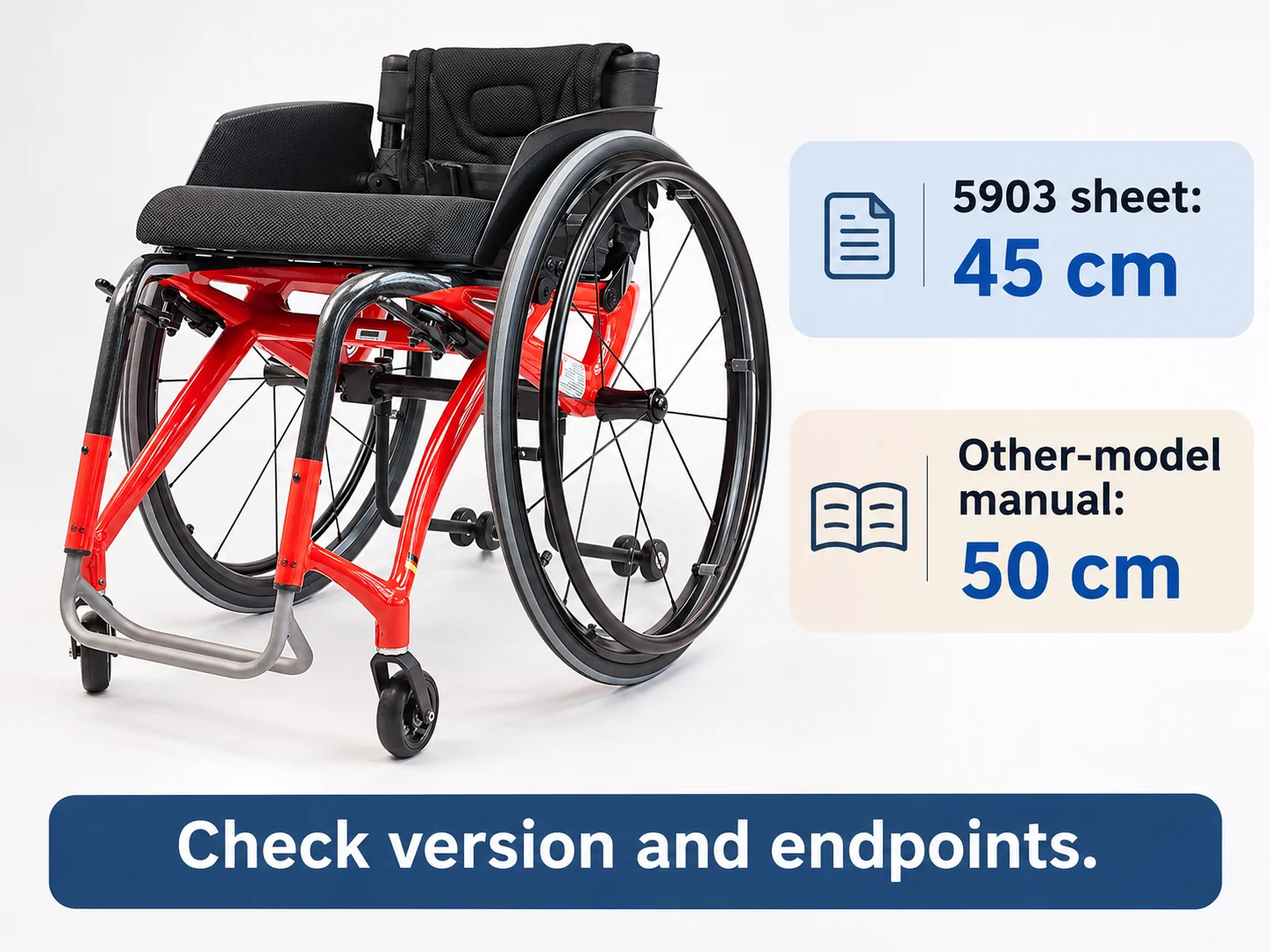
Resolve model and measurement-reference differences before combining conflicting wheelchair seat depth measurement records. The 5903 seat depth sources disagree because the product images list 45 cm while the supplied manual names another model and lists 50 cm. The records do not establish whether this reflects a different build, definition or document mismatch.
Resolve the model and revision
Do not merge the values into an adjustable range. Send the supplier both source references and the offered unit details. Request the applicable drawing and a current measurement before describing the chair as meeting a specific depth requirement.
- Product image
- Manual entry
- Required clarification
| Review point | What to confirm |
|---|---|
| Product image | 45 cm listing |
| Manual entry | 50 cm under another model |
| Required clarification | Applicable build and measurement convention |
Key Takeaway: A documented response can resolve the difference without creating an unsupported 45–50 cm specification.
What belongs in a sample depth record?
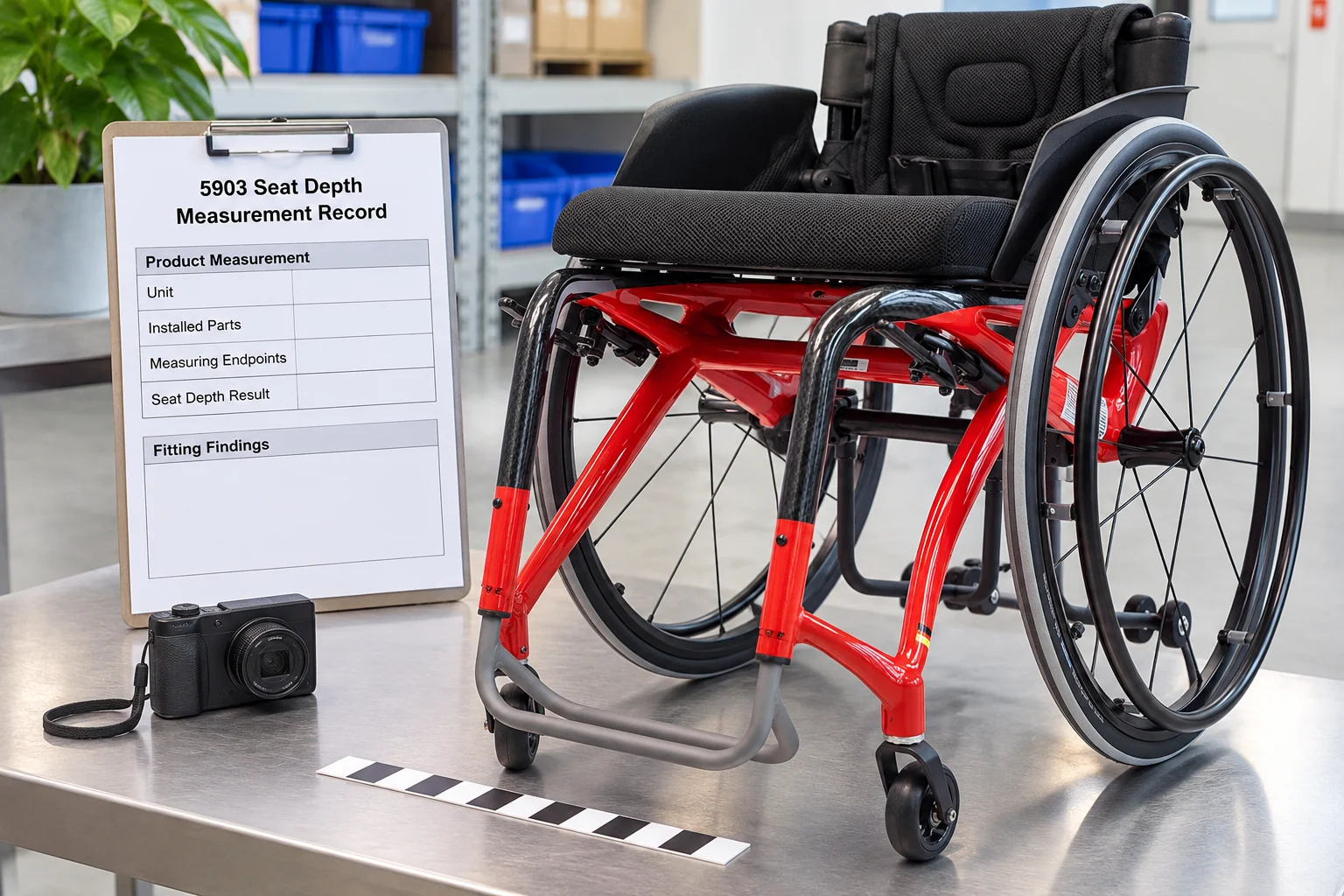
Photograph the reference points and fitted parts in a sample wheelchair seat depth measurement record. A 5903 seat depth sample record should show the unit, installed parts and measuring endpoints, with the result stated in clear units. Add the fitting findings separately so the product measurement and clinical judgment remain identifiable.
Make the photograph useful
A tape without visible endpoints leaves room for error. Record whether the cushion was fitted and which back surface was used. Repeat comparisons using the same convention and retain any discrepancy for the supplier's response. Retain that evidence with the sample inspection.
- Sample identity
- Measurement
- Fit findings
| Review point | What to confirm |
|---|---|
| Sample identity | Exact unit or sample reference |
| Measurement | Visible endpoints and units |
| Fit findings | Separate review notes |
Key Takeaway: Your sample record can support both the supplier discussion and the final seating specification.
How should wheelchair seat depth measurement appear on an order?
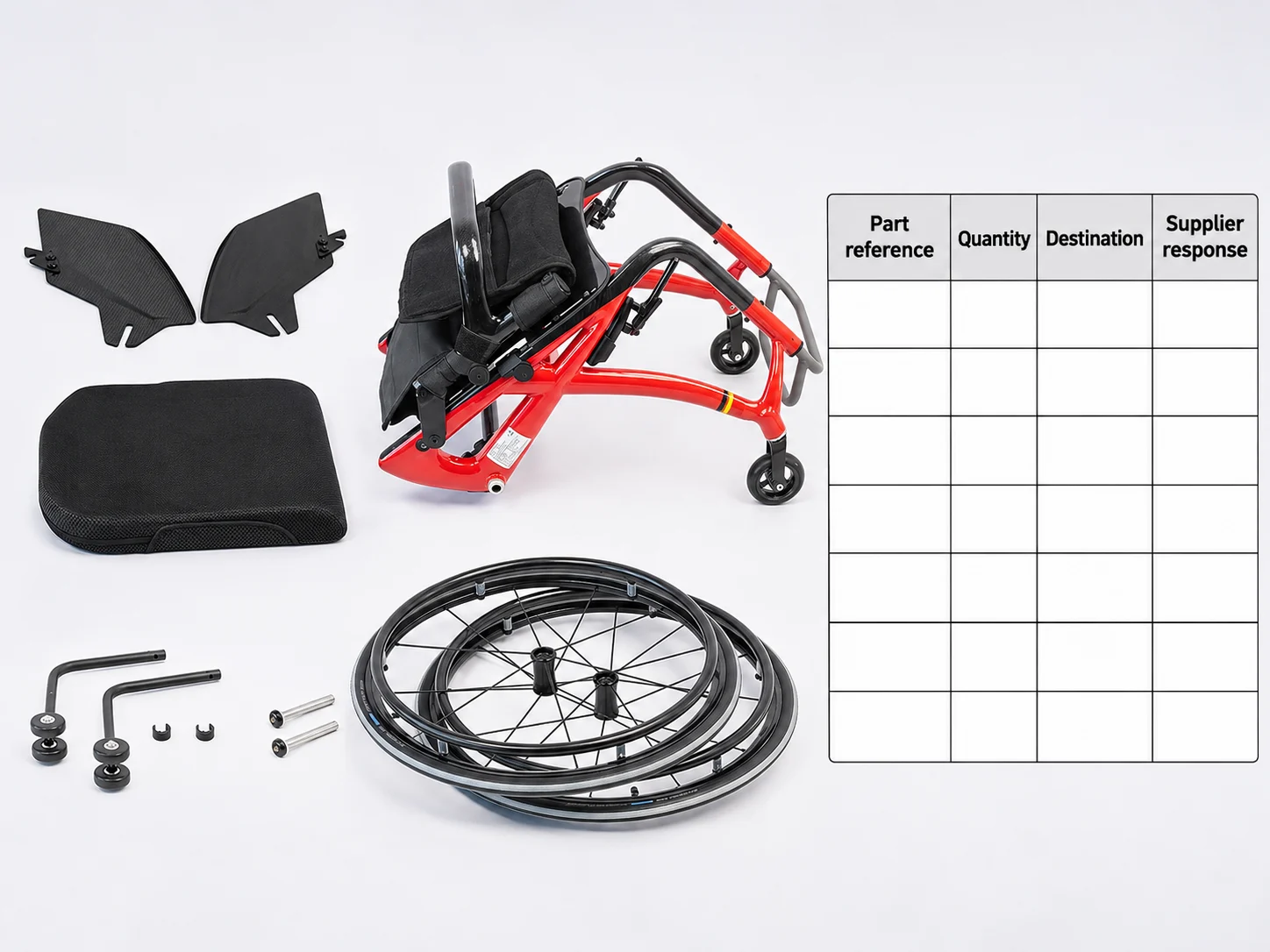
Put the agreed wheelchair seat depth measurement, its reference points and the supplied seating parts on the order. Write 5903 seat depth into the order with its reference points and associated cushion and backrest setup. If you request a different depth, obtain a specific feasibility response before treating that variation as available.
Describe the requested setup precisely
A request is not a confirmed custom option. Keep the supplier's answer tied to the quote revision and intended market. Any accepted variation should have matching dimensions, part records and matching instructions.
- Required depth
- Associated parts
- Variation approval
| Review point | What to confirm |
|---|---|
| Required depth | Defined measurement and units |
| Associated parts | Cushion and back support |
| Variation approval | Written supplier and fitting decisions |
Key Takeaway: You can keep the purchased setup aligned with the setup that was actually reviewed.
How can you complete a useful seat depth inquiry?
Prepare a wheelchair seat depth measurement inquiry with a labeled side view and the exact question that remains unresolved. Complete a 5903 seat depth inquiry by combining the defined product dimension with the fitting questions that remain open. Ask for the applicable measurement, cushion and backrest details rather than a blanket comfort promise.
Send the measuring definition with the request
The supplier needs to know what your number represents. Give AryMD the reviewed seating brief, quantity and destination. We can discuss the product information and written setup needed for your purchasing comparison.
- Dimension request
- Seating review
- Commercial brief
| Review point | What to confirm |
|---|---|
| Dimension request | Clear front and rear reference points |
| Seating review | Individual needs and supplied parts |
| Commercial brief | Configuration quantity and destination |
Key Takeaway: You can move from a depth discrepancy toward a setup that both buyer and supplier can identify. Contact us with your 5903 setup, quantity and destination so we can discuss the product information and written supply scope. AryMD puts clear specifications before purchasing promises.
Frequently asked questions
Q1: Can I treat the 45 cm and 50 cm entries as an adjustment range?
No. They come from records with a model or measurement mismatch that needs supplier clarification.
Q2: What's the best way to define effective seat depth?
Identify the usable surface and rear support reference in the actual seating setup. Ask the supplier and fitting provider to use the same convention.
Q3: How do I know whether the cushion is too long?
Use the relevant fitting review with the actual cushion, seat base and back support. A catalog depth alone cannot settle that question for an individual.
Q4: Can changing the backrest affect the depth review?
Yes. Its installed position and support surface belong in the seating assessment, so record the proposed change with the setup.
Q5: Should a sample depth record include a photo?
Yes. A clear photo of the unit and measuring endpoints makes the result easier to compare and clarify.