
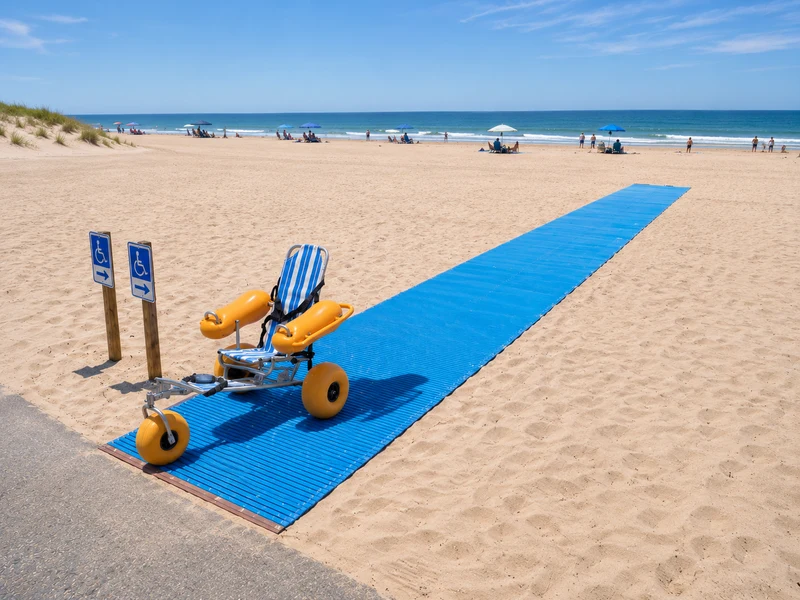
Place the beach mat endpoint where visitors can reach the intended service or viewing area and make the return journey under the site's actual conditions. A long blue strip can lead close to the beach and still end short of the place a guest came to use. Start with the destination, then decide where the mat should finish.
Where should the beach mat endpoint sit?
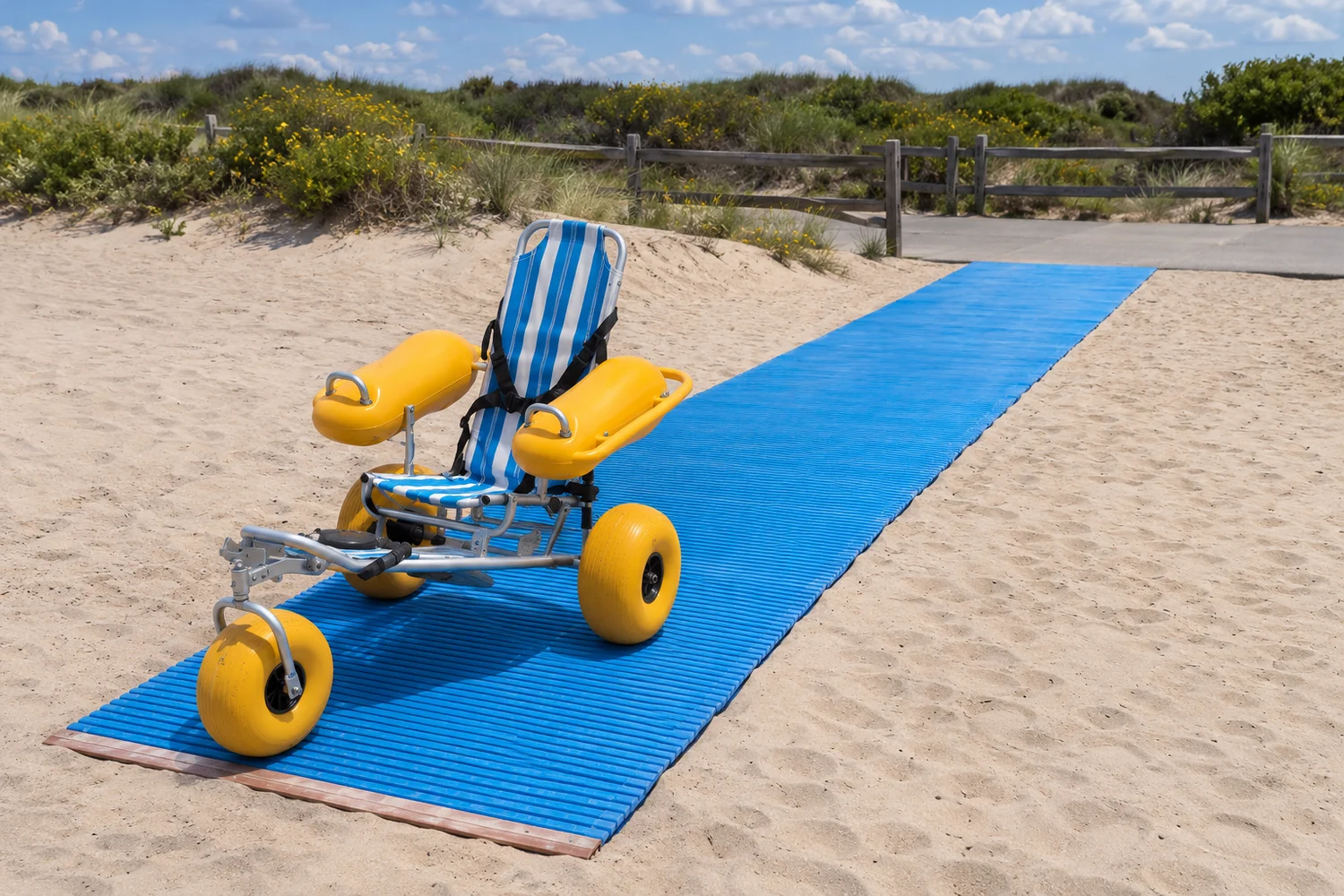
Set the beach mat endpoint at a usable destination identified by the site team, subject to applicable requirements and conditions.
What counts as a destination?
Name the visit. Watching the water, meeting an attendant or reaching a viewing area each implies a different final position and amount of space.
- Name the intended service.
- Mark the proposed end on a site sketch.
| Check | What to look for |
|---|---|
| Route end | Physical end of the material |
| Destination | Place or service the visitor can reach |
Key Takeaway: The procurement request should say what a visitor is meant to reach.
What should happen at the final position?
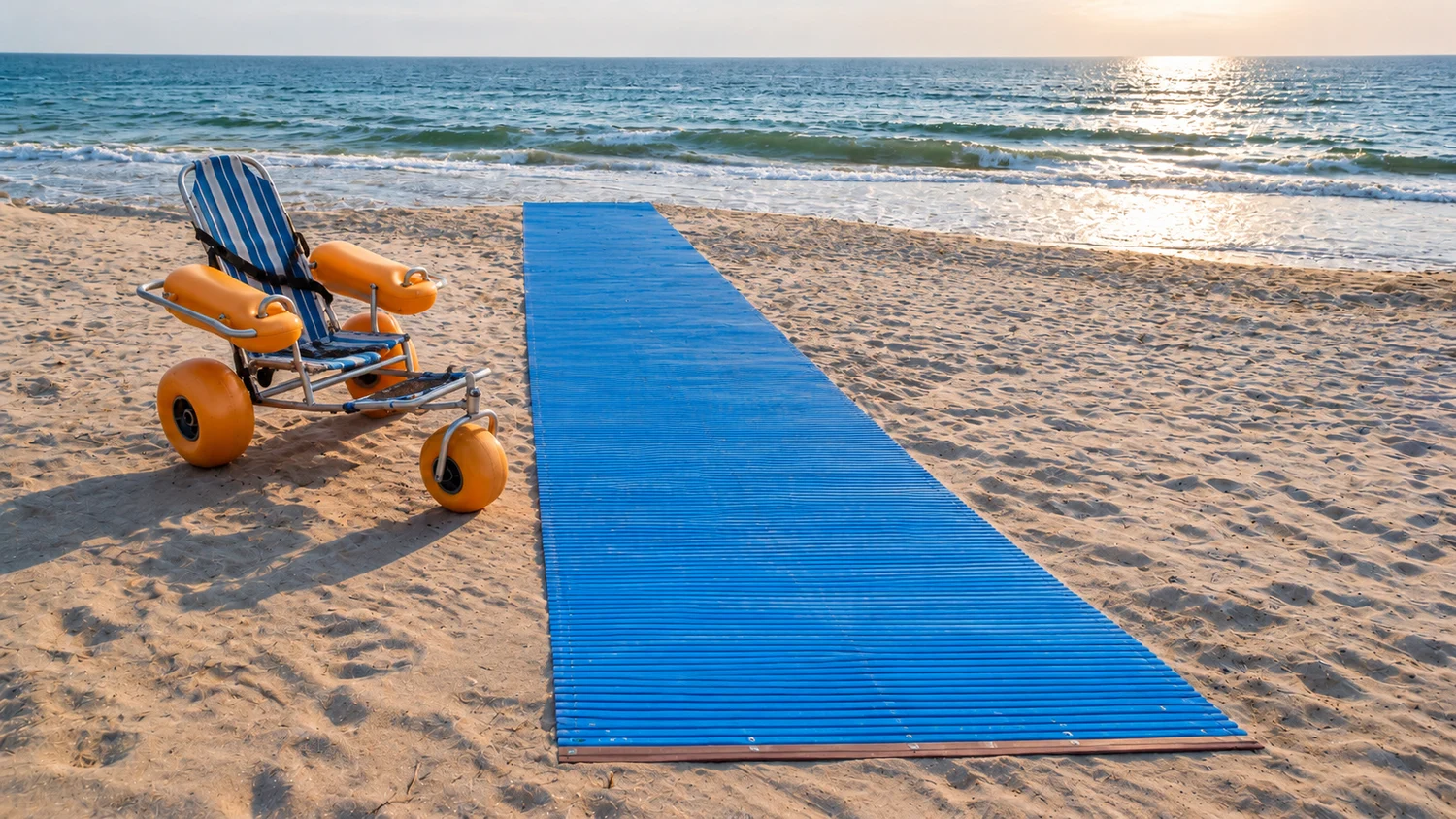
The beach mat endpoint should support the activity the site promises at that location.
Can a visitor use what the sign advertises?
Visit the end with the team. A viewing point blocked by equipment or a meeting place without a reachable attendant may satisfy neither purpose. Mark any staffed beach equipment handoff on the plan.
- Check the normal service setup.
- Identify anything that blocks the intended activity.
| Check | What to look for |
|---|---|
| Promised use | What visitors are told |
| Observed use | What the location actually offers |
Key Takeaway: The site can correct an operational gap before buying more matting.
How much turnaround space is needed?
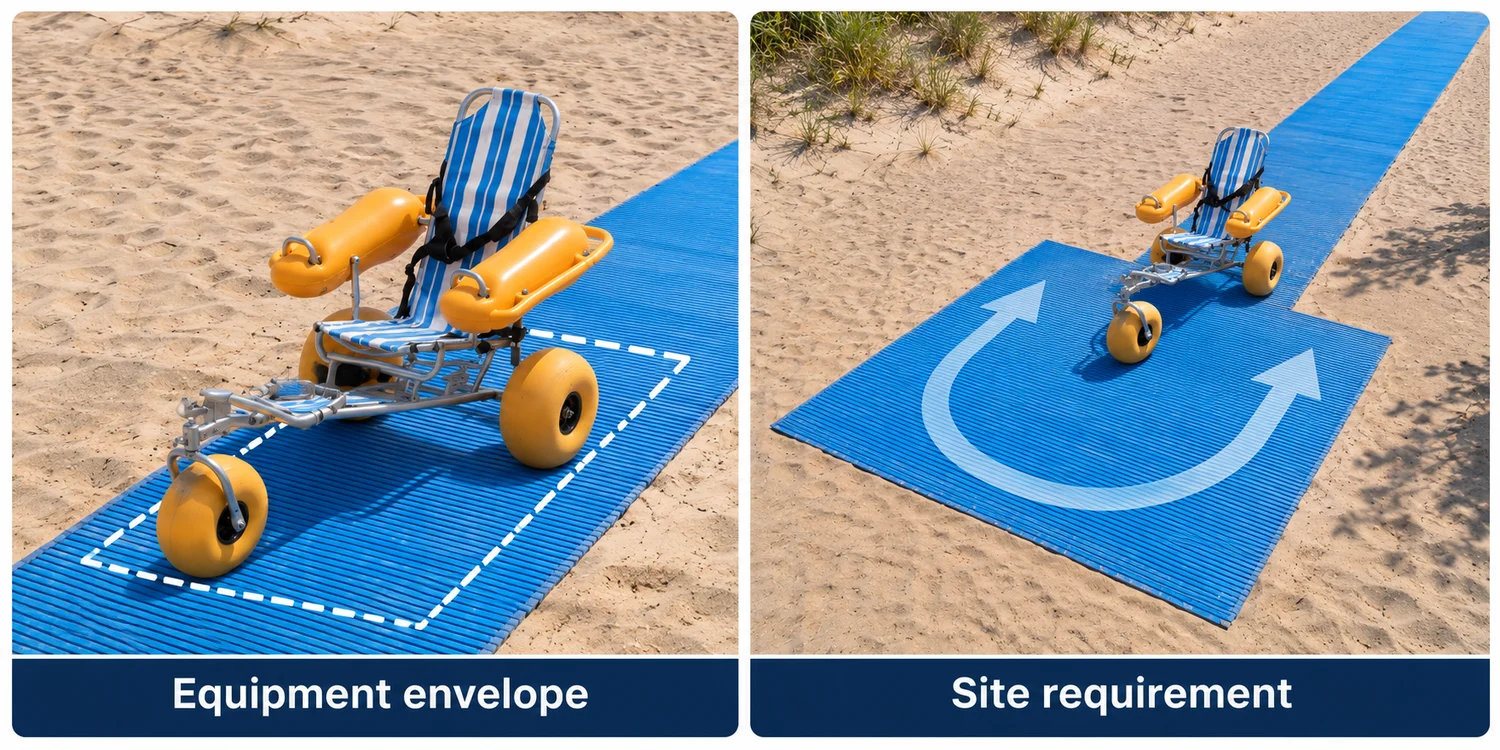
Determine turnaround at the beach mat endpoint from applicable site requirements and the equipment and users the route must serve.
Which equipment should be represented?
Use the service configuration. An attendant-propelled beach chair and a visitor's own mobility device can need different manoeuvring space.
- Name the intended equipment.
- Review real turning and return needs with qualified site staff.
| Check | What to look for |
|---|---|
| Equipment envelope | Configured device and assistance |
| Site requirement | Applicable clear space |
Key Takeaway: A sketch of the terminal area is more informative than a roll length alone.
Does the endpoint have to reach the water?
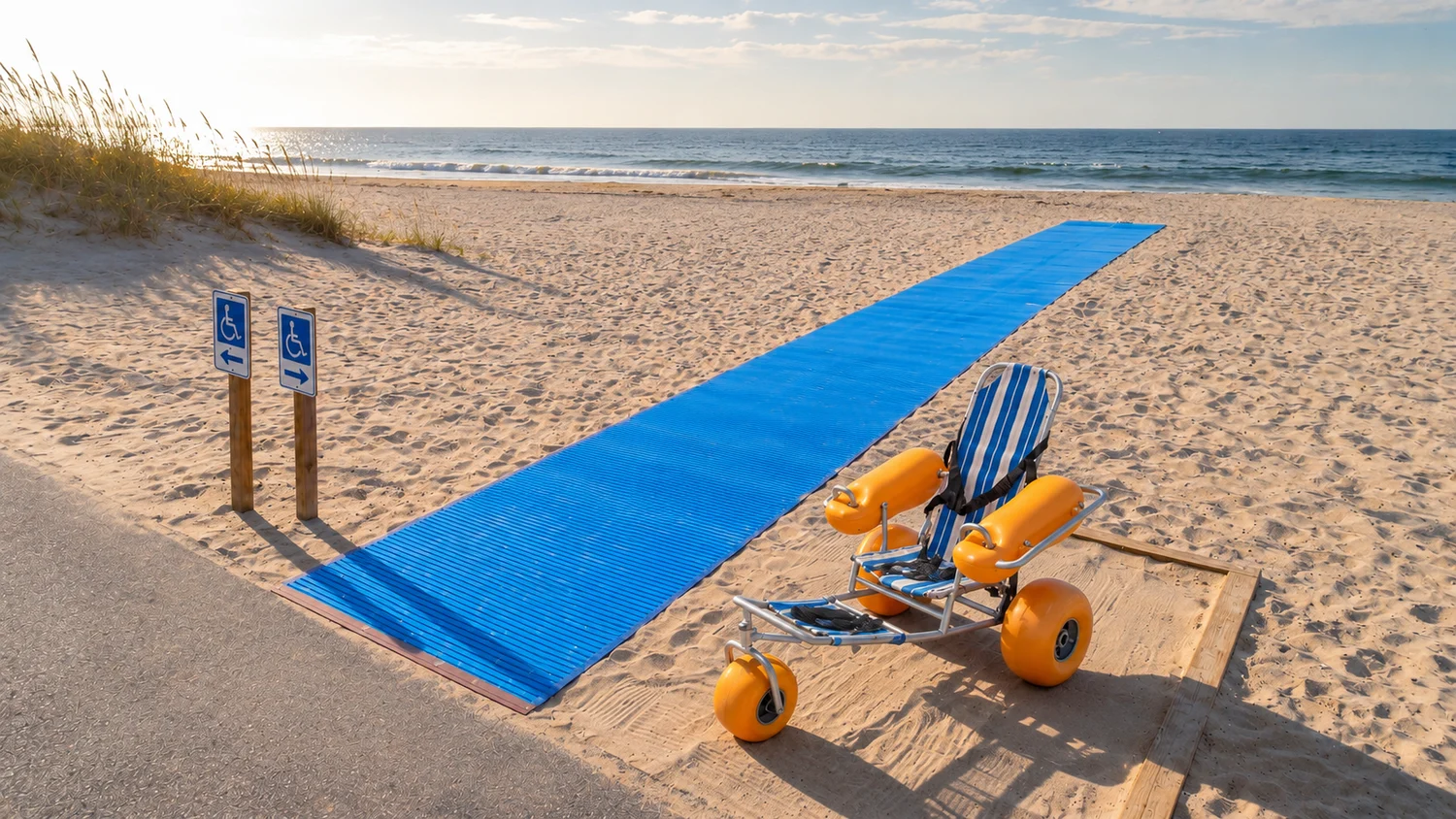
Choose the beach mat endpoint from the promised destination, actual conditions and applicable requirements for that site.
What does a tide change?
It changes the setting. The waterline can move while the land-side route and staff resources stay where they were when the mat was placed.
- Check the site's stated service.
- Set an appropriate monitoring and response plan.
| Check | What to look for |
|---|---|
| Fixed feature | Named land-side service |
| Variable feature | Shoreline or beach condition |
Key Takeaway: Tell visitors what the route reaches in terms the team can keep accurate.
How should visitors know where the mat ends?
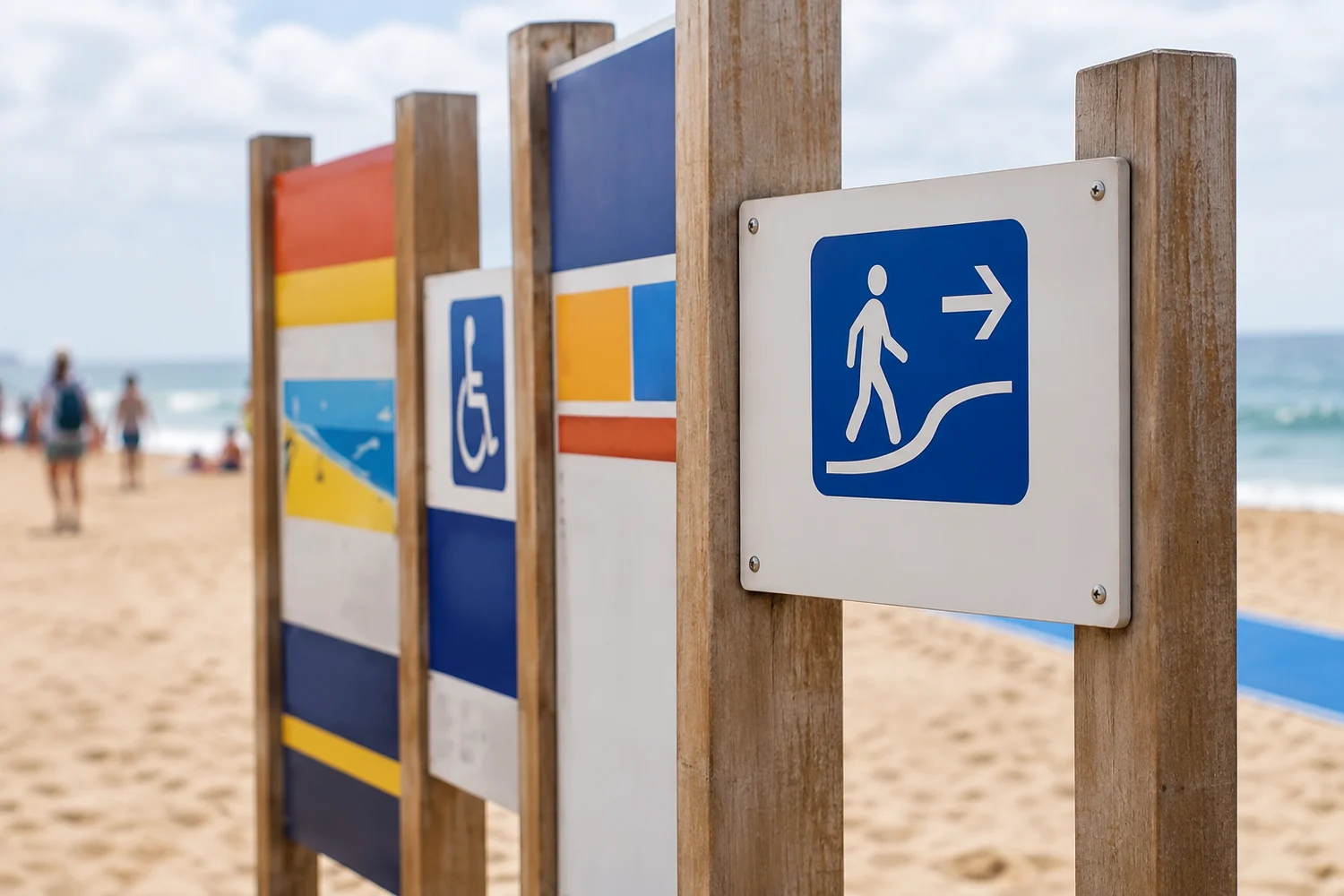
Describe the beach mat endpoint plainly in arrival information, including the service or surface beyond it.
What would a first-time visitor ask?
Answer the practical question. A person planning a trip may need to know whether the path reaches a viewing spot, a chair desk or just the start of loose sand.
- Name the end in booking information.
- State how to ask about current conditions.
| Check | What to look for |
|---|---|
| Destination name | Where the route ends |
| Beyond the end | What a visitor will encounter |
Key Takeaway: An accurate end description helps visitors decide whether the outing meets their needs.
Can a beach wheelchair meet visitors at the end?
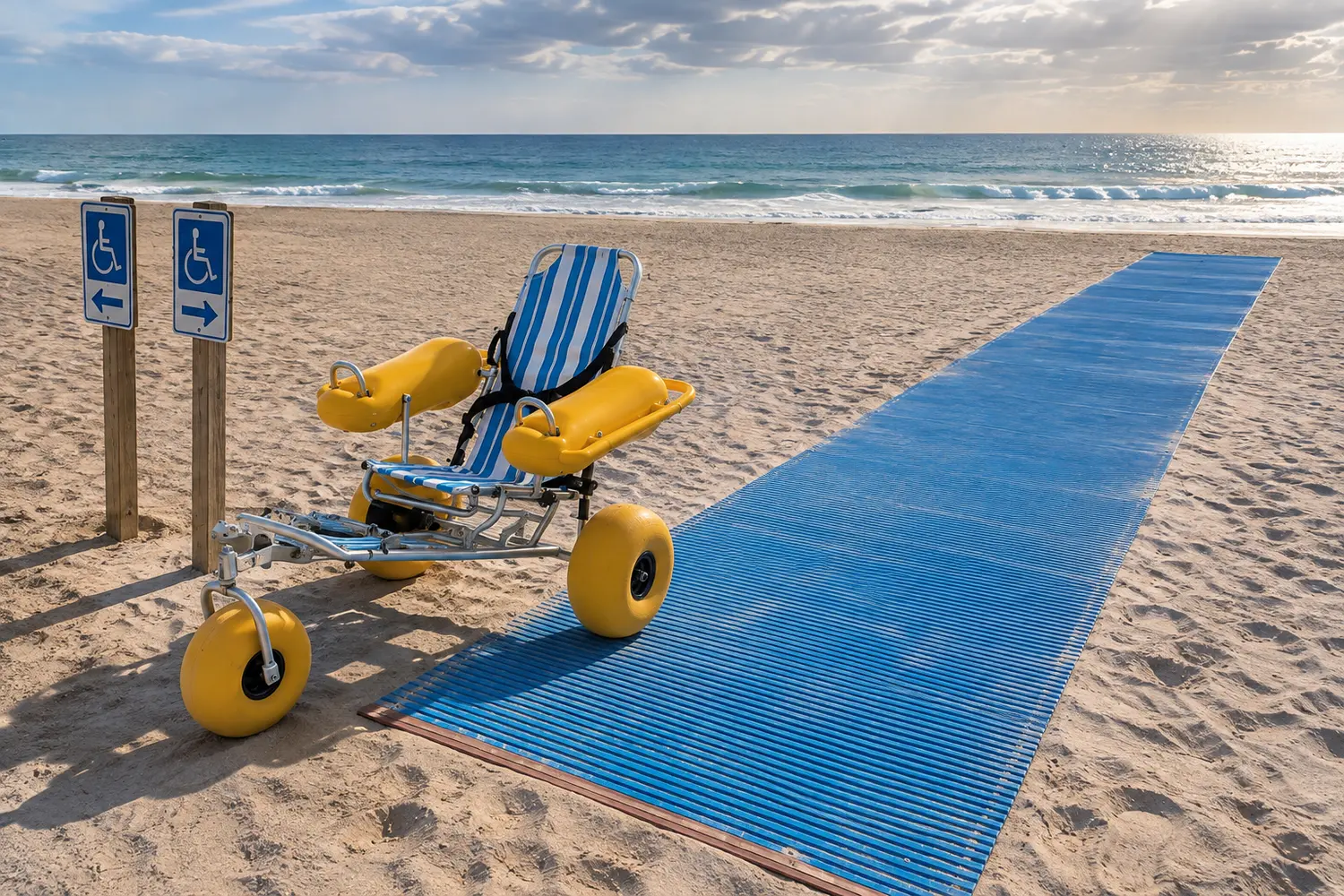
Use the beach mat endpoint as a handoff point only when the equipment, staff and approach are confirmed for that location.
Which team owns the meeting?
Name a responsible role. A handoff is a service arrangement with people and equipment, not an automatic feature of a path. Identify the actual beach wheelchair the site will provide.
- Confirm availability and meeting location.
- Provide an alternative contact for delays.
| Check | What to look for |
|---|---|
| Route | Access to the meeting point |
| Service | Confirmed personnel and equipment |
Key Takeaway: A named handoff gives the visitor a reliable next step on arrival.
What if visitors need to pass at the terminal area?
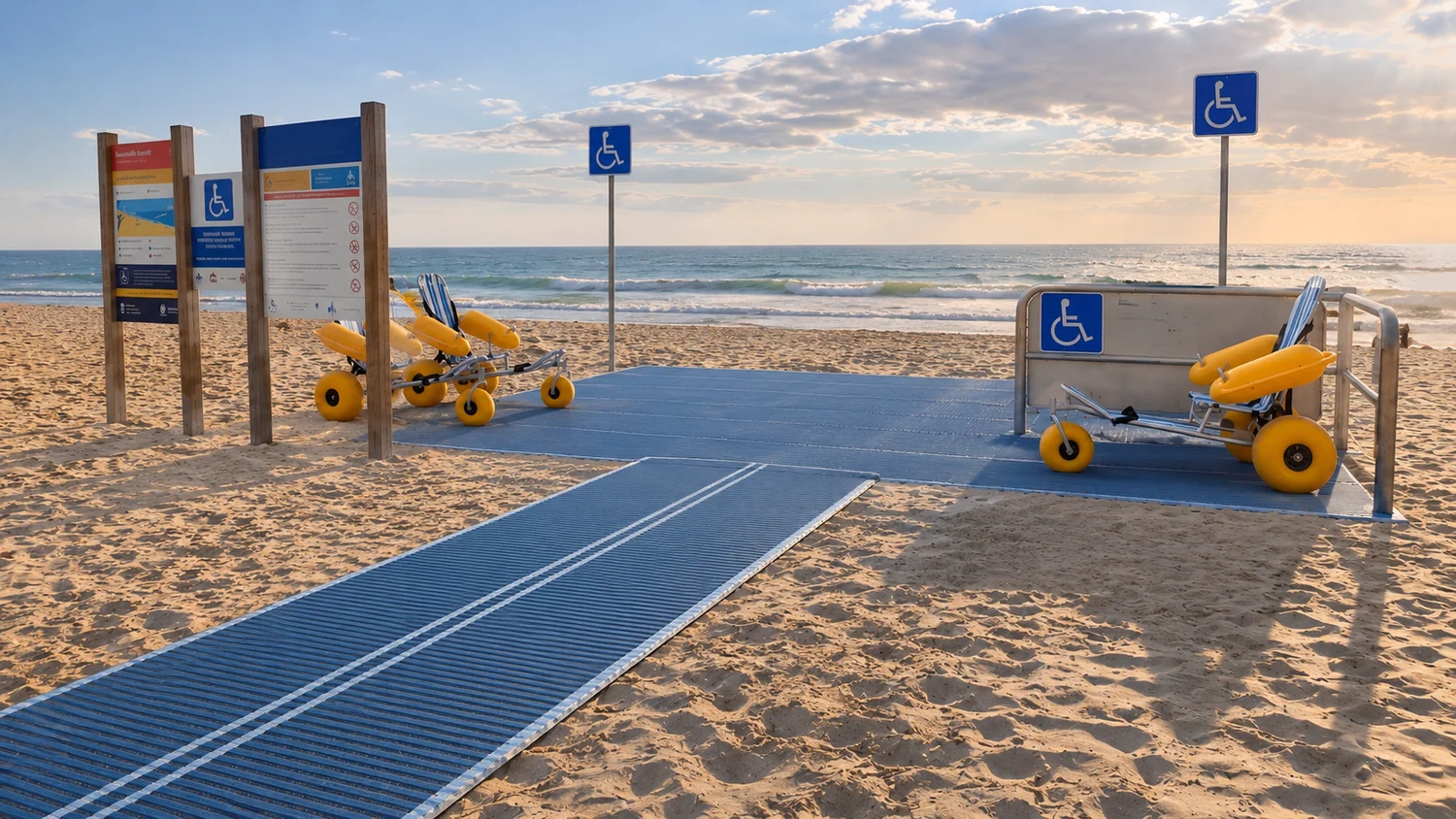
Review passing, waiting and returning separately at the beach mat endpoint, especially where users arrive from both directions.
What happens at the busiest time?
Observe a normal service period. A waiting group can occupy turning space that appeared free in a pre-opening photograph. For applicable US federal outdoor sites, consult the Access Board guide to outdoor developed areas.
- Map where people wait.
- Keep service storage clear of the required route.
| Check | What to look for |
|---|---|
| Movement space | Approach and return |
| Waiting space | People awaiting service |
Key Takeaway: A functioning terminus needs both space for movement and a practical waiting arrangement.
Who checks changes near the end?

Assign the site team a defined responsibility for inspecting the beach mat endpoint as beach conditions change.
What should trigger another look?
Name local triggers. Sand displacement, a moved service station or a closed area can change what the endpoint provides without changing the mat itself. Send a current destination view with your route enquiry.
- Record who checks the end.
- Link changes to visitor information.
| Check | What to look for |
|---|---|
| Condition report | Observed site change |
| Response | Recheck, update or closure decision |
Key Takeaway: Route information stays credible when someone owns the update.
What should go into the route drawing?

Mark the beach mat endpoint, destination, usable area, intended return route and relevant service features on the drawing.
Can a single line show enough?
Draw the end as an area. A line for matting says little about turning, meeting an attendant or reaching the adjacent feature.
- Show the full terminal footprint.
- Mark fixed obstacles separately.
| Check | What to look for |
|---|---|
| Linear route | Travel to the end |
| Terminal area | Space used on arrival |
Key Takeaway: The drawing lets purchasing discuss a usable destination with the site designer.
How should the site sign off the destination?
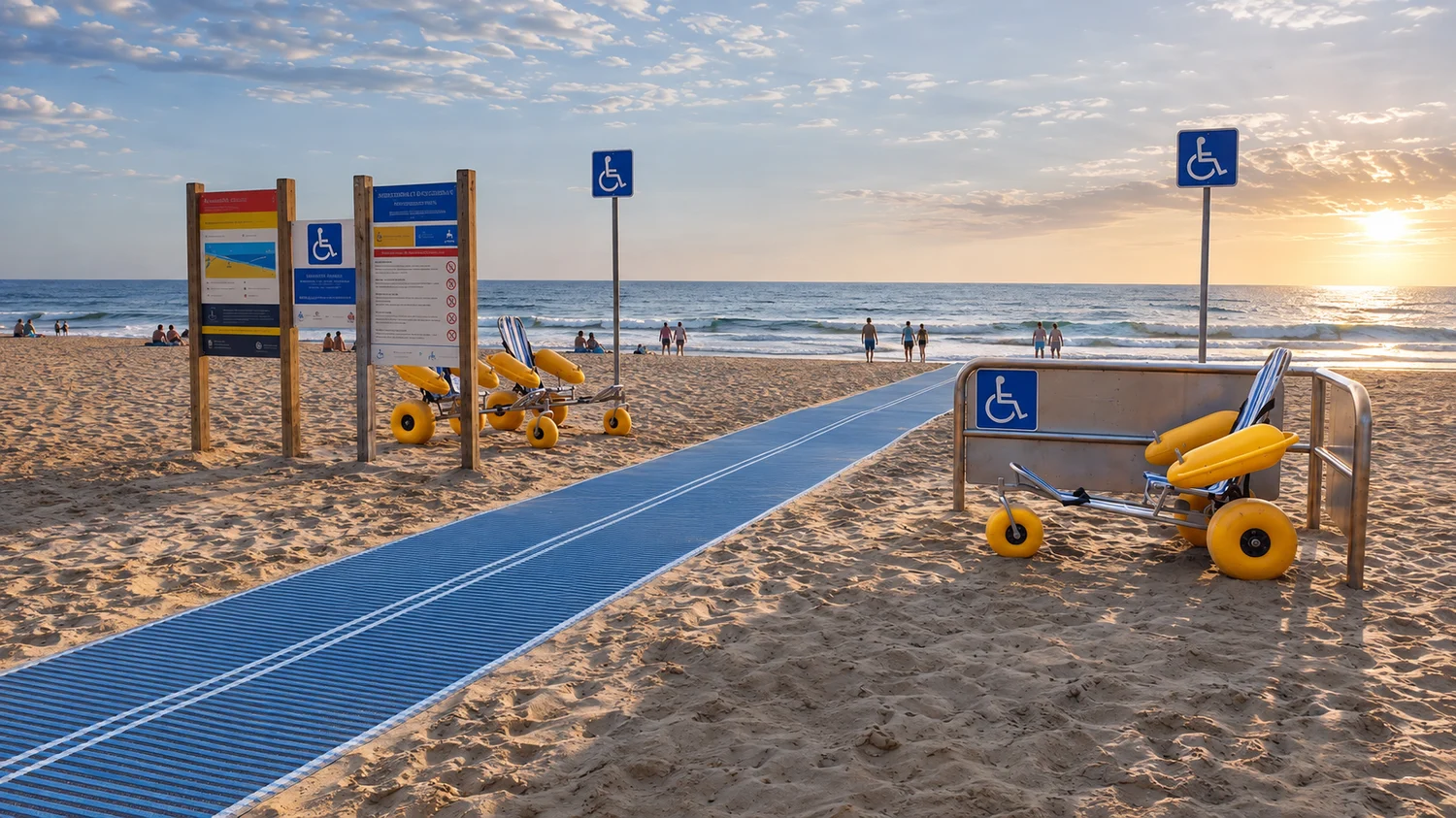
Accept the beach mat endpoint when the responsible team confirms the route reaches its stated destination and can be used as described.
What should stay on file?
Save the arrival view. A visitor-level photograph, current site plan and named review date can help the next shift detect a change.
- Record the accepted destination.
- Update visitor information when conditions change.
| Check | What to look for |
|---|---|
| Acceptance | Agreed condition and use |
| Review | Named owner and trigger |
Key Takeaway: A usable beach route ends where a visitor can do what they came to do. Our aim is to help sites make that last part of the journey clear. Contact us with a route sketch and the mobility equipment you expect to use.
Frequently asked questions
Q1: Can I choose the end before deciding what the route serves?
Define the destination first. It determines which end location needs review.
Q2: Does the mat always reach the waterline?
Ask the site. Conditions, service design and applicable requirements vary.
Q3: How do I know if I can turn at the end with my own chair?
Ask the operator for the current terminal layout and usable space for your equipment.
Q4: What's the best description for visitors?
Name the destination, the surface beyond it and how to check conditions on the day.
Q5: Can we move the endpoint after a storm?
Have the responsible team reassess the conditions and applicable requirements, then update visitor information before reopening.