
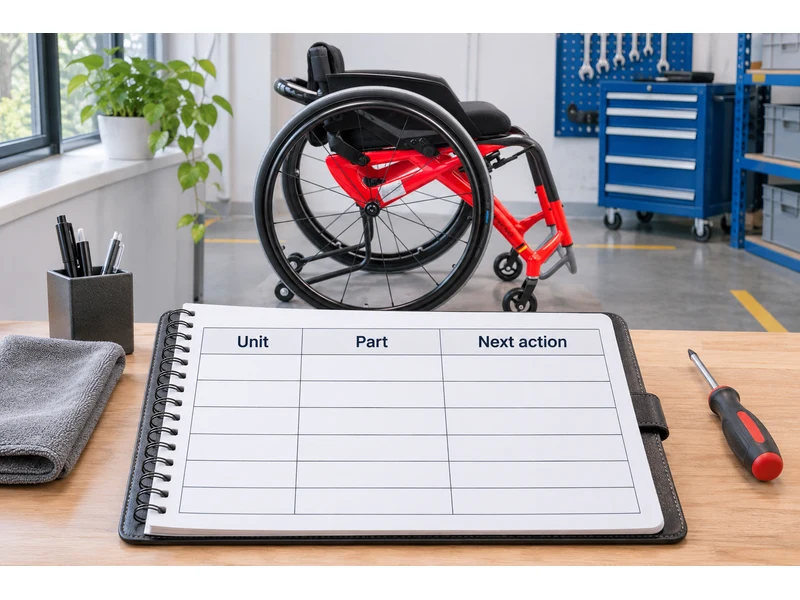
A wheelchair maintenance log should identify the chair, parts, checks, responsible people and follow-up actions. A copied electric-wheelchair checklist can add irrelevant tasks while leaving rear-axle or seating questions unclear. That makes the record harder to use when a problem appears. Examples use the 5903, a manual carbon-frame chair with one fixed 38 cm seat width.
What should a wheelchair maintenance log cover?
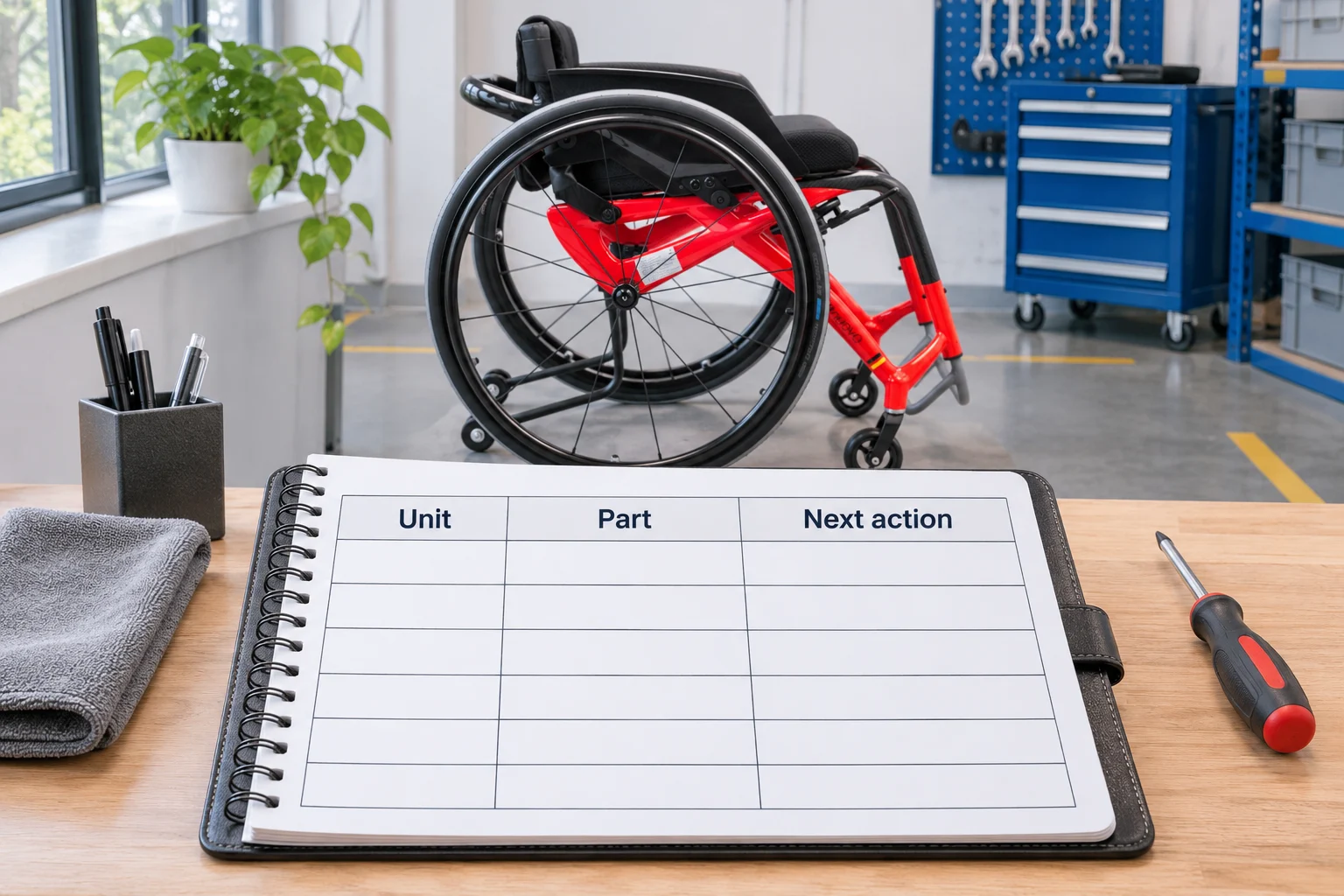
A wheelchair maintenance log should identify the chair, parts, checks, responsible people and follow-up actions. A 5903 wheelchair maintenance plan should cover the actual frame, rear wheels, front casters, parking locks, seating parts and fitted rear supports. Record the relevant instructions and the person responsible for each care or service task.
Start with the delivered setup
A generic checklist may include parts this manual model does not have. The base chair shown has no motor, drive battery or electronic controller. Keep electrical tasks out of its routine unless a separately approved attachment is present and has its own guidance. WHO guidance supports assessment, fitting and follow-up.
- Mechanical assemblies
- Seating
- Powered equipment
| Review point | What to confirm |
|---|---|
| Mechanical assemblies | Actual frame wheels and locks |
| Seating | Supplied cushion guards and back support |
| Powered equipment | None in the base setup |
Key Takeaway: You can build a maintenance plan around the delivered manual chair instead of copying an electric-chair schedule.
Which instructions should set the maintenance intervals?
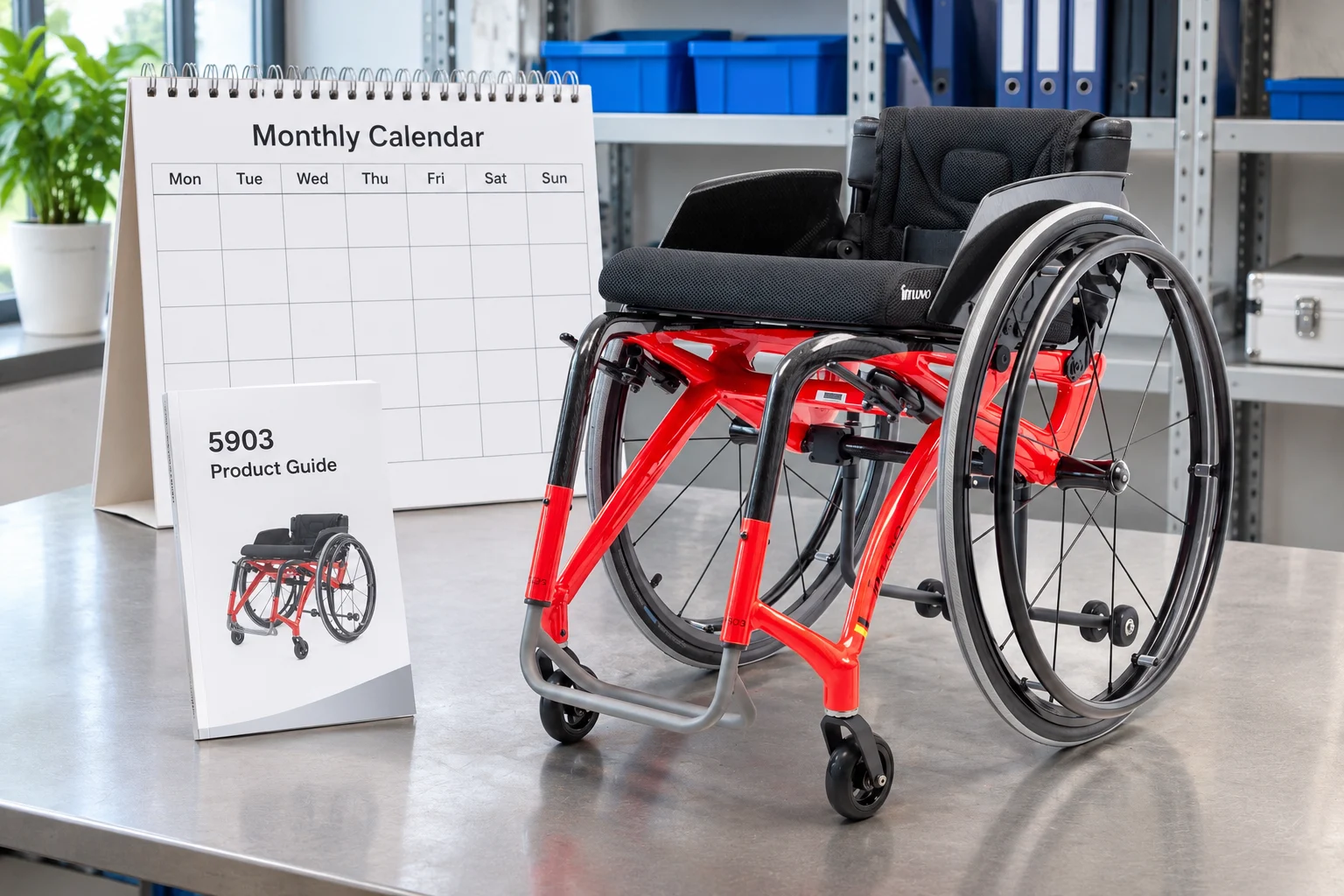
Use the matching manufacturer instructions to set the intervals recorded in a wheelchair maintenance log. The 5903 wheelchair maintenance intervals should come from the matching guide and responsible service review for the actual unit. The supplied manual has another model identifier and inconsistent content, so its schedule requires confirmation.
Which guide is current for this build?
Do not treat a nearby calendar as a universal rule. Ask the supplier to resolve the document match before issuing a local schedule. Keep reported concerns separate from calendar checks because a problem may need attention before the next planned interval. Keep the confirmed care schedule with the user handover.
- Guide identity
- Planned intervals
- Reported concern
| Review point | What to confirm |
|---|---|
| Guide identity | Actual model and revision |
| Planned intervals | Confirmed product and service basis |
| Reported concern | Relevant response when it occurs |
Key Takeaway: You can avoid treating a calendar interval as a guarantee that the chair's condition remains unchanged.
How should user care differ from wheelchair maintenance work?
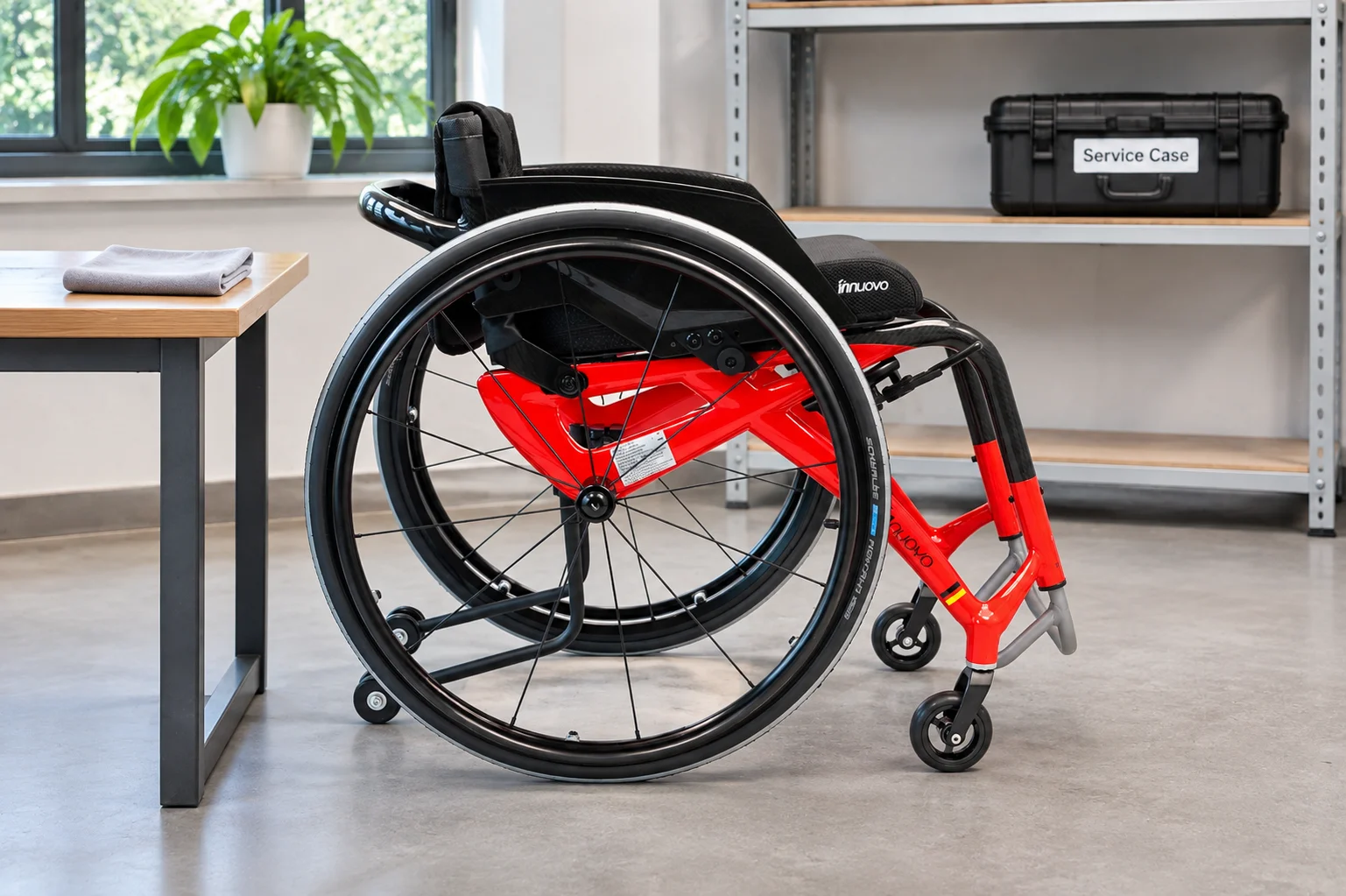
Separate routine user care from qualified service work in a wheelchair maintenance log. User care and technical 5903 wheelchair maintenance work should have clearly assigned scopes based on the actual instructions and service arrangement. Routine observations do not authorize every adjustment, repair or replacement.
Name who owns each task
A supplied tool does not define the full service role. Ask the provider to explain which checks belong in handover and which require technical work. Keep that division visible so a reported issue reaches the appropriate person without an improvised fix.
- Routine care
- Technical work
- Handover
| Review point | What to confirm |
|---|---|
| Routine care | Permitted observations and care tasks |
| Technical work | Confirmed service responsibilities |
| Handover | Clear route for questions and concerns |
Key Takeaway: You can reduce confusion between noticing a problem and being authorized to repair it.
What belongs in the wheel and axle review?
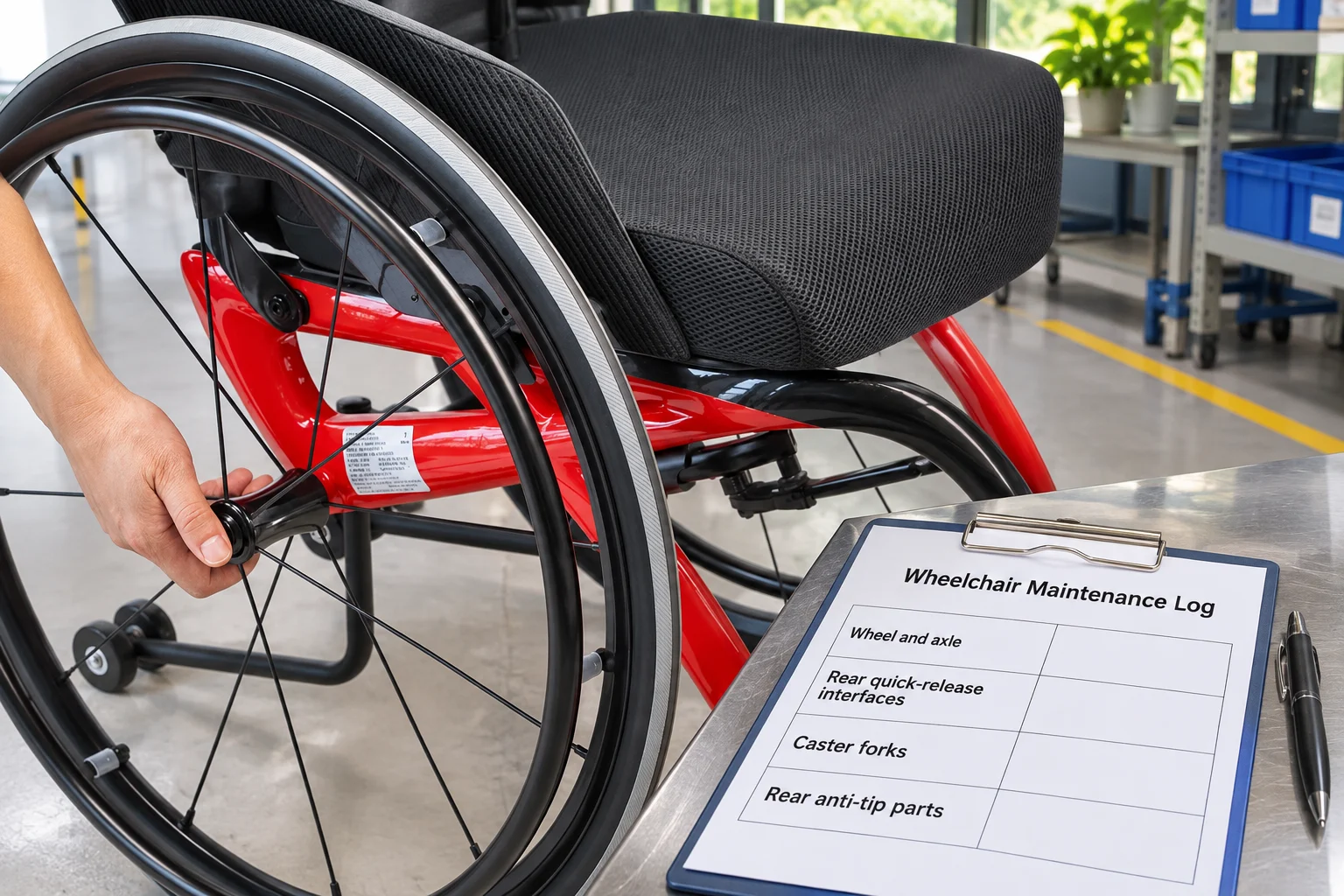
Record wheel, axle and attachment observations against the matching instructions in a wheelchair maintenance log. The wheel and axle part of 5903 wheelchair maintenance should identify the actual assemblies and the checks required by their matching instructions. Keep rear quick-release interfaces distinct from caster forks and rear anti-tip parts.
Use the correct part name
Different small wheels and axles can be confused in a report. Record wear, damage or unusual behavior with the relevant unit and part reference. Ask the service provider to assess retention, bearings or other technical concerns under the appropriate procedure.
- Rear system
- Front system
- Rear supports
| Review point | What to confirm |
|---|---|
| Rear system | Wheel hub axle and receiver |
| Front system | Caster wheel and fork |
| Rear supports | Actual anti-tip assemblies |
Key Takeaway: You can make a wheel-related maintenance entry specific enough to support the next service decision.
How should a wheelchair maintenance log track tires and locks?
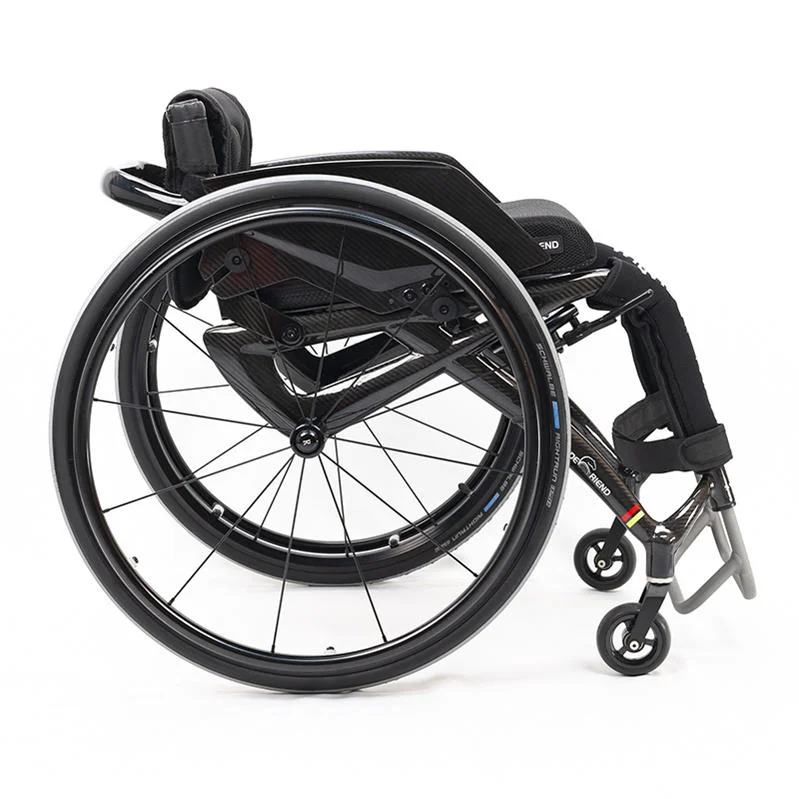
Keep tire and parking-lock checks linked to the actual configured parts in a wheelchair maintenance log. The tire-and-lock part of 5903 wheelchair maintenance should use the actual fitted tire specification and parking-lock guidance. A generic pressure value or another model's lock setting should not be inserted into the plan.
Match the tire before choosing a rule
The wheel setup affects the related review. Ask the supplier to identify the tire and the matching pressure source where pneumatic tires are fitted. Keep any wheel or tire replacement linked to the required lock and setup review. Use the actual parking-lock setup in that review.
- Tire identity
- Pressure guidance
- Lock relationship
| Review point | What to confirm |
|---|---|
| Tire identity | Actual fitted specification |
| Pressure guidance | Matching tire and product source |
| Lock relationship | Reviewed after relevant changes |
Key Takeaway: You can keep the maintenance plan consistent with the wheel equipment that is actually installed.
How should the frame and seating parts be reviewed?
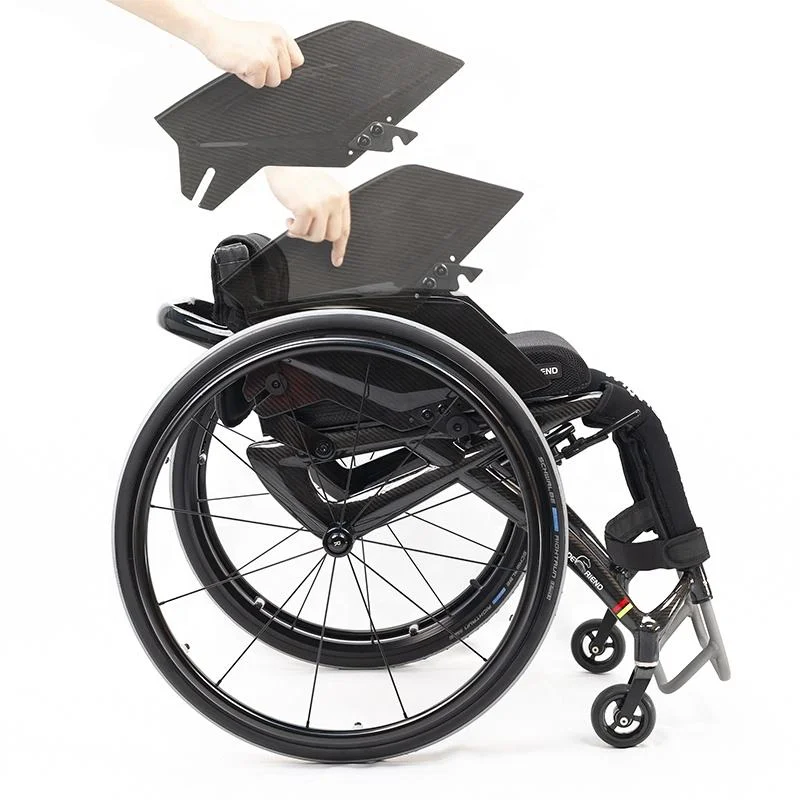
Include frame, upholstery and seating-part condition in a wheelchair maintenance log. For 5903 wheelchair maintenance, record visible frame, seat-plate, guard and upholstery concerns using the matching inspection process. A surface check should not be described as a complete structural or clinical assessment.
Separate the findings by part
The frame and cushion need different review questions. Keep the seating setup and known service history available. Refer a structural concern or changed support need through the relevant provider rather than treating it as routine cosmetic care.
- Frame record
- Seating record
- Referral
| Review point | What to confirm |
|---|---|
| Frame record | Specific location and observed condition |
| Seating record | Actual supplied parts |
| Referral | Appropriate technical or fitting response |
Key Takeaway: You can keep a maintenance observation from being overstated as proof of overall suitability.
What if a wheelchair maintenance check finds a fault?
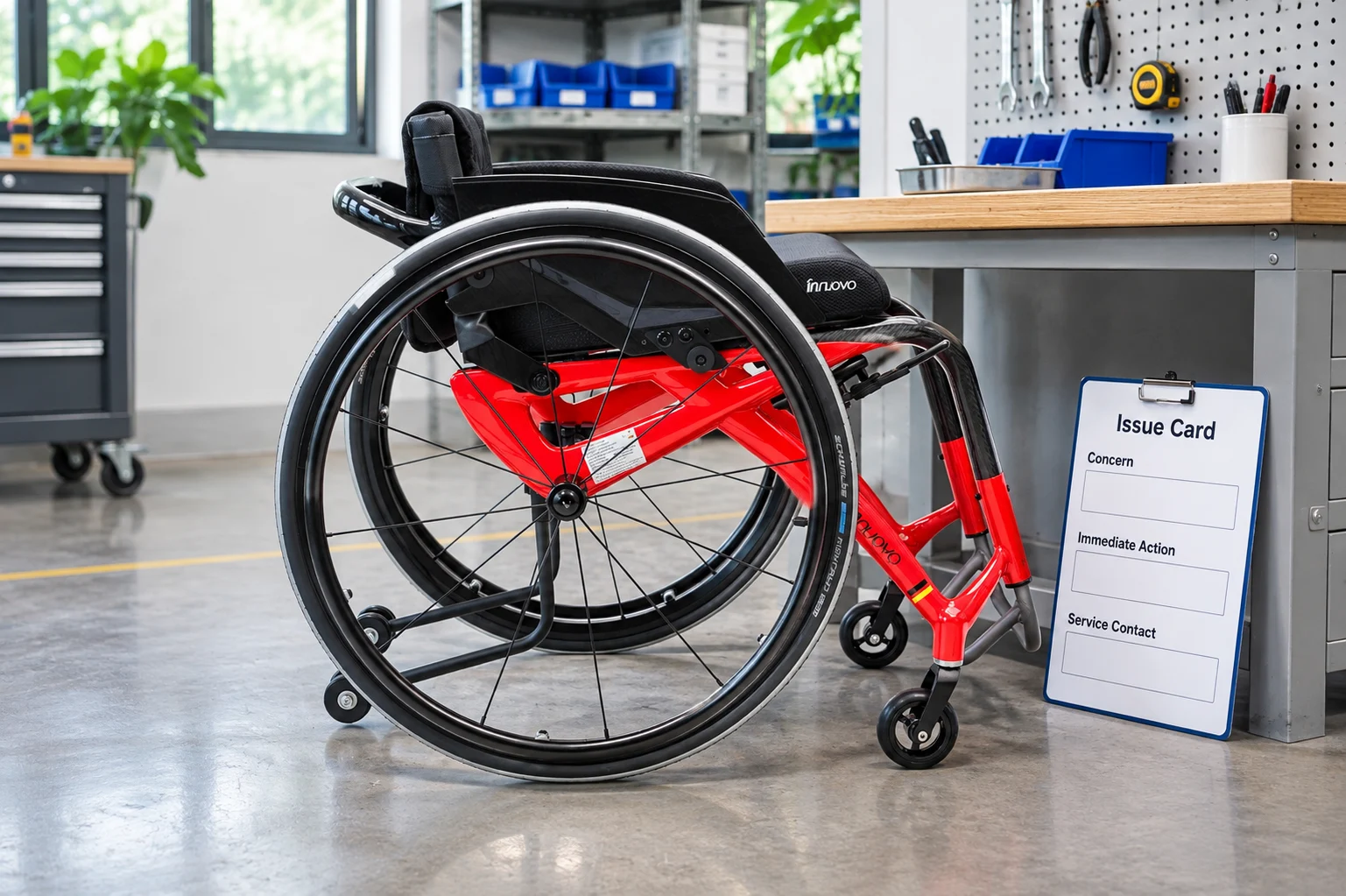
Record the concern, immediate action and responsible service contact when a wheelchair maintenance log identifies a fault. If a 5903 wheelchair maintenance check finds a fault or unresolved concern, record it and follow the matching service process before assuming readiness. The next action should address the actual finding and part.
Give the issue a named owner
A checklist mark does not complete the follow-up. Retain the provider's response, requested evidence and authorized work. Keep the concern open until the responsible review establishes the relevant outcome or next step.
- Finding
- Owner
- Outcome
| Review point | What to confirm |
|---|---|
| Finding | Specific reported condition |
| Owner | Responsible service contact |
| Outcome | Recorded response and remaining action |
Key Takeaway: You can turn a maintenance finding into a traceable service task instead of an unexplained checklist entry.
What should a unit service log preserve?
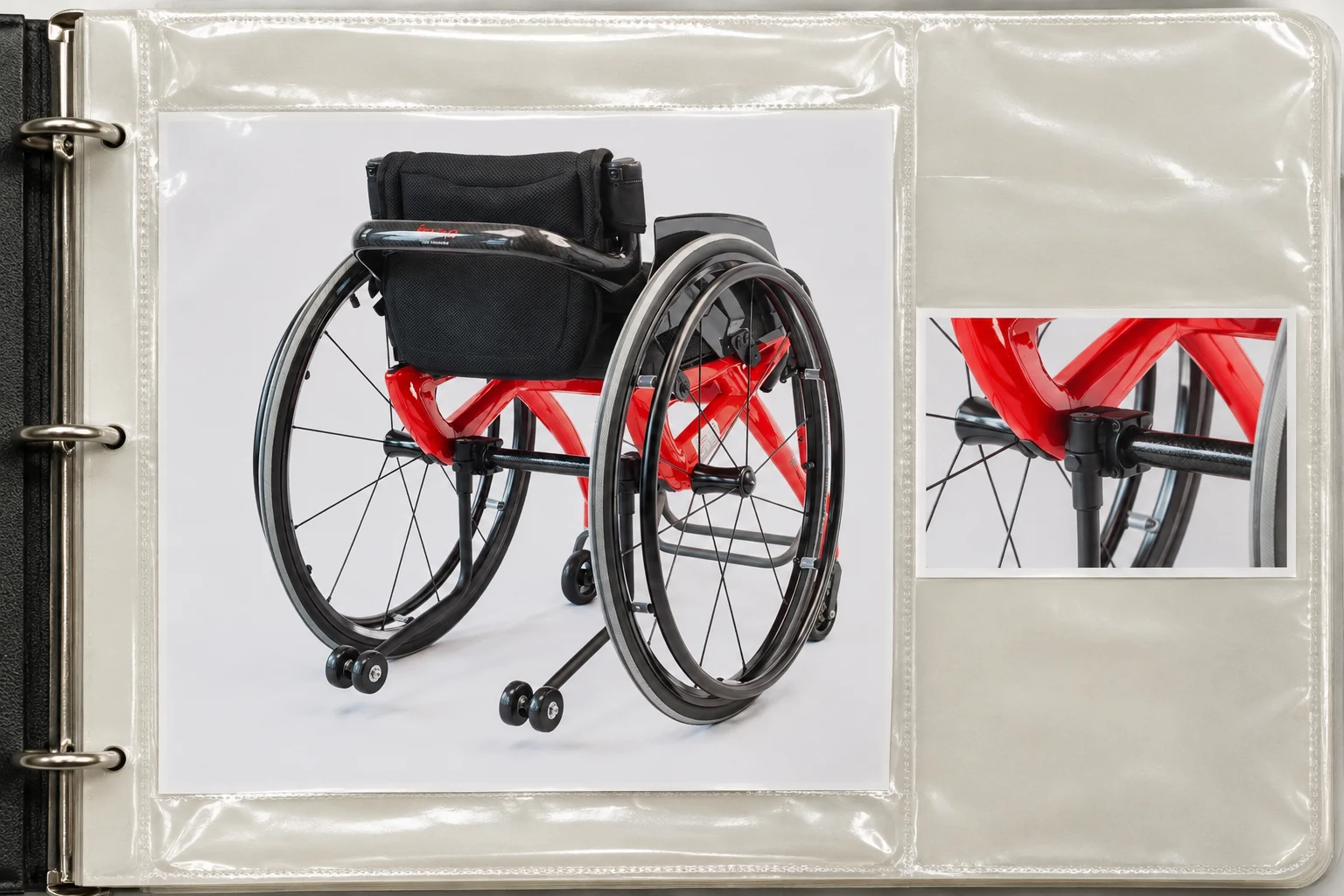
Preserve dates, parts identity, work performed and the next decision in a wheelchair maintenance log. A 5903 wheelchair maintenance service log should preserve the unit identity, reported issues, work completed and any changed parts. It should distinguish an observation, a technical finding and an accepted return-to-use decision.
Keep the history linked to the chair
A generic parts receipt can lose the context of a repair. Record the supplier and part references relevant to the work. Retain open follow-up and current guide information so a new staff member can continue from the same product record. Retain the relevant frame identity in the service history.
- Unit identity
- Work history
- Current state
| Review point | What to confirm |
|---|---|
| Unit identity | Model and available serial reference |
| Work history | Actual completed service and parts |
| Current state | Open issues and matching documents |
Key Takeaway: You can support continuity when different staff or providers handle the chair over time.
What service duties belong in a wheelchair maintenance log?
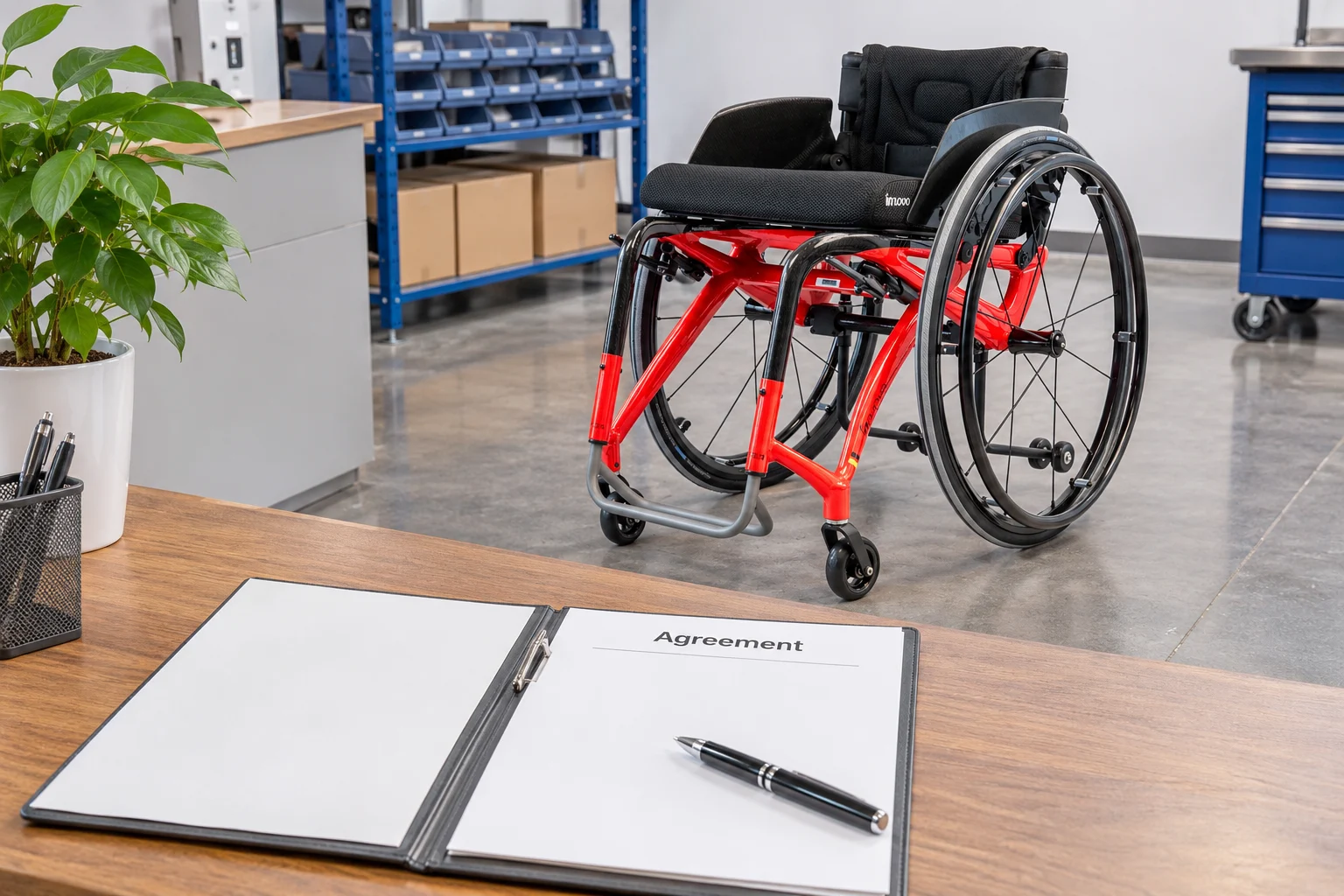
Agree the service scope and record responsibilities before using a wheelchair maintenance log to compare support offers. A 5903 wheelchair maintenance support proposal should define the tasks, responsible provider, parts process and relevant labor or transport costs. A warranty headline alone does not explain the complete service arrangement.
Ask for the practical support route
Location and scope matter when the chair needs attention. Provide the intended market and purchasing scenario. Ask which services are offered, which are separate and how unresolved cases are escalated, without assuming identical support in every country.
- Service scope
- Parts process
- Cost and location
| Review point | What to confirm |
|---|---|
| Service scope | Named included tasks |
| Parts process | Compatibility and current availability |
| Cost and location | Written responsibilities and route |
Key Takeaway: You can compare support offers through the work they actually cover.
How can you start a useful wheelchair maintenance file?
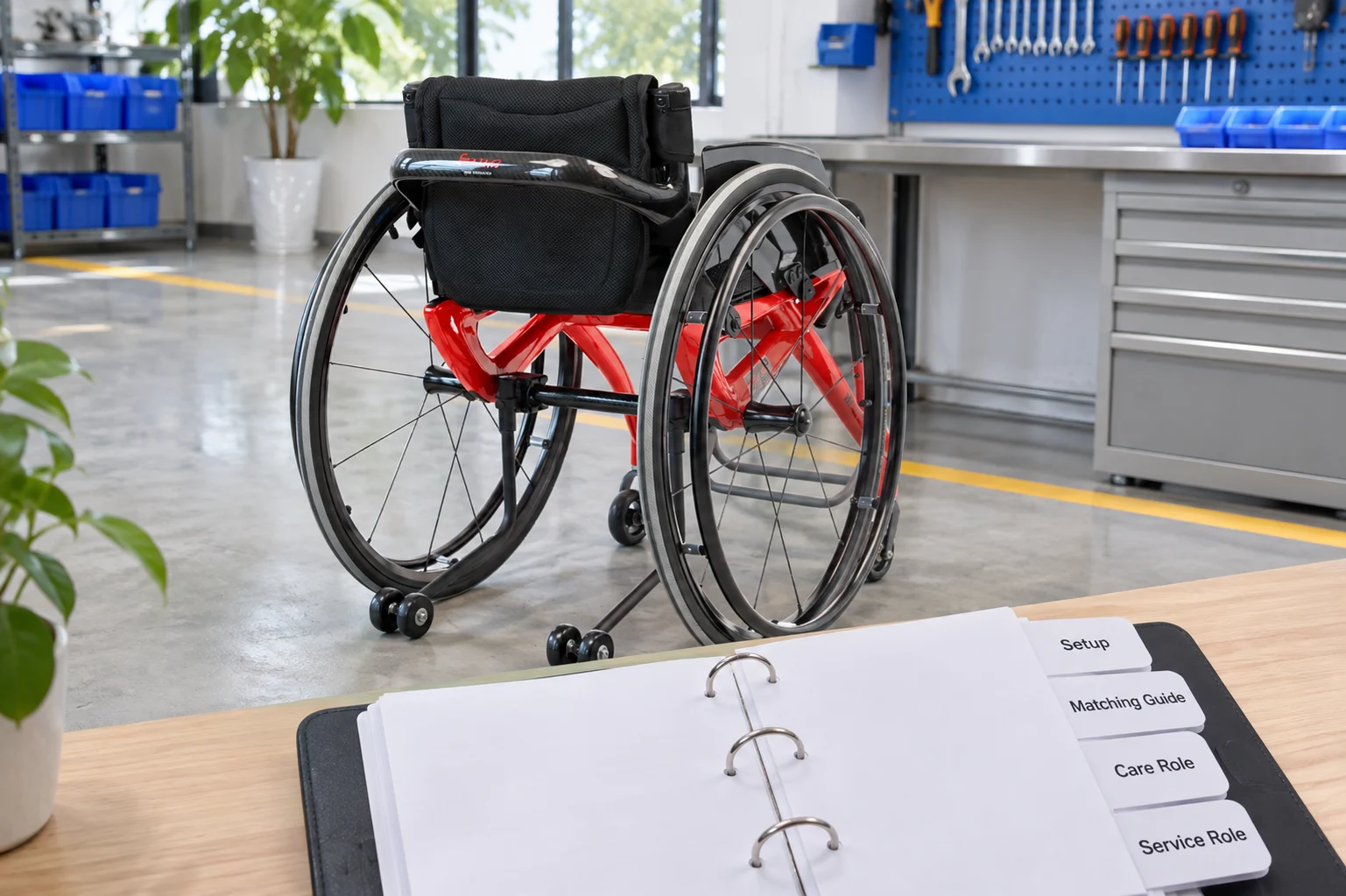
Start a wheelchair maintenance log with the unit's documents, part baseline and a clear route for unresolved issues. Start a 5903 wheelchair maintenance file with the supplied setup, matching guide and assigned care and service roles. Add observations and completed work as they occur, keeping unresolved questions visible.
Build the record around the unit
The file should make the next action clear. Give AryMD the model details, destination and support questions relevant to your purchase. We can discuss the product documentation and written scope needed for your maintenance and parts review.
- Starting record
- Operating history
- Support inquiry
| Review point | What to confirm |
|---|---|
| Starting record | Unit setup and current guide |
| Operating history | Care findings and completed service |
| Support inquiry | Specific tasks and destination |
Key Takeaway: You can connect the purchase, handover and ongoing care through one consistent product record. Contact us with your 5903 setup, quantity and destination so we can discuss the product information and written supply scope. AryMD puts clear specifications before purchasing promises.
Frequently asked questions
Q1: Can I copy an electric-wheelchair maintenance schedule?
No. The base 5903 is manually propelled, so its routine should follow the actual mechanical and seating parts.
Q2: What's the best starting record for maintenance?
Keep the unit identity, supplied setup and matching guide. Add the responsible care and service roles before logging tasks.
Q3: How do I know which tire-pressure value applies?
Identify the actual fitted tire and its matching instructions. Do not borrow a pressure value from another wheelchair model.
Q4: Should a reported fault wait until the next planned interval?
No. Use the relevant service process for the reported concern rather than assuming a calendar date guarantees condition.
Q5: Does warranty coverage define every service cost?
No. Confirm the scope of parts, labor, assessment and transport for the actual offer or case.